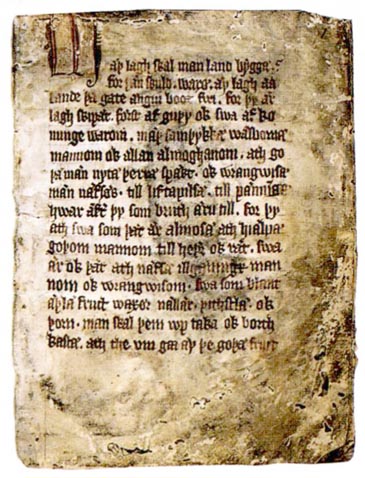
It is well known that lawmaking was inseparable from kingship in England and on the continent. Therefore, there has also been a predominant tendency to see the Medieval Scandinavian provincial laws in a regal context. In this light, the initiators of laws were kings and men belonging to the upper stratum of society, and the laws themselves are seen as reflecting the societal situation, in which they were written down. This article focuses on ‘peripheral’ or ‘provincial’ laws, such as the Icelandic Grágás, the main Svea Law, the Uppland Law and not least the Hälsinge Law. It attempts to show that such laws were not inventions of any one person or group in the thirteenth or fourteenth century, and that they cannot only be mirroring the time, in which they were written down. Rather there are complex layers in the versions of these laws which survive: some old customary law, some probably newly composed law, some having their roots in Roman legal tradition and some in canon law. The picture which emerges is much less clear-cut than has been supposed, showing many regional differences and peculiarities. A key witness to this is the Law of the Hälsinger. In medieval Hälsingland a king or king-like person was very seldom present and no archaeological or historical sources witness to the presence of an aristocracy. The Land-owning class consisted of free farmers, says Stefan Brink, and goes on to argue how the law was the result of a rewriting of another provincial law, the Uppland Law, but with significant adjustments derived from local customs and inspired by Norwegian legal tradition. The conclusion is that careful shifting may uncover such complex layers in the wider spectrum of Medieval Scandinavian Laws.
ABSTRACT:
One of the oldest ideas about the Norman conquest is that William the Conqueror introduced into England from Normandy the legal concept of ‘foresta’, land where hunting and the environment in which it took place were protected by draconian laws. However, the medieval forest laws were not imposed on a blank canvas, and a combination of different factors, such as earlier extensive royal hunting rights, the king’s will, the application of forest law to land ‘outside’, which was organized in manors and assessed for geld, and the status of escheated land as temporary royal demesne; all worked towards a great expansion of the afforested area. In England a great deal of non-royal demesne was under forest law, whereas in Normandy ducal forests were broadly speaking ducal demesne. In England the competing interests of royal sport and revenue and those of the political elite combined with population growth pressured to make the forests a toxic political issue in a way not paralleled in Normandy.
ABSTRACT:
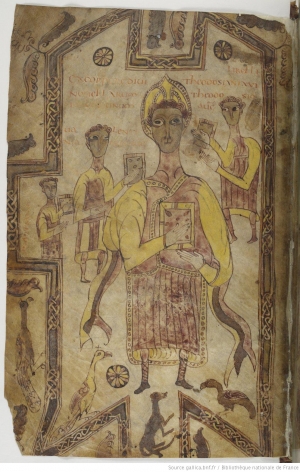
To understand the authors of the Breviarium Alaricanum and their purpose, logic and their methods it is necessary to undertake an internal study of the work – a law code collected in sixth-century Aquitaine. This article analyses Alaric’s Breviary, focusing specifically on those laws that concern the Jews. In the authors’ selection of the sources of Roman law, and the organization of those laws in the Breviary, the ‘prudentes’ who produced it made significant choices. This is even more apparent in the rewriting and commentaries. These laws reflect the issues which existed in Western Jewish communities at that time – issues which, as the compilers knew, were still dealt with in tribunals. In their selection and rewriting the prudentes took rather radical steps of removing passages which were not strictly legislative, deleted the majority of contradictory measures and clarified the style”. According to Nemo-Pekelman this was in contradiction to the codifiers of the Theodosian Code, who “had created a consistent work of propaganda on the model of apologetic and heresiological literature to create new legal categories of citizens defined by their religious adherence. They had produced a legal category for heretics, one for pagans and one for the Jews” … “this accumulation of laws and their classification was meant to underline that these citizens ere a marginal group within the civic body” (p.300) According to Capucine Nemo-Pekelman, the authors of the breviary of Alaric did not extend this work of propaganda.
The article is part of a collection of papers presented at a conference in Copenhagen in 2011 organised in a collaboration between three digitisation projects: “Early English Law“, “Nordic Medieval Laws” and “Relmin”. The work on the Breviary of Alaric was carried through in the framework of Relmin.
Even though the very early English laws are preserved only in the Textus Roffensisand Ine’s Law code only as an appendage to Alfred’s later laws it is generally believed that they represent a genuine textual tradition. However, the extent to which they should be understood as symbolic assertions of royal power or practical collections of laws which were used to guide the owners in concrete clashes has traditionally been heavily disputed. A carefully contextualized reading by John Hines of the four surviving Anglo-Saxon law codes issued in the seventh century, three from Kent and one from Wessex, shows the body of legislation they contain to be coherent and practical, and to support subtle insights into social relationships, processes of social change, and areas of social stress in that period. The importance of especially archaeological evidence, in particular that concerning the use and significance of materials and artefacts, and developments in settlement structures and the overall settlement pattern, is particularly emphasized. For instance the attention is drawn to the fact that the gold-buckle in the grave-assemblage from Sutton Hoo was made from a quantity of gold, representing 300 Kentish gold shillings corresponding to the exact “wergeld” of a nobleman.
Scholars mark 700th birthday of medieval genius and erotic storyteller
Academics at The University of Manchester and Bristol are marking the 700th birthday of one of the medieval world’s greatest writers, credited with establishing the European storytelling traditions we know today
Locating Boccaccio in 2013
Italian Giovanni Boccaccio, author of the 1351 Decameron, a collection of 100 tales ranging from the erotic to the tragic, will be honoured through a five-month exhibition at the University’s John Rylands Library.
The exhibition is curated by Dr Guyda Armstrong and Professor Stephen Milner from The University of Manchester and Dr Rhiannon Daniels from the University of Bristol.
Called ‘Locating Boccaccio in 2013’, the exhibition will showcase some of the world-renowned Boccaccio exhibits held by The John Rylands Library, alongside loans from other libraries and private collections. Exhibits span the period from the fifteenth century to the digital age, from medieval manuscripts and early printed books, through private press editions and popular classics right up to the internet resource, the Decameron Web. As well as the historic books, it contains a collection of new artists’ books, specially commissioned for the anniversary to offer new responses to Boccaccio and his works.
The Roxburghe Boccaccio
Professor Milner says: “We are delighted to be hosting the world’s leading scholars in Boccaccio studies and showcase Manchester’s outstanding collection of Boccaccio’s works. His impact as a writer is vast, both as a founding father of the Renaissance and the revival of interest in the classical world and as an innovator in writing prose stories. His influence on figures as diverse as Chaucer and Salvador Dali reflect the scale of his literary heritage”. Dr Armstrongadds: “Boccaccio was a great humanist, and unlike Dante and other writers of the time, one of the first people to give women a voice. He’s often described as the writer of “dirty stories”, but he’s so much more than that because we can credit him with establishing the great European traditions of storytelling.”
The star of the show is the “Roxburghe Decameron”, purchased by Mrs Rylands in 1892 from the Earl Spencer, and is the founding volume of the world’s most exclusive book club – The Roxburghe Club. The Roxburghe Club, which boasts just forty members at any one time, was founded in 1812 after the auction of the 1471 printed edition of Boccaccio’s Decameron for a then world record price of £2,260 after a dramatic bidding war.
The same team are also hosting 60 Boccaccio scholars from around the world at a conference at Manchester Town Hall on 10-12 July. The programme can be accessed here
Boccaccio and Artists’ Books
Boccaccio continues to be read across the world and to evoke responses seven hundred years after his birth. In order to commemorate Boccaccio’s anniversary year in 2013 and explore the ways in which his works speak to new audiences, the curator and organisers also invited an international group of artists to create new books about Boccaccio. The parameters of the project were left deliberately open and artists were invited to make a book in response to Boccaccio himself or to any of his texts.
Thirteen artists’ books were created and are on display in the exhibition. The artists’ books will move on 26 November to the Special Collections Library, Ashton Bower at the University of the West of England, where they will be displayed from 2 December 2013 to the end of January 2014.
This part of the exhibition is designed to reflect the – still popular – reception of Boccaccio as an author of erotic and light-hearted stories, but also aims to inform new audiences about the breadth and depth of his achievements as a literary innovator, humanist, and linguistic model. Boccaccio wrote a wide range of texts in both Italian and Latin, prose and poetry, and was responsible for many literary ‘firsts’, such as the development of ‘octave rhyme’ (ottava rima), the first epic poem in Italian, and the first psychological novel. His prose writing in the Decameron became the basis for the standard Italian language used today.
The following virtual exhibition presents a series of images from each of the thirteen artists’ books. Click on the artists’ names below in order to see pages not on display within the Rylands Library:
Each year IMC in Leeds choose a special thematic strand; for 2014 it is “Empire”.
2014 is the year when the world will celebrate two important anniversaries –the 2000 years since Augustus died and the 1200 years since Charlemagne passed away. Both events will be duly celebrated all over Europe with conferences, exhibitions and publications. Probably inspired by this, the thematic strand for the IMC next year is “empire” or “imperium”.
In the call for papers the organisers write that: “Although the last Western Roman emperor was deposed in 476, the Roman Empire continued to shape imagination even when it had ceased to play a major political role. Throughout the Middle Ages, “Empire” suggested a claim to universal lordship. The concept of imperium implied not only the ability and power to exercise authority over others, but could also be used to distinguish spiritual from secular spheres of power. There was also the concept of “informal empire”, a term often employed by modern historians to describe a group of distinct territories held together by ties of commerce, ideology, dynastic traditions, or conquest. “Informal empires” were forged by King Cnut in the 11th century and by the rulers of Aragon in the 14th. The papacy, the western Empire, and Byzantium all claimed to inherit the mantle of Rome, while the Caliphates expressed a similar claim to universal leadership. The meaning of imperium, in turn, became a central issue in medieval scholarship, whether in scholastic theology, medieval philosophy, canon law, or the writing of history and literature. No type of empire was unable to avoid challenges (and challengers). Each type exercised a profound influence not only on politics, but on every aspect of daily life: on commerce and trade as well as the environment, cultural practice, social structures and organisation, the movement of ideas and people. Empires and their rulers could also be products of political and cultural memory and myth-making, with Charlemagne, Arthur, and Troy perhaps among the more famous examples. “Empire” was not limited to the regions surrounding the medieval Mediterranean. Universal monarchy was central to the self-representation of imperial China, while informal empires rose and fell in Africa as well as in Asia and pre-Columbian America. Christian, Confucian, Buddhist, and Islamic scholars discussed ‘Empire’ in all its varieties and forms. Empire was a universal phenomenon, and thus calls for sustained exploration across a wide range of disciplines, and geographical and chronological areas of expertise.”
Points of discussion could include:
The role of settlers, merchants, rulers, and others in creating and fashioning empire
The decline and fall of empires
The typology of empire
The governance and organisation of empires
The experience of empire by individuals and communities
The representation of Empire in music, art, literature, and material culture
Traditions of empire, their use and development
Theoretical models of Empire: Medieval and modern
Concepts and practices of empire in the Islamic world, Africa, America, and Asia
The role of imperium in medieval philosophy, theology, and literature
The role of universal authority in medieval thought and practice
The influence of medieval concepts and practices of empire on their post-medieval successors
Word-counts can be used to uncover what the hot topics were at the Medieval Congress in Leeds …
Doing a work–count–analysis is very simple. You just run a text through a site like WriteWords and the list crops up.
What then are the results of an analysis of the sessions at the International Medieval Congress in Leeds this year apart from the 145 times “pleasure” and “pleasures” was mentioned? (Pleasure was the overarching thematic strand)
First of all it is pertinent to mention that the most frequent word was English (24). Paired with England + Britain (22) the slant is apparent. Participants may come from all over the world, but a significant number does come from England and give presentations on such topics as local history in Chester and elsewhere. However it is worth mentioning that Europe also played a significant role, mentioned 23 times.
Looking at perspectives it is pertinent to mention that the word culture may only have been mentioned 14 times. However cultural was used 12 times, making it by far the most important orientation (26). Compared to this political and politics (22), social (14) and spiritual (13) perspectives were much less prominent.
Considering topics, the most important was text(s) (30). This was followed by medieval law (23), literature (21) history (16) saints (13) and finally violence and military (12). Less prominent but still important were topics like crusades (10), communities (10), music (9) landscapes (9) and the Venerable Bede (9). Finally a bit further down the list we find Cistercian (8) and Byzantium (8) mentioned topped off by such locations as Italy, Ireland and Scandinavia.
To sum it up: Anyone in search of a hot topic in Leeds this summer might have focused on Cultural Perspectives on Early Medieval English Laws and their Textual and Literary Qualities. Not that anyone gave such a paper but someone might very well have done…
The Conversion of Scandinavia. Vikings, Merchants, and Missionaries in the Remaking of Northern Europe
Winner of the 2013 Gustav Ranis International Book Prize awarded by the MacMillan Center at Yale University.
In this book a MacArthur Award-winning scholar argues for a radically new interpretation of the conversion of Scandinavia from paganism to Christianity in the early Middle Ages. Overturning the received narrative of Europe’s military and religious conquest and colonization of the region, Anders Winroth contends that rather than acting as passive recipients, Scandinavians converted to Christianity because it was in individual chieftains’ political, economic, and cultural interests to do so.
Through a painstaking analysis and historical reconstruction of both archaeological and literary sources, and drawing on scholarly work that has been unavailable in English, Winroth opens up new avenues for studying European ascendency and the expansion of Christianity in the medieval period.
ABOUT THE AUTHOR:
Anders Winroth is professor of history at Yale, is the author of The Making of Gratian’s Decretum, for which he was awarded a MacArthur Fellowship in 2003. He lives in New Haven, CT.
The story of the Viking expansion west across the North Atlantic between AD. 800 and 1000, the settlement of Iceland and Greenland, and the exploration of northeastern North America, is a chapter of history that deserves to be more widely known. Norse discoveries in the North Atlantic are the first step in the process whereby human populations became connected into a single global system. The Norse, and their Viking ancestors, are little known, misunderstood, and almost invisible on the American landscape. Although Norse voyages were known since the early 1800’s, the near absence of physical evidence of Vikings in the New World has rendered the information, and the possibility that Norse explorers reached the North American mainland five hundred years before Columbus, speculative, at best. Yet, discovery of a Viking site in Newfoundland in 1960 confirmed a pre-Columbian European presence in the Americas, and Norse artifacts found in archaeological sites scattered throughout the eastern Canadian arctic and sub-arctic, raise the issue of how far south of Newfoundland the Norse did explore, and what impact their contacts had on Native Americans.
The term “Viking” is indelibly associated with seafaring warriors. Carpentry, and especially boat building, were skills known to all Viking men, and along with maritime skill, was the characteristic upon which Viking expansion and influence depended. Viking craft had an advantage over all other watercraft of their day in speed, shallow draft, weight, capacity, maneuverability, and seaworthiness, giving Vikings the ability to trade, make war, carry animals, and cross open oceans safely. The territorial expansion of the Vikings from their Scandinavian homelands began in the last decades of the eighth century, and started as seasonal raids on the British Isles. Those Vikings who ventured west settled the islands of the North Atlantic. Many theories attempt to explain what propelled Vikings outward from their northern homelands: developments in ship construction and seafaring skills; internal stress from population growth and scarce land; loss of personal freedom as political and economic centralization progressed; but the overriding factor seemed to be an awareness of the opportunities for advancement. By taking on lives as soldiers of fortune, Vikings could dramatically alter their prospects: becoming wealthy, reaping glory and fame in battle, and achieving high status as leaders and heroes based on their own abilities and deeds. Although there is reason for speculation about how far the Norse traveled south of Newfoundland, recent archaeological research provides a solid basis for understanding more about Norse explorations and contacts in the north. Archaeologists found Norse artifacts in early Inuit (Eskimo) sites in the Canadian arctic and Greenland. That people of the Dorset culture had begun to replace their stone blades with metal after AD. 1000 seemed curious, although understood when both late Dorset and Early Thule sites began to produce not only Norse iron and copper, but a host of other Norse materials. Soon Norse materials were reported from many eastern Canadian arctic and northwest Greenland sites dating to the Norse period. These finds suggest that Native Americans interacted with the Norse in a variety of ways: by casual contacts, scavenging Norse wrecks, or outright skirmishes
This volume celebrated the Vikings’ epic voyages, which brought the first Europeans to the New World. In doing so, the ring of humanity that had been spread in different directions around the globe for hundreds of thousands of years, was finally closed. Even though Leif Eriksson’s was not the first—nor the last—voyage of Viking exploration, nor did it lead to permanent settlement in the Americas, his voyage achieved an important and highly symbolic goal that made the world an infinitely smaller place.
This book is a catalogue published in connection with an exhibition in Washington 2000 celebrating the Viking Passage to America in the 1000. It is still worth a read.
Vikings : The North Atlantic Saga
William F. Fitzhugh and Elisabeth I. Ward
Smithsonian Books; First Edition 2000
ISBN-13: 978-1560989950