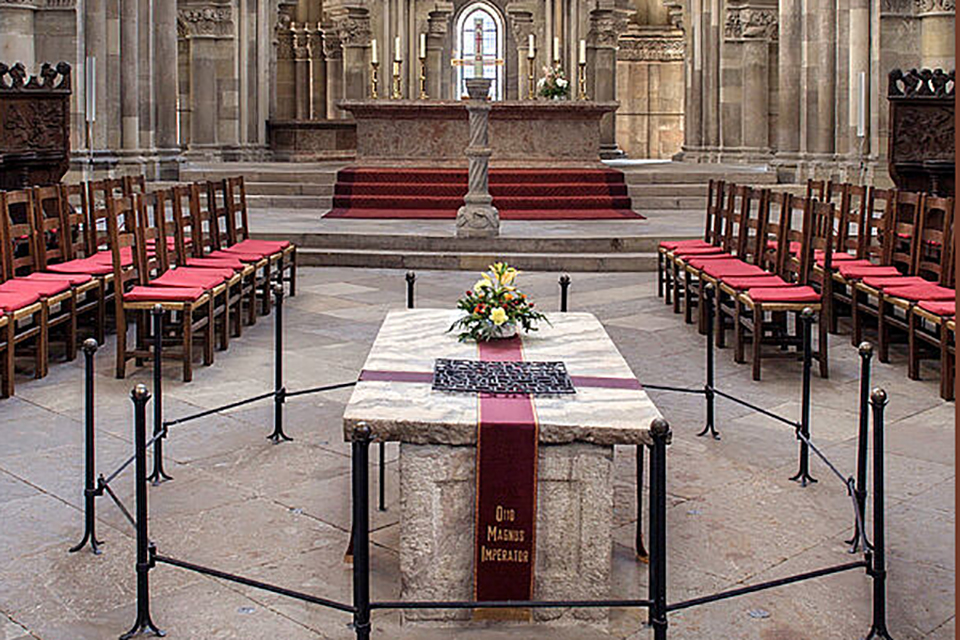
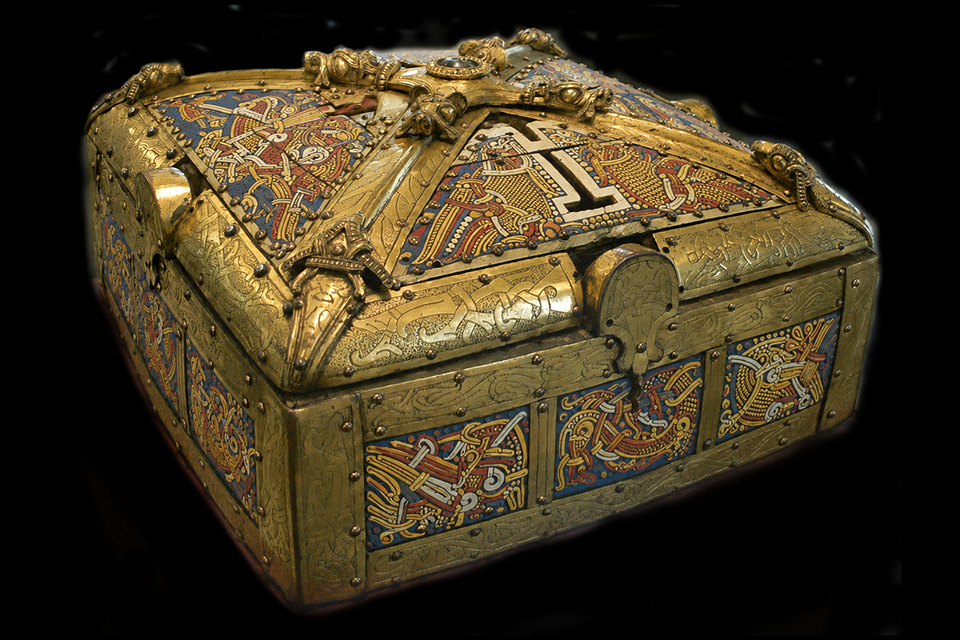
Could the Bamberg Shrine have been a diplomatic gift presented to Otto the Great by the emissaries of the Danish king at Quedlinburg in AD 973?
Otto I (912-973) was the duke of Saxony (as Otto II, 936–961), German king (from 936), and Holy Roman emperor (962–973). He consolidated the German Kingdom (1) by his suppression of rebellious vassals and his decisive victory over the Hungarians. His use of the church as a stabilizing influence created a secure empire and stimulated a cultural renaissance.
Otto was the son of King Henry I (the Fowler), of the Liudolfing, or Saxon, dynasty, and his second wife, Matilda. Little is known of his early years, but he probably shared in some of his father’s campaigns. He married Editha (Eadgyth), daughter of the English king Edward the Elder, in 930. She obtained as her dowry the flourishing town of Magdeburg. Nominated by Henry as his successor, Otto was elected king by the German dukes at Aachen on Aug. 7, 936, a month after Henry’s death, and crowned by the archbishops of Mainz and Cologne.
While Henry I had controlled his vassal dukes only with difficulty, the new king firmly asserted his suzerainty over them. This led immediately to war, especially with Eberhard of Franconia and his namesake, Eberhard of Bavaria, who were joined by discontented Saxon nobles under the leadership of Otto’s half-brother Thankmar.
Thankmar was defeated and killed, the Franconian Eberhard submitted to the King, and Eberhard of Bavaria was deposed and outlawed. In 939, however, Otto’s younger brother Henry revolted; he was joined by Eberhard of Franconia and by Giselbert of Lotharingia and supported by the French king Louis IV. Otto was again victorious: Eberhard fell in battle, Giselbert was drowned in flight, and Henry submitted to his brother.
Nevertheless, in 941 Henry once again joined a conspiracy to murder the King. This was discovered in time, and, whereas the other conspirators were punished, Henry was again forgiven. Thenceforward he remained faithful to his brother and, in 947, was given the dukedom of Bavaria. The other German dukedoms were likewise bestowed on relatives of Otto.
Despite these internal difficulties, Otto found time to strengthen and to extend the frontiers of the kingdom. In the east the margraves Gero and Hermann Billung were successful against the Slavs, and their gains were consolidated by the founding of the Monastery of St. Maurice in Magdeburg, in 937, and of two bishoprics, in 948.
In the north, three bishoprics (followed in 968 by a fourth) were founded to extend the Christian mission in Denmark, which however remained a separate kingdom under the rule of Gorm the Old . Otto’s first campaign in Bohemia was, however, a failure, and it was not until 950 that the Bohemian prince Boleslav I was forced to submit and to pay tribute.
Having thus strengthened his own position, Otto could not only resist France’s claims to Lorraine (Lotharingia) but also act as mediator in France’s internal troubles. Similarly, he extended his influence into Burgundy. Moreover, when the Burgundian princess Adelaide, the widowed queen of Italy whom the margrave Berengar of Ivrea had taken prisoner, appealed to him for help, Otto marched into Italy in 951, assumed the title of king of the Lombards, and married Adelaide himself, his first wife, Editha (Eadgyth), having died in 946. In 952 Berengar did homage to him as his vassal for the Kingdom of Italy.
Otto had to break off his first Italian campaign because of a revolt in Germany, where Liudolf, his son by Editha, had risen against him with the aid of several magnates. Otto found himself compelled to withdraw to Saxony; but the position of the rebels began to deteriorate when the Magyars invaded Germany in 954, for the rebels could now be accused of complicity with the enemies of the kingdom. After prolonged fighting, Liudolf had to submit in 955.
This made it possible for Otto to defeat the Magyars decisively in the Battle of the Lechfeld, near Augsburg, in August 955; they never invaded Germany again. In the same year Otto and the margrave Gero also won a victory over the Slavs. A further series of campaigns led, by 960, to the subjection of the Slavs between the middle Elbe and the middle Oder. The archbishopric of Magdeburg was founded in 968 with three suffragan bishoprics. Even Mieszko of Poland paid tribute to the German king.
In May 961 Otto procured the election and coronation of the six-year-old Otto II, his elder son by Adelaide, as German king. Then he went for a second time to Italy on the appeal of Pope John XII, who was hard pressed by Berengar of Ivrea. Arriving in Rome on Feb. 2, 962, Otto was crowned emperor, and 11 days later a treaty, known as the Privilegium Ottonianum, was concluded, to regulate relations between emperor and pope. This confirmed and extended the temporal power of the papacy, but it is a matter of controversy whether the proviso enabling the emperor to ratify papal elections was included in the original version of the treaty or added in December 963, when Otto deposed John XII for treating with Berengar and set up Leo VIII as pope. Berengar was captured and taken to Germany, and in 964 a revolt of the Romans against Leo VIII was suppressed.
When Leo VIII died in 965, the Emperor chose John XIII for pope, but John was expelled by the Romans. Otto, therefore, marched for a third time to Italy, where he stayed from 966 to 972. He subdued Rome and even advanced into the Byzantine south of Italy. Prolonged negotiations with Byzantium resulted in the marriage of Otto II to the Byzantine princess Theophano, in 972. Having returned to Germany, the Emperor held a great assembly of his court at Quedlinburg on March 23, 973. He died in Memleben several weeks later and was buried in Magdeburg at the side of his first wife.
Otto I’s achievement rests mainly on his consolidation of the kingdom. He deliberately made use of the bishops to strengthen his rule and thus created that “Ottonian church system of the Realm” that was to provide a stable and long-lasting framework for Germany. By his victorious campaigns, he gave Germany peace and security from foreign attack, and the preeminent position that he won as ruler gave him a sort of hegemony in Europe. His Italian policy and the acquisition of the imperial crown constituted a link with the old Carolingian tradition and was to prove a great responsibility for the German people in the future. All areas under Otto’s rule prospered, and the resultant flowering of culture has been called the Ottonian renaissance.
(1) Often called the German Reich in English historiography, the term Reich echoes the expression, The Nazi Reich. Here it is called the more neutral “German Kingdom”.
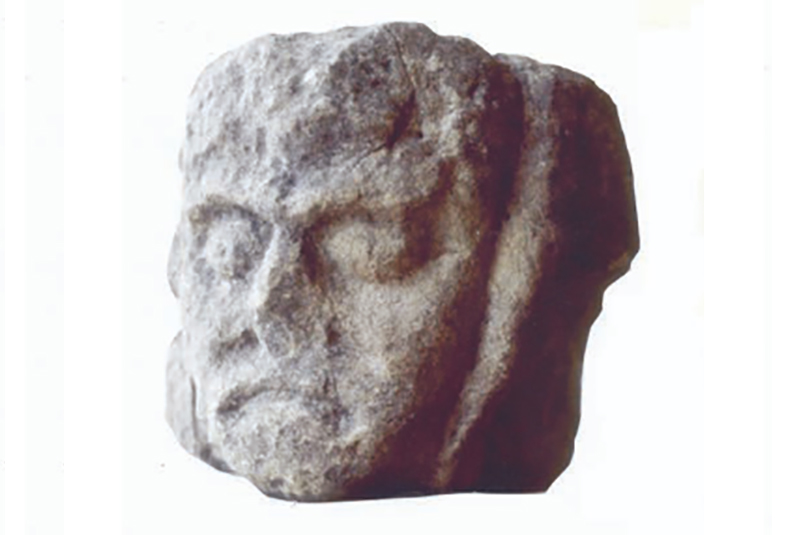
In 2025, the remains of Otto the Great were taken up from his grave in Magdeburg Cathedral. This led to public access to a number of photos, including several of his skull. The present photo is an AI-reconstruction based on fleshed out version of his death-mask (also done by AI).
The biography of Johannes Laudage is the best of the more current publications. Unfortunately it has not been translated. However, to these must be added the catalogues from the major exhibitions in the last 25 years in Magdeburg. The smaller publication by Matthias Becher offers a quick overview.


Primary narrative sources to the history of the 10th century German Kingdom

![]()
When Angus’s father died c. 1250, an Irish bard composed a praise poem petitioning the son to pay his father’s debt. The poem offers a vivid account of the cultural inventory of one of the Sea Kings.
Thietmar of Merseburg was bishop of the diocese of Merseburg from 1009 to 1018. Famous for his Chronicle, he was one of the most important historians of the Ottonian period
Heinrich II (973 (978)-1024) – famous for his foundation of Bamberg – was the last Ottonian to rule Germany and the Holy Roman Empire.
The 10th-century German queens set their mark on politics in different ways. The last queen, Kunigunde, primarily played the role of dynastic bridgebuilder.
In 1002, Otto III died at Paterno near Civita in Italy. With no direct descendants, the succession was fraught with tensions. Duke Henry of Bavaria caught the upstream.
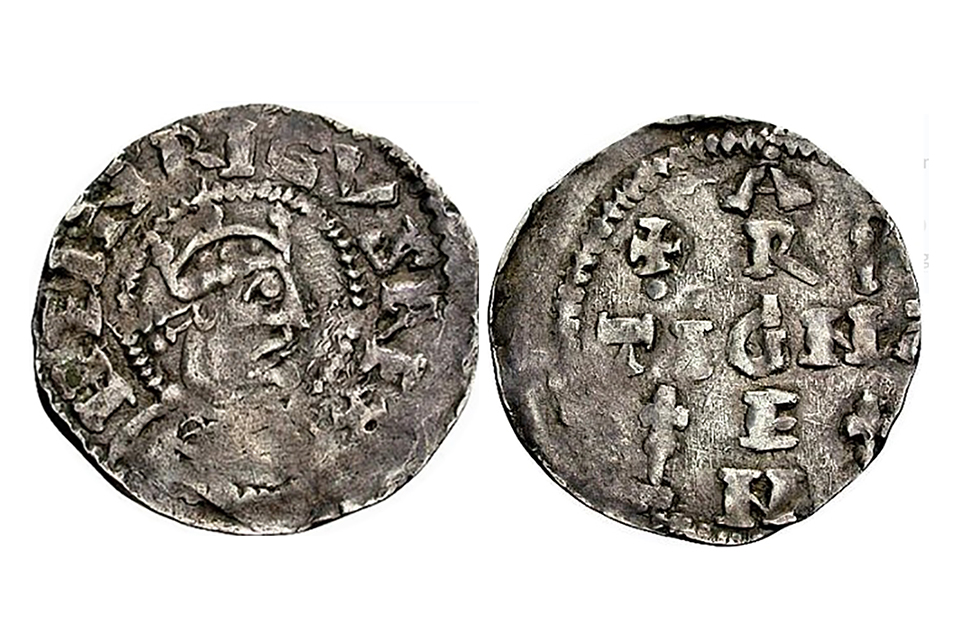
Following nearly a year of negotiations and wrangling, Henry II finally secured his position as King of Germany in the autumn of 1002. The following text is believed to have been personally dictatated by the King in January 1003 arguing his case
Charles Gilles le Bouvier (1355 - 1456) served as herald to the French King, Charles VII. In this role, he kept up the Grandes Chroniques while authoring several other important historical works.
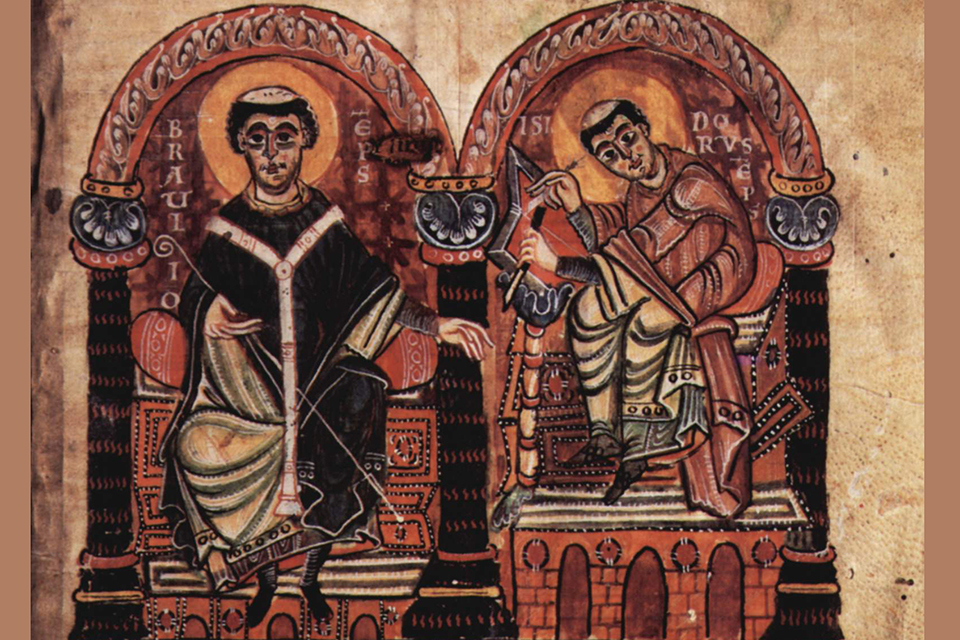
Isidore of Seville was a renowned scholar, theologian, and archbishop who lived in Visigothic Iberia from around AD 560 to 636. He had a profound influence on education and scholarship in Medieval Europe.
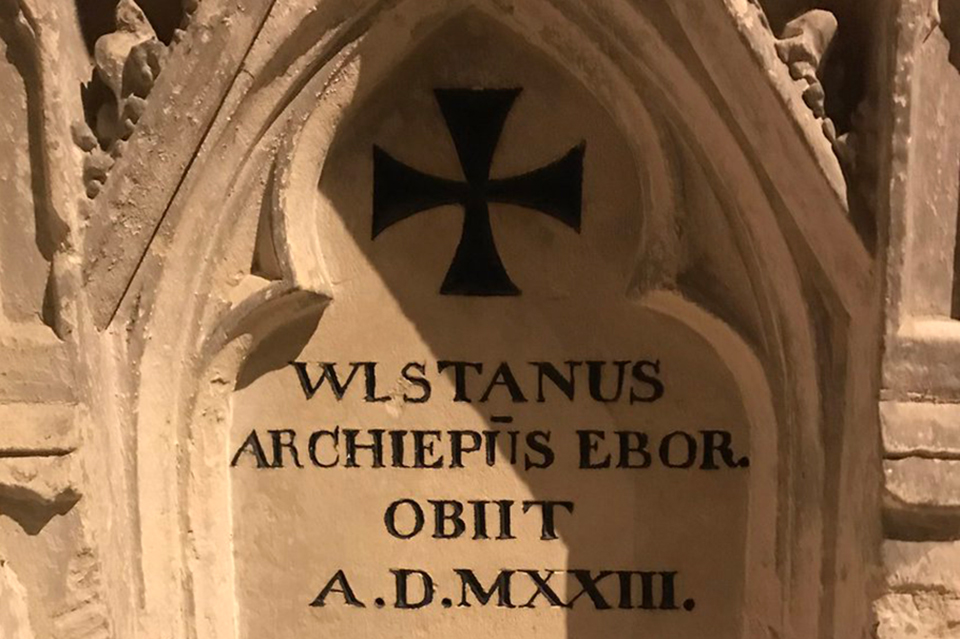
Wulfstan played a significant political role in Anglo-Saxon England at the turn of the first millennium and the events surrounding the political and personal demise of King Æthelred, and the conquest of Sweyn Forkbeard and Cnut the Great
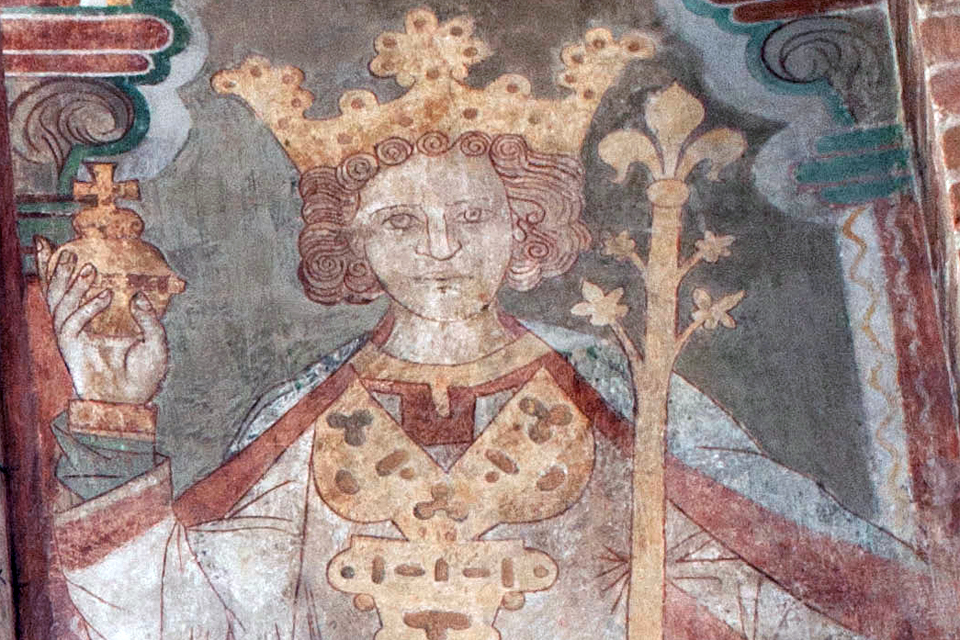
August 1250, Eric IV – also known as Eric Ploughpenny – was murdered on a boat and dumped in the firth of Schlei. His death was the culmination of ten years of civil war and the harbinger of a tumultuous period in the medieval history of Denmark.
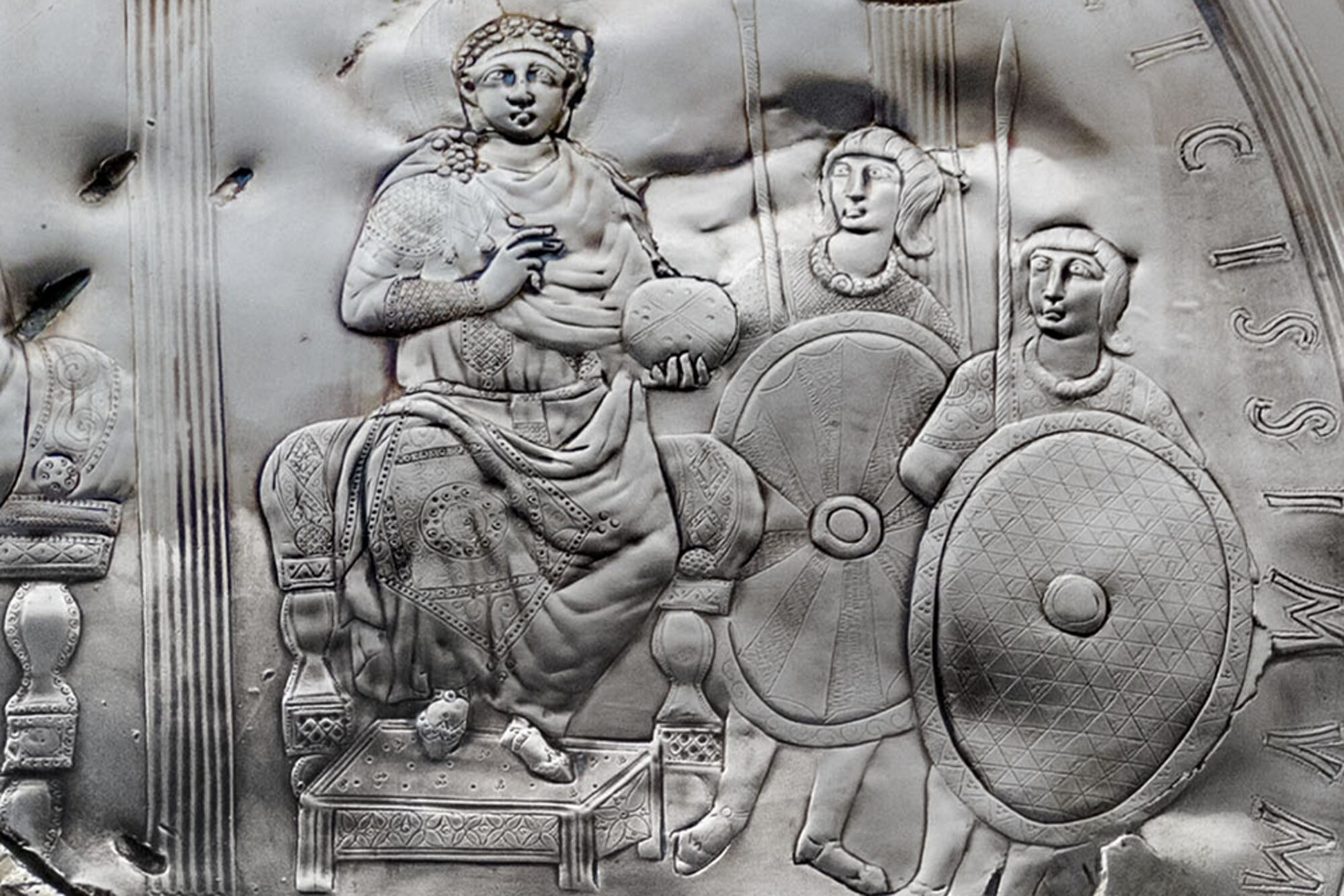
Theoderic II and Euric were kings of the Visigoths in Toulouse in the second half of the 5th-century. From the letters of Sidonius Appolinaris we possess precious biographical glimpses of these Goths and their counterpoise, Vectius
Abelard and Heloise loved each other. Their love affair, though, was so much more than just an act of carnal lust. It was also a relationship filled with charity and friendship. By delving into their love story, we may learn of a faraway world
Eric the I of Sweden (c. 1125 - 1160) was a stout man, used to fighting and a great fan of a diet of diet of fresh-water fish. It appears, also, the legend of his death speaks the truth
Recently Pope Francis canonized Blessed Angela of Foligno, a Franciscan mystic from the 13th century – but why?...