The Bosworth Boar Badge located the spot where Richard III died...
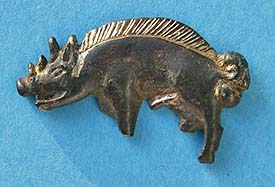
The Bosworth Boar Badge located the spot where Richard III died...
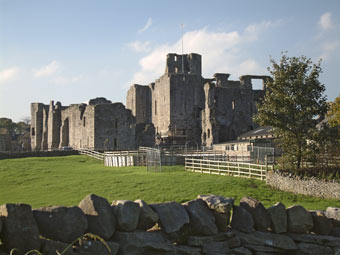
Windsor of the North, Middleham Castle, was home to Richard III...
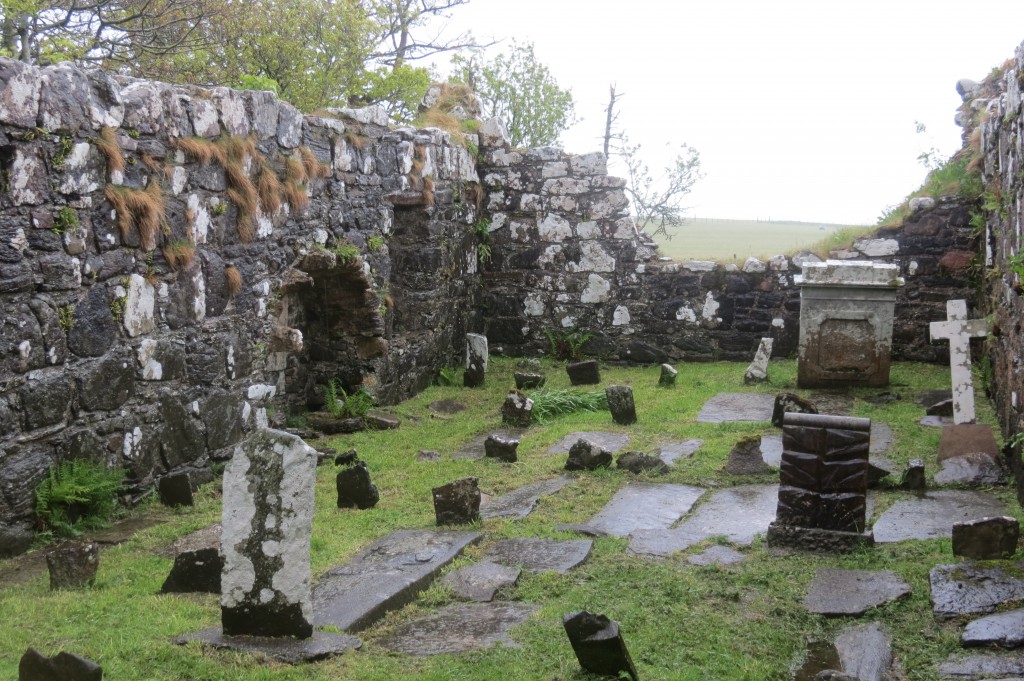
Eigg is one of the small isles in the Scottish Inner Hebrids. Around 600 St. Donnán or Donan, a Gaelic priest, arrived from Ireland to introduce Christianity to the Picts of Northern Scotland. According to the martyriology of Oengus St. Donnan was a friend of St. Columba, whom he followed from Ireland to Scotland toward the end of the sixth century. But while Columba chose a socalled “white martyrdom” (i.e. life of exile from his kindred) St. Donnan went for a “Red Martydom” going up further North. Seeking a solitary retreat, he and his companions settled on the island of Eigg, off the west coast of Scotland, which used only to pasture sheep belonging to the queen of the country. Informed of the invasion, the queen ordered the monks to be slain. Her agents, probably a marauding band of Picts, or pirates according to one account, arrived during the celebration of Mass on Easter eve 617. Being requested to wait until after Mass. Then St. Donnan and his fifty-one companions gave themselves up to the sword. According to legend St. Donnan specifically asked to be the last of his flock.
Eventually a new monastery at Kildonnan was founded from Iona, which lasted several cnturies until the Vikings settled on Eigg. Probabaly the monastery was an important and wealthy institution as is suggested by the later mentioning in the Annals of Oan, a Princeps or superior of Eigg, who died in 725 and of Cumméne, another religious who was mentioned in 752. At this time the monastery is believed to have become a royal institution. Several fragments of early Christian Crosses have been recovered from the Kildonnan graveyard and are currently displayed at “The Lodge”
Last year Eigg History Society won £17.500 from the Heritage Lottery Fund to carry out an archaeological excavation of the graveyard in order to locate the first monastery from the 7th century. According to the History Society the archaeologists have succeeded in identifying the likely oval enclosure and ditch surrounding the first settlement. Emeritus professor John Hunter based at the University of Birmingham has led the excavation. According to the Scotsman the findings have surpassed all his expectations: Pictish pottery was found in the enclosure which together with the oval form helps to date the settlement to the 7th century.

The Isle of Eigg is owned by The Eigg Heritage Trust
Read about the excavation at the dedicated Eigg Excavation Blog
Current plans for archaeological excavations on Eigg and the other Small Islands
READ MORE:
Warlords and Holy Men: Scotland Ad 80-1000. Alfred P. Smyth. Edinburgh University Press, 1984
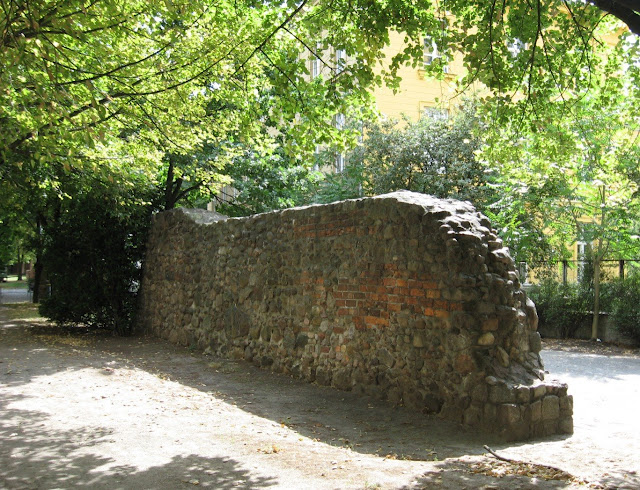
Most people think of Berlin as a modern bustling town built out of the wreckage of the 19th and 20th century. But Berlin has a much longer and interesting – medieval – history
Around 1170 Berlin was founded on two opposing plateaus: Barnim and Teltow, located on either brink of the river Spree, a tributary to Havel, which feeds the Elbe. The first Berliners were German colonists from the Harz, the Rhineland, Westphalia and Flanders. When they arrived the land was marshy, forested and in fact not very inviting. However, ancient Slavic trading routes along the rivers from West to East passed through and made it an inviting spot to locate a market.

The beginnings were modest. Berlin and Cölln were located on the sandy islands, each with a few wooden houses and a small-timbered church. However, two generations later (around 1230) the Ascanian Margraves: Johann I and Otto III presented the market with city-status exempting them from taxes. The emblem of the House of Ascania, a red eagle and bear, became the heraldic emblems of Berlin.
This investment paid off. A few decades later the Ascanians derived huge profits from customs, tolls and fees on market stands and the use of the mills of the city. The city status started a construction boom in Berlin. First of all the Mühlendamm (Mill Damm) was built on a huge number of massive oak trunks. This linked the two sister cities and at the same time dammed the Spree. This allowed the city to exploit the river in two ways. First off all this forced riverboats to reload their freights, inviting the traders to market their wares at the local market. Secondly the water was used in milling and other forms of crafts and trades (processing cloth, tanning hides etc.) At this time a series of large stone churches were built. St. Nikolai was the first. Later (1270) the Franciscans built the first brick-church echoing the prevalent mode of church building in Northern Germany.
 The city itself was the result of a planned exercise. Spandauer Strasse, Jüdenstrasse and Klosterstrasse ran parallel to each other with plots of land in given to new settlers. Amongst these were the Jews, who were given a separate gated area at the Grosse Jüdenhoff with a synagougue off the Molktenmarkt. Jewish merchants, who were involved in money exchange and the credit business, were among the first settlers. On the other side at the city’s North-Eastern edge, the Margraves reserved a piece of land for themselves.
In the mid-13th century Berlin expanded towards the north-west. The Mariensiedlung residential area grew up around the Neuer Markt, with houses with tiled roofs. At this time the twin city began building city walls in order to replace the older earthwork and palisade fortifications. Around this time more than 2000 people lived within the city’s walls and Berlin had become a major foreign trade hub. From East came wood, rye and linen, salt came from Halle, herrings from the Baltic and cloth from Flanders and the more local textile production centres in Brandenburg. At the end Berlin became a member of the Hanseatic League.
This story is told in much details in a new book, which was recently published in connection with the “Historiale 2012” focusing on the 775 anniversary of Berlin.
Information about medieval buildings and ruins in Berlin
Read more about “The Historiale 2012”
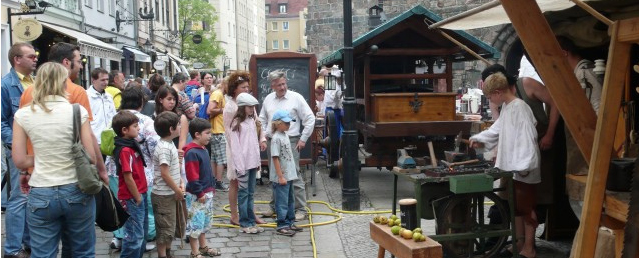
History festivals may be the way forward to “sell” history in a serious yet popular manner
The Historiale in Berlin has the ambition to be the largest historical festival in Europe. Since 2006 The foundation behind this festival has been the driving force behind a magnificent staged series of events focusing on a wide variety of themes, from “Napoleon in Berlin” to “Haupstadt der Spione”. This year the Historiale celebrates the 775 anniversary of Berlin from the 20th to the 26th of August with a huge mixture of musical events, theatre-performances, lectures, public debates plus guided tours and much more. At the end of the week there will be a large parade where people who are willing to dress up can take part.
A significant part of this takes place around the Nikolaikircheviertel where there is also a marketplace. In the Nikolaikirche itself an exhibition tells the story of this 800-year old building and the personalities, who lived and worked there. At the same time eight small exhibitions along the former city walls show the results from excavations which were carried out in connection with work on the Metro.
However, the gate to the festival is the exhibition in the Berlin Museum where the changing fortunes of the city are told through a combination of multimedia installations, audioguides etc. For the really interested it might be worthwhile to start out by visiting the City Museum of Berlin (Märkisches Museum) where amongst other fascinating thing large models of the historical city from its early beginnings may be studied in detail. For the medieval buff the museum in itself is interesting: the building is more than a 100 years old and in full-blown “historismus” style with a tower built out of red brick and a “Gothic Chapel” with a remarkable collection of medieval sculptures; all newly restored to its former grandeur. At the Museum annex at Ephraim-Palais there is a special exhibition “Berlinmakers ‘n’ shakers. 775 Portraits – One Network” which showcases seven hundred present-day and seventy-five historical figures. Their stories shed light both on the lives of Berliners and also on the uniqueness of Berlin.
Tired of all the noise and jostling from more than 100.000 guests and participants? Maybe it is time to take the train out South and visit one of Berlin’s more hidden gems: The village of Düppel (Museumsdorf Düppel). Here guests can experience a medieval village complete with a fully-fledged farm cultivated with traditional three-year rotation and showcasing old grains as well as medieval gardens. On Sundays volunteers enliven the place with their handcrafts. All scientifically well-documented in an orderly way. (The Museumsdorf is part of the Stadmuseum of berlin).
The program for the Historiale
Accompanying this years “Festivale” is a book about “Berlin im Mittelalter”:
Berlin im Mittelalter: Berlin/Cölln unter den Askaniern. By Norbert F. W. Meier. Berlin Story / Alles Uber Berlin 2012
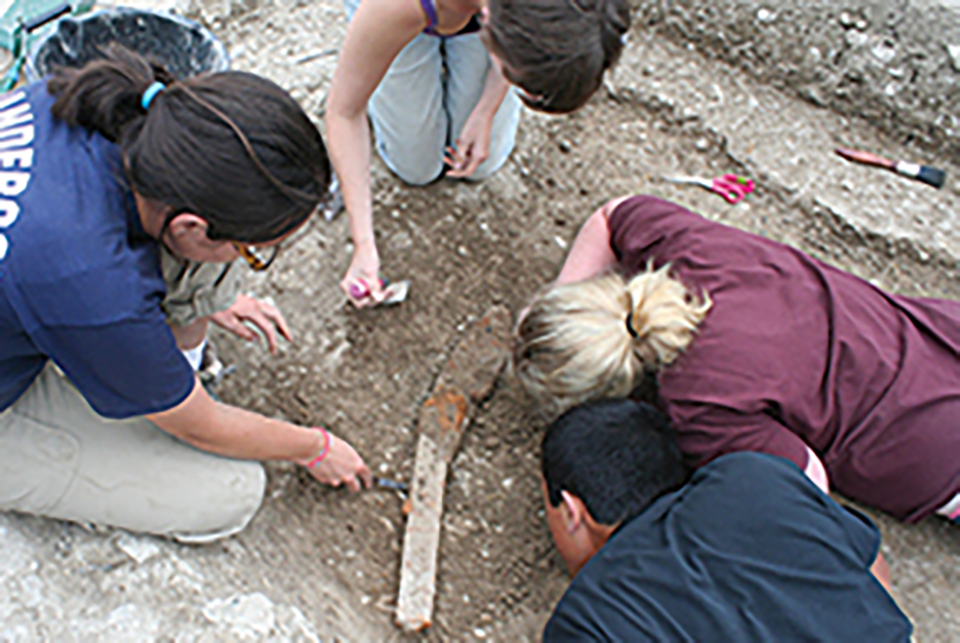
Anglo-Saxon Lyminge in Kent yields important new knowledge

Refuge at Falkenstein on the road to St. Wolfgang excavated...
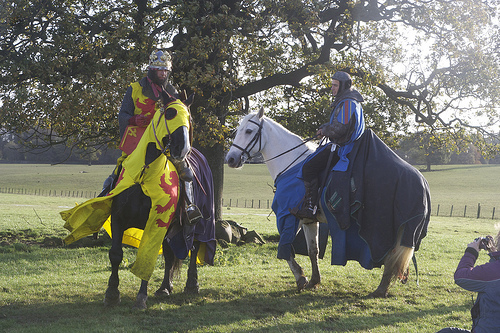
Prepare for battle 2014 in Scotland...
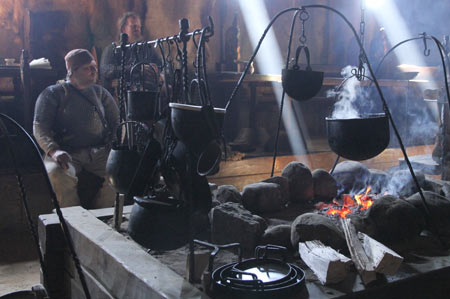
Christian burials in Denmark have been dated to ca. 850...

Viking burials explored at Valhalla exhibition in York...
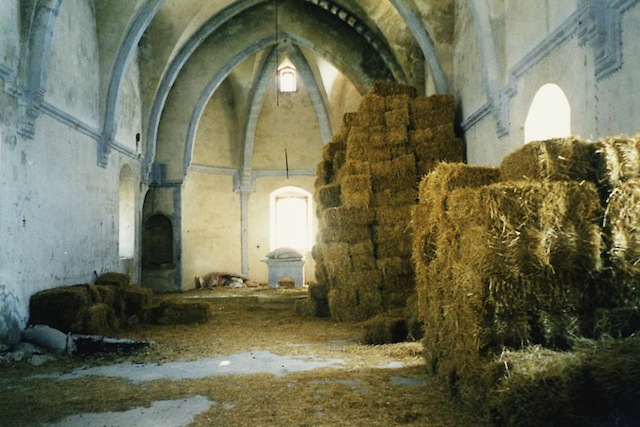
Churches of Northern Cyprus continues to be destroyed...
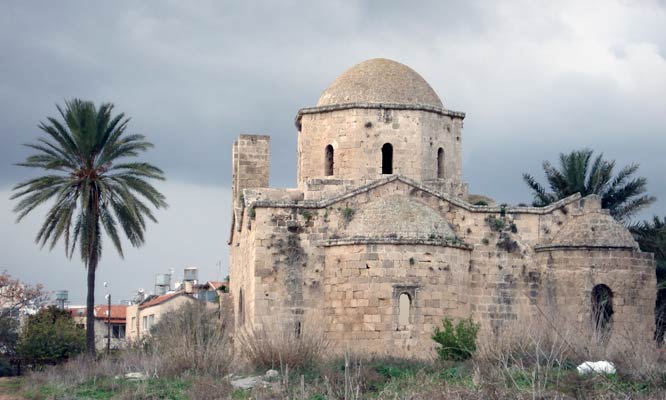
Beautiful, crumbling, spoiled and maltreated…
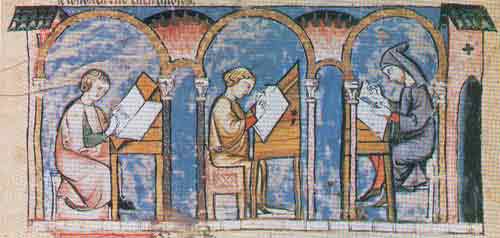
Last year UK proposed to make research papers stemming from work paid by British Taxpayer’s free online by 2014. July 16 the proposal was confirmed. Next day the European Commission followed the plan of the UK government and made all EU-funded scientific research available for free from 2014. It is believed that scientists will benefit, as they will be able to more productive as no publishers will be able to act as gatekeepers and scholars – due to copyright issues will not be obliged to publish the same results twice albeit with different wording (so-called “slicing the salami thin”). Likewise voluntary and charitable organisations as well as independent scholars will be able to access information hitherto reserved for Universities. “Last, but certainly not least, citizens will have direct access to publicly-funded research in addition to benefitting from the indirect effects resulting from everybody else’s faster access”, says the Memo.
As a first step, the Commission will make open access to scientific publications a general principle of Horizon 2020, the EU’s Research & Innovation funding programme for 2014-2020. As of 2014, all articles produced with funding from Horizon 2020 will have to be accessible: Articles will either have to be made immediately accessible online by the publisher, which can get reimbursement of up-front for publication costs, or researchers will be obliged to make their articles available through an open access repository no later than six months (12 months for articles in the fields of social sciences and humanities) after publication (“Green” open access).
In a press release the European Commissioner for Research and Innovation, Máire Geoghegan-Quinn, declared that open access to scientific papers and data “will speed up important breakthroughs by our researchers and businesses, boosting knowledge and competitiveness in Europe.”
This will definitively hit the lucrative business of Medieval History Publishing as most European Research in the Humanities is funded by the member-states. Of course there will still be a market in US, but as much research here is dependent on grants from European Universities – hosting visiting overseas scholars working in Archives or Museums – matters will not be that simple.
From a recent roundtable discussion on “The Future of Academic Publication” in Leeds at the 19th International Medieval Congress it appeared that the usual print-run for a book is 300, with 50 presented to the authors, while app 200 – 250 are sold to (American) University Libraries. As most books published by the more prestigious publishers are sold on average for between €100 -120 (whether in print or as an E-Book) this is a lucrative business.
Although the publishers at the roundtable stressed the value of their work connected with the so-called “editorial process”, some scholars, who were present at a later reception, afterwards claimed, that they did most of the editing themselves. Further it was apparent that in a number of instances, these scholars had even been obliged to pay for the editing process, thus in reality the privilege to publish. Further some scholars had experienced that publications, they had contributed to, were not available at their national or academic libraries (in the minor European countries). As copyright was strictly policed, they were not even allowed to circulate their results among colleagues. Added to this should be the dissatisfaction with the fact that the large publishing houses routinely declined collections of papers from conferences. Finally a general dissatisfaction with the quality of the publications was sounded: photos and illustrations were printed in non-colours and LD.
“Something has to give”, as one scholar voiced it! Apparently sooner than later if the different European Countries follow up on the recent decisions by the Commission.
Karen Schousboe
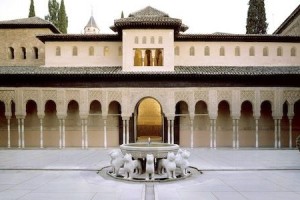
The “coolest” place in heat-waved Spain is Alhambra…
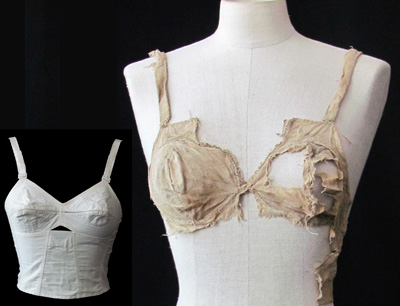
15th century linen bras, a linen male hose, a woolen codpiece...
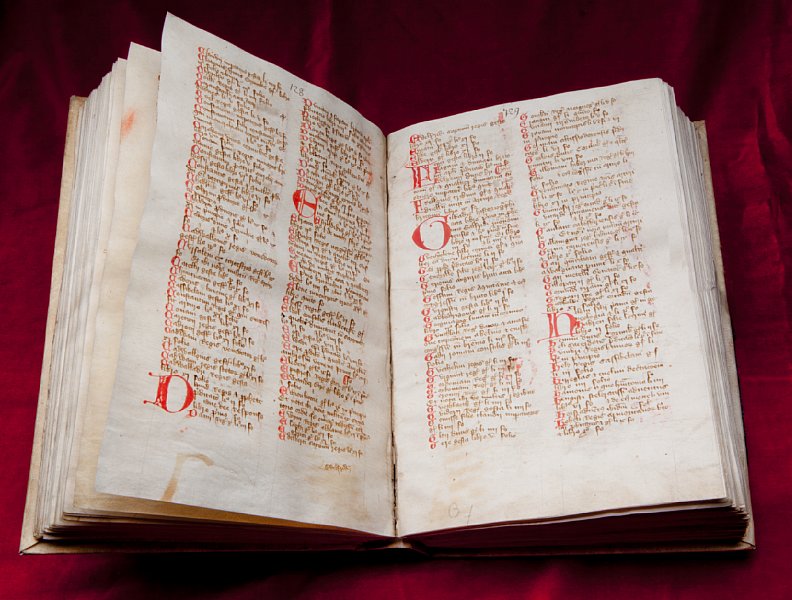
Unique manuscript secured for the Royal Library in Copenhagen…