While Hildesheim Cathedral is being restored, its treasures are exhibited all over the world...
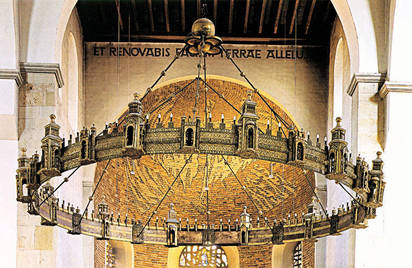
While Hildesheim Cathedral is being restored, its treasures are exhibited all over the world...
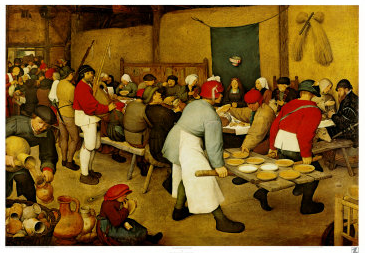
ABSTRACT:
The vernacular literary output of the ‘chambers of rhetoric’ in the Low Countries provides us with some insight into the ideology of the urban medieval middling classes. This literature included criticisms of social order, and it is argued here that whilst these come from an inherited religious discourse of reform, they can nonetheless be read as speaking to a political ideology particular to the urban context of the late Middle Ages. This article seeks to bring these ideological expressions into view, to contribute to our understanding of the political practices and popular uprisings of this time and place.
ABOUT THE AUTHORS
Jan Dumolyn, Department of History, Ghent University, Sint-Pietersnieuwstraat 35, B 9000 Ghent, Belgium;, Email:
Jelle Haemers, Department of History, University of Leuven, Blijde Inkomststraat 21, B 3000 Leuven, Belgium;, Email: jelle.haemers@arts.kuleuven.be
SOURCE:
‘Let Each Man Carry on with His Trade and Remain Silent’: Middle-Class Ideology in the Urban Literature of the Late Medieval Low Countries
By Jan Dumolyn and Jelle Haemers
In: Cultural and Social History, Volume 10, Number 2, June 2013 , pp. 169-189 (21). Publication date: 2013-06-01
Publisher: Bloomsbury Journals (formerly Berg Journals)
DOI: http://dx.doi.org.ep.fjernadgang.kb.dk/10.2752/147800413X13591373275169

REVIEW: Christians and Jews in Angevin England and The York Massacre of 1190...
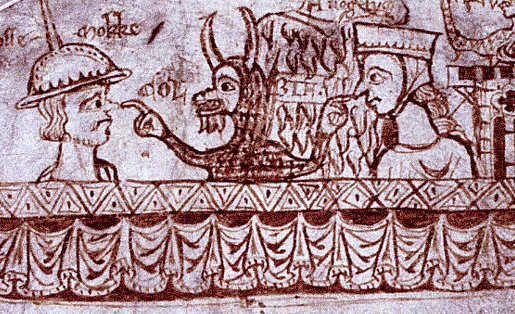
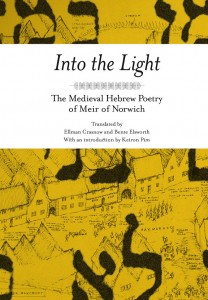
REVIEW: Into the Light – The Medieval Hebrew Poetry of Meir of Norwich.
In 1290 a learned Jew in Norwich, Meir ben Eliahu, was expelled to the continent together with approx. 2000 other Jews. Around that time, he wrote a collection of poems imbued with a mixture of fear, anger, sorrow, hope – in short a concoction of all sorts of those emotions, which the Jewish community in England must have lived through, when they finally lost their livelihoods and homes after more than 200 years of anti-Semitic persecution.
For centuries the collection of poems was “hidden” in the Vatican until they were discovered in the middle of the 19th century. Until now only parts of this collection have been translated and thus made available to a wider audience. However, in a brand new edition we are treated to the Hebrew texts as well as an English translation of the poems accompanied by an introduction and partially annotated. In itself this is a feat and the editors and translators are to be congratulated.
The edition holds all the 22 poems of Meir from Norwich. (We know they were composed by him, because of his proclivity to embellish them with rather lengthy acrostics, carefully explained in the book by the translators.)
The collection opens up with a poem “On the Termination of the Sabbath”, which was set to a dancing tune. Then it continues with “A Liturgical Poem on the Burden of Exile, Suffering and Ruin” also called: “Put a curse on my enemy.” What is immediately apparent from the tile is that now we move towards the woes of Meir of Norwich and his friends and family stemming from the local racist harassment as well as that which was fed on the national level. Nonetheless one of the next poems: “Who is like you”, which is basically a poetic rendering of Genesis and Exodus holds (at least to me) one of the most moving stanzas. Following upon the expulsion from Paradise, Meir writes:
Forced away from where we dwelt
We go like cattle to the slaughter.
A slayer stands above us all.
We burn and die.
(Verse 55 -56, p. 58)
Obvious witness to an early holocaust, the words vibrate with pain and desperation, hardly contained; elsewhere the poet finds comfort in steadfast belief in how the luminous light of God will “irradiate our darkness with light”. Here, however, the tone is raw with pain, reminding us of the remains of the pitiful slayed Jewish family which were found in a well in Norwich, identified through their DNA and recently buried in the Jewish Cemetery in Norwich.
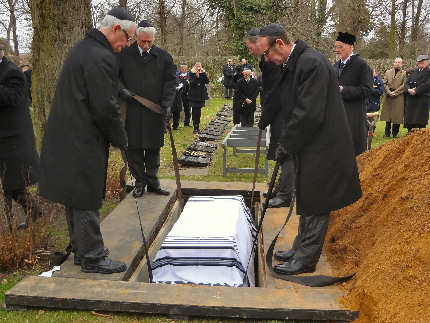
According to an introductory note a literal translation was first produced; after this a freer version was made. At the same time the translators have sought to preserve the essential meaning of the poems, while striving to “produce a text in English, which reads well.” Indeed, the translation does read well.
In this the translators have obviously succeeded. On the other hand the graphical layout is cumbersome. It is not apparent why it should be marred by the use of Latin ligatures. To be cool? Make it look at bit “Medieval”? Match the “otherness” of the Hebrew writing? Whatever the explanation, it disturbs the reading and thus to a certain extent mars the edition.
It is another – although minor quibble – that although at least some of the poems have obviously been woven together from quotations from the Hebrew Bible, only a few of those have been identified in the footnotes, even though many more may be found in the work of Einbinder, e.g. in her scholarly work on one of the poems (“Put a curse on my enemy”). Obviously the editors and translators have made a choice here, which however is not stated in the introduction. An unprepared reader may thus mistake the poems for something else than what they are – highly skilled and sometimes even beautiful heart-rendering textual patchworks steeped in the hebrew Bible as well as the the poetic traditions of Jewish Liturgical Poems from France, Germany and Spain.
Meir ben Eliahu was – if nothing else – obviously a very learned man!
Into the Light – The Medieval Hebrew Poetry of Meir of Norwich.
Translated by Ellmann Crasnow and Bente Elsworth. With an introduction by Keiron Oim.
East Publishing, Norwich 2013
Karen Schousboe
READ MORE:
Meir ben Elijah of Norwich: persecution and poetry among medieval English Jews.
By Susan B. Einbinder.
In: Journal of Medieval History Vol. 26, no. 2. Pp. 145 – 162
SOURCE OF PHOTO:
1233: A tax roll with a nasty tale to tell (E 401/1565– National Archives)
The future Tomb of Queen Margaret has already been designed and archaeologists are digging to make room for it...
Leicester Cathedral announces plans to spend £1 million on reinterment of Richard III
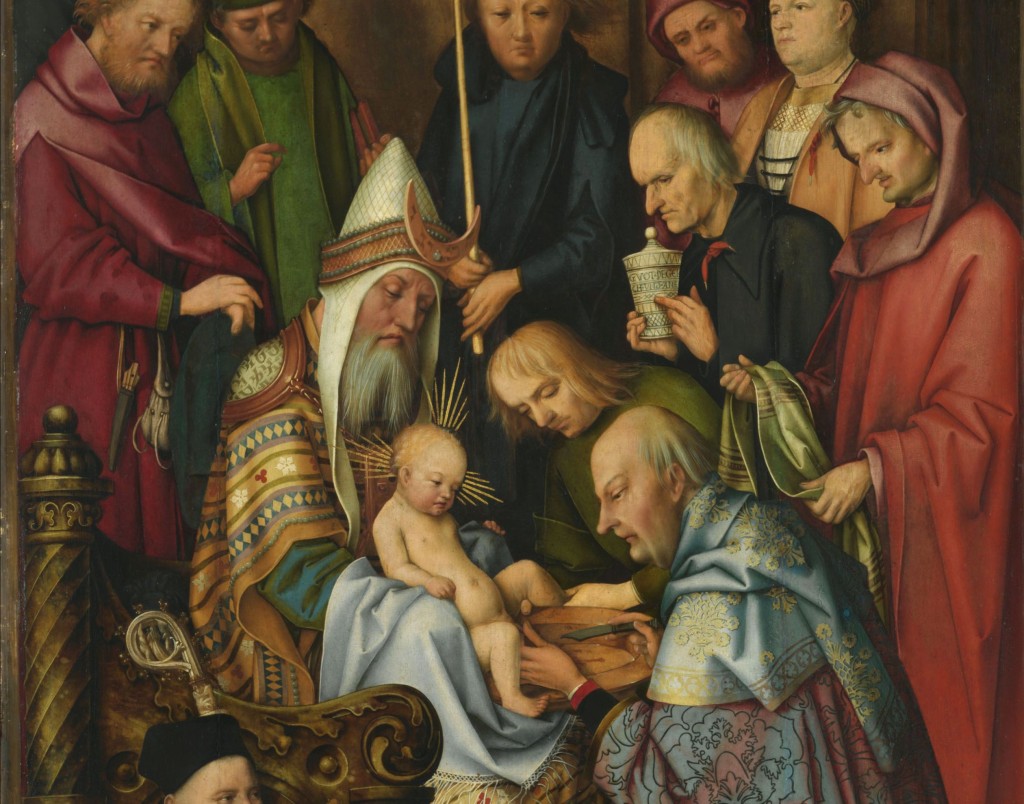
Subjects and Stories from the Old Testament are highlighted in a major exhibition in Munich...
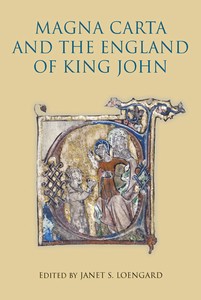 Magna Carta and the England of King John
Janet S. Loengard (Editor)
Contributors: Janet S. Loengard, Ralph V. Turner, John Gillingham, David Crouch, David Crook, James A. Brundage, John Hudson, Barbara Hanawalt, James Masschaele
Publisher: Boydell Press 2010
ISBN-13: 978-1843835486
BOOK DESCRIPTION:
Magna Carta marked a watershed in the relations between monarch and subject and as such has long been central to English constitutional and political history. This volume uses it as a springboard to focus on social, economic, legal, and religious institutions and attitudes in the early thirteenth century. What was England like between 1199 and 1215? And, no less important, how was King John perceived by those who actually knew him? The essays here analyse earlier Angevin rulers and the effect of their reigns on John’s England, the causes and results of the increasing baronial fear of the king, the `managerial revolution’ of the English church, and the effect of the ius commune on English common law. They also examine the burgeoning economy of the early thirteenth century and its effect on English towns, the background to discontent over the royal forests which eventually led to the Charter of the Forest, the effect of Magna Carta on widows and property, and the course of criminal justice before 1215. The volume concludes with the first critical edition of an open letter from King John explaining his position in the matter of William de Briouze.
CONTENTS:
1 Introduction
2 England in 1215: An Authoritarian Angevin Dynasty Facing Multiple Threats
3 The Anonymous of Béthune, King John and Magna Carta
4 Baronial Paranoia in King John’s Reign
5 The Forest Eyre in the Reign of King John
6 The Managerial Revolution in the English Church
7 Magna Carta, the ius commune, and English Common Law
8 Justice without Judgment: Criminal Prosecution before Magna Carta
9 What Did Magna Carta Mean to Widows?
10 The English Economy in the Age of Magna Carta
11 The Complaint of King John against William de Briouze
 Medieval Law in Context: The Growth of Legal Consciousness from Magna Carta to The Peasants’ Revolt (Manchester Medieval Studies)
Anthony Musson
Publisher: Manchester University Press 2001
ISBN-13: 978-0719054945
BOOK DESCRIPTION
Offering an important new perspective on medieval political, legal, and social history in England, Anthony Musson examines how medieval people at all social levels thought about law, justice, politics, and their role in society. He provides a history of medieval law and judicial developments in the 13th and 14th centuries, while interweaving within each chapter a special focus on different facets of legal culture and experience. This illuminating approach reveals a comprehensive picture of two centuries worth of tremendous social change.
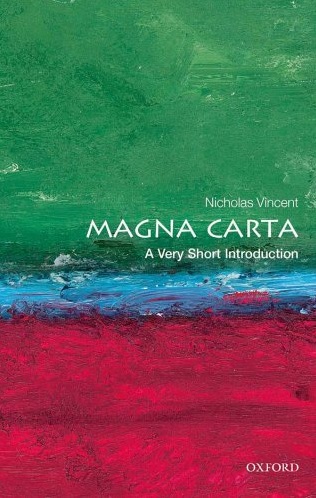 Magna Carta: A Very Short Introduction
Nicholas Vincent
Publisher: Oxford University Press (September 7, 2012)
ISBN-13: 978-0199582877
BOOK DESCRIPTION
The Magna Carta is arguably the greatest constitutional document in recorded history, yet few people today understand either its contents or its context. This Very Short Introduction, which includes a full English translation of the 1215 Magna Carta, introduces the document to a modern audience, explaining its origins in the troubled reign of King John, and tracing the significant role that it played thereafter as a symbol of the subject’s right to protection against the absolute authority of the sovereign. Drawing upon the great advances that have been made in our understanding of thirteenth-century English history, Nicholas Vincent demonstrates why the Magna Carta remains hugely significant today. The book is the result of
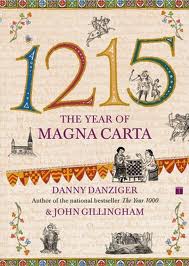 1215: The Year of Magna Carta
Danny Danziger (Author), John Gillingham (Author)
Publisher: Touchstone; Touchstone Edition edition (May 17, 2005)
ISBN-13: 978-0743257787
BOOK DESCRIPTION:
Surveying a broad landscape through a narrow lens, 1215 sweeps readers back eight centuries in an absorbing portrait of life during a time of global upheaval, the ripples of which can still be felt today. At the center of this fascinating period is the document that has become the root of modern freedom: the Magna Carta. It was a time of political revolution and domestic change that saw the Crusades, Richard the Lionheart, King John, and — in legend — Robin Hood all make their marks on history.
The events leading up to King John’s setting his seal to the famous document at Runnymede in June 1215 form this rich and riveting narrative that vividly describes everyday life from castle to countryside, from school to church, and from hunting in the forest to trial by ordeal. For instance, women wore no underwear (though men did), the average temperatures were actually higher than they are now, and the austere kitchen at Westminster Abbey allowed each monk two pounds of meat and a gallon of ale per day. Broad in scope and rich in detail, 1215 ingeniously illuminates what may have been the most important year of our history.
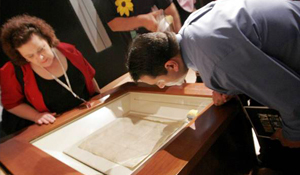
Repositioning a secular legal text like Magna Carta as “sacred” is a prerequisite for making a spectacular exhibition out of it
A first tour to Washington might very well be termed sacrilegious if the visitor only walks the mile from the Lincoln Memorial to the Capitol, but forgets to visit the National Archives at Constitution Avenue in order to inspect the American Founding documents in the Rotunda for the Charters of Freedom. Something like a neo-classical temple the showcases look like classical tombs, enshrining the holy of holies – the Declaration of Independence.

According to Richard Voase and Barry Ardley, both Lincoln University,who has carried out a study of visitors to the present exhibition in Lincoln of one of the four extant copies of Magna Carta, this is unfortunately not the experience, which people get. Until now the authentic document has been exhibited in a small rather cramped location in an old prison, which – although it is surrounded by sympathetic offers of well-intended introductions to the historical context – does not allow for visitors to experience the document as more than a small, old and unreadable piece of parchment.
In their highly inspiring article building on insights from sociologists like Émile Durkheim , Walter Benjamin and Daniel Bell the authors demonstrate how a proper exhibition would have to rethink this essentially secular document as a sacred artefact and imparting its renewed aura to visitors, presenting it in a spatial setting signaling gravitas as well as aura.
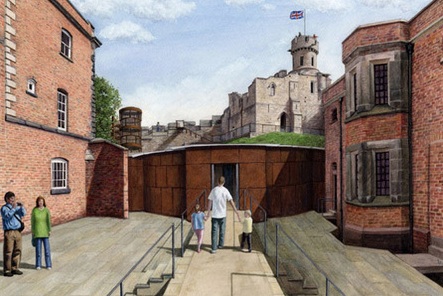
The suggestion is pertinent as Lincolnshire is currently investing app. £20 million on a project called Lincoln Castle Revealed. Part of this project is to create a new vault to showcase the Magna Carta and the Charter of the Forest and complete this with a cinema space. However, the design does not look at all like a neo-classical Greek temple; rather the inspiration seems to have come from an Anglo-Saxon mound… one wonders to what extent the city was presented with the very clever arguments which can be found in the article: Magna Carta: repositioning the secular as “sacred”?
The new vault has been designed by the architect Andrew Arrol from Arrol and Snell
According to the project the investment should hopefully result in an increase in the overall value of tourism to Lincoln as well as 600 – 1100 new jobs.
Magna Carta: repositioning the secular as ‘sacred’
Barry Ardleya and Richard Voase
International Journal of Heritage Studies, Volume 19, Issue 4, 2013 pages 341-352
DOI:10.1080/13527258.2012.663780
Abstract of article:
Magna Carta is an English legal document, of mediaeval origin. Its salience subsists in the origination of principles such as habeas corpus, trial by jury, and the right of the people to representation in the government. This paper considers how one of the remaining copies, held in Lincoln, UK, can best be presented for public view. The approach is essentially conceptual, underpinned by primary research in the form of an exit survey. The findings suggested some visitor dissatisfaction with the current display. This is interpreted by a discussion of the nature of tourist gazing and anticipation, drawing on the theoretical work of Campbell, Urry, MacCannell and Foucault. A revised presentational paradigm is proposed, drawing on the writings of Durkheim, Benjamin, and Bell. It is argued, with reference to a comparable model elsewhere, that the key to meeting visitor expectations is to re-imagine the Magna Carta as a ‘sacred’ rather than a secular document. The practical implication is to present the document in a way as to generate aura. Forthcoming intentions to re-design the display, to coincide with the 800th anniversary of the signing of the document, add import to the discussion.
READ MORE:
Read about the planned festivities in connection with the 800th anniversary

The 800th anniversary of the sealing of Magna Carta is planned on a grand scale...
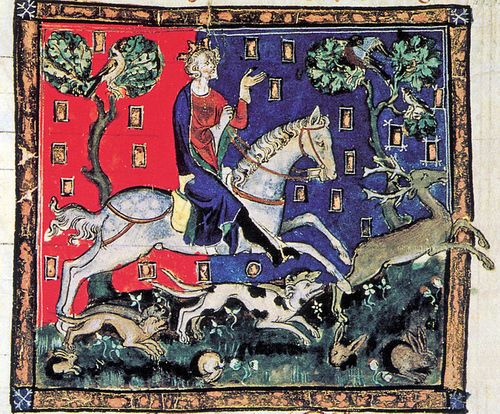
For the first time ever the four extant Magna Cartas will be united...
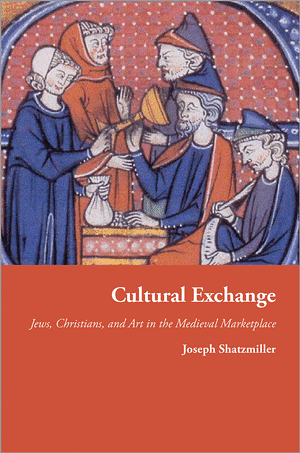 Cultural Exchange: Jews, Christians, and Art in the Medieval Marketplace (Jews, Christians and Muslims from the Ancient to the Modern World)
Joseph Shatzmiller
Princeton University Press 2013
ISBN-13: 978-0691156996
Demonstrating that similarities between Jewish and Christian art in the Middle Ages were more than coincidental, Cultural Exchange meticulously combines a wide range of sources to show how Jews and Christians exchanged artistic and material culture. Joseph Shatzmiller focuses on communities in northern Europe, Iberia, and other Mediterranean societies where Jews and Christians coexisted for centuries, and he synthesizes the most current research to describe the daily encounters that enabled both societies to appreciate common artistic values.
Detailing the transmission of cultural sensibilities in the medieval money market and the world of Jewish money lenders, this book examines objects pawned by peasants and humble citizens, sacred relics exchanged by the clergy as security for loans, and aesthetic goods given up by the Christian well-to-do who required financial assistance. The work also explores frescoes and decorations likely painted by non-Jews in medieval and early modern Jewish homes located in Germanic lands, and the ways in which Jews hired Christian artists and craftsmen to decorate Hebrew prayer books and create liturgical objects. Conversely, Christians frequently hired Jewish craftsmen to produce liturgical objects used in Christian churches.
With rich archival documentation, Cultural Exchange sheds light on the social and economic history of the creation of Jewish and Christian art, and expands the general understanding of cultural exchange in brand-new ways.
ABOUT THE AUTHOR:
Joseph Shatzmiller is the Smart Family Professor of Judaic Studies at Duke University. He is the author of Shylock Reconsidered and Jews, Medicine, and Medieval Society.
TABLE OF CONTENTS:
The Book is published in the series: Jews, Christians, and Muslims from the Ancient to the Modern World
READ MORE:
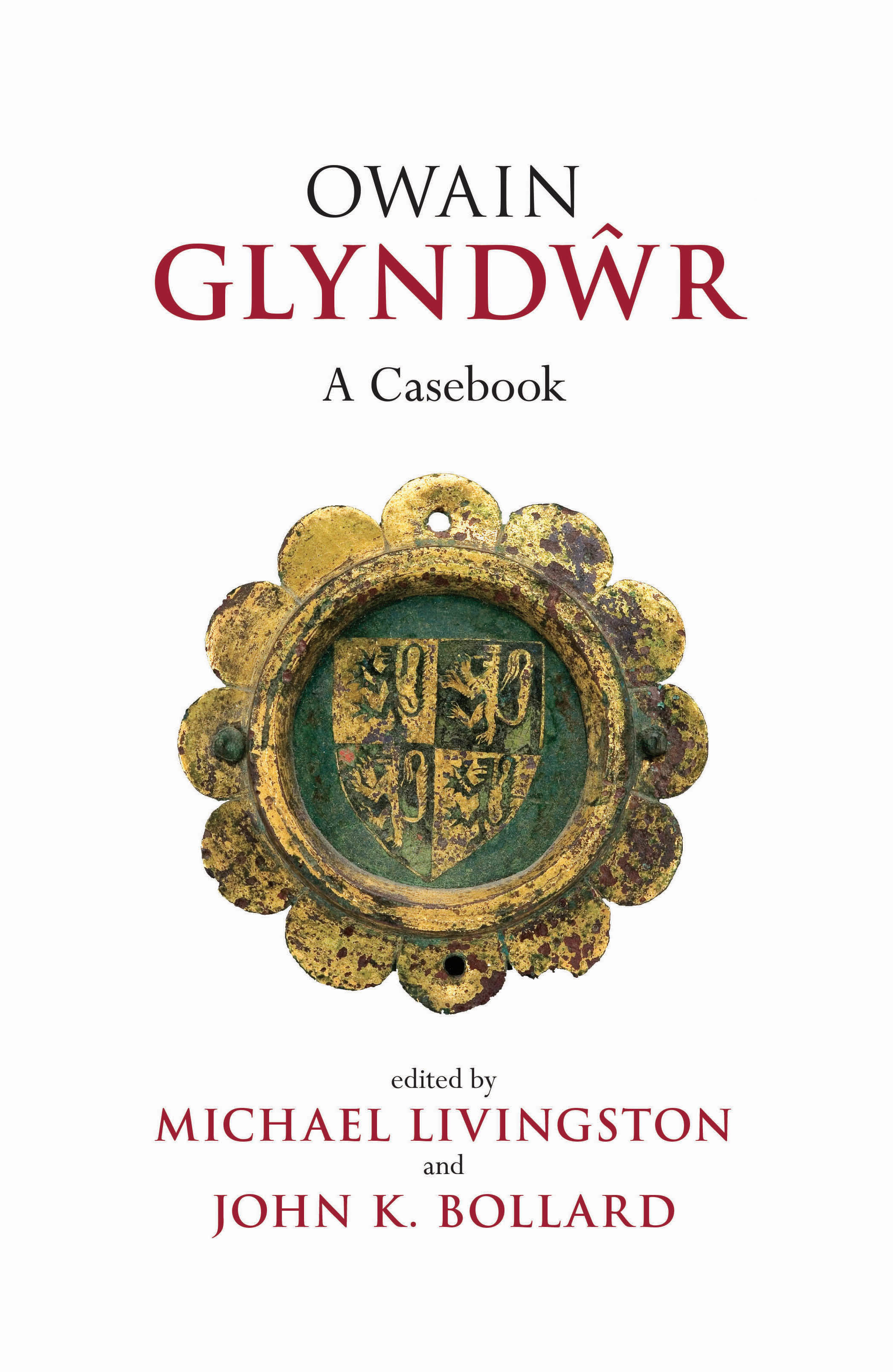 Owain Glyndwr: A Casebook (Exeter Medieval Texts and Studies)
Michael Livingston (Editor), John K. Bollard (Editor)
Liverpool University Press 2013
ISBN-13: 978-0859898843
BOOK DESCRIPTION:
Owain Glyndwr (1357?-1415) was the last native Welshman to hold the title Prince of Wales and a revolutionary. This book presents the original text and English translations of the medieval and post-medieval records, documents, poems and chronicles relating to him, his career and his legacy. In addition, textual notes and essays on the historical, social and literary context of these documents will provide up-to-date perspectives and commentary on the man and his times. For the first time, historians, literary scholars, students and the general reader will be able to view a wide range of materials collected in a single volume and will be able to assess for themselves the significance of Glyndwr in Welsh, English and European history from the late Middle Ages into the Renaissance and to redress the imbalance of historical accounts past and present. The high profile international contributors include: John K. Bollard, Independent Scholar of Welsh Kelly DeVries, Loyola University, Maryland Helen Fulton, University of York, UK Rhidian Griffiths, Independent Scholar Elissa Henken, University of Georgia Michael Livingston, The Citadel Alicia Marchant, University of Western Australia Scott Lucas, The Citadel William Oram, Smith College Gryffydd Aled Williams, Aberystwyth University, UK
ABOUT THE AUTHORS:
Michael Livingston is an Associate Professor at The Citadel, The Military College of South Carolina. He is the editor of The Battle of Brunanburh: A Casebook (2011), along with scholarly editions of Siege of Jerusalem (2004), In Praise of Peace (2005), and The Middle English Metrical Paraphrase of the Old Testament (2011).
John K. Bollard is a Medieval Welsh scholar, editor, and lexicographer. He has published extensively on The Mabinogi and other early Welsh works, including popular translations of The Mabinogi (2006), Companion Tales to The Mabinogi (2007), and Tales of Arthur (2010).