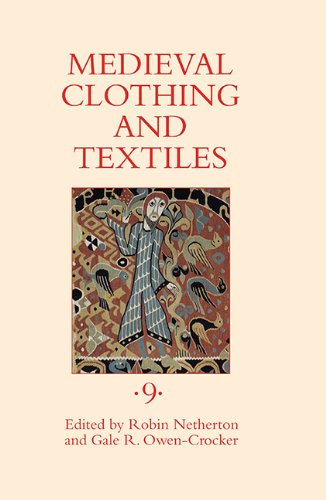
Medieval Clothing and Textiles 9
Robin Netherton (Editor), Gale R. Owen-Crocker (Editor)
Hardcover: 182 pages
Publisher: Boydell Press (18 July 2013)
ISBN-13: 978-1843838562
BOOK DESCRIPTION:
Topics in this volume range widely throughout the European middle ages. Three contributions concern terminology for dress. Two deal with multicultural medieval Apulia: an examination of clothing terms in surviving marriage contracts from the tenth to the fourteenth century, and a close focus on an illuminated document made for a prestigious wedding. Turning to Scandinavia, there is an analysis of clothing materials from Norway and Sweden according to gender and social distribution. Further papers consider the economic uses of cloth and clothing: wool production and the dress of the Cistercian community at Beaulieu Abbey based on its 1269-1270 account book, and the use of clothing as pledge or payment in medieval Ireland. In addition, there is a consideration of the history of dagged clothing and its negative significance to moralists, and of the painted hangings that were common in homes of all classes in the sixteenth century. Robin Netherton is a professional editor and a researcher/lecturer on the interpretation of medieval European dress; Gale R. Owen-Crocker is Professor of Anglo-Saxon Culture at the University of Manchester. Contributors: Antonietta Amati, Eva I. Andersson, John Block Friedman, Susan James, John Oldland, Lucia Sinisi, Mark Zumbuhl
CONTENTS:
Preface
Bridal Gifts in Medieval Bari
The Marriage of the Year [1028]
Clothing as Currency in Pre-Norman Ireland?
Cistercian Clothing and Its Production at Beaulieu Abbey, 1269-70
Clothing and Textile Materials in Medieval Sweden and Norway
The Iconography of Dagged Clothing and Its Reception by Moralist Writers
Domestic Painted Cloths in Sixteenth-Century England: Imagery, Placement, and Ownership
Medieval Life Cycles: Continuity and Change (International Medieval Research 18) Isabelle Cochelin (Editor), Karen Smyth (Editor)
Hardcover: 357 pages
Publisher: Brepols Pub (30 July 2013)
ISBN-13: 978-2503540696
BOOK DESCRIPTION:
The essays in this collection present new research into a variety of questions on birth, childhood, adolescence, adulthood, middle age, and old age, ordered in a more or less chronological manner according to the lifecycle. The volume exposes attitudes and representations of the lifecycle from the Anglo-Saxon period to the end of the Middle Ages as being full of inconsistencies as well as definitive categories, and of variation and stasis. This attests to the fact that medieval conceptions and representations of the stages of life and their interrelationships are much more nuanced and less idealized than is usually credited. Medieval conceptual, mental, artistic, cultural, and sociological processes are scrutinized using various approaches and methods that cross disciplinary boundaries. What is emphasized across the volume is that there were varying, context-dependent rhythms of continuity and change in every stage of life in the medieval period. The volume’s selection of authors is international in scope and represents some of the leading current scholarship in the field.
LIST OF CONTENT:
Introduction: Pre-Thirteenth-Century Definitions of the Life Cycle by Isabelle Cochelin
Baptism and Infant Burial in Anglo‑Saxon England by Sally Crawford
Wanton Boys in Middle English Texts and the Christ Child in Minneapolis, University of Minnesota, MS Z822 N81 by Mary Dzon
Adolescence Uncloistered (Cluny, Early Twelfth Century) by Isabelle Cochelin
Rebellious Youth and Pliant Children: Jewish Converts in Adolescentia by Jessie Sherwood
Generational Discourse and Images of Urban Youth in Private Letters: The Nuremberg Tucher Family around 1550 by Christian Kuhn
Adulthood in Medieval Europe: The Prime of Life or Midlife Crisis? by Deborah Youngs
The Middle-Aged Meanderings of Margery Kempe: Medieval Women and Pilgrimage by Sue Niebrzydowski
‘Byð se ealda man ceald and snoflig’: Stereotypes and Subversions of the Last Stages of the Life Cycle in Old English Texts and Anglo‑Saxon Contexts by Philippa Semper
Imagining Age in the Fifteenth Century: Nation, Everyman, and the Self by Karen Smyth
Publisher: Macmillan; 1 edition (4 July 2013)
Language: English
ISBN-10: 0230700152
ISBN-13: 978-0230700154
BOOK DESCRIPTION:
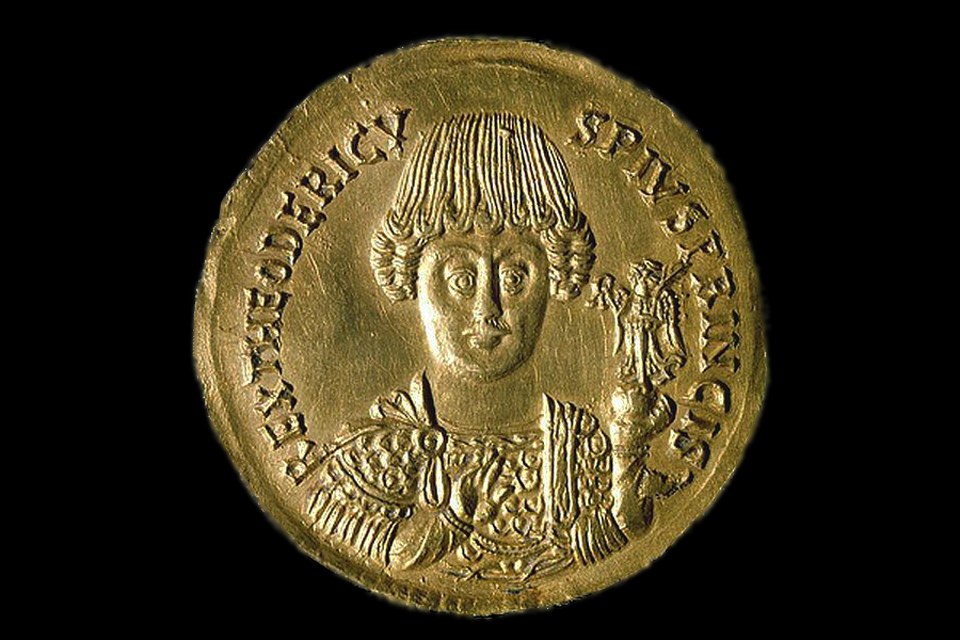
In 476 AD the last of Rome’s emperors was deposed by a barbarian general, the son of one of Attila the Hun’s henchmen, and the imperial vestments were despatched to Constantinople. The curtain fell on the Roman Empire in Western Europe, its territories divided between successor kingdoms constructed around barbarian military manpower. But if the Roman Empire was dead, the dream of restoring it refused to die. In many parts of the old Empire, real Romans still lived, holding on to their lands, the values of their civilisation, their institutions; the barbarians were ready to reignite the imperial flame and to enjoy the benefits of Roman civilization, the three greatest contenders being Theoderic, Justinian and Charlemagne.U
Ultimately, they would fail nevertheless fail. It was not until the reinvention of the papacy in the eleventh century that Europe’s barbarians found the means to generate a new Roman Empire, an empire, which has lasted a thousand years.
ABOUT THE AUTHOR:
Peter Heather is currently Professor of Medieval History at King’s College London. He is the author of the acclaimed and bestselling Fall of the Roman Empire also published by Pan Macmillan.
In early fourteenth-century Lucca, one government organ began expanding its activities beyond the maintenance of public works to promote public hygiene and safety, and in ways that suggest both a concern for and an appreciation of population-level preventative healthcare. Evidence for this shift (which is traceable in and beyond the Italian peninsula) is mostly found in documents of practice such as court and financial records. These augment and complicate the traditional view afforded by urban statutes and medical treatises. The revised if still nebulous picture emerging from this preliminary study challenges a lingering tendency among urban and public health historians to see pre-modern European cities as ignorant and apathetic demographic black holes.
Basis for this conclusion is a careful analysis of the records of the “Curia Viarum”, – the Court of Roads. This body was mainly concerned with “maintaing urban, suburban and regional infrastructure” but it was also held responsible for “enforcing sanitary , labour and building regulations” (p. 398). 13 volumes of early court-proceedings have been preserved from the period 1336 -1377 and presents a series of diverse complaints and rulings pertaining to environmental violations and concerns, like the neglect of maintenance of ovens, contaminations of drinking water supplies, waste thrown into streets, blockage of sewers and drains, keeping animals inside the walls of the city, washing cloth in the fountains etc. The article is according to Guy Geltner a first presentation of the material, which is currently undergoing a more detailed study.
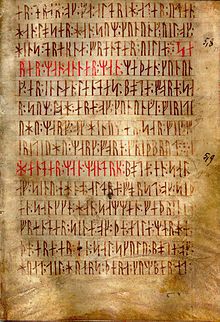
The earlier Anglo-Saxon laws offer the rare opportunity for semantic insight into the word riht, which was common to most Germanic languages and is still in use today in all of them. However, German Recht and English ‘right’ had a different semantic history. While the German word still has both an objective and a subjective meaning, ‘right’ kept only the subjective meaning of ‘personal right to something’. The semasiological study of seventh century legislation shows that the Old English word riht did originally have a wider meaning than ‘right’. It meant also customary norm, judgment, claim, fulfilment of the legal claim, legal duty, right to, privilege, sentence, process.
These findings have allowed the author to question both the assumption of German research about the mere subjective meaning of this word in the early middle ages and the interpretation of its semantic development according to a Latin model.
Cambridge, Corpus Christi College, MS. 383 is an English collection of Anglo-Saxon legal texts produced in the late eleventh century or early years of the twelfth century, possibly at or for St. Paul’s cathedral, London. This article focuses in particular on the scribal strategies and mise-en-page of the rubrics and emendations made to the manuscript by a scribal hand of the first half of the twelfth century. Developments in the concept and technology of the book were used by the scribes, who emended and updated the manuscript to facilitate and direct (potential and actual) readers’ interactions with the legal texts and allow intellectual interests in the continued role of Anglo-Saxon law into the twelfth century to be discerned. “Updating, adaption, appropriation and re-contextualizing of Anglo-saxon Law” continued throughout the 12th century, witnessing to a continued intellectual interest, Thomas Gobbitt argues.
The article is an attempt to define medieval treaties in their legal context, thereby re-aligning the medieval historiography with its modern counterpart, and to explore some of the textual and practical possibilities and problems of this context. It considers why some treaties in the early and high middle ages have been regarded as laws while others have not and argues that while the modern concept of international law is based on the three principles of treaties, practice and custom, and general principles of law (including canon or Roman law), medieval scholars have only looked to the latter principle, thereby disregarding the treaties themselves and the corresponding legal practice. Jenny Benham argues that medieval treaties belonged to the category laws.
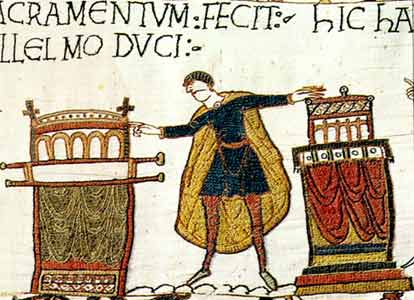
The article analyses the Old English terms for ‘pledge-giving’ within the context of Anglo-Saxon law codes and related material such as charters and wills by means of a contextual analysis of the occurrences of such terms. It argues for the centrality of the concept to Anglo-Saxon legal interaction as the means by which agreements, in particular between individuals, were made binding and shows that this had linguistic consequences by tracing the development of the collocation að and wedd (‘oath and pledge’) into a formulaic word pair. Thus the article sheds light on the way in which Oaths and Pledges in Anglo-Saxon Laws were important aspects on the way in which “the prescriptive decrees of the law codes would have functioned in reality” ( and how this changed over time (p. 515).
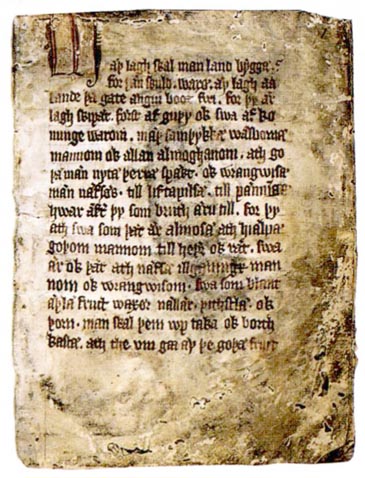
In the decades after 1200 the kingdom of Denmark developed a corpus of provincial laws written in Danish for the three major legal provinces. With the legislation for the eastern province of Scania as a starting point, this article shows how the writing down of the law led not only to the creation of a legal language but to a written vernacular language in general. Nonetheless, it was generally not until the fifteenth century that written Danish was found outside of these texts; charters and narrative until that point were written in Latin. The article tells the story of how the Law of Scania came about. According to the authors “it was probably written by a collective of secular magnates, who had the provincial assembly in Lund as a legal arena, and clerics from the cathedral chapter with training in canon and Roman Law and Latin – all under the benign supervision of the archbishop.” (p. 509). The law was written in the vernacular and with an indigenous vocabulary (only 3% of the words can be described as foreign). Many of these words came to designate specific legal concepts, which a little later gave the Archbishop, Anders Sunesen, a challenge when had a Latin translation or rather paraphrase done. He simply had to keep a significant part of the vernacular terms.
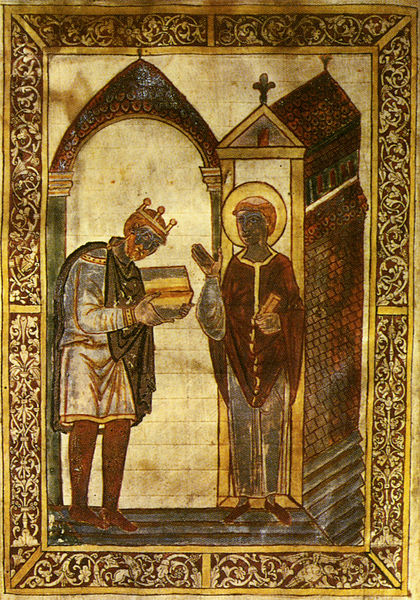
The article seeks to provide a fresh perspective on long-standing debates about the role of the written word in later Anglo-Saxon legal culture. Using the Anglo-Saxon law codes of King Æthelstan’s reign as a ‘case study’, it argues that many of the unusual features of early English law are not so much products of orality, as of a fundamentally different approach to legal norms than is prevalent in the modern Western world. It thus seeks to move beyond recent literacy-orality debates, suggesting that it is more profitable to investigate the attitudes shown towards legal norms (both written and oral) within Anglo-Saxon society. “The crucial distinction, writes Levi Roach, lies less between “oral” and “literate” legal cultures, than between two fundamentally different approaches to legal norms: one according to which these are treated as flexibly, more like guidelines and rules; and another according to which they are regarded as prescriptive regulations” (p. 468) This is demonstrated through a careful reading of Æthelstan’s laws which is finally compared to recent research into the comparable Frankish laws as well as some ethnographic case studies. The article represents a good introduction to the scholarly debate concerning how to understand the context of Anglo-Saxon law codes and legal norms
Carolingian kings and the leges barbarorum
Thomas Faulkner, Cambridge University
In: Historical Research, Volume 86, Issue 233, pages 394–407, August 2013
DOI: 10.1111/1468-2281.12027
ABSTRACT:
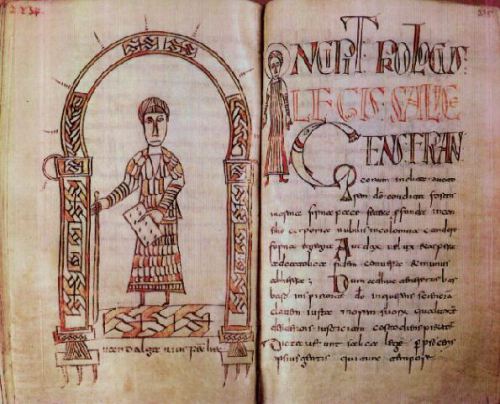
This article examines various texts attributed to Charlemagne and Louis the Pious, associated with a reform of the Merovingian-era leges barbarorum. It argues that in some cases their attribution to a king is not secure, and proposes they be seen instead as derived from local meetings, independent of direct royal influence. If approached in this way, the contents allow some insight into how the leges were read in the Carolingian period, which is otherwise difficult to derive from surviving sources. They suggest that the leges were used broadly, practically and flexibly in disputes, and were not seen as official, royally endorsed law. This conclusion is reached through a careful analysis of texts like e.g. the so-called Lex Francorum Chamavorum. But also a series of other texts are being reconsidered by Thomas Faulkner. The article presents us with a fresh introduction to some of the major debates in the scholarly circles treating these diverse and to some extent enigmatic texts.
It is well known that lawmaking was inseparable from kingship in England and on the continent. Therefore, there has also been a predominant tendency to see the Medieval Scandinavian provincial laws in a regal context. In this light, the initiators of laws were kings and men belonging to the upper stratum of society, and the laws themselves are seen as reflecting the societal situation, in which they were written down. This article focuses on ‘peripheral’ or ‘provincial’ laws, such as the Icelandic Grágás, the main Svea Law, the Uppland Law and not least the Hälsinge Law. It attempts to show that such laws were not inventions of any one person or group in the thirteenth or fourteenth century, and that they cannot only be mirroring the time, in which they were written down. Rather there are complex layers in the versions of these laws which survive: some old customary law, some probably newly composed law, some having their roots in Roman legal tradition and some in canon law. The picture which emerges is much less clear-cut than has been supposed, showing many regional differences and peculiarities. A key witness to this is the Law of the Hälsinger. In medieval Hälsingland a king or king-like person was very seldom present and no archaeological or historical sources witness to the presence of an aristocracy. The Land-owning class consisted of free farmers, says Stefan Brink, and goes on to argue how the law was the result of a rewriting of another provincial law, the Uppland Law, but with significant adjustments derived from local customs and inspired by Norwegian legal tradition. The conclusion is that careful shifting may uncover such complex layers in the wider spectrum of Medieval Scandinavian Laws.
ABSTRACT:
One of the oldest ideas about the Norman conquest is that William the Conqueror introduced into England from Normandy the legal concept of ‘foresta’, land where hunting and the environment in which it took place were protected by draconian laws. However, the medieval forest laws were not imposed on a blank canvas, and a combination of different factors, such as earlier extensive royal hunting rights, the king’s will, the application of forest law to land ‘outside’, which was organized in manors and assessed for geld, and the status of escheated land as temporary royal demesne; all worked towards a great expansion of the afforested area. In England a great deal of non-royal demesne was under forest law, whereas in Normandy ducal forests were broadly speaking ducal demesne. In England the competing interests of royal sport and revenue and those of the political elite combined with population growth pressured to make the forests a toxic political issue in a way not paralleled in Normandy.
ABSTRACT:
To understand the authors of the Breviarium Alaricanum and their purpose, logic and their methods it is necessary to undertake an internal study of the work – a law code collected in sixth-century Aquitaine. This article analyses Alaric’s Breviary, focusing specifically on those laws that concern the Jews. In the authors’ selection of the sources of Roman law, and the organization of those laws in the Breviary, the ‘prudentes’ who produced it made significant choices. This is even more apparent in the rewriting and commentaries. These laws reflect the issues which existed in Western Jewish communities at that time – issues which, as the compilers knew, were still dealt with in tribunals. In their selection and rewriting the prudentes took rather radical steps of removing passages which were not strictly legislative, deleted the majority of contradictory measures and clarified the style”. According to Nemo-Pekelman this was in contradiction to the codifiers of the Theodosian Code, who “had created a consistent work of propaganda on the model of apologetic and heresiological literature to create new legal categories of citizens defined by their religious adherence. They had produced a legal category for heretics, one for pagans and one for the Jews” … “this accumulation of laws and their classification was meant to underline that these citizens ere a marginal group within the civic body” (p.300) According to Capucine Nemo-Pekelman, the authors of the breviary of Alaric did not extend this work of propaganda.
The article is part of a collection of papers presented at a conference in Copenhagen in 2011 organised in a collaboration between three digitisation projects: “Early English Law“, “Nordic Medieval Laws” and “Relmin”. The work on the Breviary of Alaric was carried through in the framework of Relmin.
Even though the very early English laws are preserved only in the Textus Roffensisand Ine’s Law code only as an appendage to Alfred’s later laws it is generally believed that they represent a genuine textual tradition. However, the extent to which they should be understood as symbolic assertions of royal power or practical collections of laws which were used to guide the owners in concrete clashes has traditionally been heavily disputed. A carefully contextualized reading by John Hines of the four surviving Anglo-Saxon law codes issued in the seventh century, three from Kent and one from Wessex, shows the body of legislation they contain to be coherent and practical, and to support subtle insights into social relationships, processes of social change, and areas of social stress in that period. The importance of especially archaeological evidence, in particular that concerning the use and significance of materials and artefacts, and developments in settlement structures and the overall settlement pattern, is particularly emphasized. For instance the attention is drawn to the fact that the gold-buckle in the grave-assemblage from Sutton Hoo was made from a quantity of gold, representing 300 Kentish gold shillings corresponding to the exact “wergeld” of a nobleman.
Scholars mark 700th birthday of medieval genius and erotic storyteller
Academics at The University of Manchester and Bristol are marking the 700th birthday of one of the medieval world’s greatest writers, credited with establishing the European storytelling traditions we know today
Locating Boccaccio in 2013
Italian Giovanni Boccaccio, author of the 1351 Decameron, a collection of 100 tales ranging from the erotic to the tragic, will be honoured through a five-month exhibition at the University’s John Rylands Library.
The exhibition is curated by Dr Guyda Armstrong and Professor Stephen Milner from The University of Manchester and Dr Rhiannon Daniels from the University of Bristol.
Called ‘Locating Boccaccio in 2013’, the exhibition will showcase some of the world-renowned Boccaccio exhibits held by The John Rylands Library, alongside loans from other libraries and private collections. Exhibits span the period from the fifteenth century to the digital age, from medieval manuscripts and early printed books, through private press editions and popular classics right up to the internet resource, the Decameron Web. As well as the historic books, it contains a collection of new artists’ books, specially commissioned for the anniversary to offer new responses to Boccaccio and his works.
The Roxburghe Boccaccio
Professor Milner says: “We are delighted to be hosting the world’s leading scholars in Boccaccio studies and showcase Manchester’s outstanding collection of Boccaccio’s works. His impact as a writer is vast, both as a founding father of the Renaissance and the revival of interest in the classical world and as an innovator in writing prose stories. His influence on figures as diverse as Chaucer and Salvador Dali reflect the scale of his literary heritage”. Dr Armstrongadds: “Boccaccio was a great humanist, and unlike Dante and other writers of the time, one of the first people to give women a voice. He’s often described as the writer of “dirty stories”, but he’s so much more than that because we can credit him with establishing the great European traditions of storytelling.”
The star of the show is the “Roxburghe Decameron”, purchased by Mrs Rylands in 1892 from the Earl Spencer, and is the founding volume of the world’s most exclusive book club – The Roxburghe Club. The Roxburghe Club, which boasts just forty members at any one time, was founded in 1812 after the auction of the 1471 printed edition of Boccaccio’s Decameron for a then world record price of £2,260 after a dramatic bidding war.
The same team are also hosting 60 Boccaccio scholars from around the world at a conference at Manchester Town Hall on 10-12 July. The programme can be accessed here
Boccaccio and Artists’ Books
Boccaccio continues to be read across the world and to evoke responses seven hundred years after his birth. In order to commemorate Boccaccio’s anniversary year in 2013 and explore the ways in which his works speak to new audiences, the curator and organisers also invited an international group of artists to create new books about Boccaccio. The parameters of the project were left deliberately open and artists were invited to make a book in response to Boccaccio himself or to any of his texts.
Thirteen artists’ books were created and are on display in the exhibition. The artists’ books will move on 26 November to the Special Collections Library, Ashton Bower at the University of the West of England, where they will be displayed from 2 December 2013 to the end of January 2014.
This part of the exhibition is designed to reflect the – still popular – reception of Boccaccio as an author of erotic and light-hearted stories, but also aims to inform new audiences about the breadth and depth of his achievements as a literary innovator, humanist, and linguistic model. Boccaccio wrote a wide range of texts in both Italian and Latin, prose and poetry, and was responsible for many literary ‘firsts’, such as the development of ‘octave rhyme’ (ottava rima), the first epic poem in Italian, and the first psychological novel. His prose writing in the Decameron became the basis for the standard Italian language used today.
The following virtual exhibition presents a series of images from each of the thirteen artists’ books. Click on the artists’ names below in order to see pages not on display within the Rylands Library:
 Medieval Clothing and Textiles 9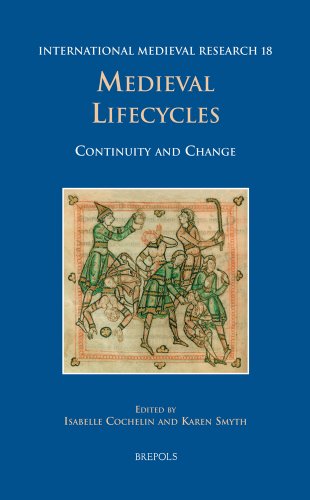
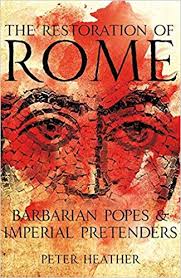 In 476 AD the last of Rome’s emperors was deposed by a barbarian general, the son of one of Attila the Hun’s henchmen, and the imperial vestments were despatched to Constantinople. The curtain fell on the Roman Empire in Western Europe, its territories divided between successor kingdoms constructed around barbarian military manpower. But if the Roman Empire was dead, the dream of restoring it refused to die. In many parts of the old Empire, real Romans still lived, holding on to their lands, the values of their civilisation, their institutions; the barbarians were ready to reignite the imperial flame and to enjoy the benefits of Roman civilization, the three greatest contenders being Theoderic, Justinian and Charlemagne.U