
Jonathan Riley-Smith is one of the most prominent crusade-scholars in present-day academia. In 2008 he wrote a very significant book on the uses and abuses of the history of crusading since 1096, when Western Europeans embarked on the first crusade. This slight book should be obligatory reading for anyone trying to grasp the ongoing war in the Middle East and the Islamist terrorism currently waged globally
Today we are trying desperately to cope with the fact that a growing series of very violent terrorist attacks are being mounted against a very wide variety of targets. To get a sense of what we are talking about, a Wikipedia-page counts 108 successful attacks, which have taken place since 1980 and all over the world. Beneath this flows an undercurrent of very many more attacks, which have been a prevented.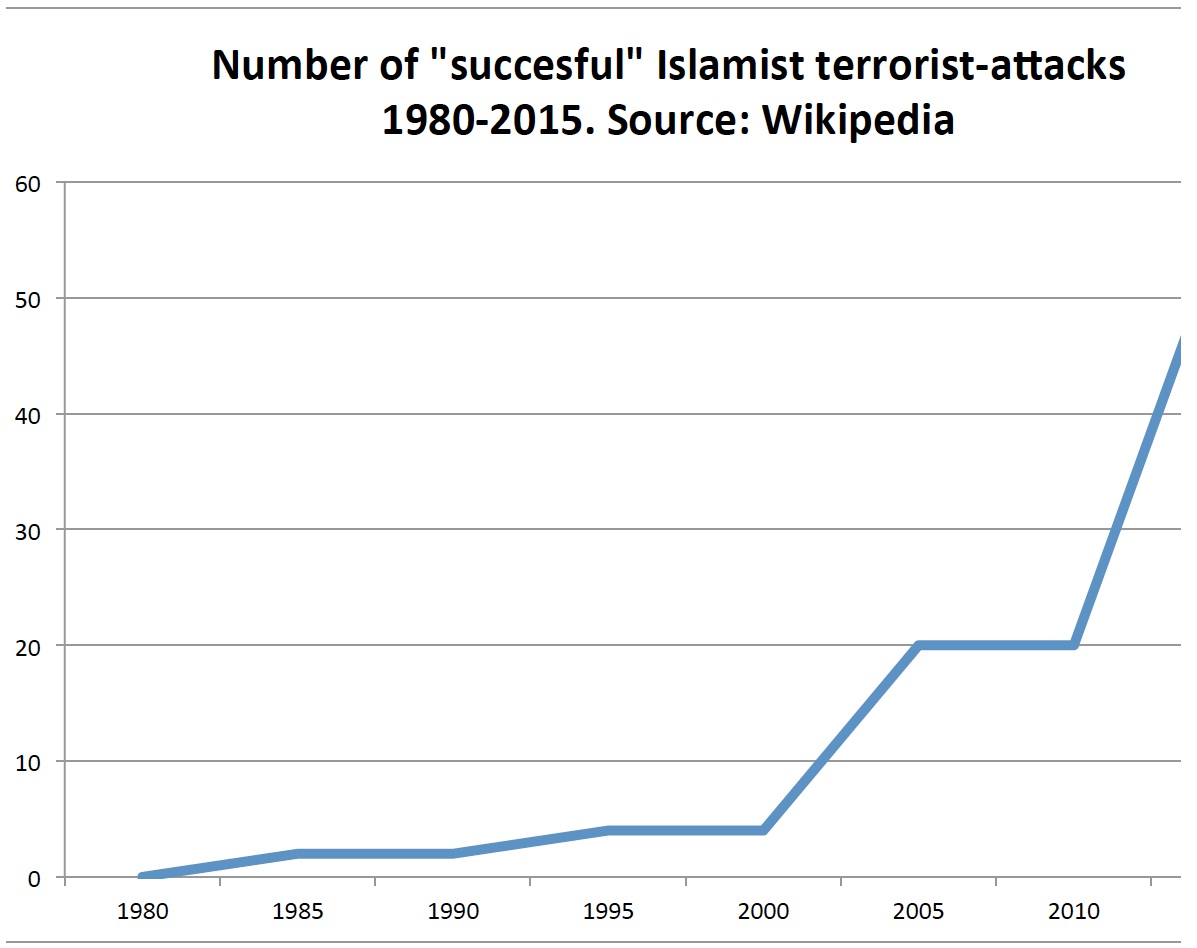
One of the common denominators of these Jihadist attacks is the fact that they are accompanied with a war of words in which the concept of the Crusades figure prominently. On a very general level this is of course no different from the ideologies of imperialism, nationalism, Marxism, Nazism, fascism, humanitarianism and liberal democracy, which have all from time to time been used to justify wars. It seems wars – as so many other human acts whether ultimately gracious or horrifying – simply need justification.
However, any specific kind of justification does matter, in so far as it is always used to appoint enemies and meter out the exact treatment, which is deemed appropriate regarding civilians or prisoners of war.
Since the current Islamist wars and terrorist acts are to some extent justified with reference to the Crusades, we need to know what this phenomena was and not least how it is understood today.
This is the history, which we are treated to in a slight but extremely important book, which Jonathan Riley- Schmit wrote in 2008. In it he tells the story of what in his opinion characterised the historical phenomena, crusading, which began in 1096 and petered out in the 17th century (The last crusade league was the Holy league, which began the recovery of the Balkans from the Turks between 1684 -1699, he informs us.) As such it was part of what might in general be termed the idea of “Holy War”, shared not only by Catholics but also – after 1517 – protestants. Crusading was simply far more embedded in our Christian history, than we now wants to believe, and one purpose of his book is to “draw attention to the gulf that has opened up between the historical actuality perceived by specialists in the subject and modern convictions”. His stated object is to “try to explain how the crusades were viewed in religious terms by the Christian faithful, how the language associated with them was appropriated by Europeans in the age of imperialism and how the nineteenth-century rhetoric, itself a distortion of reality, was in the twentieth century distorted again both in the West and in Islam” (p. 6)
Jonathan Riley-Smith believes – in his own words – that “we cannot hope to comprehend – and thereby confront – those who hate us so much unless we understand, how they are thinking; and this involves opening our eyes to the actuality – not the imagined reality – of our own past.
Does he succeed? The answer is a resounding yes.
Although fast-paced, it sketches a number of conclusions, reached by the author through his life-long immersion into the history of the crusades. First of all he tells the story of how authentic crusades were fought in many different theatres and against many different opponents. It was never just warfare against the Muslims. Further he explains that there was no reason to consider the crusaders morally or intellectually inferior to their opponents. The best explanation of why people took the cross was that they were inspired by a set of intellectual and theological ideas, carefully worked out through centuries. Crusades were foremost Christian holy and penitentially inspired wars. Later, the idea of crusading was romanticized not least by Walter Scott and whole generations of Europeans, who grew up on his novels and used them as inspiration in their construction of imperialist thinking and rhetoric.
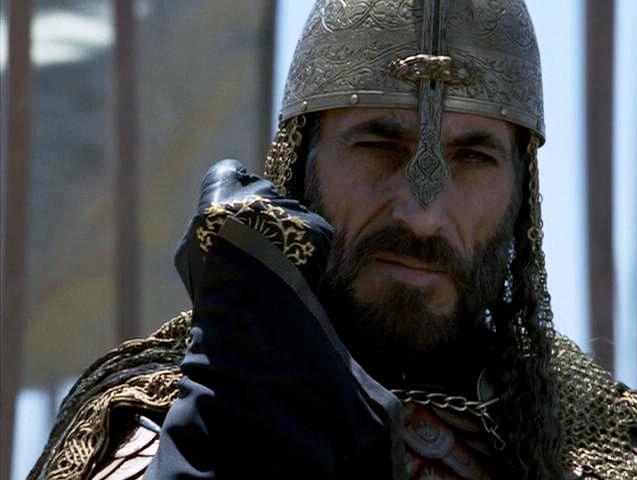
Finally Riley-Smith tells the story of how Islamist thinkers came to redefine the Crusades in the 20th century when developing their corresponding set of ideas about how to establish Pan-Islamism “an ideology enshrining the Unity of all Muslims under one world authority”. Until then the Muslims had thought of the Crusades as a war, they won. Now they began to consider the crusades as acts perpetrated by a destructive and vicious West bent on obliterating Islam. Today – inspired by the ideologue Sayyid Qutb (1906 – 66) – Islamists (and very many Moslems) believe that when push comes to show, crusaderism is simply in the “Western Blood”, as he wrote. It is this vision of the West bent on waging a religious war, which inflames Islam in its widest sense. However false this potent vision is when critically considered through the magnifying lens of an accomplished historian, we in the West have to deal with it on different levels. It is not enough simply to defend ourselves – our lives and livelihood, or families and children. We also need to deal with the fact that this modern Islamist understanding of the crusading phenomena, represents a distorted phantasy steeped in our own continuous peddling of the old Romantic myths of the 19th century – the noble savage (Saladin) on one hand and the decadent, cruel, stupid and culturally inferior crusaders on the other hand, bent un plundering and sacking a holy and superior culture.
This myth is not at all helpful…
The book is with some slight alterations and reorganization the outcome of the Bampton Lectures, which were given at Columbia University in 2007.
Karen Scousboe
The Crusades, Christianity, and Islam
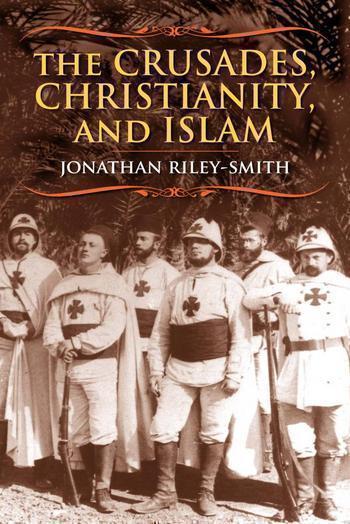 By Jonathan Riley-Smith
Columbia University Press 2011 (2008)
ISBN: 9780231146258 (Paperback)
ISBN: 9780231146241 (Hardcover)
ISBN: 9780231517942 (E-Book)
ABOUT THE AUTHOR
Jonathan Riley-Smith, Dixie Professor Emeritus of Ecclesiastical History at the University of Cambridge, is the author of nine books, including The Knights of St. John in Jerusalem and Cyprus, c. 1050-1310; The Feudal Nobility and the Kingdom of Jerusalem, 1174-1277; What Were the Crusades? fourth edition; The First Crusade and the Idea of Crusading; The Crusades: A History, second edition; The First Crusaders, 1095-1131; and Templars and Hospitallers as Professed Religious in the Holy Land.
FEATURED PHOTO:
From: Guillaume de Tyr, Histoire d’Outremer, XIVe siècle, France (Paris), Paris, BnF, département des Manuscrits, FranÇais 22495 fol. 90