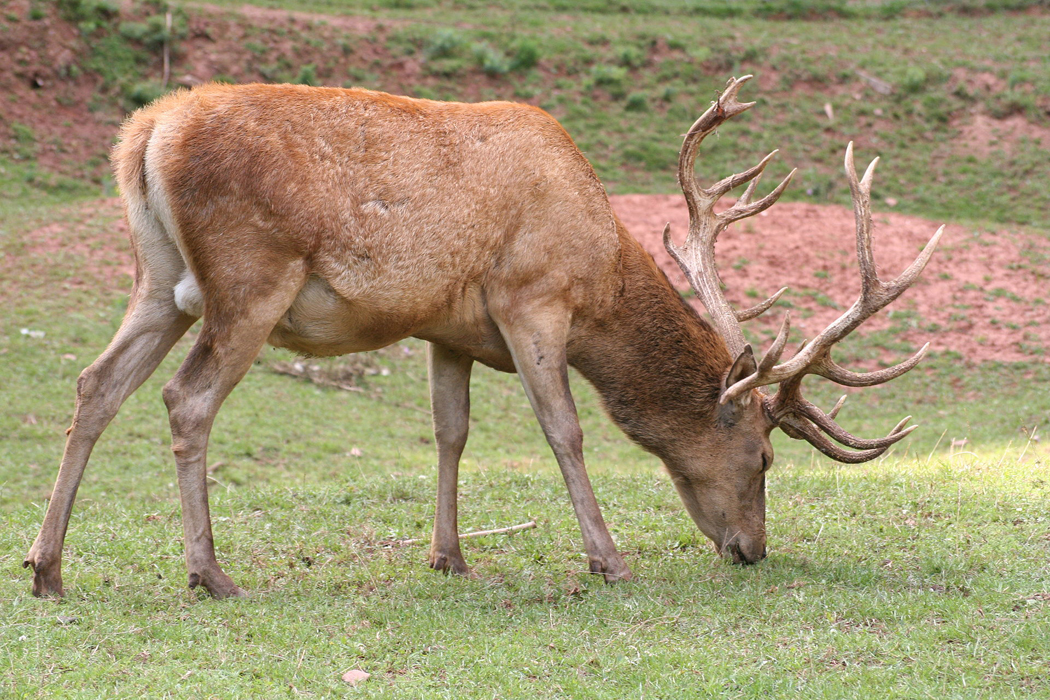
The Gaelic lords in Ireland hunted Red deer, while the Anglo-Norman invaders built deer parks. Fiona Beglane tells us about the relation between deer and identity
Deer and Identity in Medieval Ireland
By Fiona Beglane
in Kucera, M. and G-K. Kunst (eds.): Bestial Mirrors: Animals as material culture in the Middle Ages 2010. Vienna Institute for Archaeological Science, Vienna pp. 77-84.
ABSTRACT:
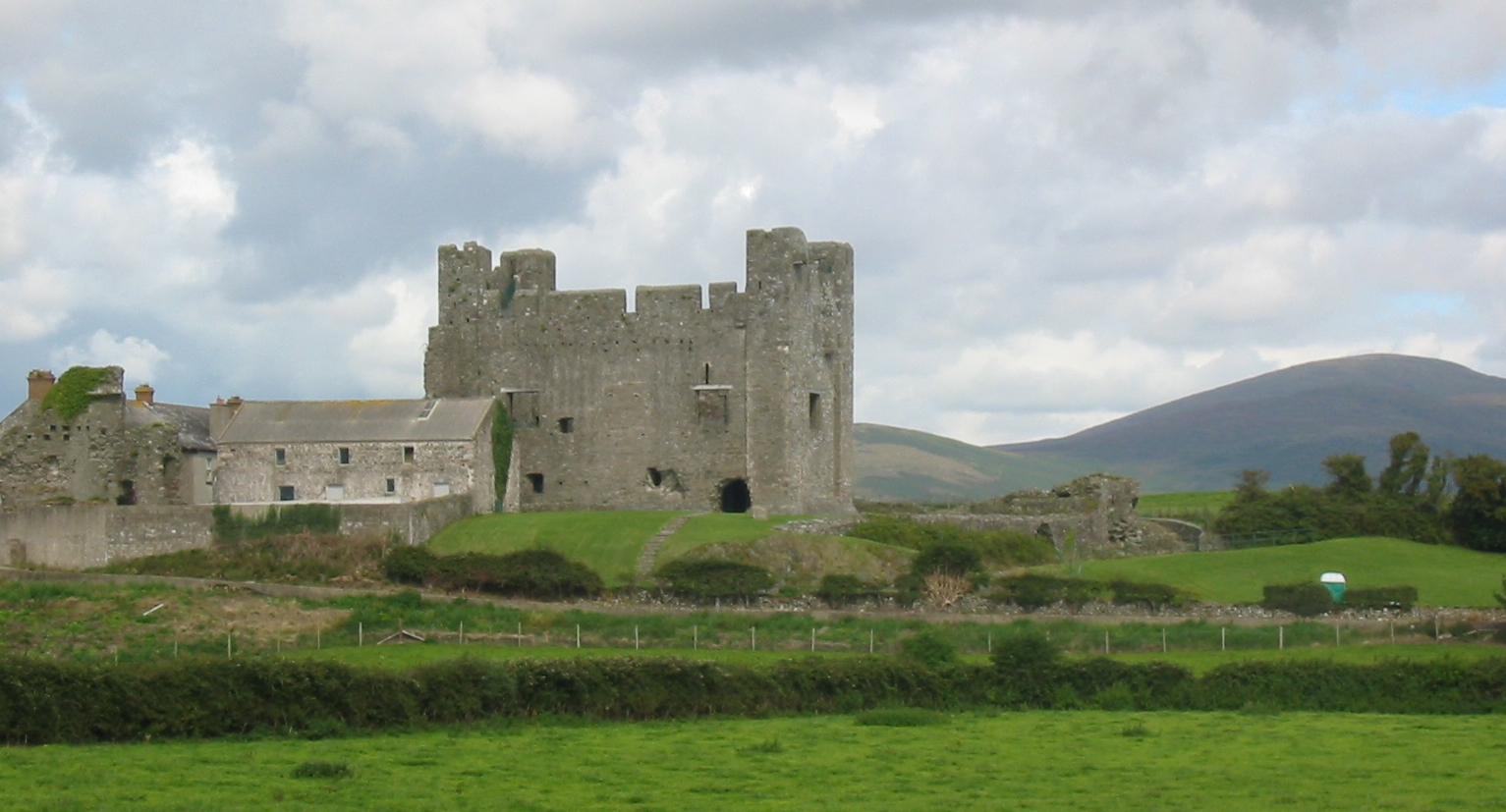
Identity is inextricably linked with places, landscapes and objects. It is only recently however that this idea has been extended to animals and their interaction with human society. The paper discuss the different arenas in which hunting took place in Gaelic and Anglo-Norman society before providing an overview of what is known about fallow deer and deer parks in Ireland. To illustrate the differences in approach between the cultures two case studies based on the author’s analysis of the faunal assemblages are presented, with Kilteasheen being a Gaelic site and Greencastle being Anglo- Norman
Until the twelfth century Ireland was predominantly Gaelic with the coastal cities such as Dublin and Limerick having been founded by the Vikings. This changed with the coming of the Anglo-Normans in the late twelfth century, when they settled in Ireland and introduced their own culture.
To the Gaelic lords with a tradition of cattle-raiding and successional disputes, the mountains, woodlands and bogs were an integral part of the landscape and the ability to range over these was vital in the petty warfare that was endemic in the medieval period. In these struggles it was primarily the taking and holding of livestock, not land or buildings, that conferred honour and nobility upon the participants and it has been noted in this context that few masonry castles were built by the Irish prior to 1400 and that the Anglo-Norman concept of the castle with its associated military and domestic features would have been alien.
Thus the Gaelic Irish took no interest in deer parks, but continued to concentrate on hunting the wild red deer. For the Gaelic aristocracy hunting the wild red deer was associated with nobility and honour.
By contrast, for an Anglo-Norman such as the clergyman and chronicler Gerald of Wales these open landscapes needed to be tamed and civilised by being brought into the agricultural arena. It has been argued that the introduction of deer parks to England resulted in the landscape becoming physically divided, reducing access for the lower orders and providing a visible sign of the status of the landowner. This would also have been the case in Ireland. The enclosure of parks tamed the landscape, both by directly enclosing wilderness and common land and by pushing agricultural activity further out into previously unused land. The importance of taming the landscape in gaining control of the country was recognised in 1619 by Sir John Davies, the attorney-general in Ireland for James I, who wrote that if the original conquest of Ireland had been followed up with more development of ‘Forrests, Chases, and Parkes’ then Ireland would have been long since subdued (Leerssen 1995).
It appears the development of parks would have had negative connotations and the hunting of fallow deer would have been of little symbolic importance. Fallow deer being kept in parks were neither wild nor domesticated, having attributes of both. It can be suggested that for the Anglo-Normans, hunting red deer across the unenclosed countryside was both part of the taming of the wild and a noble pursuit whilst hunting fallow deer within parks provided exercise in a civilised environment. The Anglo-Normans thus thrived in both settings.
The zooarchaeological results from Greencastle and Kilteasheen are typical of high-status medieval Anglo-Norman and Gaelic sites respectively. They demonstrate that despite a shared love of deer hunting and venison the differing approaches to how and where this was carried out are indicative of differences in the self-perceptions of the two cultures and in the maintenance of their separate identities.
Read the full article: Dear and Identity in medieval ireland
ABOUT THE AUTHOR:
Fiona Beglane is a lecturer in archaeology at the Institute of Technology, Sligo, and a consultant zooarchaeologist.
READ MORE:
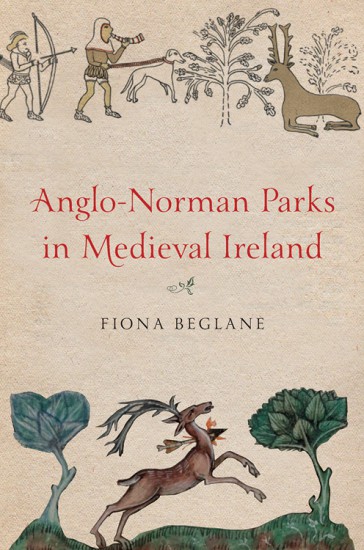 Anglo-Norman parks in Medieval Ireland
By Fiona Beglane
Four Courts Press 2015
ISBN: 978-1-84682-569-9
This illustrated volume examines the evidence for medieval parks in Anglo-Norman Ireland. It is the first book on the subject and concentrates on the parks documented in the period 1169 to c.1350. Drawing on archaeological fieldwork, historical and place-name evidence, it generates a broad understanding of the role of parks in medieval society. It stresses the importance of the landscape and of the deer, cattle and timber within it as integral aspects of the material culture of high-medieval Ireland. The research is underpinned by extensive fieldwork, which has identified surviving park features in the landscape. Key topics explored include the form and function of medieval parks, their occurrence and location in the landscape, the status and identity of their owners and a comparison with parks elsewhere. Notably, the evidence suggests that both parks and fallow deer were relatively uncommon in Ireland compared to England. The reasons for this lie in chronology, landscape and politics, and these form a major theme within the book.
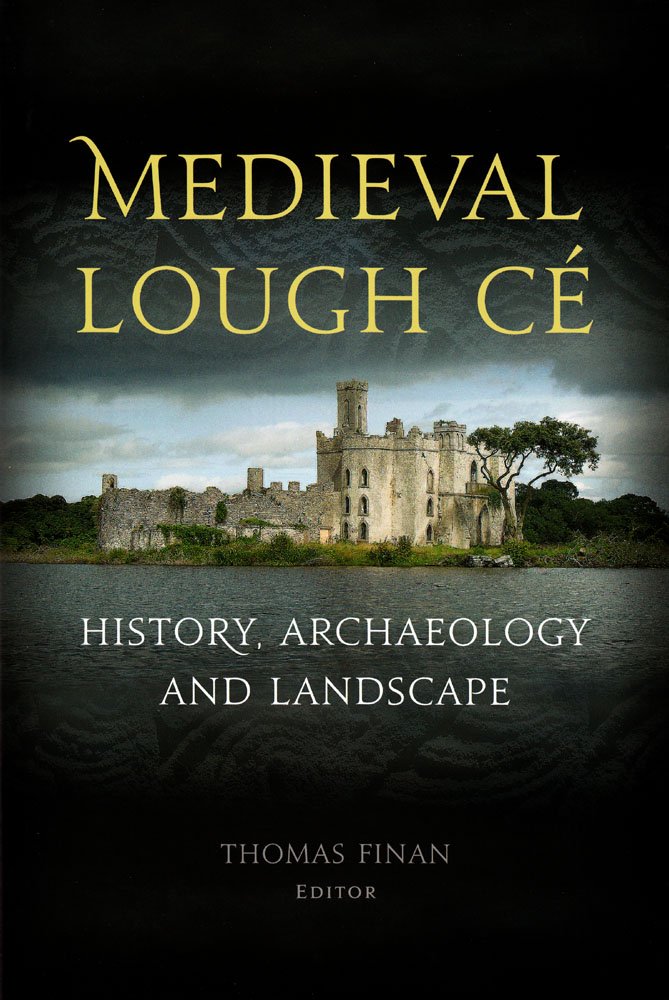 Medieval Lough Cé. History, archaeology and landscape
Thomas Finan, editor
Four Courts press 2010
ISBN: 978-1-84682-104-2
The role of Lough Ce and its relationship to the various lordships of north Roscommon in the later Middle Ages is examined in this collection of essays. Lough Ce was a vital geographic feature in relation to the MacDermot and O’Conor dynasties of the 13th and 14th century, and was the scene of a number of military incursions on the part of English lordships in the mid-13th century. Yet, this lake, and the history and archaeology of the region surrounding the lake, has rarely been examined as a landscape feature in, and of, itself.
Table of Contents:
- Introduction: Moylurg and Lough Cé in the later Middle Ages by Thomas Finan
- The Rock of Lough Cé, Co. Roscommon by Kieran O’Conor, Niall Brady, Anne Connon & Carlos Fidalgo
- Remembering where the bishop sat: exploring perceptions of the past at the Bishop’s Seat, Kilteasheen, Co. Roscommon by Christopher Read
- The rental of Holy Trinity abbey, Lough Cé by Miriam Clyne
- Animal contact: livestock approaches to understanding social boundaries in later medieval Roscommon by John Soderberg & Jennifer L. Immich
- Romanesque sculpture in north Roscommon by Rachel Moss
- Deer in medieval Ireland: preliminary evidence from Kilteasheen, Co. Roscommon by Fiona Beglane
- O’Conor ‘Grand Strategy’ and the Connacht Chronicle in the thirteenth century by Thomas Finan