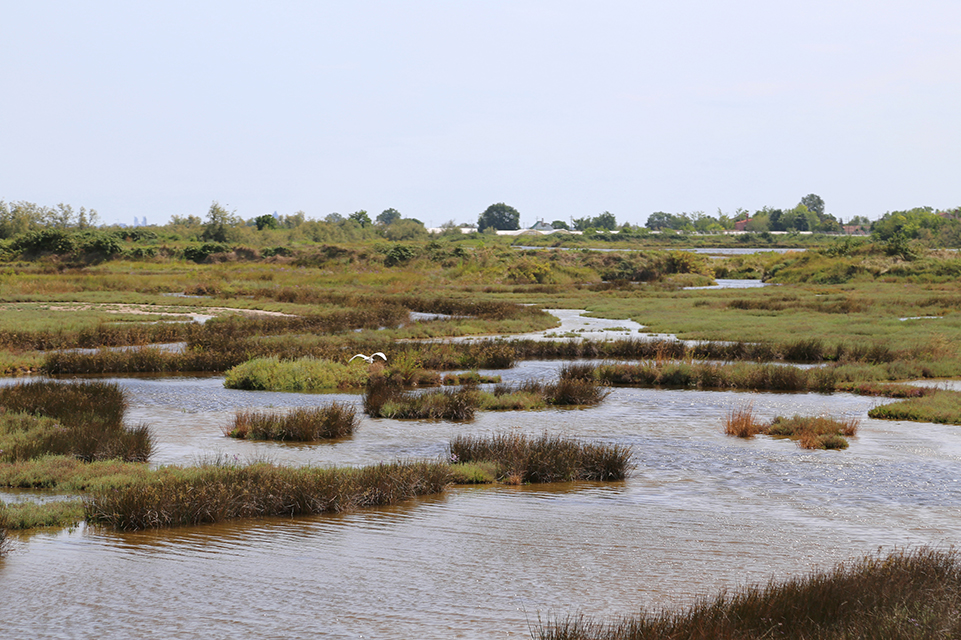
How did a collection of marshy islands on the northern Adriatic coast become one of medieval Europe’s most remarkable cities? A new study challenges the familiar story of Venice’s origins, exploring how refugees, Byzantine officials, merchants and local communities gradually created an independent political and commercial centre
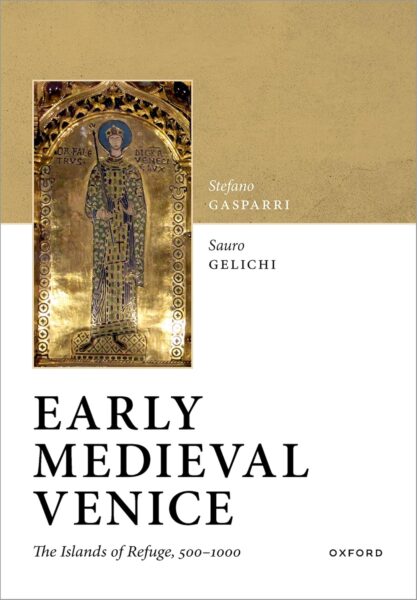
Early Medieval Venice: The Islands of Refuge, 500–1000
By Stefano Gasparri and Sauro Gelichi
Oxford University Press, 2026
ABSTRACT:
 According to Venetian tradition, the city was born when refugees fled the invading barbarians during the collapse of the Western Roman Empire. Seeking safety among the islands and marshes of the northern Adriatic, they established settlements which eventually developed into the magnificent city of Venice. Later generations of Venetians celebrated this story of flight and freedom, cultivating the idea that their city had enjoyed an exceptional independence almost from its foundation.
The historical reality was rather different. Venice did not emerge fully formed from the ruins of the Roman world. Nor was its future greatness inevitable. Instead, the city developed slowly over several centuries as settlements scattered across the lagoon responded to political upheavals, changing commercial opportunities and the formidable difficulties of living in an amphibious landscape.
In Early Medieval Venice: The Islands of Refuge, 500–1000, the historians Stefano Gasparri and Sauro Gelichi revisit these formative centuries, combining written sources with archaeological evidence to reconstruct the emergence of a distinctive political community. Their account begins in the late Roman period, when the lagoon was already inhabited and connected to the economic networks of northern Italy and the Adriatic. Consequently, the arrival of refugees during the upheavals of the fifth and sixth centuries did not represent the foundation of an entirely new society. Rather, it contributed to the transformation of an existing coastal landscape.
The relationship with Byzantium was particularly important. Following the reconquest of parts of Italy under Justinian in the sixth century, the lagoon remained within the sphere of the Eastern Roman Empire. Byzantine military and administrative structures provided the framework from which the Venetian duchy gradually emerged. However, its inhabitants also had to negotiate their position between competing powers, including the Lombards, the Carolingians and the Byzantine authorities themselves. During the eighth and ninth centuries, these shifting relationships helped shape the political identity of the Venetians. Their rulers increasingly asserted local autonomy, while the communities of the lagoon developed institutions and allegiances that distinguished them from their neighbours on the mainland.
One of the particularly attractive aspects of the book is its attention to the material foundations of this development. What did early Venice actually look like? How did its inhabitants construct their houses, churches and political buildings? How did they obtain drinking water, defend their settlements and maintain communications across the lagoon?
Thus, archaeology provides a rather different picture from the later city of marble palaces and monumental churches. Early Venice was predominantly built of wood, with its inhabitants adapting their buildings and infrastructure to unstable ground and constantly changing environmental conditions. The development of Rialto therefore involved not simply the consolidation of political power, but the practical creation of an urban landscape in a challenging environment. It took some time, though, before Venice was a single city. In the early history, several settlements competed for political and economic importance, among them Torcello, Equilo (Jesolo), Cittanova and Metamauco (Malamocco). Only gradually did Rialto emerge as the dominant centre, becoming the nucleus of the city we recognise today. The authors also examine how this relatively new community constructed a historical identity for itself. Although Venice celebrated its independence, its inhabitants looked towards the Roman past and Byzantium for cultural and political legitimacy. The reuse of ancient building materials – spolia – formed part of this process, physically incorporating remnants of antiquity into the emerging city.
By the tenth century, the Venetian duchy had established the political structures and commercial connections that would eventually support its extraordinary expansion. However, the familiar image of Venice as a great maritime republic still belonged to the future.
The importance of this study lies in its reconstruction of the centuries before that transformation. Rather than treating early Venice merely as the prelude to its later commercial greatness, Gasparri and Gelichi approach the lagoon settlements as communities with their own political ambitions, economic possibilities and material constraints.
The result is a history of urban formation that raises broader questions about the early medieval transformation of the Roman world. How did new political communities emerge from the fragmented institutions of the late antique Mediterranean? How did settlement patterns respond to changing environments and commercial networks? And how did people living on the margins of competing empires create new identities and forms of collective organisation?
In this respect, the early history of Venice offers a particularly illuminating example of how a medieval city could emerge not from a single act of foundation, but from centuries of negotiation between geography, political power, material resources and human ingenuity.
ABOUT THE AUTHORS
Stefano Gasparri is Professor Emeritus at Ca’ Foscari University of Venice and a specialist in the political and social history of early medieval Italy, particularly the Lombard and Carolingian periods. Sauro Gelichi, formerly Professor at the same university, is an archaeologist specialising in medieval settlement history and material culture. He has directed numerous archaeological projects and is principal editor of Archeologia Medievale. Their collaboration brings together historical and archaeological approaches to the emergence of Venice, reflecting the book’s organisation into sections dealing with political history, settlement archaeology, material culture and the construction of Venetian identity.
FEATURED PHOTO:
The Lagoon near Venice © Dreamstime 105111663/Fede Candoni Photo
READ ALSO: