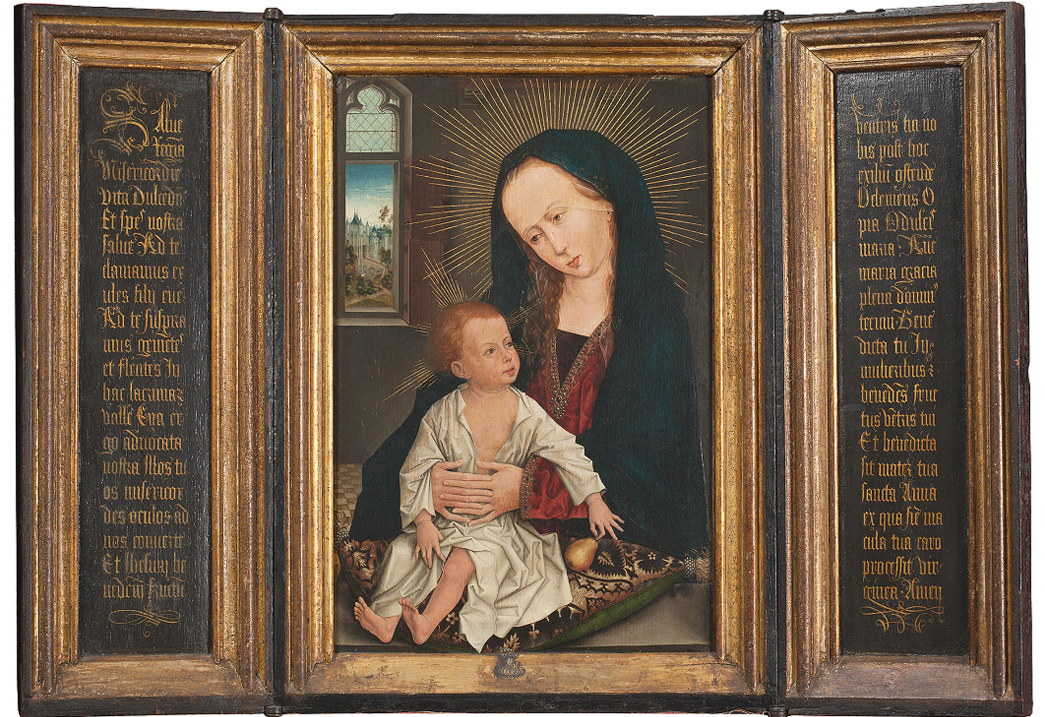
Innovative electronic presentation of book on ‘Frames and Supports in 15th- and 16th-Century Southern Netherlandish Painting’ leads the way for future art-historical publications.

Today marks the launch of a new in-depth study of selected panel paintings and their frames, Frames and Supports in 15th- and 16th-Century Southern Netherlandish Painting, supported by the Getty Foundation as part of the Panel Paintings Initiative.
In 1989 Hélène Verougstraete published her doctoral thesis on the construction of the supports of the Flemish Primitives. This may seem a very dry subject. However, understating the way in which joinery was devised and the way in which this impacted upon the “workings” of the diptychs, triptychs and polyptycs, which were continuously unfolded and closed again.
“The frames with their crescendos of colours, mouldings and other trompe-l’oeil devises, played a role in this deployment”, she writes. To understand these mechanics is simply to understand these pieces of art as cabinets or books more than just mere static paintings.
 Today, her thesis has been republished electronically and with all the illustrations in colour as a free e-book by KIK-IRPA, the Royal Institute for Cultural Heritage in Brussels. Offering more than 700 images in HD and 1500 diagrams this is not only in landmark in terms of making a very important work accessible for a new audience of art-historians. It is also a generous gift to medievalists in general. The new version has been fully translated into English and contains expanded research with crisp full-color illustrations and a searchable, zoomable interface.
Apart from the general introduction there are separate presentations of a number of works in Antwerp, Bruges, Brussels, Ghent, Kuringen, Leuven, Mechelen, Namur, St. Truiden, Tongeren and Tournai plus five in private collections.
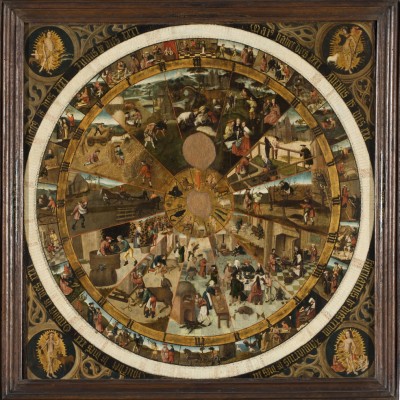
A good example of the richness is found in the presentation a Calendar Dial ca. 1500, presently in the collection of the Leuven Museum. The dial is made of fiver vertical boards, butt-joined with dowels. The painting has been painted in the frame. By studying the frame, it becomes readily obvious that the calendar dial has obviously been made to place a clock movement.
(Anonymous, Calendar Dial ca. 1500. Leuven M-Museum, inv. No. S/4/O)
READ MORE:
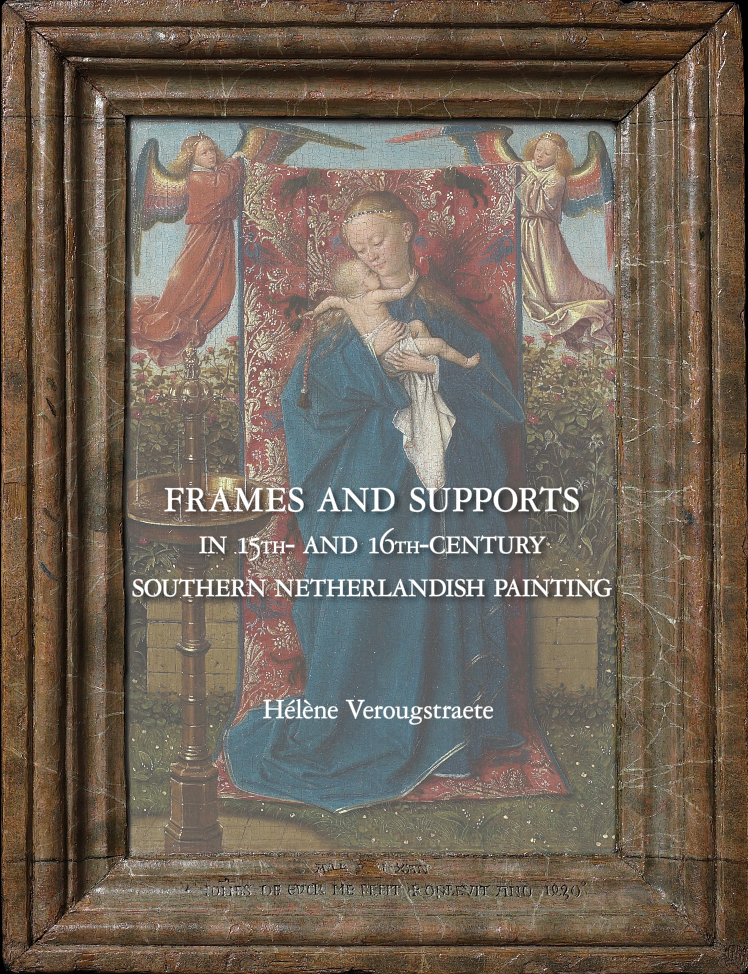 Frames and Supports in 15th- and 16th-Century Southern Netherlandish Painting
By Hélène Verougstraete
Royal Insitute for Cultural Heritage 1989 (2015)
FEATURED PHOTO:
Triptych of the Virgin and Child. By Goosen van der Weyden. 15th century. Closed: Annunciation in Grisaille,