Sweden recently compiled a report on human remains in Swedish Historical Museums. Seventeen percent hold and exhibit remains of Sami people
Exhibitions of skeletons of dead people are considered controversial by many. There is an intrinsic “objectification” involved and especially indigenous people have fought to have the remains of family members turned over for proper reburials.
On behalf of the Swedish Government, the museums have been required to compile a report of human remains kept in public museums in Sweden. A total of 240 museums have answered the questionnaire and the responses show that at least 66 museums have human remains in their collections. All in all, the remains represent tens of thousands of individuals.
The vast majority of the remains have been found in connection with archaeological excavations. Most derive from older time periods: prehistoric times or the middle ages. For scientific reasons, osteological and other types of explorations represent important types of studies with huge potentials.
The overview has shown that 66 museums have 43 pieces of relics only from Sweden, but 18 museum collection includes relics from other parts of the world and five museums have only remnants from other parts of the world. Human remains from Sami are at least 11 museums. The survey shows that the dialogue between the museums, or between museums and other institutions, are generally very sporadic in terms of human remains.
Within the work of the mission, two issues have been identified as particularly important, says Fredrik Svanberg director of research at the Historical Museum. They recommend that a broader approach is taken on the issue concerning the relics of minority groups and indigenous peoples by a more thorough and detailed report of what these collections consist of.
– We also recommend that the work carried out on state initiatives to develop national guidelines for the management and ethics surrounding human remains in museums in Sweden, he adds. The guidelines should apply at the museum work.
Today there are no national guidelines for the management and ethics surrounding human remains in museums in Sweden. From the 1980s onwards, there has been a more conscious approach to ethical issues in archeology and museums. There are a number of ethical parameters that museums usually relate to: how the dead body is treated, if the remains can be identified or not, what period they come from and the ways in which the material entered the museum.
Sami Challenge
Especially the Sami living in Northern Sweden have lobbied to have the human remains of their ancestors returned and reburied. From time to time some repatriation has taken place. In general, however, archaeologists and scientists are not very accomodating.
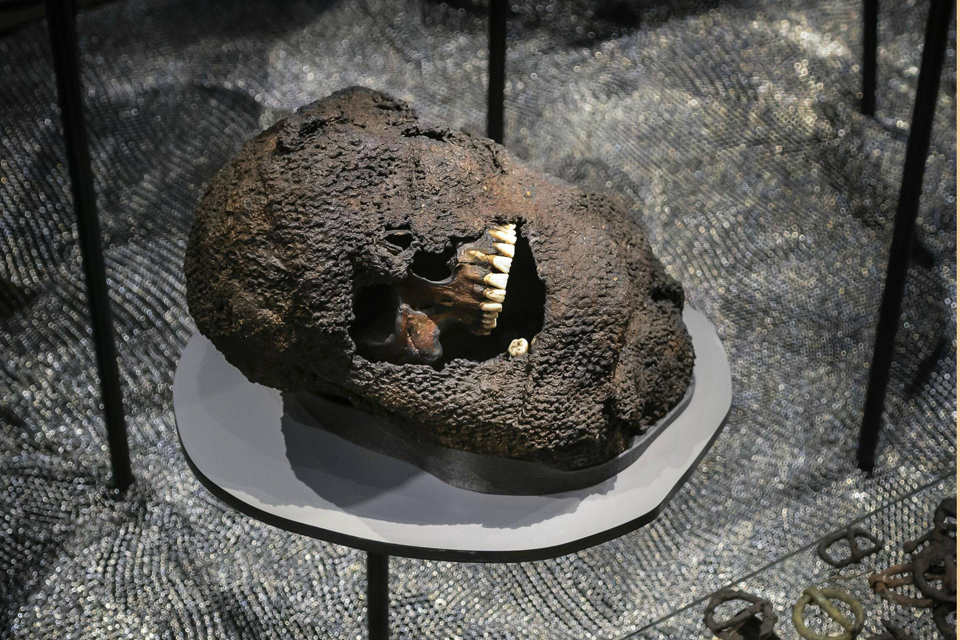
However, other issues can be raised. For instance, the dead peasants killed at Gotland in 1361 have been extensively studied and a number are exhibited at the museum in Visby. The fact remains, though, that these people were buried with great care at a nearby cemetary and a memorial cross was raised in order to commemorate the slaughter of a great part of the Gotlanders, trying to defend their independence.
The question is; should they continue to be shown in the Museum in Visby?
SOURCE:
Mänskliga kvarlevor vid offentliga museer – en kunskapsöversikt
READ MORE:
The controversy concerning the “exhibition” of Richard III in Leicester
FEATURED PHOTO:
Victim from battle at Gotland 1361. Source: Wikipedia