In the Middle Ages Bury St. Edmunds was a lively and flourishing Abbey, pilgrimage centre and market. It is still worth a visit. But don’t miss St. Mary’s – the real gem
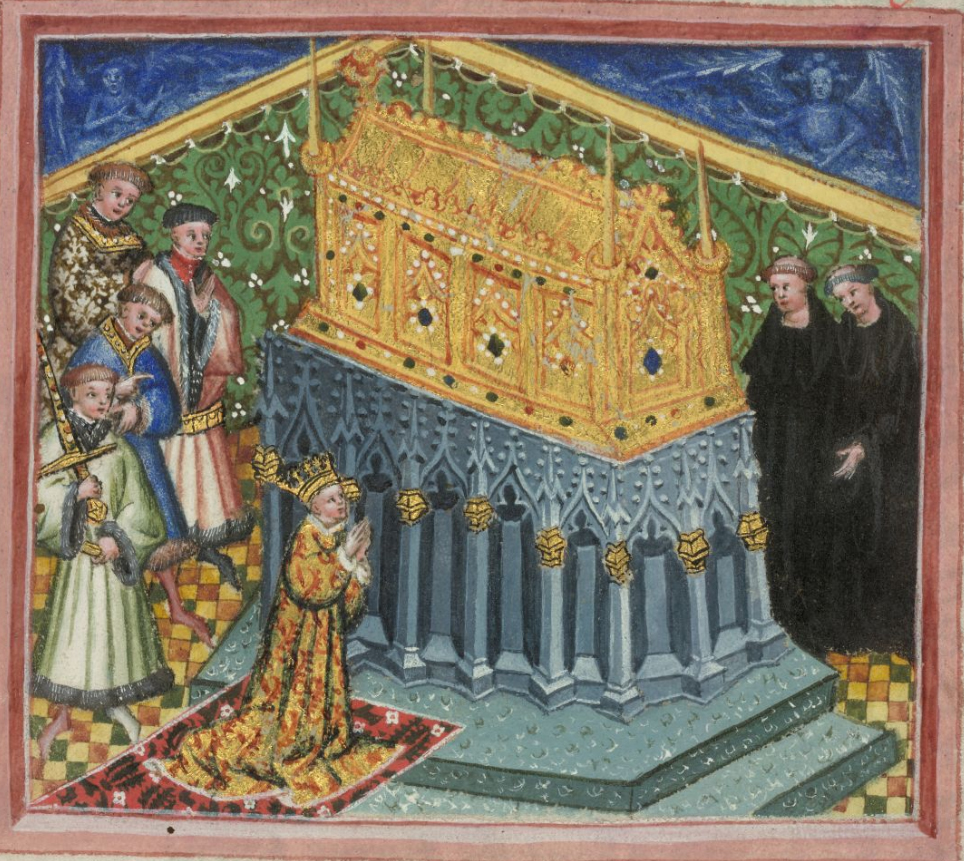
M736, Life, Passion and Miracles of St. Edmund, King and Martyr, f.12v: St. Edmund Captured by the Danes. England (Bury St. Edmund’s), c.1130
“King Edmund, against whom Ivar advanced, stood inside his hall, and mindful of the Saviour, threw out his weapons. He wanted to match the example of Christ, who forbade Peter to win the cruel Jews with weapons. Lo! the impious one then bound Edmund and insulted him ignominiously, and beat him with rods, and afterwards led the devout king to a firm living tree, and tied him there with strong bonds, and beat him with whips. In between the whip lashes, Edmund called out with true belief in the Saviour Christ. Because of his belief, because he called to Christ to aid him, the heathens became furiously angry. They then shot spears at him, as if it was a game, until he was entirely covered with their missiles, like the bristles of a hedgehog (just like St. Sebastian was). When Ivar the impious pirate saw that the noble king would not forsake Christ, but with resolute faith called after Him, he ordered Edmund beheaded, and the heathens did so. While Edmund still called out to Christ, the heathen dragged the holy man to his death, and with one stroke struck off his head, and his soul journeyed happily to Christ. From Ælfric of Eynsham, Old English paraphrase of Abbo of Fleury, ‘Passio Sancti Eadmundi’ From: Ælfric of Eynsham. “The Martyrdom of St. Edmund, King of East Anglia, 870”. Paraphrase of Abbo of Fleury’s Life of St. Edmund. Source: Mediaeval Sourcebook.
According to legend, Edmund was king of East Anglia from about 855 to his death in 869, when he was probably killed in a battle with the Great Heathen Army. As he minted coins, it is believed he did rule for some years, but virtually nothing is known about his life and deeds. However, already in the mid-890s, a series of commemorative silver pennies circulated in the Danelaw. The legend on the obverse – sce eadmund rex – witness to the growing cult. It has been argued that the Danes minted the pennies, wishing to placate the locals in the newly conquered Suffolk. Others believe that the coins were minted during the reign of Alfred in order to promote the new cult as part of establishing his over-lordship of East Anglia after his victory in the Battle of Edington in 878.
Edmund soon became an enduring favourite of English monarchs and already in 945 the English king granted the Abbey at Beodricesworth – later Bury St. Edmunds – possession of a tract of land in the centre, which was given with full liberties. In 1020 Canute the Great replaced the community of secular clergy with a group of Benedictine monks. At the same time, he confirmed these privileges. Finally, in 1043, Edward the Confessor granted the abbey jurisdiction over eight and a half hundreds in West Suffolk and the Abbots came to function as local sheriffs. At this point, a detailed hagiographic tradition had evolved according to which Edmund had died at the hands of the heathens, because he would not forsake Christ. The first passion was written by Abbo of Fleury around 985- 987.
Edmund was long regarded as the patron saint of England and Bury St. Edmunds in Suffolk became one of the great western European pilgrimage centres. Indeed, it has been characterised as one ‘gigantic shrine’ for St. Edmund; but this also implied that Bury had to establish itself as significant commercial centre catering for numerous pilgrims and other travellers bent on exploiting the local business opportunities. Such a busy town, is exactly what surfaces when archaeological and narrative sources are considered together with the evidence from charters and other deeds.
Abbey of St. Edmunds
Abbeygate from Bury St. Edmunds . Source: Wikipedia
By mid 11th century, the Abbey of St. Edmunds was arguably one of the wealthiest landholders in East Anglia and the Abbot exercised a marked degree of lordship in the area. This led to plans for a new Romanesque church, a veritable giant of a building. Later, in the beginning of the 12th century the designs of the new church was considerably enlarged and so was the monastic precinct, which at this point became enclosed. Further, a town wall was built with gallows and hospitals outside. A little later, the town was allowed a fair and a foundation to the Great market was laid while the commercial importance of Bury St. Edmund expanded; the right to employ a moneyer was also granted.
These privileges were jealously guarded and when the monks at Ely obtained a royal charter in 1201 granting them permission to hold a market 17 miles north-west of Bury, the Abbot sent letters, petitions and protests to stop the plans. Finally, the Abbey resorted to violence and sent 600 men with arms and horses to ambush the new, thriving market. Around the same time, the church was finally completed when a central tower and spire were erected in 1200 -1211.
Today, the Abbey church is nothing more than a group of picturesque ruins spread around the former enclosure of the Abbey, now a lovely garden.
Moyse’s Hall
The way to get a grip on the town of Bury St. Edmunds is of course to begin a Moyse’s Hall, a 12th century house, which may have belonged to a Jewish merchant. However, knowledge about the history of the building is very scant. In 1327, it seems to have been an inn. Later however, it obviously served as a private home: From 1600 – 1892 it functioned as the local headquarter for the police and parts were used as gaol and workhouse. In 1892 the idea to convert Moyse’s Hall into a local museum matured and in 1899 it was officially opened. As such, it still holds a not very impressive collection of local bric-à-brac (including a lock of Mary Tudor’s hair)
The Guildhall
The earliest written reference to the Guildhall dates back to the 1279. At the same time, the street upon it was built was known as the Guildhall Street. Recent examination of the rear of the building, where the original medieval stonework is still visible, suggests that the majority of the existing building was actually constructed in the second half of the twelfth century. It is quite likely that the building was constructed as part of the medieval ‘planned’ town that was begun in the late eleventh century. However, the most obvious construction work to the guildhall took place in the late 15th century. It was at this point that the highly decorative porch was added to the front of the building and the regionally important King and Queen post roof was constructed. Although the massive decorative timbers of the roof are now invisible behind later ceilings, it is clear that they were designed to be viewed and to impress. At the same time a new range of buildings were added to the rear of the Guildhall, and a detached kitchen was constructed that allowed extensive catering to take place for Guild feasts. Remnants of all these ‘new’ buildings are still evident in the historic fabric. Later, after the dissolution of the monasteries in the 16th century, the Guildhall gained an even more prominent position in the life of a city, which continued to be an economic hub of the local region. Presently, a project is underway, telling the story of Bury St. Edmunds by returning the Guildhall to the people and at the same time offering a whole new heritage experience. Recently (May 2016) the Bury St Edmunds Heritage Trust, working in partnership with the Guildhall Feoffment and St Edmundsbury Borough Council received substantial funding from the National Lottery Players securing a restoration of the ancient fabric and the new exhibition spaces. The building is expected to open to the public in July 2018.
The Angel Hotel
Right outside the Abbey Gate and thus occupying a fine position across the market square was a local inn, called The Angel. Perhaps it served as the Abbey’s guesthouse. Right next to it were two other fine establishments, The White Bear and the Castle. Today, they have all been incorporated in the grand hotel of Bury St. Edmunds, The Angel Hotel, sporting “Georgian elegance and charm” and a vaulted medieval cellar. The Angel is first mentioned in 1452. However, archaeological excavations in the courtyard have revealed the remains of a probable cellar, from the 12th to 14th century and a pit from a bit earlier period. This yielded an assemblage of pig, sheep, goat, fowl, duck, goose and fish bones as well as oyster shells.
A Medieval Kitchen
Medieval jugs from Bury st Edmunds – suffolk archaeology 2016
Recently, these earlier excavations have been supplemented with the finds from a dig 150 m south from the Angel Hotel. Here the archaeologists found the remains of a small 14th/15th century building (4.2m long x 3.4m wide), thought possibly to be a kitchen or cold store, built from flint and mortar. It is an unusual find in the town, as many contemporary structures had less substantial foundations and as a result have not survived. The building was positioned some distance from the street frontage, where the houses would have been located, indicating that if any fires occurred during cooking then the main house would hopefully not be affected. Above ground, the structure would almost certainly have been built of timber, with a tiled roof and floor.
The dig also uncovered a series of 12th-14th century pits, used to quarry chalk, which would then have been processed to extract lime for making mortar. The pits were backfilled with lots of domestic rubbish, including a gaming counter, worked bone and antler waste, pottery, a chain, a spindle whorl and roof tile fragments. They also contained large quantities of animal bone (pigs, sheep/goats, cattle and fish bones), as well as oyster and mussel shells, giving a good indication that the diets of the medieval population at both ends of the main-street were identical.
Pilgrims usually brought their own food, but fare could be had at inns and hostels – at a price! In 1331 the warden and two fellows of Merton College in Oxford plus four servants went from Oxford to Durham and Newcastle. For a Sunday spent in Alreton, they noted down the following victuals: bread 4d (31%), beer 2d (15%), wine 1 1/4d (10%), meat 5 1/2d (42%), potage 1/4d (2%). To this should be added the expenses for candles 1/2d, fuel 2d, beds 2d and fodder for horses 10d. Other days, they bought a chicken or a capon, eggs, vegetables and fish. Condiments like gravy, fat or pickles were accounted for separately. To this should be added expenses for spices like sugar, saffron, pepper and mustard. Obviously, the party was expecting to be wined and dined in an orderly fashion while travelling up north.
If we compare these shopping lists with the victuals bought for a trip a hundred years later, when a large party of magistrates from York went boating on the Ouse in order to inspect illegal fishgarths, it appears that the supplies of meat here also represented 44% of the outlay; the same percentage as in 1331. Here, however, the party obviously also stocked up on pigeon pies, which presumably were cooked on the way (two cooks were brought along).
Today, the best place to sample the fare of a medieval pilgrim in Bury St. Edmunds is probably in the Pilgrim’s kitchen where Old Cannon Brewery Ale is served together with soups, hot pots, rarebits or pies. The only thing really missing seems to be the pigeon pies, which seemed to have be the medieval version of bring-a-long wraps of our modern times.
St. Mary’s Church
Roof over the tomb of John Baret, buried in St. Mary’s in Bury St. Edmunds
The main reason, however, to visit Bury St. Edmund, is the parish church of St. Mary, originally one of the three churches, which were part of the Abbey-complex. The present church is the second to stand on the site. The first was built in the 12th century, but nothing remains of this Norman church.
Some claim the most impressive part is the west front with a huge five-light west window flanked by four-light aisle windows on either side. Others maintain that the Notyngham Porch, on the north side gives a better impression of the late-medieval church. The name, Notyngham, derives from the donor, a successful local grocer. However, entering the nave, one is immediately struck by the ten majestic bays raised on tiny capitals and soring up towards the hammer-beam roof held up by fierce angels and other figures – saints, martyrs, prophets and kings. Keeping company are a medieval menagerie complete with dragons, unicorns, birds, fishes and other animals.
Such angel roofs may be found all over England. However, of more than the 140 surviving angel roofs in Britain, 84% can be found in East Anglia. It has been suggested that they were erected as a powerful statement turned against the Lollards (pre-reformation protestants) who seemed to have despised angelology.
The particular angel roof in St. Mary’s was commissioned by a wealthy cloth merchant and property owner, John Baret, who died in 1467 and is buried in a prominent cadaver tomb in the church. In his will, he says that he had the angel roof made as a remembrance of himself and his friends.
The oldest part of the existing building is the decorated chancel with its wagon roof decorated in a vivid blue colour. Preferably the roofs should be inspected with the help of either a camera or a pair of binoculars.
John Baret
John Baret in St, Mary’s in Bury st. Edmunds. Source: Department of Theology and Religious Studies at the University of Winchester
The will of John Baret from 1467 have left us with the possibility of getting a detailed and very intimate glimpse of a pious late medieval life. Covering more than 30 pages in an edition from 1850, it details a wealth of donations of rosaries, paternosters and devotional images made of ivory, gold foil paper or painted on stained cloth. The recipients were a large number of local dignitaries from the Abbot and all the way down to the personal servant boy of Johan Baret.
In the will, he also donated his house in Bury St. Edmunds to the Church of St. Mary to be used as for lodgings for the priest and other retainers (including two nieces, who obviously lived with him). The house also included a “spinning house” and a chapel and may have functioned as a kind of beguinage. The house still exists as the core of a now very posh villa in the town. Recently put op for sale, it is possible to ascertain that not much of the pious spirit of John Baret lingers.
John Beret 1467 from Bury st. Edmunds. Source: Wikipedia
There is no doubt that John Baret was a very devout late medieval man who collected not only prayers but also devotional knick-knack of all sorts. All in all, he bequeathed 23 rosaries to named individuals plus one to each of the priests, who took part in his “solemn exequies”. To this should be added a substantial number bequeathed to persons belonging to the household of the Abbey and the fraternity, to which he belonged. All this is interspersed with a number of donations of black gowns, belts, rings, purses, cups and even a pair of spectacles.
In his will, he also outlined his last resting place in St Mary’s Church, where he wished to be buried near the alter in the Lady’s Chapel. The tomb shows him as a withered corpse in a late stage of rotting. Beneath, he is shown in life, dressed in fine clothes and wearing the silver “Collar of Esses”, which he had received as a token of gratitude by Henry VI, who was a welcome visitor to the Abbey and a friend of the Abbot. We know, the figure represents John Baret as it holds a scroll engraved with “me”.
Post-Reformation History
For centuries pilgrims from throughout the world came to worship, and the Abbey grew in strength and wealth. However, at the dissolution of the monasteries by Henry VIII in the 16th century, the Abbey was dismantled and fell into ruin. The current Cathedral, St Mary’s Church, the Abbey-gate and the Norman Tower are all that remain of the mighty complex of church buildings that once stood alongside Angel Hill.
If you are a medievalist, the Cathedral is of lesser interest. The Abbey church itself fell into ruins and the present cathedral was a minor church, originally dedicated to St. Denys and later replaced in the 12th century with a church dedicated to St. James. However, this was really never finished and building projects have been undertaken all the way up to our time. In 2005 the skyline of Bury St Edmunds thus changed with the completion of a magnificent 45 m Gothic lantern tower. Five years in construction, the Millennium Tower and other works – the North Transept, the Chapel of the Transfiguration, a crypt and the East Cloisters – have been built, employing traditional materials and methods. In June 2009, the Archbishop of Canterbury consecrated the Chapel of the Transfiguration. In 2010 a painted and gilded vault was unveiled under the Tower.
St Edmund’s Abbey was one of the most highly privileged and wealthiest religious houses in medieval England, one closely involved with the central government; its history is an integral part of English history. This book (the first of two volumes) offers a magisterial and comprehensive account of the Abbey during the thirteenth century, based primarily on evidence in the abbey’s records (over 40 registers survive). The careers of the abbots, beginning with the great Samson, provide the chronological structure; separate chapters study various aspects of their rule, such as their relations with the convent, the abbey’s internal and external administration and its relations with its tenants and neighbours, with the king and the central government. Chapters are also devoted to the monks’ religious, cultural and intellectual life, to their writings, book collection and archives. Appendices focus on the mid-thirteenth century accounts which give a unique and detailed picture of the organisation and economy of St Edmunds’ estates in West Suffolk, and on the abbey’s watermills and windmills. A History of the Abbey of Bury St Edmunds, 1257-1301: Simon of Luton and John of Northwold
Antonia Gransden
Boydell & Brewer 2015
ISBN: 9781783270262
St Edmund’s Abbey was one of the most highly privileged and wealthiest religious houses in medieval England, one closely involved with the central government; its history is an integral part of English history. This book, the second of two volumes, offers a magisterial and comprehensive account of the Abbey during the latter part of the thirteenth century, based primarily on evidence in the abbey’s records (over 40 registers survive). It begins with an account of the two abbots of this period, Simon of Luton and John of Northwold, who showed outstanding ability in steering the abbey through difficult times, including conflict with the Friars Minor in the town, straitened financial circumstances (partly caused by oppressive taxation from king and pope), and domestic issues. This is followed by consideration of such matters as the abbey’s mint, its economy, religious, intellectual and cultural life, and the abbey’s architecture — especially the charnel chapel constructed by John, which survives to this day. The monks’ dietary regime (with examples of actual recipes from the time) is examined in a detailed appendix.
The abbey of Bury St Edmunds, by 1100, was an international centre of learning, outstanding for its culting of St Edmund, England’s patron saint, who was known through France and Italy as a miracle worker principally, but also as a survivor, who had resisted the Vikings and the invading king Swein and gained strength after 1066. Here we journey into the concerns of his community as it negotiated survival in the Anglo-Norman empire, examining, on the one hand, the roles of leading monks, such as the French physician-abbot Baldwin, and, on the other, the part played by ordinary women of the vill. The abbey of Bury provides an exceptionally rich archive, including annals, historical texts, wills, charters, and medical recipes. The chapters in this volume, written by leading experts, present differing perspectives on Bury’s responses to conquest; reflecting the interests of the monks, they cover literature, music, medicine, palaeography, and the history of the region in its European context.
The abbey of Bury St. Edmund’s was one of the richest and most powerful of the monasteries of medieval England. The Libert of the Eight and a Half Hundreds, over which the abbot exercised the authority of Sherriff, covered all west Suffolk and survived as a separate administrative district until the country reorganisation of 1974. As its centre was an even more privileged area, the town and suburbs of Bury St. Edmunds, which grew up to service the abbey’s worldly needs and remained under the abbot’s absolute control; today it survives as the prosperous borough of Bury St. Edmunds. The abbey church itself was larger than Durham cathedral and housed the shrine of St. Edmund, king and martyr, who had been killed by the Danes in 870 when they invaded East Anglia, and whose cult was the abbey’s raison d’etre . In April 1994 the British Archaeological Association held a four day conference at Culford School, near Bury St. Edmunds, which was devoted to the study of the abbey and town. Most of the conference papers are printed in the preent Transactions, with the addition of three specially commissioned papers. They cover a wide range of subjects and break much new ground. There are papers on the abbey’s architecture and on the layout of the medieval town, studies on St. Edmund’s shrine, relics and cult, and on the abbey’s administration and economic history, including papers on the mint, which the abbot administered, on the abbey’s woodlands, and on its salterns in Lincolnshire. An especial feature of the volume are the papers on the abbey’s manuscripts, comprising studies on their art, palaeography, and bindings, and on the monastic library. The volume ends with the catalogue prepared for the exhibitions held in Cambridge for delegates to the conference, of Bury manuscripts owned by a number of Cambridge colleges and by Cambridge University Library. In all, these transactions make an important contribution to the study of medieval Bury St. Edmunds and will no doubt stimulate further research.
The Cult of St Edmund in Medieval East Anglia
Rebecca Pinne
Boydell & Brewer 2015
ISBN: 9781783270354
St Edmund, king and martyr, supposedly killed by Danes (or “Vikings”) in 869, was one of the pre-eminent saints of the middle ages; his cult was favoured and patronised by several English kings, and gave rise to a rich array of visual, literary, musical and political artefacts.
This study explores the development of devotion to St Edmund, from its first flourishing in the ninth century to the eve of the Reformation. It explores a series of key questions: how, why and when did the cult develop? Who was responsible for its promotion and dissemination? To which groups and individuals did St Edmund appeal? How did this evolve over time? Using as evidence a range of textual and visual treasures from the Anglo-Saxon king’s erstwhile kingdom and later cultic heartland, Norfolk and Suffolk, the study draws on sources and approaches from a variety of disciplines (literature, art history, social history and anthropology) to elucidate the social, cultural and political dynamics of cult construction.
St Edmund, king and martyr, supposedly killed by Danes (or “Vikings”) in 869, was one of the pre-eminent saints of the middle ages; his cult was favoured and patronised by several English kings and spawned a rich array of visual, literary, musical and political artefacts. Celebrated throughout England, especially at the abbey of Bury St Edmunds, it also inspired separate cults in France, Iceland and Italy.
The essays in this collection offer a range of readings from a variety of disciplines – literature, history, music, art history – and of sources – chronicles, poems, theological material – providing an overview of the multi-faceted nature of St Edmund’s cult, from the ninth century to the early modern period. They demonstrate the openness and dynamism of a medieval saint’s cult, showing how the saint’s image could be used in many and changing contexts: Edmund’s image was bent to various political and propagandistic ends, often articulating conflicting messages and ideals, negotiating identity, politics and belief.
It has been estimated that over 90% of England’s figurative medieval art was obliterated in the image destruction of the Reformation. Medieval angel roofs, timber structures with spectacular and ornate carvings of angels, with a peculiar preponderance in East Anglia, were simply too difficult for Reformation iconoclasts to reach. Angel roof carvings comprise the largest surviving body of major English medieval wood sculpture. Though they are both masterpieces of sculpture and engineering, angel roofs have been almost completely neglected by academics and art historians, because they are inaccessible, fixed and challenging to photograph.’The Angel Roofs of East Anglia’ is the first detailed historical and photographic study of the region’s many medieval angel roofs. It shows the artistry and architecture of these inaccessible and little-studied medieval artworks in more detail and clarity than ever before, and explains how they were made, by whom, and why.Michael Rimmer redresses the scholarly neglect and brings the beauty, craftsmanship and history of these astonishing medieval creations to the reader.The book also offers a fascinating new answer to the question of why angel roofs are so overwhelmingly an East Anglian phenomenon, but relatively rare elsewhere in the country.



 The earliest written reference to the Guildhall dates back to the 1279. At the same time, the street upon it was built was known as the Guildhall Street. Recent examination of the rear of the building, where the original medieval stonework is still visible, suggests that the majority of the existing building was actually constructed in the second half of the twelfth century. It is quite likely that the building was constructed as part of the medieval ‘planned’ town that was begun in the late eleventh century. However, the most obvious construction work to the guildhall took place in the late 15th century. It was at this point that the highly decorative porch was added to the front of the building and the regionally important King and Queen post roof was constructed. Although the massive decorative timbers of the roof are now invisible behind later ceilings, it is clear that they were designed to be viewed and to impress. At the same time a new range of buildings were added to the rear of the Guildhall, and a detached kitchen was constructed that allowed extensive catering to take place for Guild feasts. Remnants of all these ‘new’ buildings are still evident in the historic fabric. Later, after the dissolution of the monasteries in the 16th century, the Guildhall gained an even more prominent position in the life of a city, which continued to be an economic hub of the local region. Presently, a project is underway, telling the story of Bury St. Edmunds by returning the Guildhall to the people and at the same time offering a whole new heritage experience. Recently (May 2016) the Bury St Edmunds Heritage Trust, working in partnership with the Guildhall Feoffment and St Edmundsbury Borough Council received substantial funding from the National Lottery Players securing a restoration of the ancient fabric and the new exhibition spaces. The building is expected to open to the public in July 2018.
 Pilgrims usually brought their own food, but fare could be had at inns and hostels – at a price! In 1331 the warden and two fellows of Merton College in Oxford plus four servants went from Oxford to Durham and Newcastle. For a Sunday spent in Alreton, they noted down the following victuals: bread 4d (31%), beer 2d (15%), wine 1 1/4d (10%), meat 5 1/2d (42%), potage 1/4d (2%). To this should be added the expenses for candles 1/2d, fuel 2d, beds 2d and fodder for horses 10d. Other days, they bought a chicken or a capon, eggs, vegetables and fish. Condiments like gravy, fat or pickles were accounted for separately. To this should be added expenses for spices like sugar, saffron, pepper and mustard. Obviously, the party was expecting to be wined and dined in an orderly fashion while travelling up north.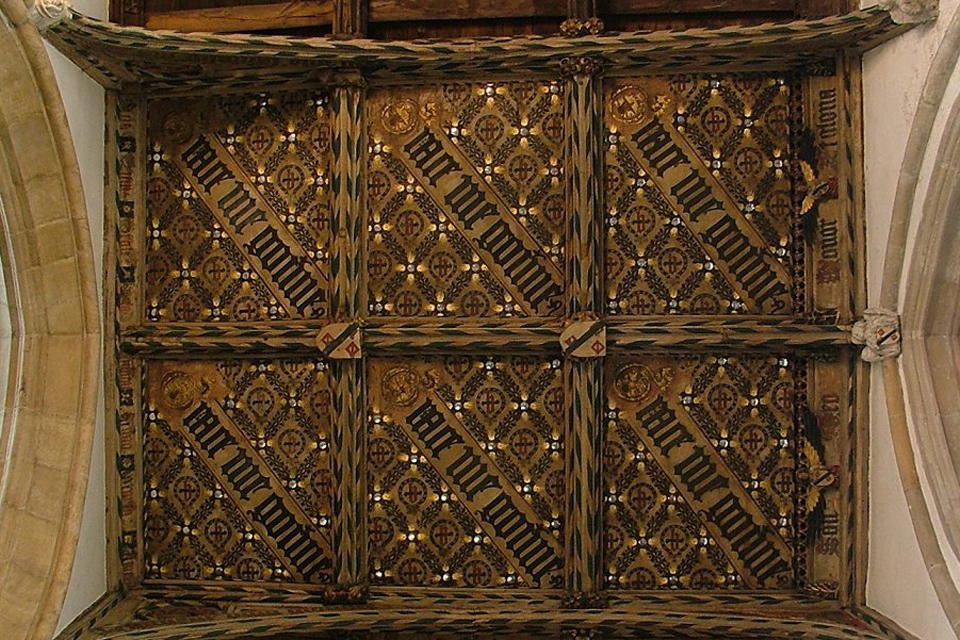


 A History of the Abbey of Bury St Edmunds, 1182-1256
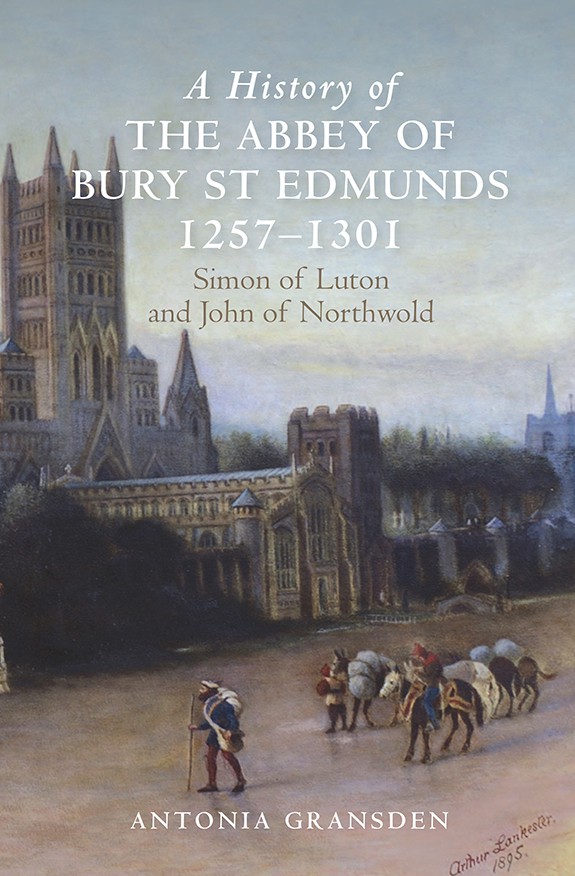 A History of the Abbey of Bury St Edmunds, 1257-1301: Simon of Luton and John of Northwold
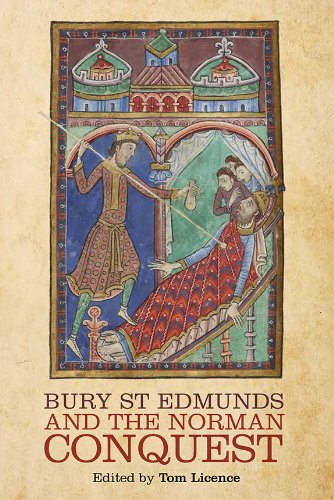 Bury St Edmunds and the Norman Conquest
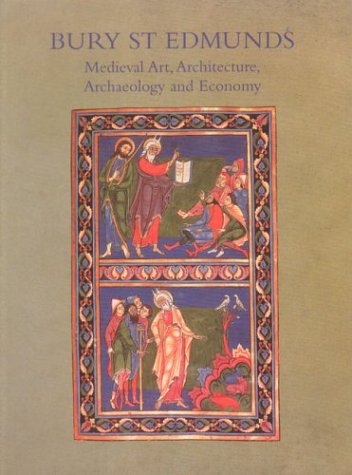 Bury St Edmunds: Medieval Art, Architecture, Archaeology and Economy (The British Archaeological Association Conference Transactions)
 The Cult of St Edmund in Medieval East Anglia
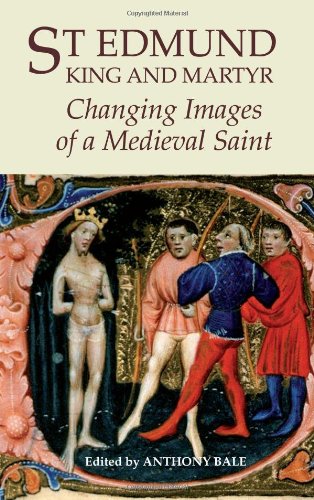 St Edmund, King and Martyr. Changing Images of a Medieval Saint
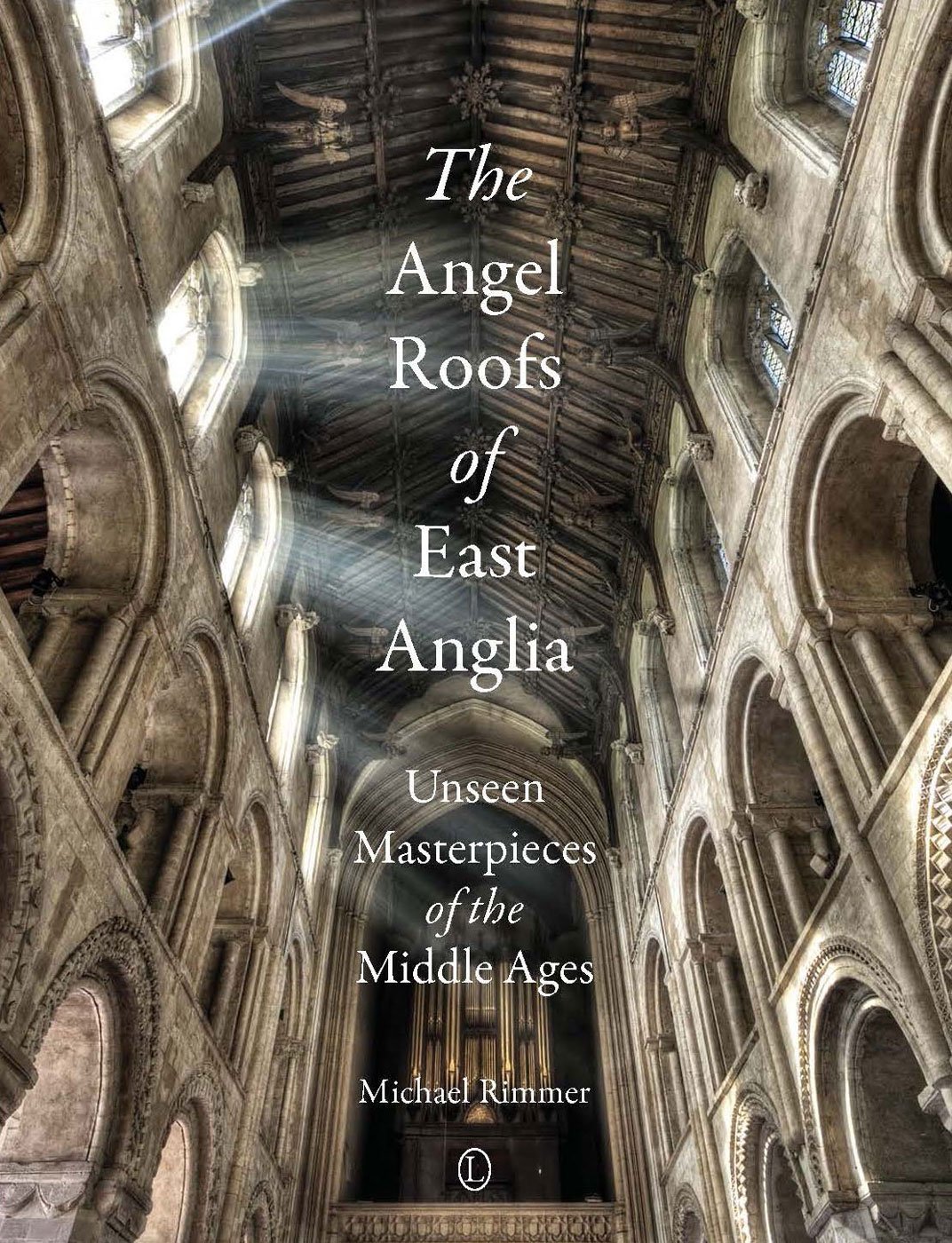 The Angel Roofs of East Anglia: Unseen Masterpieces of the Middle Ages