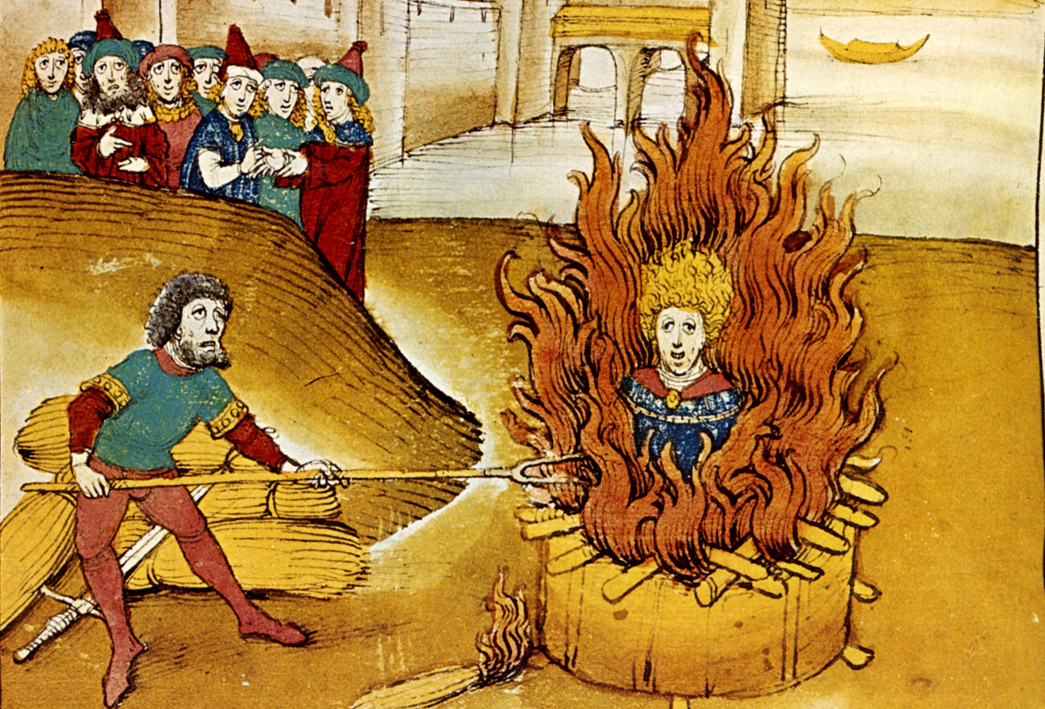
In 1415 – precisely 600 years ago – the Bohemian Reformator and protestant saint, Jan Hus, was led to a bonfire down to the shore in Constance, where he was burned at the stake. Several sessions and a roundtable serve to commemorate this event
To commemorate the 600th anniversary of the martyrdom of Jan Hus, these sessions examines the role his teachings and ideas played in shaping the historic narrative of the Bohemian Reformation. These papers piece together aspects Hus’s thought that situate him within the context of both admirers and critics in an attempt to complicate the historic image of the martyr and heretic.
Bohemian Reformation & Religious Practice, I [Session No: 1517]
These papers piece together aspects Hus’s thought that situate him within the context of both admirers and critics in an attempt to complicate the historic image of the martyr and heretic.
Bohemian Reformation & Religious Practice, II [Session No: 1617]
These papers piece together aspects of the Bohemian Reformation that attempt to broaden the vision of what the movement included by examining external influences and internal critiques to create a more vibrant and inclusive narrative for the period.
Jan Hus and Wycliffe
The Wycliffite and Hussite projects of Church reform represent the most thorough attempts in late-medieval Europe to reshape religious and political ideologies and practices. In both cases, an academic controversy was immediately followed by a long-lasting ecclesiastical-political conflict. Despite the achievements of research into the Bohemian reception of Wycliffe’s writings, new comparative approaches need to be adopted in order to better understand the preconditions, realities and developments in England and Bohemia, as well as the Hussites’ bold experiment aimed at implementing some of the most radical Wycliffite ideas. The set of four sessions brings together specialists from Wycliffite and Hussite studies who will discuss their research into these late-medieval religious and political reform programs.
Wycliffe, Hus, and the Impact of Reform, I: The Puzzle of Transmission [Session No: 522]
In this session, the modalities of reception of the key writings of Wycliffe and Hus will be discussed, focusing on their manuscript transmission and cultural contexts.
Wycliffe, Hus, and the Impact of Reform, II: The Pitfalls of Learned Debate [Session No: 622]
In this session, focus will be on the intellectual settings in which Wycliffite and Hussite ideas took shape, especially at the universities of Oxford and Prague and the Council of Constance.
Wycliffe, Hus, and the Impact of Reform, III: The Struggle for Simple Minds? [Session No: 722]
In this session, the focus will be on the social impact of reform ideas, the strategies of the chief ideologists to get broader support, and the various responses to reform agendas.
Wycliffe, Hus, and the Impact of Reform, IV: Battle of Words – Battle of Swords [Session No: 822]
In this session, the focus will be on the reaction of power centers to reform ideas and on the formation of Wycliffite and Hussite movements.
Wycliffe, Hus, and the Impact of Reform, V: Editing Wycliffe and Hus – A Round Table Discussion [Session No: 922]
This round table will address the modalities of reception of the key writings of Wycliffe and Hus throughout the centuries and the consequences of various source editions for our present understanding of these two influential reformers. We will discuss current editing projects as well as the reasons behind the availability or lack of critical editions and/or vernacular translations, focusing on why certain works were made accessible and others ignored. We will also pay attention to the way early modern prints, which are readily accessible but notoriously and sometimes intentionally biased, have distorted our image of the Wycliffite and Hussite ideas. This round table discussion complements the series of sessions on ‘Wycliffe, Hus, and the Impact of Reform’. Participants include Anne Hudson (University of Oxford), Stephen Lahey (University of Nebraska, Lincoln), Pavlina Rychterová (Österreichische Akademie der Wissenschaften, Wien), Elizabeth Solopova (University of Oxford), and Fiona Somerset (University of Connecticut).