Lack of Medieval Male Heirs led to conflicts and instability and slowed down economic development. The consequences can still be measured today. It appears Henry VIII was right to fret about his lack of male heirs!
Medieval State Building and Contemporary European Development
By Avidit Acharya and Alexander Lee
Stanford University 2015, Unpublished Paper
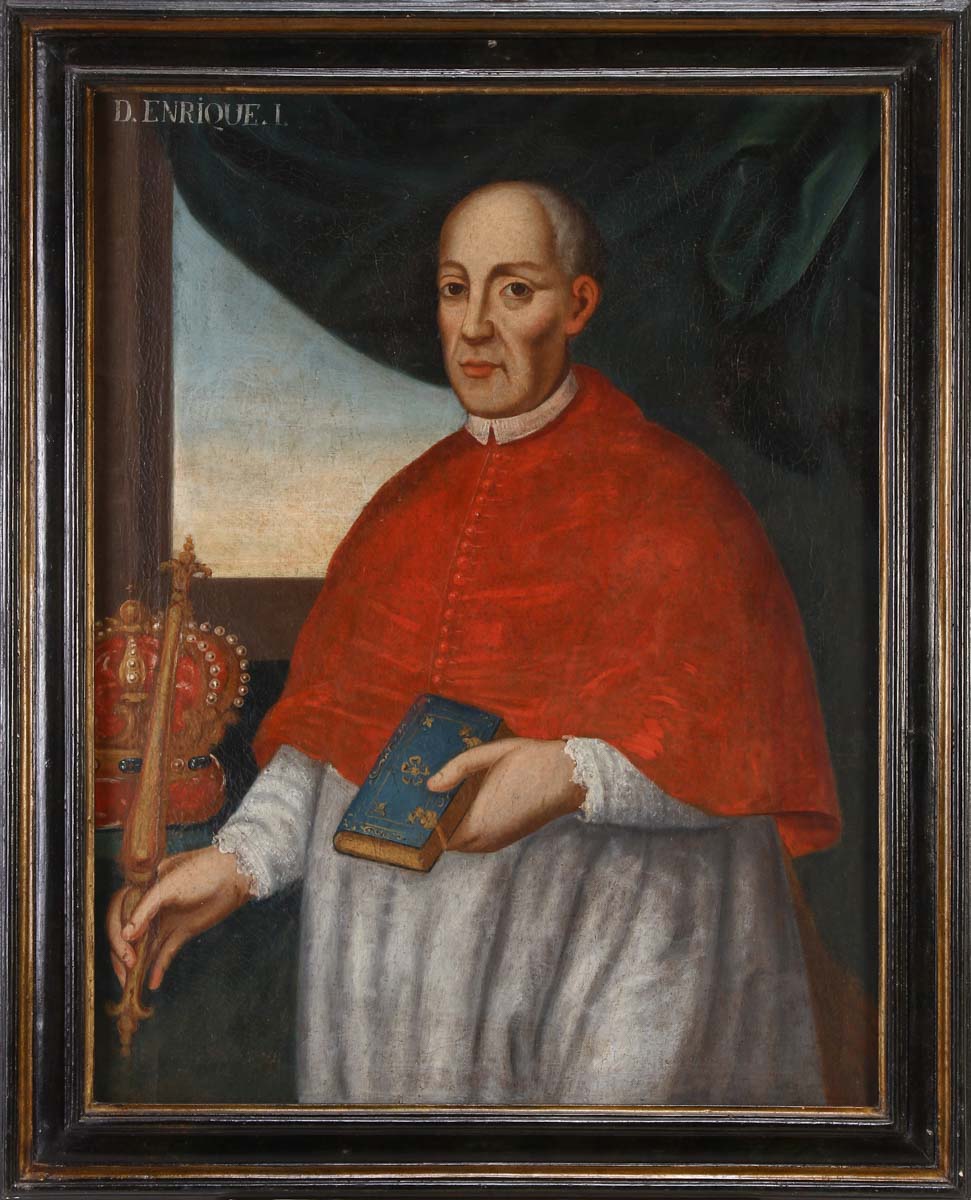
In the Middle Ages a shortage of male heirs led to conflict and instability which led to persistently weaker institutions as well as persistently weaker development outcomes. The amazing discovery is, that such medieval periods of instability are reflected in modern GDP. One such example is Portugal, where the House of Avis failed to produce any male heirs in the period after 1500. This led to Portugal’s annexation by the King of Spain (the female-line-heir). Afterwards followed a long period of absentee rule (1580 – 1640), which is generally associated with the beginning of the Portuguese decline; the results of which can still be seen today (in comparison to Spain).
The amazing result of the work of Avidit Acharya and Alexander Lee is, that this case is not singular. In fact, hard-core statistics show that such “events” are reflected in modern-day economic performance in several European regions.
ABSTRACT:
The development of modern state institutions is a major legacy of the medieval period in Europe. Following existing arguments about the importance of the state for development, Avidit Acharya and Alexander Lee have conjectured a link between the success or failure of medieval state building projects and contemporary development. To substantiate this conjecture in the face of empirical challenges, they have developed a theory that identifies an important source of variation in medieval state building. During the Middle Ages, most European polities operated under a norm that gave only the close male relatives of a deceased monarch a clear place in the line of succession. When no such heirs were available, succession disputes were more likely, with more distant relatives and female(-line) heirs laying competing claims to the throne. These disputes often produced violent conflicts that destroyed existing state institutions and stunted the subsequent development of the state.
The theory can be schematically summarized as follows:
shortage of male heirs➞ conflict and instability ➞ persistently weaker state institutions ➞ persistently weaker development outcomes
The hypothesis is that the unavailability of male heirs to Europe’s monarchies in the Middle Ages have had a corresponding deleterious effect on contemporary development levels across European regions.
The findings of Acharya and Lee show that the state building processes that were underway in medieval Europe had profound consequences for the development of the continent. In regions where chance allowed for a series of uncontested leadership transitions, rulers were able to build up a set of state institutions that supported economic development. In areas burdened with more potential succession disputes, and thus more politically instability, the path to economic prosperity was much more arduous. These results reinforce other findings in the literature documenting the negative effect of violent conflict, and the importance of political institutions for development.
“Besides emphasizing the importance of state building in general, their results also show how the pre-1500 period was an important period in the political development of the modern world, and that within Europe the political trajectories of regions diverged much earlier than is sometimes argued. The emergence of the first modern states in this period was so important, and the states themselves so fragile, that even small disruptions could have long-term consequences—consequences they have shown are measurable even after centuries of revolution, industrialization, war and institutional growth”, they write in the conclusion, adding:
“The findings also illustrate the remarkable effect of chance and other contingent factors on political development. Far from being determined by natural resources, disease environments, pre-existing political institutions, or even the plans of their rulers, the fortunes of regions like Naples and France were influenced by accidents of biology. The results provide a rejoinder to a focus on large structural predictors of social scientific phenomena, and remind us of the glorious chaos of politics in an unpredictable world”, they conclude. Highly interesting…
ABOUT THE AUTHORS:
Avidit Acharya is Assistant Professor of Political Science, Stanford University, Encina Hall West, Stanford, CA 94305.
Alexander Lee is Assistant Professor of Political Science, University of Rochester, Harkness Hall, Rochester, NY 14627.
FEATURED PHOTO
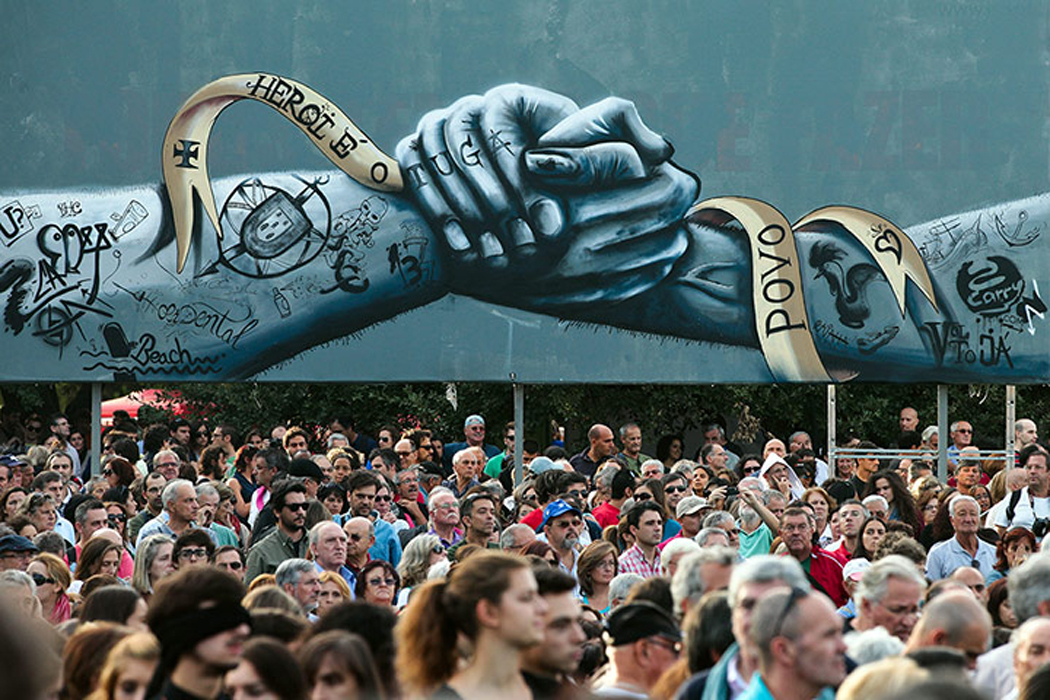
People demonstrating against the crisis in Marquês da Fronteira Avenue. In 2013 the ‘Association to Combat Job Insecurity’ and the ‘Inflexible Precarious Workers’ associations called on a group of artists to decorate the city with murals.