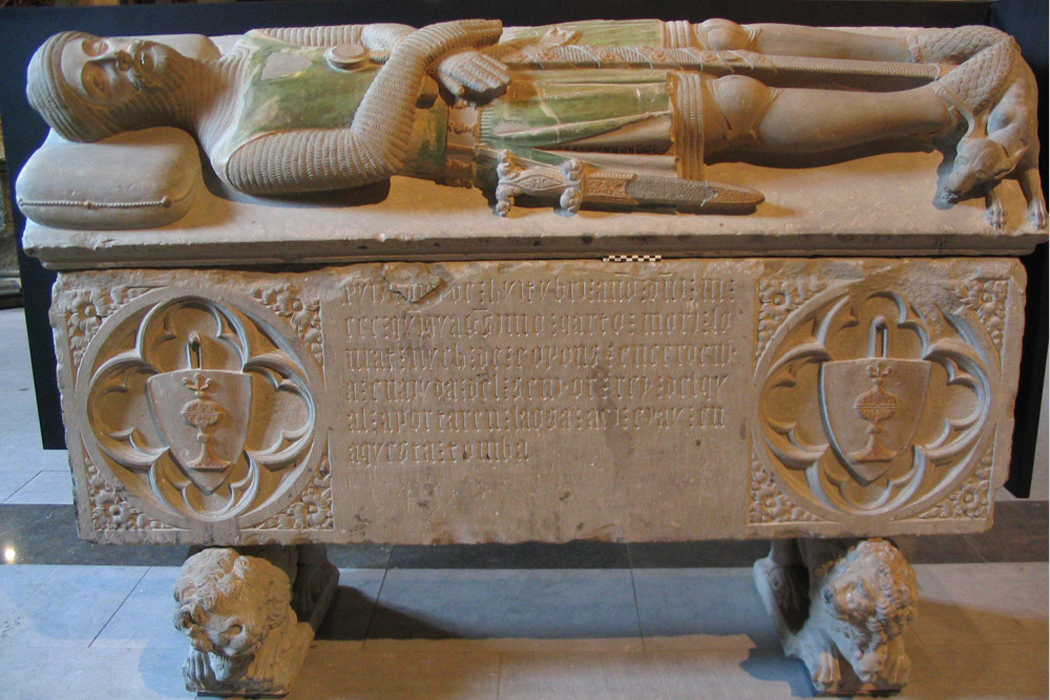
Medieval Knights are often shown wearing a coat of mail, brandishing swords and galloping on a horse across the battlefield. New book uncovers the archaeological facts behind this story, exploring the Catalan material
In the middle ages, nobles proudly donned armour at the parades, in tournaments and in war. In 1217 we hear from the autobiography of Jaume I of Aragon how he was at the age of nine for the the first time dressed as a soldier:
“I was no more than nine years old at the time, and for the battle that was expected a knight (whose name I do not recollect) lent me a light coat of mail or hauberk (gonio), which I put on, and that was the beginning, the first arms that I ever took.” (From: The Chronicle of James I, King of Aragon, Surnamed The Conqueror. Translated by John Forster Chapman and Hall, 1883: Chapter 14)
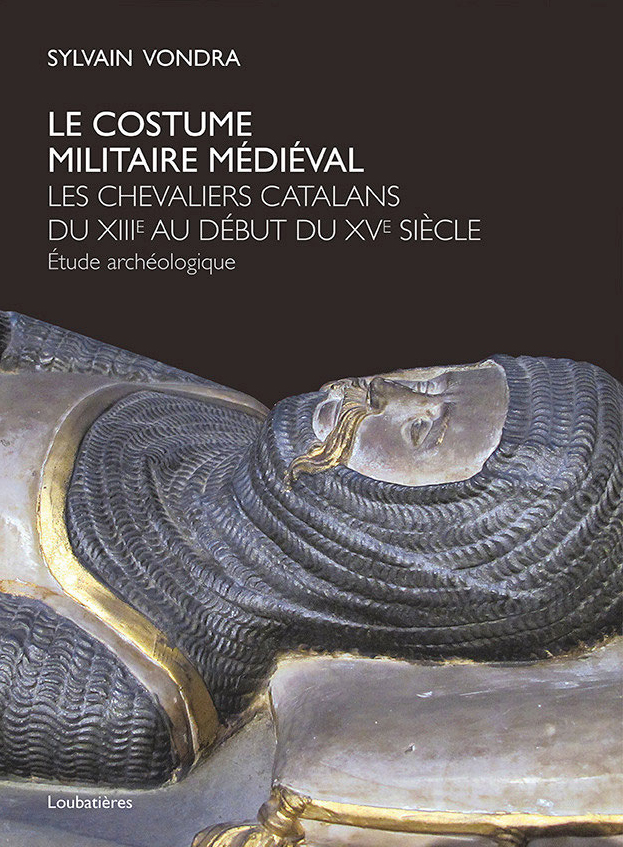 The armour was a sign of power that marked the position of the man in the hierarchical order. This is why it often appears on the seals or funerary monuments. These – the two main sources of this research – are present in large numbers in the region of Catalonia. It has a large concentration of recumbent figures that reveal stylistic influence from countries with which trade was plied. The thorough execution of some of these works brings an incomparable wealth of information for the study of the armour, which was worn by the aristocratic milieu in the entourage of the Counts of Barcelona – some of which became kings of Majorca. But what did they really look like?
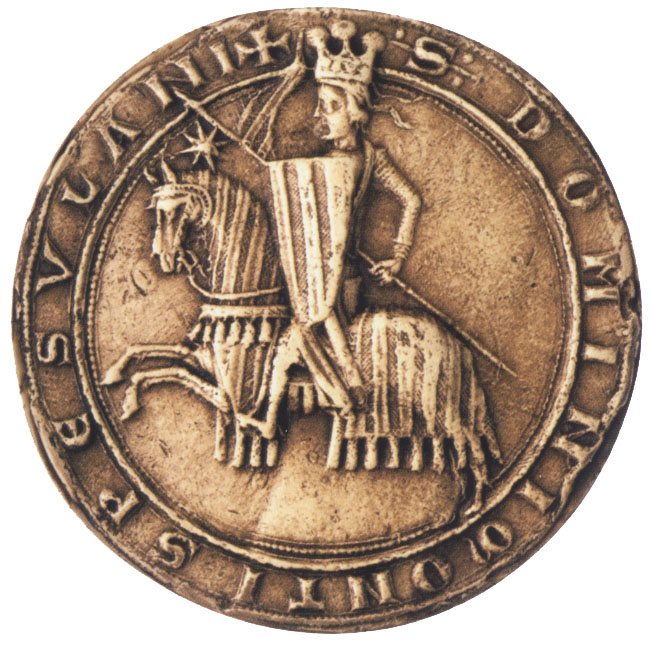
One of the very important sources are the seals. Small though they are, they show warriors in full gear right from the twelfth century, well before the onset of effigies. And their contribution goes further since they almost always display head protections and allow an overview of the equestrian equipment, which is more often than not a missing element in the funerary sculpture.
The data collected here help to understand what types of armor were worn by knights and with what weapons they preferred to be seen. For a detailed analysis of each piece of weaponry, it is possible to present the morphology and function, and then, through a chronological classification it appears that a need to be properly protected developed in the face of the growing effectiveness of offensive weapons.
As in the rest of Medieval Europe, the armour of a Catalan knights displays two main values. Primarily it signals ‘warrior’ . However,it also retains an important symbolic reference to hierarchy and power.
The book is the result of seven years of research conducted by Sylvain Vondra gathered in this book very well documented and beautifully illustrated.
L’archéologie du costume militaire médiéval. Le chevalier catalan du XIIe au début du XVe siècle. D’après les monuments funéraires et complété des empreintes sigillographiques
Sylvain Vondra
Nouvelles Éditions Loubatières 2015
ISBN 978 2 862 667164
FEATURED PHOTO:
Tomb of Hug de Copons from the Church of del Llor. Can bee seen at the Museu Diocesà i Comarcal de Solon. Photo: © Sylvain Vondra