The Man and the Myth
The discovery of the remains of Richard III might potentially change history
Tudor accounts foregrounded the disabilities and villainy of Richard III giving the impetus for the later Shakesperean defamation of the last king of the Plantagenets. Since then a long parade of distinguished actors have tried to impersonate his crippled walk and his withered arm. Indeed, many has taken their inspiration from the words of Thomas More, who inspired Shakespeare: “…little of stature, ill featured of limbs, crook backed, his left shoulder much higher than his right, hard favoured of visage..”
The remains of the king, however, dispute this caricature and declares it unfounded. Yes, the man had an idiopatic adult scoliosis, a wicked and probably very painful curvature of his spine. Idiopatic however means that he was afflicted by it when adolescent and not born with it as was hinted at by Thomas More, one of his later detractors. Neither were any of his arms withered, which was later claimed.
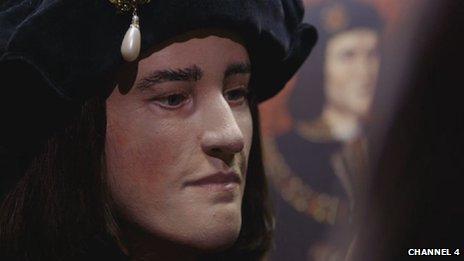
On the other hand the skeleton shows that he was a slender person probably more than five feet tall (his full height is something which the researchers have had problems deciding because of the scoliosis). With near effeminate physiognomy he may indeed have looked somewhat like a very early description, which state that he was with “quite slender arms and thighs, and also a great heart” (Niclas Von Popplau 1484). There is thus no reason to believe that he was a crippled coward; rather he must have been a capable, experienced warrior.

This is also the physiognomy which can be detected in the very early portrait which exists in the Royal Collection and which has recently undergone a detailed examination. From this it has been possible to show that this portrait shortly after its creation, or perhaps in order to ‘complete’ the image, underwent significant changes. Thus the outline of the King’s right shoulder (the left shoulder as we look at the painting) was extended upwards in an arch from the elbow to the neck so that one shoulder was made to seem higher than the other, creating the impression of a hunched back. The artist also appears purposefully to have turned the corners of the sitter’s mouth downwards to make the facial expression seem severe.” (read more about the portrait here).
All in all the discovery of the remains of Richard III has the potential to induce researchers to revaluate a number of the very early sources, which tells a different story than that of his later detractors.
As the Chancellor of the University of Leicester has claimed: “History may have to rewritten”.
Read more about the importance of the identification of the remains of Richard III
Read about the identification of the skeleton as that of Richard III
See photo of skull and skeleton of Richard III
READ MORE and FIND THE LINKS:
The fight for the upcoming reburial
Richard III‘s Inn
Latest biography of Richard III: