This week is all about medievalism: a new exhibition in Lübeck, a Medieval Modern Exhibition at Frederiksborg in Denmark, and a new book on “unthinking medieval poetry”
NEW EXHIBITIONS:
09.10. 2026 Let’s Play Mittelalter: When the Museum Becomes the Game

Games are now among the most powerful producers of popular medieval imagery. This exhibition does more than display those images: it asks visitors to inhabit the rules by which they are made. That makes it a potentially important test of museum interpretation, agency and historical counterfactuals. To explore the possibilities, The European Hansemuseum opens ‘Let’s Play Mittelalter’ in Lübeck’s Castle Friary this week. The visitor creates an avatar, solves tasks and chooses a route through a walk-in medieval game world. A tournament ground, banquet, ‘dragon’s lair’, gaming lab and side quests combine specialist research, pop culture, game design and media art. The museum describes the game itself – not labels or cases – as the exhibition’s central interpretive method. The exhibition runs to 31 October 2027.
The question raised is: When a museum makes the Middle Ages playable, does it reveal historical contingency – or replace the logic of the past with the logic of modern games?
The exhibition is supported by The Possehl Stiftung, and the EU-Förderprogramme in Schleswig-Holstein
Tags: Medievalism; Medieval Museums; Digital History; Games; Public History; Medieval Germany; Hanse; Medieval Education
08.10.2026 Medieval Modern: Agnes and Harald Slott-Møller
 How did medieval ballads and heroes around 1900 become raw material for modern Danish identity – and what did those national images leave out? This week, ‘Medieval Modern’, an exhibition on Agnes and Harald Slott-Møller opens in Frederiksborg Museum in Denmark north of Copenhagen. The exhibition focus on an artist couple which used folk ballads, medieval motifs and historical legend to formulate a vision of modern Denmark. The museum promises a critical examination of the artists’ attempt to root national identity in history and myth. The exhibition will show a wide collection of their work which not only represents a concise Danish example of medievalism as political work but also shows the genre in a known from for instance William Morris in a Nordic Mood. The medieval past did not simply survive into modernity around 1900; artists selected, coloured and monumentalised it to explain who belonged to the nation.
Tags: Medievalism; Medieval Denmark; Medieval Ballads; National Identity; Art History; Medieval Memory; Medieval Exhibitions
NEW RESEARCH
05.10.2026 New Manuscript for Berceo’s Vida de Santa Oria
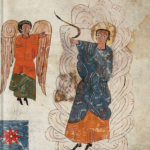 Gonzalo de Berceo’s Vida de Santa Oria is a 13th-century hagiographical poem written in cuaderna vía (four-fold verse) detailing the mystical visions and anchoritic life of the Riojan recluse Saint Oria (Aura) (1043-1070) associated with San Millán de Suso. At Harvard’s Medieval Studies Interdisciplinary Workshop, the PhD-student Jordan Vanderpool will present new manuscript evidence concerning Gonzalo de Berceo’s source for the Vida de Santa Oria. The question raised is whether Berceo freely shaped Oria’s visionary life, or whether he was translating and reorganising a source whose manuscript history can now be recovered? Such questions are necessary to pose whenever we encounter “spiritual” writings more ore less “said” to echo those of their primary witnesses, the women communicating their experiences. We look forward to the finalising of his PhD.
08.10.2026 1,150 Years Since the Battle of Andernach
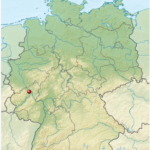 The week marks the 1,150 years since the battle of Andernach on 8 October 876. In August 826, Louis the German (806-876), ruler of East Francia, died and was buried at Lorsch. This invited his half-brother, Charles the Bald (823-877), king of West Francia, to attempt to secure the eastern half of Lotharingia. At the pitched Battle at Andernach, he was defeated by Louis the Younger (830-882). The anniversary falls at a moment when historians continue to question how quickly the Carolingian world hardened into distinct political regions. The battle is not commemorated locally, however in a new study by Christopher P. Flynn Charles the Bald’s decision to force an engagement against Louis the Younger in the context of the volatile politics of the time, as well reconstructing the decisive battle’s course. Andernach is often made to carry a large retrospective burden as a further step towards France and Germany following another decisive battle, that of Fonetnoy. The question remains, though, to which extent it was a result of the Carolingians’ succession struggles over Lotharingia, in which royal ambition, negotiated partitions and the Rhine frontier remained fluid.
Tags: 9th century; Carolingians; Medieval France; Medieval Germany; Lotharingia; Medieval Warfare; Medieval Borders;
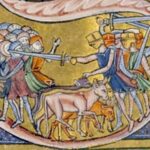 This article reinterprets the siege and capture of Ascalon in 1153 not merely as a military operation but as a deliberate act of political communication designed to consolidate royal authority in the Kingdom of Jerusalem. After the conflict with Queen Melisende, Baldwin III had to convert military success into durable political legitimacy. Drawing on narrative and diplomatic sources, the study uses the concept of political ritual to examine warfare as a performative expression of power. It argues that collective mobilisation, oath-taking, royal leadership, ceremonial entry into the conquered city, and the distribution of rewards served as mechanisms of elite integration and consensus-building. The campaign reunited secular and ecclesiastical elites previously divided by civil war, turning victory into symbolic capital that confirmed divine favour and reinforced monarchical authority. The siege of Ascalon thus emerges as a pivotal moment in the reconfiguration of royal power in the mid-twelfth-century Latin East.
NEW THESES
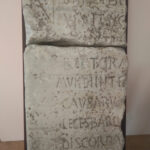 This dissertation examines ethnic discourse in the barbarian kingdoms of A.D. 493-554. Woodworth argues that a comparative focus on letters and letter-collections, with theirconcrete audiences and specific contexts, allows us to evaluate the role of ethnic discourse in both political and everyday life across the Ostrogothic, Burgundian, and Frankish kingdoms. He aims to demonstrate that literate individuals in these kingdoms had a practical interest in discourse surrounding romanitas as an ethnically-coded standard of behavior, and that using this language was an important strategy in both personal and political communication.
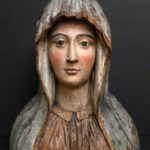
This study examines the relationship between self-inflicted pain and mystical experience in the lives of medieval women mystics, focusing on Marie d’Oignies, Christina the Astonishing, and Dorothea of Montau. While ascetic pain has often been interpreted as a sign of religious devotion, mastery over the body, and identification with Christ, the lives of these mystics reveal a further paradox: accounts of extreme bodily suffering are often intertwined with descriptions of spiritual pleasure. These experiences exceed straightforward imitation of Christ and instead suggest a complex interplay between pain and pleasure that destabilizes conventional understandings of embodied devotion. Drawing on interdisciplinary frameworks, including modern neuroscience, this study considers how self-inflicted pain may generate states of ecstatic pleasure and spiritual transcendence. Methodologically, it reads these experiences through sensation as an interpretive lens.
Communal Responses to the Plague in Medieval Novgorod, ca. 1352–1533 by Amelia Isabelle Sophie Gardner-Thorpe. Cambridge University 2026.
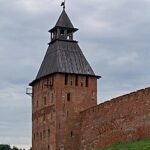 This thesis examines communal responses to repeated plague epidemics in the northwestern Rus’ city of Novgorod the Great (Velikii Novgorod) between ca. 1352 and 1533. Through the lens of extant textual sources (from Novgorodian, Pskovian, and Muscovite chronicles to ecclesiastical writings), commemorative practices and rituals, and selections of visual culture, this thesis goes beyond the ‘facts’ about plague epidemics in East Slavdom and explores why and how a single urban community thought and felt about, and reacted to, this disease on theirown terms. To do so, I employ Social Constructionist and Foucauldian frameworks of community, Culture, Power, and Knowledge to build a picture of what I mean by the ‘medieval Novgorodian community’ (and thus communal responses to plague) and how aspects of communal identity and action expressed itself in cultural texts. Set apart from modern epidemiological understandings about plague (Yersinia pestis), the present study underlines the overwhelmingly religious conceptualisation and understanding of disease in the collective Novgorodian cultural consciousness and how this essentially shaped, if not dictated, major responses to epidemics. While plenty of sources show that municipal authorities in Novgorod and Pskov used quarantines, regulations on burials and funerals, restricted social interaction (e.g., some religious gatherings), and even fled to combat plague, the textual consensus was that it was a divine punishment for sin.
NEW ISSUES OF JOURNALS
Amsterdamer Beiträge zur älteren Germanistik, Volume 86 (2026): Issue 1-2 (Sep 2026). BRILL
The Medieval Chronicle, Volume 18 (2026): Issue 2 (Sep 2026)
NEW BOOKS
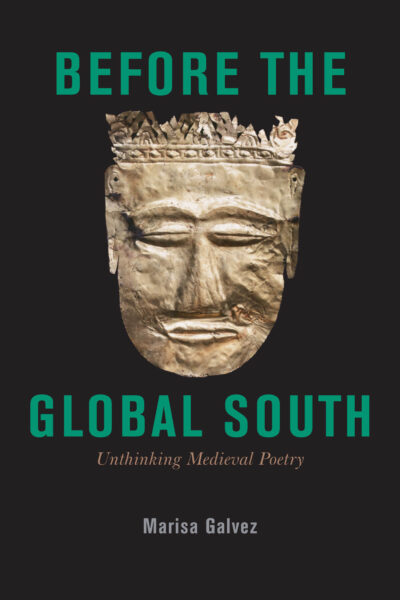 In this book, Marisa Galvez gathers an eclectic array of contemporary poets, artists, writers, and translators—from Brazilian poet Augusto de Campos and Irish painter Louis le Brocquy, to Occitanists Gérard Zuchetto and Jean-Louis Séverac, to Martinican writer Édouard Glissant, poet Rosanna Warren, and essayist Eliot Weinberg—to explore how they reimagine medieval European lyric forms. Galvez calls these adaptations unthought medievalism, and in Before the Global South, she argues that we should understand them as a mode of inquiry that is at once scholarly, critical, and creative. In these modern innovations, Galvez finds an expression of the medieval that challenges popular and scholarly dogmas alike, one she believes can inspire us to create a more shared, global world. A bold approach to the work of contemporary, Indigenous, and other emergent artists as revisionist adaptations of medieval lyric poetry.
Weather Magic in Medieval Scandinavia: Old Norse-Icelandic Traditions in Broader Scandinavian Contexts. By Jennifer Hemphill, Routledge. 2026
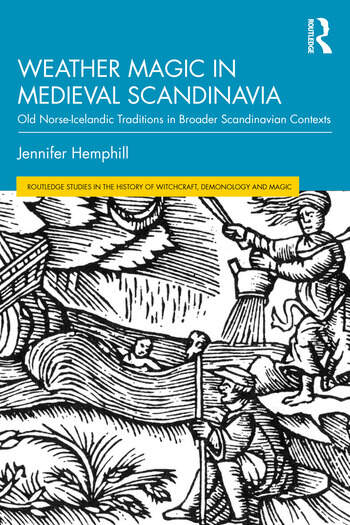 Weather Magic in Medieval Scandinavia explores how people in medieval Scandinavia understood and attempted to influence the weather through magic. Covering the period from c. 800 to 1555 ᴀᴅ, the book reveals how storms, winds, and divine tempests shaped not only medieval imagination but also law, ritual, and power across the North. Drawing on Old Norse sagas, poetry, law codes, religious texts, archaeology, and early modern trial records, this is the first comprehensive study of weather magic across the medieval Scandinavian world. The book argues that weather magic was not a marginal superstition but a key part of how medieval societies conceptualised human and divine agency within nature. It traces how figures such as Óðinn, völur, and saints appear as mediators between people and the elements, and how ideas of magic and miracle blurred in Christian and non-Christian contexts. By combining literary, historical, and material evidence, Weather Magic in Medieval Scandinavia illuminates how weather manipulation was bound to performance, voice, and social power, linking magic, seafaring, warfare, and the legitimisation of elite authority. The study offers new interdisciplinary insights into belief, ecology, and cultural exchange in the medieval North.
The book appeals to scholars and students of Old Norse studies, medieval history, folklore, religious studies, and environmental humanities, as well as general readers interested in the intersections of magic, mythology, and climate in the North.
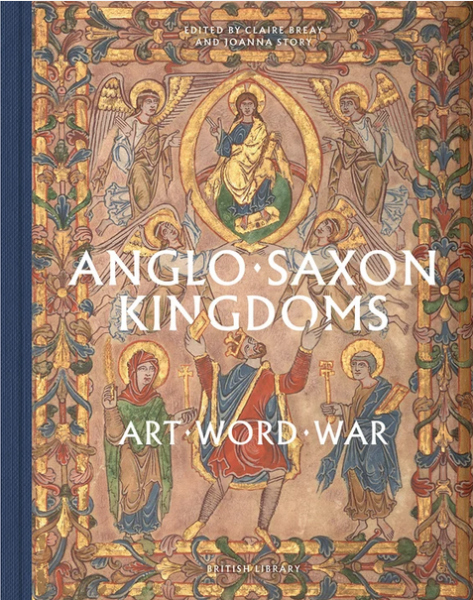 In 2018, the British Library staged a landmark exhibition, the largest ever to deal exclusively with Anglo-Saxon England. Presenting over 180 objects, the exhibition and its book were a critical and commercial success and led the way for a cultural re-appraisal of Anglo-Saxon culture. This expanded edition of the bestselling exhibition book includes new retrospective material on the influence of this exhibition and subsequent discoveries in the field. The Anglo-Saxon period stretches from the arrival of Germanic groups on British shores in the early 5th century to the Norman Conquest of 1066.
During these centuries, the English language was used and written down for the first time, pagan populations were converted to Christianity, and the foundations of the kingdom of England were laid. This richly illustrated book presents Anglo-Saxon England as the home of a sophisticated artistic and political culture, deeply connected with its continental neighbours. Leading specialists in early medieval history, literature and culture engage with the unique, original evidence from which we can piece together the story of the Anglo-Saxon kingdoms.
Charlemagne’s Dream. The rie and Fall of the Carolingian Empire. By James Palmer. Basic Books 2026
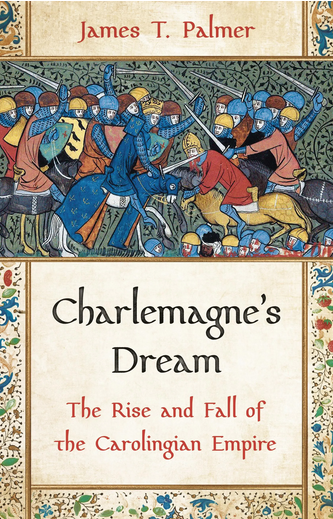 Today, the Carolingians are best known as the dynasty of Charlemagne. In a few remarkable decades spanning the late eighth and early ninth centuries, Charlemagne united much of modern-day Europe through conquest and diplomacy, establishing the continent’s first empire since the fall of Rome. Charlemagne’s Dream depicts the entire sweeping arc of the Carolingian dynasty – the men and women who laid the foundations for his achievements, and the colourful heirs who squandered his legacy. They fought and traded with power centres as far-flung as Córdoba, Constantinople, and Baghdad. They gathered scholars and philosophers to drive a cultural and intellectual renaissance. They allied with the pope, forever changing the relationship between church and state. And they dispatched the first missionaries to northern Europe, expanding Christendom’s reach farther than ever imagined.
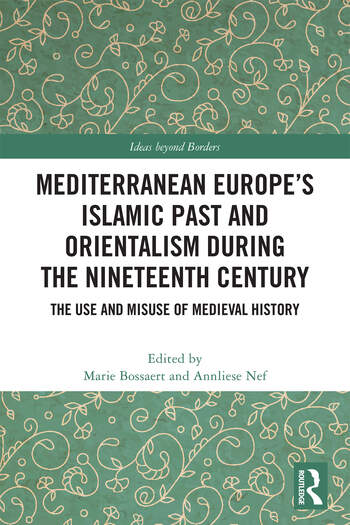 Spain, Portugal, Italy, and France share a common historical experience: a period of Islamic presence during the Middle Ages. This volume examines how this Islamic past was studied, interpreted, represented, and mobilised during the 19th century, a time marked by the construction of nation-states and the expansion of colonial empires, particularly in the Maghreb.
Bringing together medievalists and 19th-century historians, the book offers, for the first time, a collection of contributions focused on these different regions of Mediterranean Europe. Whereas these four countries are usually studied separately, this volume proposes a joint, comparative, transnational, and connected approach. It explores the intersections of Orientalism, medievalism, and nation-building to shed light on the distinctive ways in which Mediterranean Europe has historically engaged with its domestic relationship to Islam.
This book will appeal to scholars and students interested in medieval history, 19th-century European history, the history of Orientalism, nationalism and nation-building, colonial studies, Mediterranean studies, Islamic history in Europe, historiography, and the cultural politics of memory and heritage.
God’s Hammer: A History of the Viking Crusades. By Thomas Williams. William Collins Books 2026
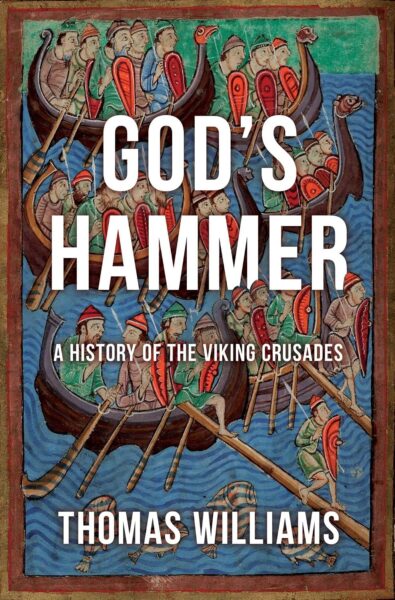 In 1861, the archaeologist James Farrer excavated a grass-grown mound on the Orkney Islands off the north coast of Scotland. He discovered a Neolithic tomb that had once provided shelter for the prehistoric dead. He also found evidence that many centuries earlier, Norse-speaking tomb-breakers had entered the mound and left dozens of inscriptions, one of which stood out: “Crusaders broke into this barrow.” The world of the Viking north and the era of the Crusades sit apart from one another in the imagination, divided by the mental gulf created by the Norman Conquest. The Vikings are seen as a phenomenon of the Dark Ages, a time of unreconstructed barbarism and pagan menace, drenched in blood-sacrifice and presided over by grim gods; the Crusades on the other hand are squarely medieval, an outgrowth of the color, pageantry and romance of an era of knights, cathedrals, castles and bright heraldry: an age of violence, certainly, but glossed with faith and chivalry. Both images are false, of course, created and compounded by centuries of historiographical habit. From the tenth century onward, the men of the north were as likely to be found killing in the name of Christ as they were to be pillaging the monasteries of Britain, Ireland and France. And, by the eleventh and twelfth centuries, the swords of Scandinavia were turned with frequency and fervor against the perceived enemies of God: in the Holy Land, in the wild and frozen world of the eastern Baltic and within the bounds of their own Scandinavian realms.
God’s Hammer is full of the adventure, horror, and madness associated with the Crusades, yet it exists in a world that remained inspired by the Viking heroes of the past. The focus throughout is on the deeds and experiences of the Scandinavians themselves; of the change they wrought upon the people and places they encountered, and the way in which the experience of Holy War transformed the self-image and mentality of those who prosecuted it and shaped the societies that gave rise to and sustained it.
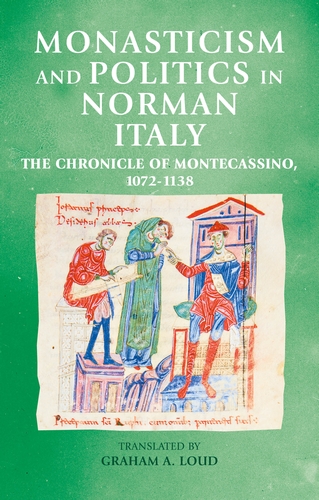 The Chronicle of Montecassino gives a detailed and compelling account of the monastery during its ‘golden age’ under Abbots Desiderius and Oderisius I, and the challenges that it then faced from the early years of the twelfth century onwards. As law and order in the Principality of Capua broke down, the monks faced increasing threats to their lands, and internal division arose within the monastery. Eventually too their previously close relationship with the papacy broke down. The last part of the chronicle includes a day-by-day account by Peter the deacon of his defence of the monastery at a meeting with Pope Innocent II and Emperor Lothar III in July 1137. This text provides a fascinating insight into both monasticism and politics in medieval southern Italy.
FEATURED PHOTO
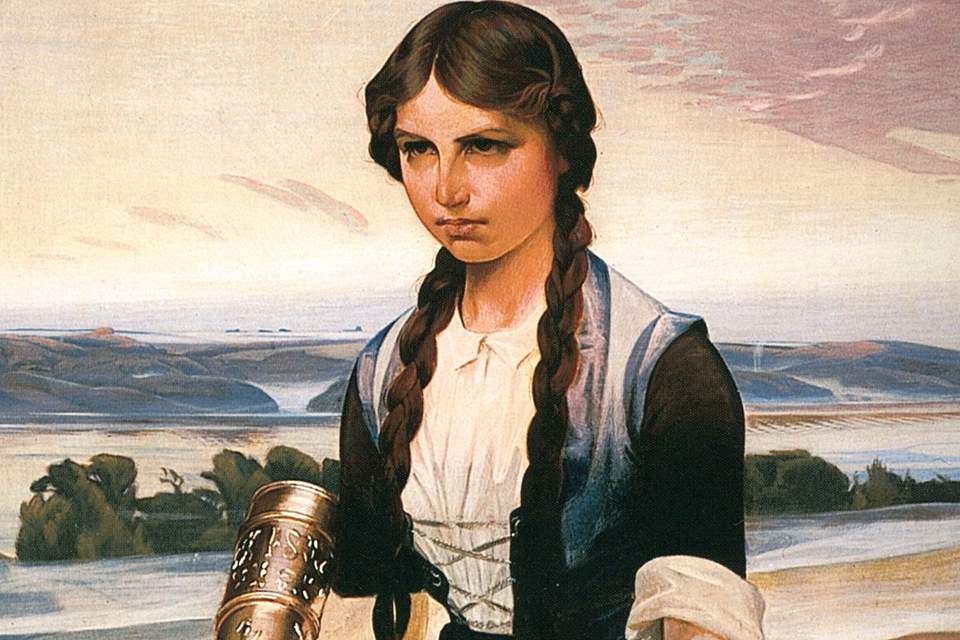
Around 1900, the artist couple Agnes and Harald Slott-Møller developed a vision of what a modern Denmark should look like. Through folk ballads, medieval motifs and powerful national narratives, they turned to the past in order to understand the age in which they themselves lived. Agnes and Harald Slott-Møller’s colourful paintings are filled with figures drawn from folk ballads and historical legends. The feature photo is part of a painting presenting the girl who found the Golden Horns in the 17th centuryin Southern Jutland. In the painting, Agnes acted as a model.