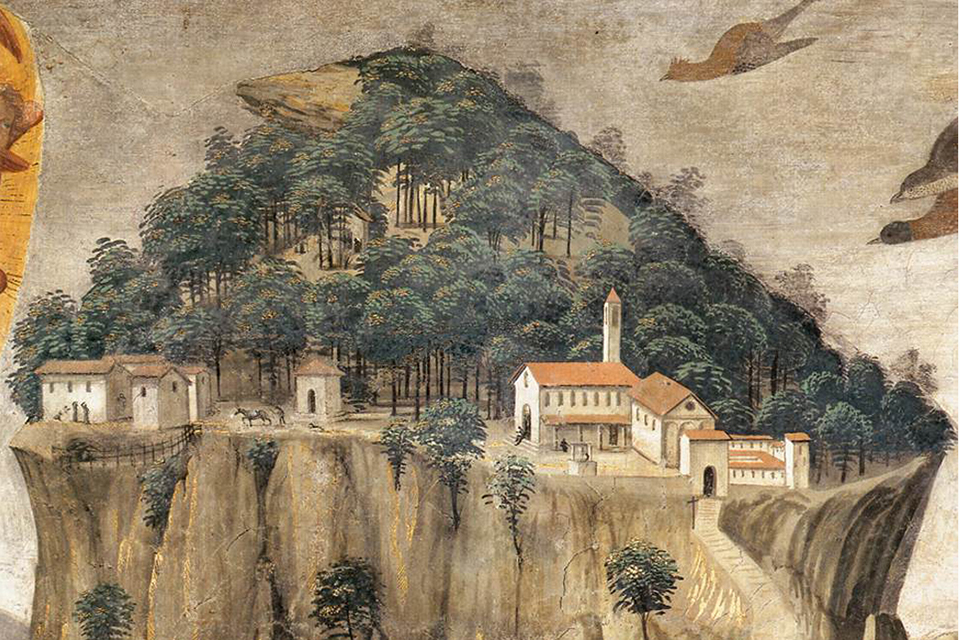
From Sabatier to Leppin, modern biographers have repeatedly attempted to reconstruct the “real” Francis, each revealing as much about their own age as about the saint
Already two years after the death of Francis of Assisi, the Poverello was canonised. At the same time, Thomas of Celano was officially commissioned to write his vita and to provide the texts for the new saint’s office. Yet over the following forty years, Francis’s heirs repeatedly quarrelled over how his legacy should be administered and, not least, how a saint was to be fashioned out of the man they had known.
In the end, Bonaventure was entrusted with the task of bringing these disputes to a close by composing an authoritative legend. The result was a virtual damnatio memoriae of many earlier recollections, remembrances and fragments of memory.
During the twentieth century, however, long-forgotten manuscripts containing alternative versions of these early traditions began to resurface. As recently as 2015, a previously unknown manuscript was discovered preserving an abbreviated version of Celano’s biography together with a substantial collection of miracles.
These rediscoveries have fuelled a remarkable succession of biographies throughout the twentieth and twenty-first centuries, in which leading medievalists have offered strikingly different “takes” on the “real” Francis. The result is a rich but sometimes bewildering historiography, making it difficult to gain a firm sense of how the events of the thirteenth century actually unfolded – and of how far the Francis we think we know is the man himself, or the product of successive acts of remembrance, interpretation and reinvention.
Here is a commented list:
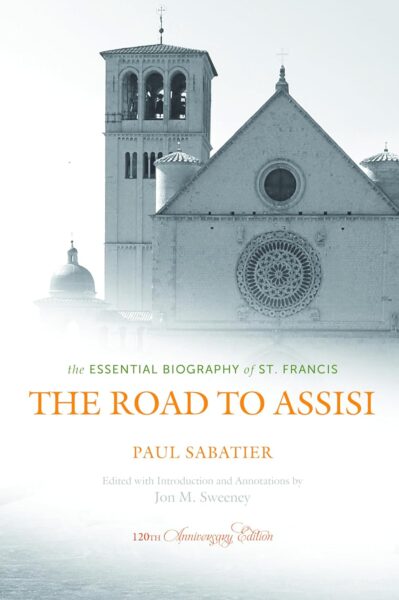 Paul Sabatier, Vie de Saint François d’Assise (1893), English trans. Louise Seymour Houghton as Life of St. Francis of Assisi (1894) (New edition 2014) , stands at the beginning of the modern historiography. Although technically a nineteenth-century work, it shaped almost every major twentieth-century discussion. Sabatier’s Francis is the evangelical charismatic whose original inspiration was gradually constrained by ecclesiastical and institutional forces. The underlying contrast is between Francis as a spontaneous exponent of the Gospel and the later Order as an organisation increasingly governed by law, hierarchy and clerical discipline. Sabatier’s Protestant background is important here, and later scholarship has often criticised the extent to which his Francis resembles the liberal religious reformer of Sabatier’s own age. Yet his great achievement was to make Francis a historical problem rather than merely a hagiographical subject. In doing so, he also helped to create the modern “Franciscan Question”: how far can the earliest and later sources be trusted, and can one recover the historical Francis behind the competing traditions?
xxx
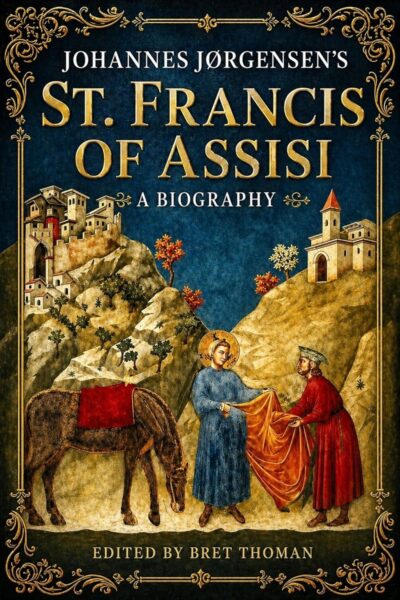 Johannes Jørgensen’s Den hellige Frans af Assisi (1907), translated into English as Saint Francis of Assisi: A Biography, represents in many respects a Catholic answer to Sabatier. Jørgensen does not deny Francis’s radicalism, but he locates it firmly within Catholic sacramental Christianity rather than treating it as a protest against the Church. His Francis is above all a poet, convert and religious personality whose experience of nature, poverty and faith forms an integrated whole. The book is less source-critical than the later academic biographies, but it has a particular strength in its sensitivity to Francis as a performative and aesthetic personality. Jørgensen understood very well that Francis’s religion was enacted through gesture, speech, song, clothing and behaviour rather than through doctrine alone. The biography was also a personal defence for his conversion which took place a year after he had first travelled to Assisi
xx
 G. K. Chesterton’s St Francis of Assisi (1923) is not a scholarly biography in the strict sense, but as with Jørgensen’s it has had enormous influence on the modern image of Francis. Chesterton’s Francis is the joyous Christian fool, troubadour and knight of paradox. Poverty is treated less as a socioeconomic category than as an instrument of liberation: by giving up ownership, Francis becomes free to receive the world afresh. Chesterton was particularly alert to humour, inversion, chivalric culture and dramatic gesture. Much of the book is impressionistic, yet his emphasis on performance and paradox has proved remarkably durable and, in some respects, anticipates later work on Francis as an enacted rather than merely doctrinal religious figure.
xxx
 Arnaldo Fortini’s Nova vita di San Francesco (1926), later expanded and translated into English in 1980 as Francis of Assisi, marks a different development. Fortini’s central contribution was to restore Francis to the civic, familial and political world of Assisi. His Francis is Pietro Bernardone’s son before he is the universal saint. Merchant families, urban conflict, property, neighbourhoods, communal politics and relations with Perugia all become central. Fortini’s archival reconstructions have not all survived subsequent scrutiny, but he decisively demonstrated that Francis cannot be understood apart from the particular social and political culture of the Umbrian commune.
xxx
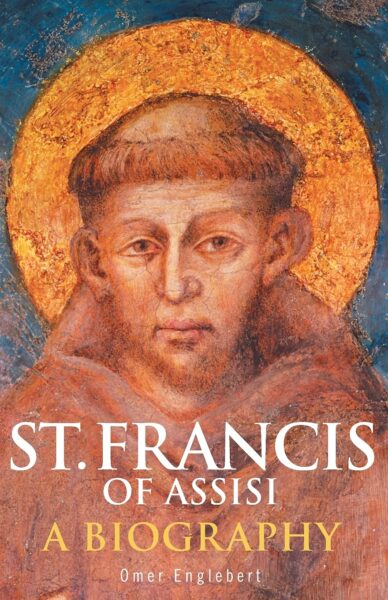 Omer Englebert’s Vie de Saint François d’Assise, 1950, published in English as Saint Francis of Assisi: A Biography (2013), belongs to the great mid-century Catholic synthesis. His Francis remains recognisably the saint of the Catholic tradition, but the narrative incorporates modern historical criticism and avoids the more openly devotional tone of earlier lives. Englebert is important less because he introduced a radically new interpretation than because he represents a stage at which critical historiography had been absorbed into mainstream Catholic biography. In his personal life, Englebert was a Franciscan who ended up as a local priest.
xxx
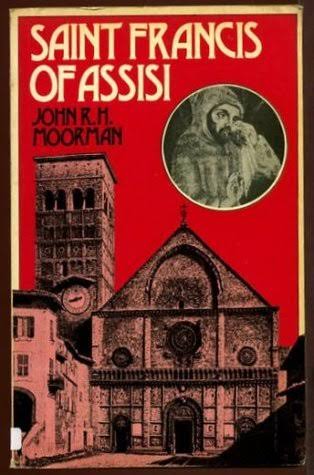 John Moorman’s Saint Francis of Assisi (1963) moves further towards professional ecclesiastical history. His Francis is a medieval religious founder situated within the reform movements and institutional developments of the twelfth and thirteenth centuries. Moorman is less interested than Jørgensen or Chesterton in Francis’s personality as such, and more concerned with chronology, ecclesiastical context and the emergence of the Franciscan movement. Francis therefore appears less as an isolated genius and more as the founder of a historical phenomenon.
xxx
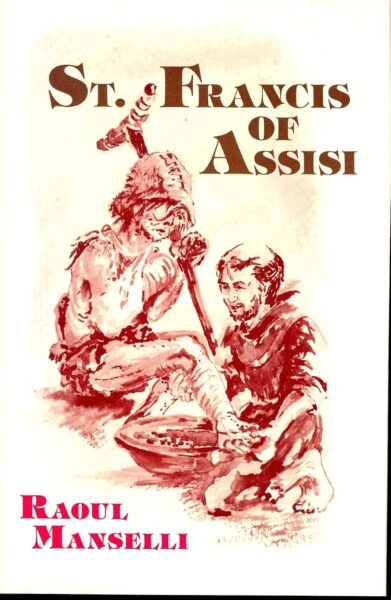 Raoul Manselli’s San Francesco d’Assisi (1980), translated into English as St. Francis of Assisi, represents one of the decisive turning points in modern Franciscan historiography. Manselli wanted to strip away the picturesque and sentimental Francis accumulated by centuries of devotional retelling and to ask, episode by episode, what the sources actually permit us to say. His Francis remains profoundly religious and Christocentric, but is more difficult, more historically conditioned and more human. The key concept is the attempt to follow in the vestigia Christi, the footprints of Christ, rather than the romantic pursuit of poverty for its own sake. Manselli also rejected the simple Sabatierian opposition between Francis and institution. The drama lies instead in Francis’s attempt to translate an intensely radical evangelical intuition into a viable historical form. His companion study Nos qui cum eo fuimus was equally important because it reconsidered the evidential status of the traditions attributed to the companions.
xxx
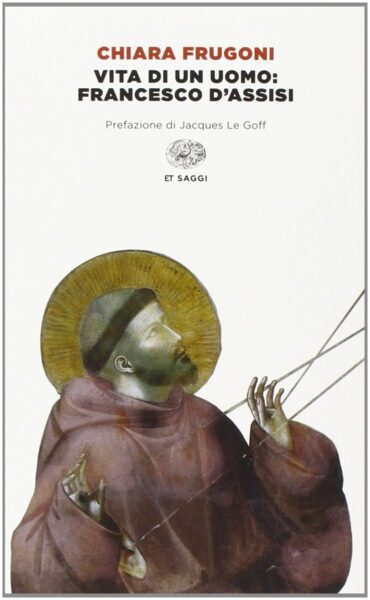 Chiara Frugoni’s Vita di un uomo: Francesco d’Assisi (1995), translated as Francis of Assisi: A Life, shifts the centre of gravity again. The Italian title is revealing: this is the “life of a man”. Frugoni insists on Francis as a historically situated human being rather than a timeless moral exemplar. He is intelligent, ambitious, imaginative, difficult and thoroughly medieval. Her great contribution, however, lies in combining biography with the history of representation. In Francesco e l’invenzione delle stimmate and related studies, she showed how texts and images progressively constructed an authoritative Francis. Her question is therefore not only what Francis did, but how particular versions of what he did became visible, credible and canonical. This makes her especially important for the history of Francis’s body, appearance, stigmata and iconisation.
xxx
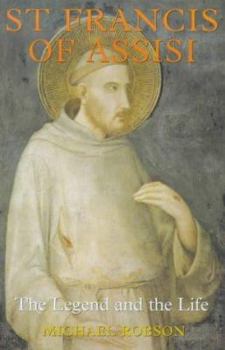 Michael J. P. Robson’s St Francis of Assisi: The Legend and the Life (1997) approaches Francis through relationships and through the creation of legend. Francis is understood in relation to Pietro Bernardone, Bishop Guido, Innocent III, Cardinal Ugolino, Clare, Anthony and others. Robson’s interest lies partly in the fact that the “legend” of Francis began while Francis was still alive. Biography therefore becomes relational rather than purely individual, and the formation of Franciscan memory becomes part of the historical subject itself.
xxx
 Jacques Le Goff’s Saint Francis of Assisi, translated into English in 2004, is not a conventional cradle-to-grave biography so much as a synthesis of Le Goff’s long engagement with Francis. This is very much the Annales Francis. Francis appears at the intersection of the great transformations of European society around 1200: urbanisation, the expansion of money, the rise of lay religious culture, the growth of vernacular expression, and the shift from older monastic models to the mendicant movements. Le Goff’s question is not simply who Francis was, but why somebody like Francis could emerge at this particular moment. Francis is therefore both the product and the agent of social transformation.
xxx
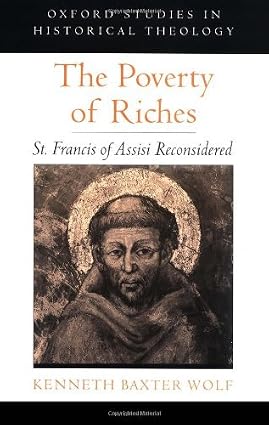 Kenneth Baxter Wolf’s The Poverty of Riches: St. Francis of Assisi Reconsidered (2003) belongs here, between Le Goff’s social contextualisation and the later work of Vauchez and Thompson. It is not a full biography, but it is too important to omit because it changes the terms of the discussion. Wolf asks what Francis’s voluntary poverty meant when viewed from the perspective of people who were involuntarily poor. His Francis is the privileged man who chooses poverty and thereby acquires a form of spiritual capital unavailable to those who had no choice in the matter. The distinction between voluntary and involuntary poverty allows Wolf to question one of the most persistent assumptions of Franciscan biography: that identifying with the poor is necessarily equivalent to assisting them. He also asks whether mendicant poverty could compete with the needs of ordinary beggars rather than alleviating them. Conceptually, Wolf is important because he forces a socioeconomic test upon the traditional celebration of Franciscan poverty. At the same time, his handling of the sources is not always as rigorous as his argument requires, and his references can be frustratingly imprecise. He is best read as a provocative corrective rather than as the most reliable guide to the primary evidence.
xxx
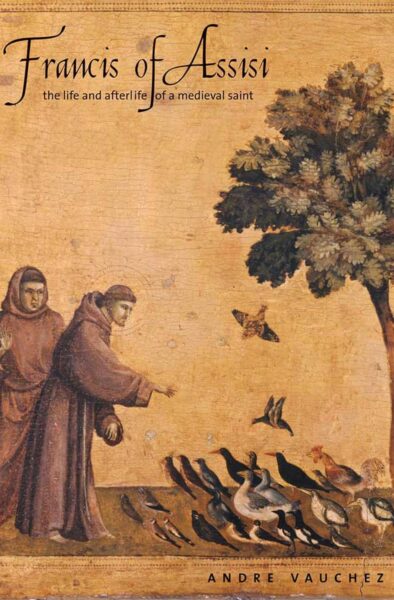 André Vauchez’s François d’Assise: entre histoire et mémoire (2009), translated as Francis of Assisi: The Life and Afterlife of a Medieval Saint, is perhaps the most capacious modern synthesis. The subtitle, “between history and memory”, gives the method. Vauchez accepts that a historical Francis can be recovered, but only through a succession of memories that are themselves historically significant. He therefore avoids both naïve acceptance of the hagiographies and the idea that source criticism can simply strip them away to reveal an untouched historical core. Francis emerges as a medieval religious figure whose memory was continually reshaped by the needs of successive communities. Vauchez is especially good at resisting modern appropriations of Francis as a straightforward environmentalist, pacifist or interfaith liberal, while still taking seriously the genuinely innovative elements in his relation to creation, poverty, Scripture and the body.
xxx
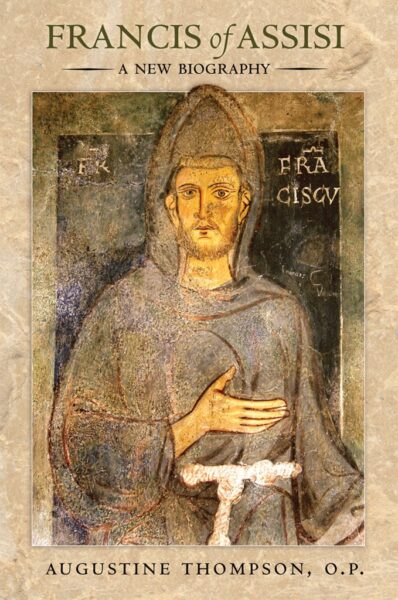 Augustine Thompson’s Francis of Assisi: A New Biography (2012) attempts a renewed source-critical reconstruction after this historiographical turn towards memory and representation. Thompson’s Francis is a thirteenth-century Italian lay penitent, intensely sacramental and liturgical, emotionally complicated and often overwhelmed by the movement that formed around him. Thompson gives particular weight to Francis’s own writings and to material that can be independently corroborated, while treating later picturesque anecdotes with considerable scepticism. The result is a Francis who is in some respects more orthodox and more ecclesiastically embedded than the popular modern saint, but also stranger and less easily assimilated to contemporary ideals. Thompson’s separate “Sources and Debates” section makes the book particularly valuable because it exposes the evidential machinery behind the reconstruction.
xxx
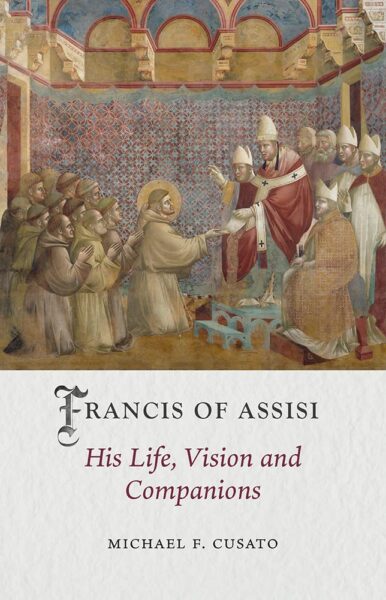 Michael F. Cusato’s Francis of Assisi: His Life, Vision and Companions (2023) represents one of the most important recent attempts to move beyond the older emphasis on Francis as the solitary hero of poverty. Cusato places minoritas rather than simply paupertas at the centre of Francis’s vision. Poverty matters, but the more fundamental move is the deliberate assumption of a socially lesser position and the attempt to create relationships across boundaries of status and exclusion. The encounter with lepers is therefore not merely an episode of personal conversion but part of a broader reorientation towards those defined as socially marginal. Cusato also gives greater weight to the companions and to Clare, presenting early Franciscanism as a collective experiment rather than the institutional residue of a single exceptional individual.
xxx
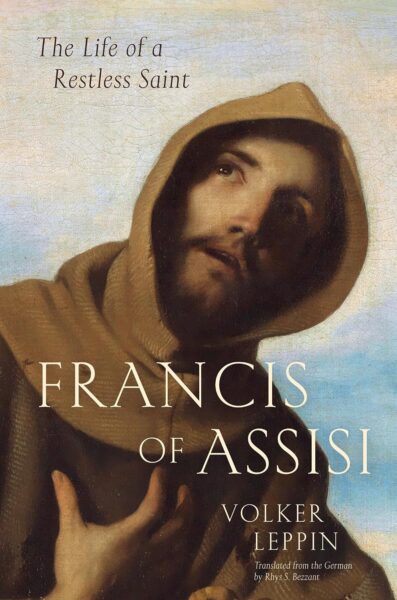 Volker Leppin’s Franziskus von Assisi has now appeared in English as Francis of Assisi: The Life of a Restless Saint, translated by Rhys S. Bezzant and published by Yale University Press in 2025. Leppin belongs naturally at the end of this historiographical sequence because he makes the uncertainty of the evidence itself part of the interpretation. His Francis is a seeker who never quite reaches a settled destination: charismatic, spiritually intense, frequently restless and at times uncomfortable with the movement gathering around him. Leppin insists that the historical record is fragmentary and that any biography of Francis therefore remains an act of reconstruction rather than recovery in any simple sense. He gives particular weight to Francis’s own writings, while treating later narratives as indispensable but mediated evidence.
xxx
Overview
Seen as a whole, the historiography develops in a fairly clear sequence. Sabatier made Francis the charismatic reformer threatened by institution. Jørgensen and Chesterton reasserted the religious, poetic and performative saint. Fortini and Moorman restored him to communal and ecclesiastical history. Manselli subjected the traditions to more severe source criticism. Frugoni and Robson turned attention towards representation, relationships and the making of memory. Le Goff located Francis within the structural transformations of medieval society. Wolf then challenged the romanticisation of Franciscan poverty by asking how voluntary poverty looked from below. Vauchez brought history and memory together in a large synthesis. Thompson attempted a renewed reconstruction of the historical Francis from the most secure evidence. Cusato shifted attention from poverty alone to minoritas, fraternity and the social experiment created around Francis. Leppin, finally, returns once more to the biographical problem itself: how can one write the life of Francis when the surviving evidence consists of fragments, memories and competing acts of interpretation?
The movement is therefore not simply from “less accurate” to “more accurate” biographies. The question itself changes. Sabatier asks which Francis is authentic. Manselli asks what the sources can sustain. Frugoni asks how Francis was made into an image. Le Goff asks why Francis was possible in the society of around 1200. Wolf asks what Franciscan poverty meant socially. Vauchez asks how historical experience became cultural memory. Thompson asks what can still be reconstructed after all this criticism. Cusato asks whether the central subject should perhaps be not Francis alone, but the social form of life he and his companions attempted to create. Leppin then asks something slightly different again: whether the most historically responsible biography may be one that acknowledges that Francis can never be reconstructed as a seamless whole.
READ MORE