Contrary to received wisdom monks flittered around the Early Medieval Mediterranean. Conference in November explores these Monastic Journeys
Monastic Journeys from Late Antiquity to the Middle Ages. Religious Aspirations, Political Goals and Economic Concerns
Vienna
17.11.2016 – 19.11.2016
Monastic Journeys from Late Antiquity to the Middle Ages is the third conference organised by the programme: Monks Around the Mediterranean: Contacts, Exchanges and Influences in East and West from Late Antiquity to the Middle Ages (4th-15th c.)
Call for papers
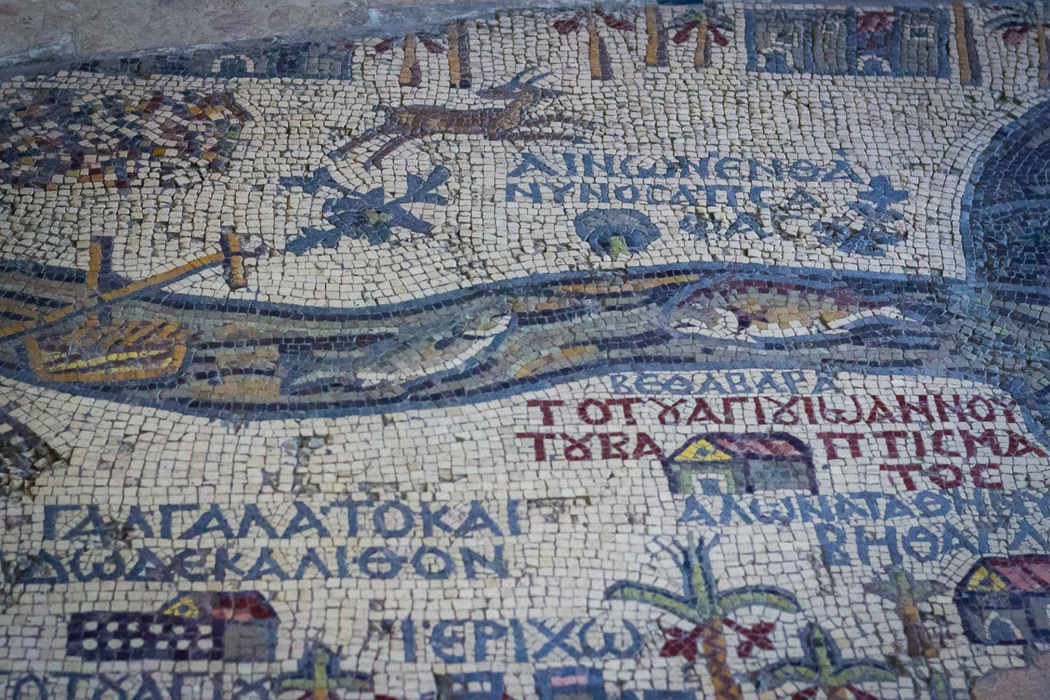
The conference on “Monastic Journeys from Late Antiquity to the Middle Ages: Religious Aspirations, Political Goals and Economic Concerns” welcomes contributions on Eastern and Western monasticisms. It will focus on monks travelling over long distances, despite the monastic rule of stabilitas loci.
Monastic journeys have several aspects, among them:
- Religion, for missionary monks, founders, pilgrims, crusaders;
- Representation, for ambassadors, petitioners, administrators of monasteries, congregations or orders;
- Economy, for monks seeking business, privileges and funding;
- Education, for monks considered as students, scholars, or those looking for a distant monastic experience;
- Constraint, for refugees, monks banned or summoned to a trial.
Monastic journeys reveal the broad social functions of the monks in late antique and medieval societies. They show in what ways monasticism was regularly used to meet political needs. One may also consider the sacred geography and the holy places of power linked by those movements. Practical issues such as logistics, financing and distant accommodation may be addressed, as well as the role of monks in interreligious dialogue. The geographic frame is the wider Mediterranean and continental Europe. The period under consideration extends from the 4th to the 15th century.
Communications are expected to last 20 minutes. They will be presented preferably in English, but German and French are also accepted. The proceedings of the conference will be published.
CONTACT:
Please send your title and a brief summary by 30 April 2016 to the following address: programme-moines@ifao.egnet.net. The results of the call will be announced by 15 May 2016.
A first conference on regional trips (“Monastic mobility and contacts at local and regional scales”) was held at the French School in Rome from 17 to 19 September 2014. A second conference on the monastic heritage of a Greek father was held in Rome in 3 November 3 2015 (“From Basil to the Basilians. The monastic offspring of a Greek father in East and West”).
ORGANISING COMITTEE:
- Olivier Delouis, CNRS, Paris olivier.delouis@college-de-france.fr
- Maria Mossakowska-Gaubert, IFAO, Cairo mmossakowska@ifao.egnet.net
- Annick Peters-Custot, University of Nantes annick@peters-custot.fr
- Claudia Rapp, Universität Wien and Österreichische Akademie der Wissenschaften claudia.rapp@univie.ac.at
SUPPORT:
The “Monks around the Mediterranean” program (2012-2016) is supported by the following partners:
- Institut français d’archéologie orientale (IFAO, Le Caire)
- Unité mixe de recherche Orient et Méditerranée (UMR 8167, CNRS-Collège de France, Paris)
- Laboratoire d’excellence « Religions et sociétés dans le monde méditerranéen » (RESMED, Paris-Sorbonne)
- École française de Rome (EfR)
- École française d’Athènes (EfA)
- Centre de Recherches en Histoire Internationale et Atlantique (CRHIA, EA 1163, Université de Nantes)
The 2016 meeting is made possible through the support of the Wittgensteinprize Project ‘Mobility, Microstructures and Personal Agency’ at Vienna University and the Abteilung Byzanzforschung/IMAFO of the Austrian Academy of Sciences.
FEATURED PHOTO:
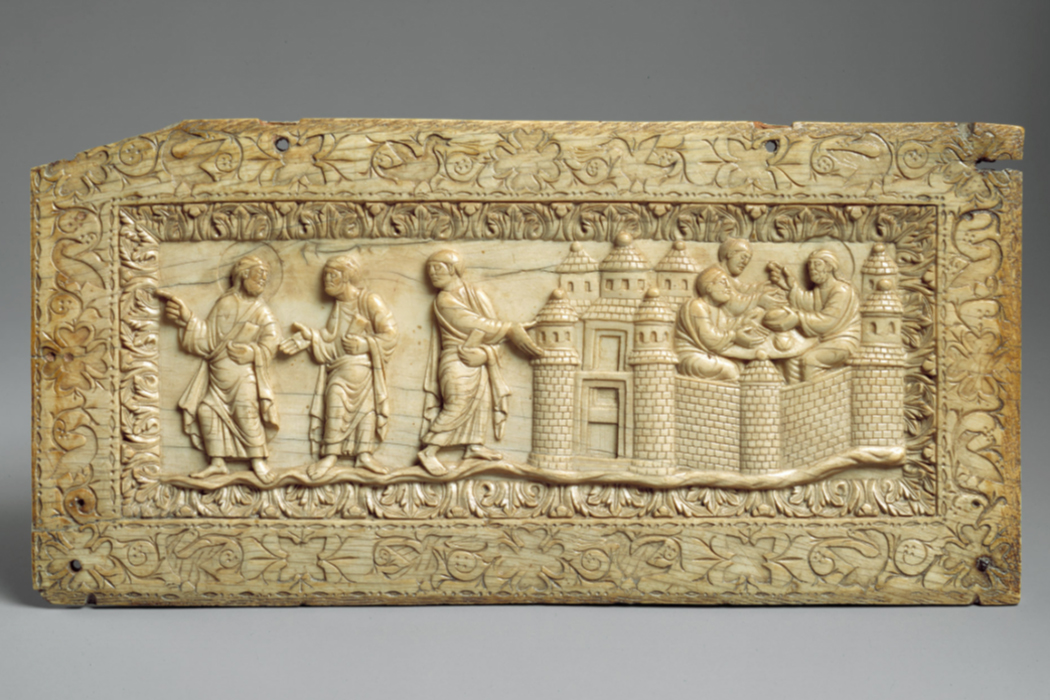
Plaque with Scenes of the “Road to Emmaus”, ca. 850–900, Northern France. This plaque probably once served as the side panel of a small, luxuriously crafted box made for a church. The decorative animal and floral motifs on the border were originally inlaid with gold. The animated carving in the center shows two scenes from the life of Christ. At the left, Christ appears after his resurrection to two disciples on the road to Emmaus. They do not recognize him, but invite him, with bold gestures, to dine with them. At the right, the three have supper within the town walls of Emmaus, and it is there, in the breaking of the bread, where Christ’s identity is revealed. © Metropolitan Museum