German historians of the 19th and early 20th centuries claimed that Otto the Great (912–973) was responsible for consolidating Germany as a nation. Modern historians tell a more nuanced story.
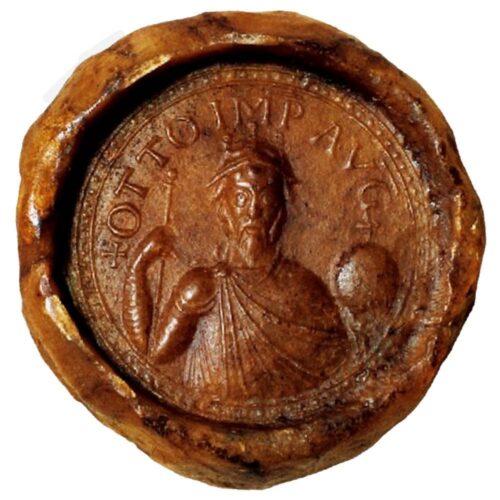
Otto I (912–973) was born into the Liudolfing dynasty, whose power base lay in Saxony. He succeeded his father, Henry I, as king in 936 and was crowned emperor in Rome in 962. His reign was marked by repeated rebellions within his own family and among the leading aristocracy, warfare along the eastern frontier, conflict with the Magyars, and increasingly ambitious interventions in Italy. By the time of his death in 973, Otto had established his dynasty at the centre of a network of kingdoms, principalities and bishoprics stretching across much of central Europe and into Italy.
Early years
Otto was born in 912, the son of Henry, Duke of Saxony, and his second wife, Matilda. In 919, Henry was elected king of East Francia, becoming the first member of the Liudolfing dynasty to hold the kingship. Rather than attempting to impose uniform royal government, Henry based his rule upon agreements and alliances with the powerful dukes who controlled the principal regions of the kingdom.
In 929 or 930, Otto married Editha (Eadgyth), daughter of Edward the Elder, King of the Anglo-Saxons. The marriage linked the rising Saxon dynasty on the Continent with the royal house of Wessex. Magdeburg became closely associated with the couple and was later to occupy a central place in Otto’s political and religious ambitions.
Before his death in 936, Henry designated Otto as his successor. Otto was elected king and crowned at Aachen on 7 August 936. The elaborate coronation deliberately invoked Carolingian traditions and presented Otto as more than simply the leading Saxon prince. Yet the extent of his authority over the other great men of the kingdom remained to be established.
Almost immediately, Otto faced opposition. His half-brother Thankmar rebelled and was killed in 938. Eberhard of Franconia and Giselbert of Lotharingia subsequently joined another rebellion, supported by Otto’s younger brother Henry. Eberhard was killed in battle in 939, while Giselbert drowned during his flight. Henry eventually submitted. Even this did not end the dynastic conflicts. In 941, Henry became involved in another conspiracy against his brother, but was pardoned and subsequently reconciled with him. He was made Duke of Bavaria in 947 and thereafter became one of Otto’s most important supporters. The pattern is characteristic of Ottonian rule. Rebellion did not necessarily end with the destruction of an opponent. Submission, reconciliation and renewed bonds of loyalty could be equally important instruments of government.
The eastern frontier
Otto inherited a kingdom whose eastern frontier remained fluid. Beyond the Elbe and Saale lived numerous Slavonic peoples whose relationships with the Saxon rulers alternated between warfare, tribute, alliance and conversion.
Much of Otto’s expansion in this region was undertaken by powerful aristocratic commanders, particularly Gero and Hermann Billung. Military pressure was accompanied by ecclesiastical expansion. New bishoprics were established, while Magdeburg increasingly became the centre of Otto’s missionary ambitions towards the east.
Otto also intervened in Bohemia. After years of conflict, Duke Boleslav I accepted Otto’s supremacy in 950, although the relationship between the Bohemian ruler and the Ottonian king was by no means simply one of subjection.
Relations with the emerging Piast polity in Poland were similarly complex. Mieszko I eventually entered the political orbit of the Ottonian realm, but remained an independent ruler pursuing his own interests.
To the north, Otto’s reign coincided with the consolidation of the Danish kingdom under Gorm the Old and Harald Bluetooth. German ecclesiastical ambitions extended into Denmark, but the Danish kingdom remained politically independent.
Rebellion and Lechfeld
Otto’s most serious internal crisis came from within his immediate family. In 953, his son Liudolf, Duke of Swabia, and his son-in-law Conrad the Red, Duke of Lotharingia, rebelled against him. The revolt drew in other members of the aristocracy and demonstrated how dependent royal power remained upon shifting networks of kinship and loyalty.
The situation became still more dangerous when the Magyars invaded in 954 and again in 955. By then, however, Otto had succeeded in isolating the rebels.
On 10 August 955, Otto’s forces confronted the Magyars near Augsburg at the Battle of Lechfeld. The victory was decisive. Although Magyar warfare in central Europe did not simply end overnight, the battle subsequently acquired enormous symbolic importance. Otto’s victory strengthened his prestige among the aristocracy and was later remembered as one of the defining events of his reign.
In the same year, Otto’s forces also campaigned against Slavonic opponents in the east. The combination of these victories substantially enhanced his standing as a ruler able to defend the Christian realm.
Italy and the imperial crown
Otto’s involvement in Italy began before Lechfeld. In 951, Adelaide, the widowed queen of Italy, appealed for assistance after being imprisoned by Berengar of Ivrea. Otto crossed the Alps, assumed the kingship of Italy and married Adelaide. His first wife, Editha, had died in 946.
The Italian intervention brought Otto into a political world in which kings, aristocratic families, bishops and the papacy competed for influence. Berengar was initially allowed to continue ruling in Italy under Otto’s supremacy, but relations subsequently deteriorated.
In 961, Otto returned to Italy after an appeal from Pope John XII. On 2 February 962, Otto and Adelaide were crowned emperor and empress in Rome.
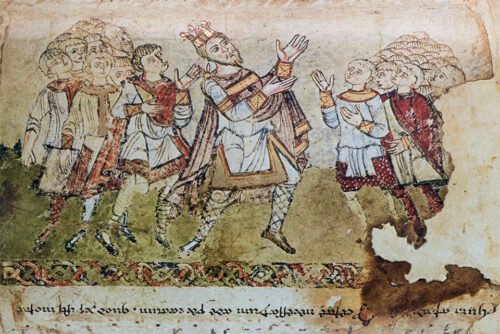
Otto the Great. Source: Exultet Roll Vatican 9820/fragment VII/Wikipedia Otto the Great. Source: Exultet Roll Vatican 9820/fragment VII/Wikipedia
The imperial coronation consciously revived the western imperial tradition associated above all with Charlemagne. Yet it also drew Otto much more deeply into Italian and papal politics.
Relations with John XII quickly collapsed. Otto deposed the pope in 963 and supported Leo VIII in his place. The ensuing struggles demonstrated both the reach and the limitations of imperial authority in Rome. Otto was repeatedly obliged to intervene personally in Italy, and his third Italian expedition, from 966 to 972, kept him south of the Alps for several years.
His ambitions also brought him into contact and conflict with Byzantium, which regarded its own emperor as the legitimate Roman emperor and retained territories in southern Italy. Eventually, diplomacy replaced confrontation. In 972, Otto’s son and co-ruler, Otto II, married the Byzantine princess Theophanu. The marriage represented a significant recognition of the Ottonian dynasty’s position within the political world of Christian Europe.
After 972, he returned to Germany, the emperor held a great assembly of his court at Quedlinburg on 23 March 973. He died in Memleben several weeks later and was buried in Magdeburg beside his first wife.
Magdeburg and the Church
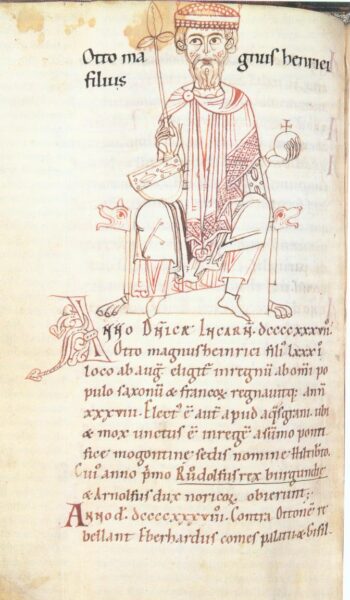
One of Otto’s most enduring projects centred upon Magdeburg. In 937, he founded the monastery of St Maurice there, and in 968 Magdeburg finally became an archbishopric.
The older historiography interpreted Otto’s relationship with bishops and abbots as a deliberately constructed “Ottonian Church System of the Realm”. According to this model, rulers strengthened royal government by appointing bishops and abbots who, unlike secular aristocrats, could not establish hereditary dynasties.
More recent scholarship has treated this model with greater caution. Bishops were powerful aristocratic actors in their own right, often drawn from the same elite families as the secular magnates. Their relationship with the ruler depended upon patronage, kinship, negotiation and reciprocal obligations. Nevertheless, churches and monasteries were indispensable components of Ottonian rule. They provided hospitality for the itinerant court, supplied educated administrators, preserved royal memoria and helped articulate the sacred character of kingship.
Magdeburg brought several of these functions together. It was associated with Otto’s first wife, Editha, with the cult of St Maurice, with missionary ambitions towards the Slavonic east, and ultimately with Otto’s own imperial commemoration.
The dynasty
Otto’s achievement cannot be understood solely in terms of territorial conquest. One of his most consequential successes was dynastic.
His father, Henry I, had become king in 919. Otto succeeded him in 936. Otto’s son, Otto II, was elected king during his father’s lifetime and subsequently succeeded him as emperor. He was followed by Otto III, and finally by Henry II, a great-grandson of Henry I through the Bavarian branch of the family.
Thus, from Henry I’s accession in 919 until Henry II’s death in 1024, kingship remained in the hands of the wider Liudolfing-Ottonian dynasty for more than a century.
This continuity should not, however, be mistaken for institutional stability in the modern sense. Ottonian kingship remained intensely personal. Authority had continually to be demonstrated and renegotiated through assemblies, gift-giving, marriage, ritual, patronage, military leadership, religious foundations, punishment and reconciliation.
Legacy of Otto I
Otto I’s fame is attached to the idea that he consolidated the kingdom while vanquishing the Magyars in AD 955 and later moving on to appropriate the legacy of Charlemagne. In one sense, it is evident that he succeeded in consolidating a dynastic presence that endured for four generations, from his father’s accession in 919 to the death of his great-nephew in 1024.
This rested in part on his close alliance with the Church and his extensive use of bishops and abbots to support his rule and his ambitions along the eastern frontier. Older historians conceptualised this relationship as the “Ottonian Church System of the Realm”.
A more modern historical interpretation of the Ottonians, however, tells a somewhat different story: that of a ruler repeatedly threatened by rebellions, disloyal factions and attacks from the north and east. Otto’s authority did not rest upon a German state that he had successfully constructed, but upon his ability to maintain a shifting network of family, aristocratic and ecclesiastical relationships.
His success was nevertheless considerable. When Otto returned from Italy in 972, his son had married a Byzantine princess, the dynasty had held the East Frankish kingship for more than half a century, and Otto himself had transformed his position from that of the son of a Saxon duke into that of a western emperor. How permanent that achievement would prove was another matter.
NOTES
(1) Often called the German Reich in English historiography, the term Reich echoes the expression, The Nazi Reich. Here it is called the more neutral “German Kingdom”.
FEATURED PHOTO:
In 2025, the remains of Otto the Great were taken up from his grave in Magdeburg Cathedral. This led to public access to a number of photos, including several of his skull. The present photo is an AI-reconstruction based on fleshed out version of his death-mask (also done by AI).
BIOGRAPHIES:
The biography of Johannes Laudage is the best of the more current publications. Unfortunately it has not been translated. However, to these must be added the catalogues from the major exhibitions in the last 25 years in Magdeburg. The smaller publication by Matthias Becher offers a quick overview.


SOURCES:
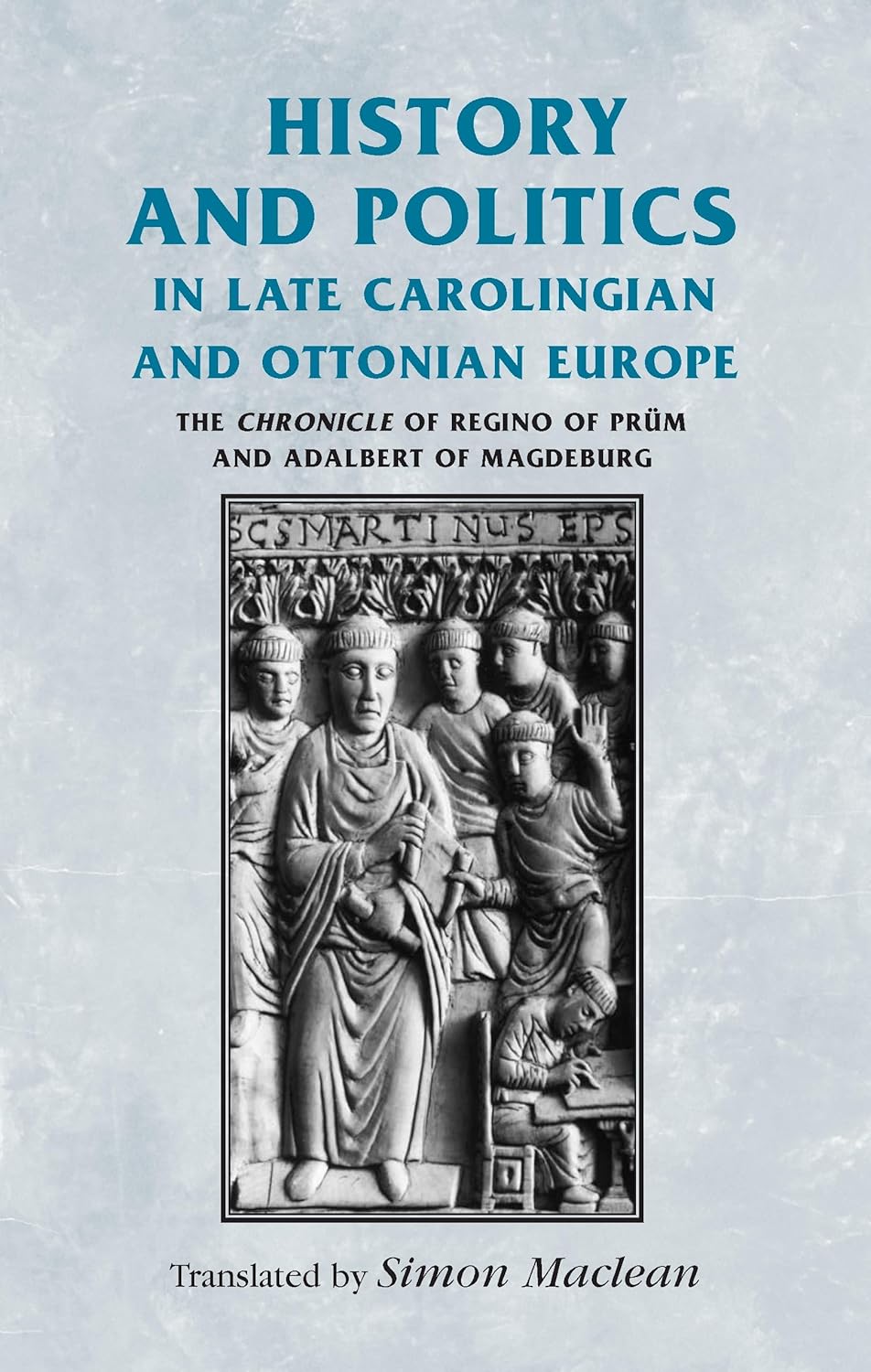
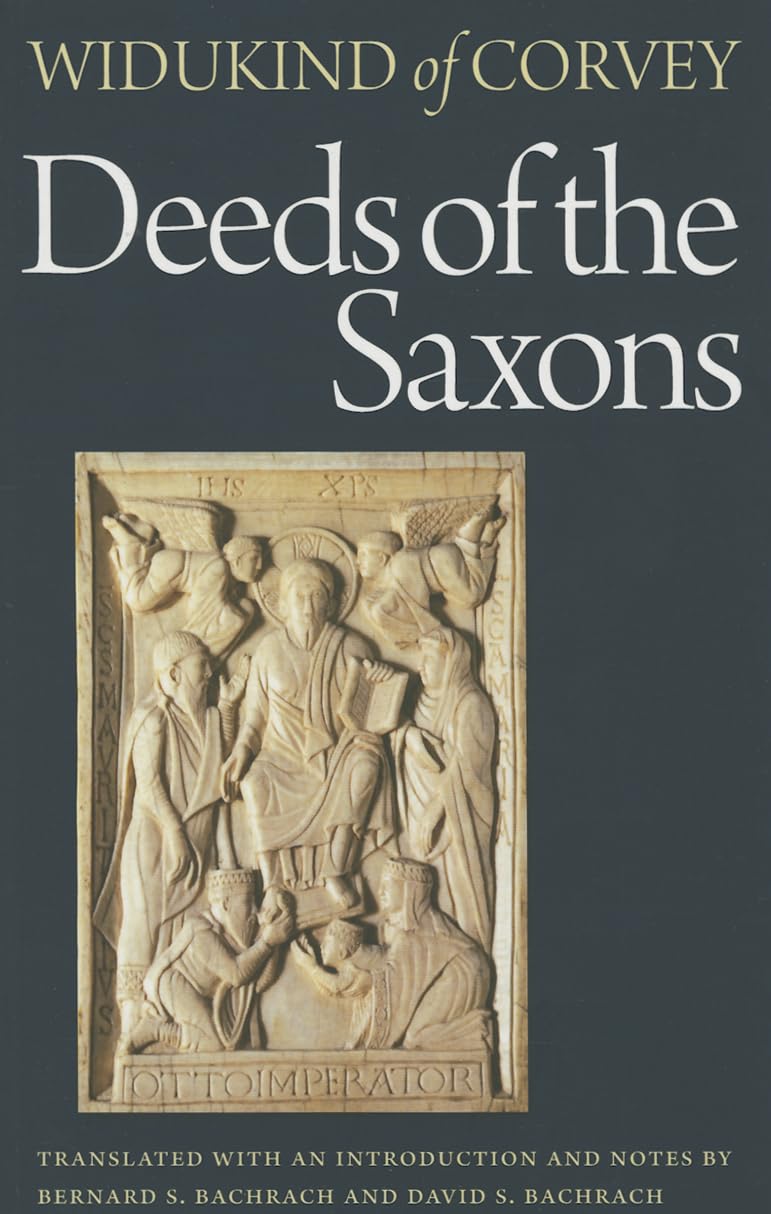
Primary narrative sources to the history of the 10th century German Kingdom