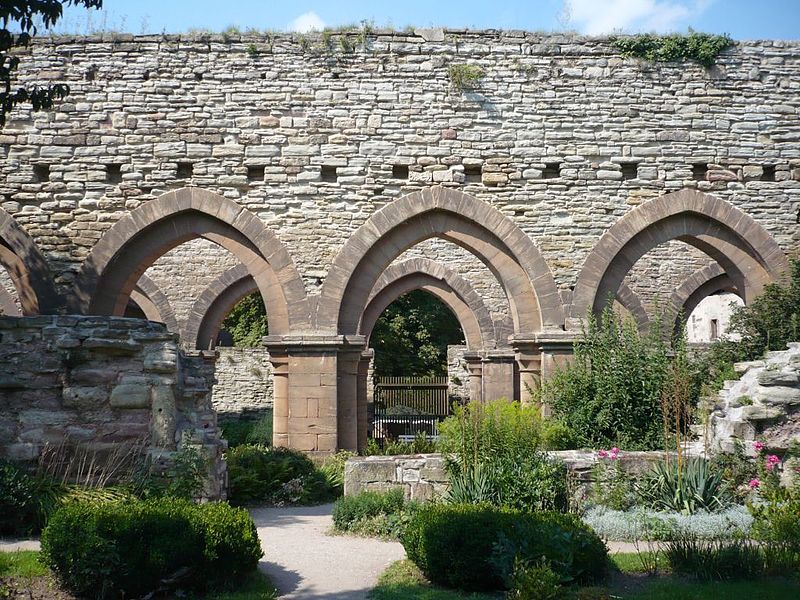
Knowledge about the Medieval Royal Palaces in Sachsen-Anhalt is sporadic. New publication aims to remedy this
 During his reign (936 – 973), the Holy Roman Emperor Otto the Great (912 -973) covered a realm from Schleswig on the border of Denmark towards the mountains around Monte Casino south of Rome. Nevertheless, there is no doubt about what constituted the heart of his realm: Sachsen-Anhalt.
Historians have calculated how many days he and his entourage spent in different locations from the dates and locations stipulated in documents and charters. Out of 5532 days accounted for in Germany, 48% were spent in this region between the Elb and the Weser.
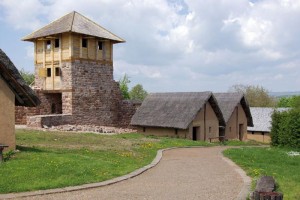
Accordingly, one of the key features of this landscape was the royal palaces. Spread out along the royal roads, there seemed to be no more than a day’s travel between them. Here, the Ottonian and Salian kings were forced to practice an itinerant lordship, regularly travelling from one place to another to exercise their political authority and impress their surroundings with highly developed ceremonial representations. One of these was the communal meal, which took place in the great halls – the Aula – of these palaces. Another was the procession from the palace to church, as can be seen in the model from Paderborn (See photo)
For the last 60 years, German Historians and Archaeologists have been busy excavating and documenting these extraordinary buildings, some of which are still standing (at least so much that it is possible to get a feeling for the type of buildings which were at hand.) Curiously enough, the palaces of Sachsen-Anhalt are, if not the least documented, those which lack their own publication in the series: Repertorium der Pfalzen, Königshöfe und übrigen Aufenthaltsorte der Könige im Deutschen Reich des Mittelalters – Repertory of Palaces, Royal Castles and other Royal Strongholds (Royal Monasteries) in Medieval Germany.
Next week, a conference will be organised to gather the relevant institutions and researchers interested in planning this publication. The focus will be on history and topography, and the aim is to get an overview of the current level of research.
Apart from a general introduction, the focus is on the history and archaeology of the different palaces.
Program
Otto Von Guericke–Universität Magdeburg
Home of the Project
READ MORE:
Read about the current exhibition in Magdeburg on the Ottonian revival of the Holy Roman Empire