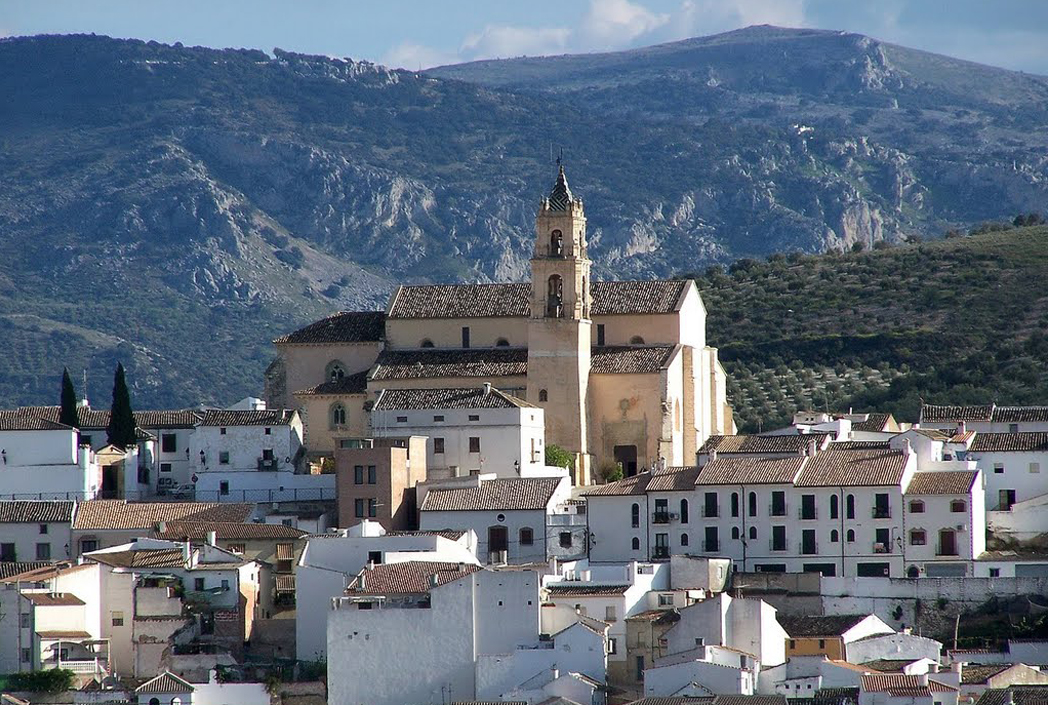
Baena is a picturesque small town in Andalucía near Cordoba. It lies at the slope of a hill crowned with a medieval castle. Plan is to turn this into a spa.
The present fame of Baena accrues to its production of high quality olive oil which has a long history of production in the area. Exhibitions on how olive oil was produced historically are on display at the Museo Arqueológico (Archaeological Museum) on Calle Henares.The location is in an old Olive Oil Mill
This fact effectively silences one of the more horrible massacres in the Civil war, which took place in 1936 when at least 700 persons were brutally murdered (other sources count more than 2000 victims). This was part of a general purging of Andalucian countryside, which was orchestrated by the fascists. This part of Baena’s history is nevertheless effectively silenced in the official tourism promotion of the town.
Long history
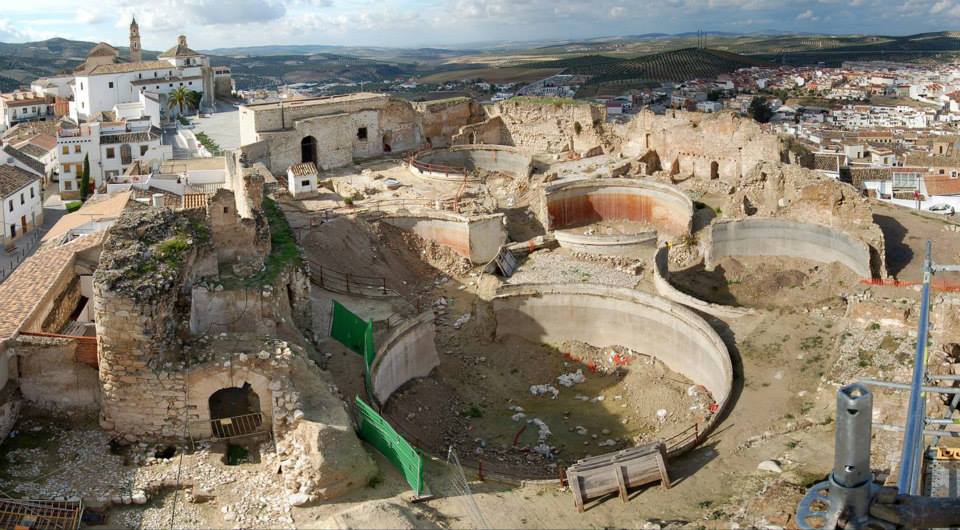 Until then Baena had been a typical peaceful rural town situated on the hillside beneath the ruins of a medieval castle and a central church with the landowners’ houses on the upper slopes and the workers living down below.
The history of the town dates back to Roman times, but it was more important in Moorish times. In fact its name stems from Bayyana, which was turned into a madinah, a proper Arabic city named after Medina. Very little, though, is left from that period apart form the minaret of a former mosque, which now functions as the tower of the 16th century Santa Mariá la Mayor, the church in the centre. The Almedina (the Arabic quarter) can be traced in the general town-plan. Next to the mosque turned church was the local alcazar located.
In 1241 Bayyana became Christian Baena. In the following centuries it was the property of the king. At this point the earlier fortress was rebuilt in order to provide a haven for the locals in times of unrest. Later in the beginning of the the castle was turned into a small palace complete with private rooms, patios wit arcades etc.
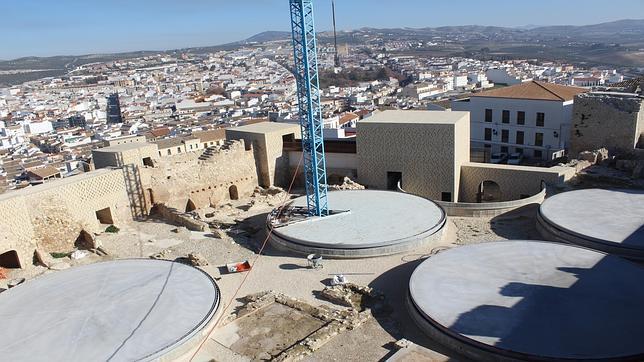 In 1897 the place was auctioned off and the castle grounds passed into private ownership. At this point the place was already falling into ruins and the monument was used as a stone quarry. Between 1927 and 1959 a water deposit was built inside the fortified patio.
In 2005 the restoration of the alcazar in Baena was initiated in order to crate a communal cultural space. In connection with this a series of archaeological excavations were carried out. Part of these plans was to renovate the local historical museum as well as creating lookouts where the surrounding countryside may be sampled. Currently the town is finalising the renovation/reconstruction of the castle and working towards opening it to the public.
At the same time the authorities are busy rethinking how to use the renovated castle grounds and especially the underground “cellars” which have surfaced inside the former water tanks.
One plan is to build the amenities for a spa with mineral waters inside the castello. Exactly how this is going to play out is not known at present. The investment is calculated to be between €300.000 and €700.000; money which is currently sought in a public-private collaboration
The water was recently certified by the Ministry of Health and comes from a spring in Cueva del Yeso, a local grotto located 8 km north of Baena
Archaeological and historical exhibition
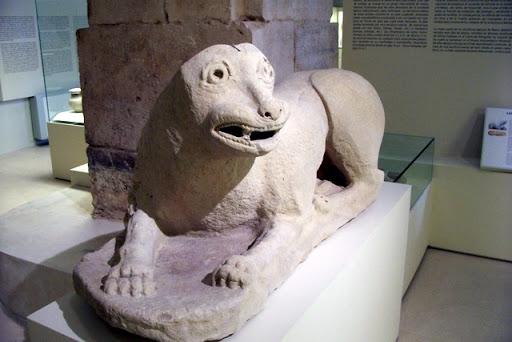 The local museum is installed in the Casa de la Tercia from the 18th century
Here a number of spectacular finds discovered in connection with the extensive archaeological excavations carried out in 2007 – 10 are exhibited as well as an extensive collection of Ibero-Celtic sclptures (and copies of them): the socalled lions of Baena
Nearby the fascinating remains of an Iberic-celtic town have been excavated. Here at Torreparedones the remains of a city founded in the 6th century BC have been excavated. In connection with this a pagan temple from the 4th century BC was discovered in 1988. It has been interpreted as an important sacrificial site. At the excavations more than 56 statues were found, probably votive in character. The were dismantled and destroyed in the first century AD. They are exhibited at Baena.
MORE ON BAENA:
Pamphlets (in Spanish) can be downloaded from the official tourism site