Christian Rome – a venerated subject for generations of scholars – continues to yield new insights into the people, the places, the art and the manuscripts. In a series of four sessions some of this will be presented.
Rome of the Antiquities was from the 4th century and onwards gradually superseded by what became Roma Sacra – or Christian Rome. An ancient and venerated subject for numerous scholars, research into the people, the places, the art and the manuscripts continues to yield new and exciting insight. In a series of four sessions some of this will be presented.
Roma Sacra, I: The Sacred Capital of the City – Patrons, Relics, and Cults in and Beyond Early Medieval Rome [Session No: 1013]
Roma Sacra, II: Building Authority and Legitimacy – Ideology, Church Foundations, and Patronage in Late Antique and Early Medieval Rome [Session No: 1113]
Roma Sacra, III: Rome and Its Leaders – The Popes, Their Agendas, and Their Propaganda [Session No: 1213]
Roma Sacra, IV: Rome and Its Leaders – The Elites and the Topography of the Early Medieval City [Session No: 1313
Papers to be presented:
Roman Generals and the Churches of Rome in the 5th Century
This paper will examine the benefactions of high-ranking Roman military men (frequently of semi-barbarian descent and sometimes even of non-orthodox Christian faith) in the area of ecclesiastical building and renovation at Rome in the 5th century.
Roma Sacra on Demand: Exporting and Appropriating Roman Saints through Hagiography and Liturgy, 8th-9th Centuries
Surviving 7th-9th century relic labels to assess the circulation of relics originating in Rome in the early medieval West. The paper will seek to ascertain whether any regional and chronological patterns of circulation can be detected, and will address the vexed question of whether relic labels were written at the relics’ place of origin or deposit.
Roma Sacra on Demand: Exporting and Appropriating Roman Saints through Hagiography and Liturgy, 8th-9th Centuries
Carolingian collections of saints’ lives and liturgical books were set up for the commemoration of those martyrs venerated in early medieval Rome. It will raise the question of whether a Roman passionary existed in the Carolingian age and if it was a Roman or a Frankish product.
Mapping Authority: Empire, Papacy, and Geopolitics in Late Antiquity
The pontificate of Pope Leo I (440-461) was a period that saw a full articulation of an ideology of Petrine authority and an increasing papal ability to intervene in the affairs of Western Christendom. Papal authority depended significantly on imperial support, and it has recently been argued that Valentinian III’s 17th novella was more than just an imperial imprimatur of papal authority. This paper will explore this theme further, examining Leo’s extensive correspondence for other indications of papal dependence on imperial support.
The Textual Authority of the Liber Pontificalis: The Life of Stephen III
This paper focus on The Liber Pontificalis biography of Pope Stephen III (768-772) and its account of his immediate predecessor (usually dubbed as ‘anti-pope’), Constantine. Alternative or parallel narratives of episodes in this period will be explored, in an attempt to uncover something of the approach of the writers of the LP biographies, and contemporary responses to their work.
Where Constantinople Meets Rome: On the Byzantine Influence in Early Medieval Rome
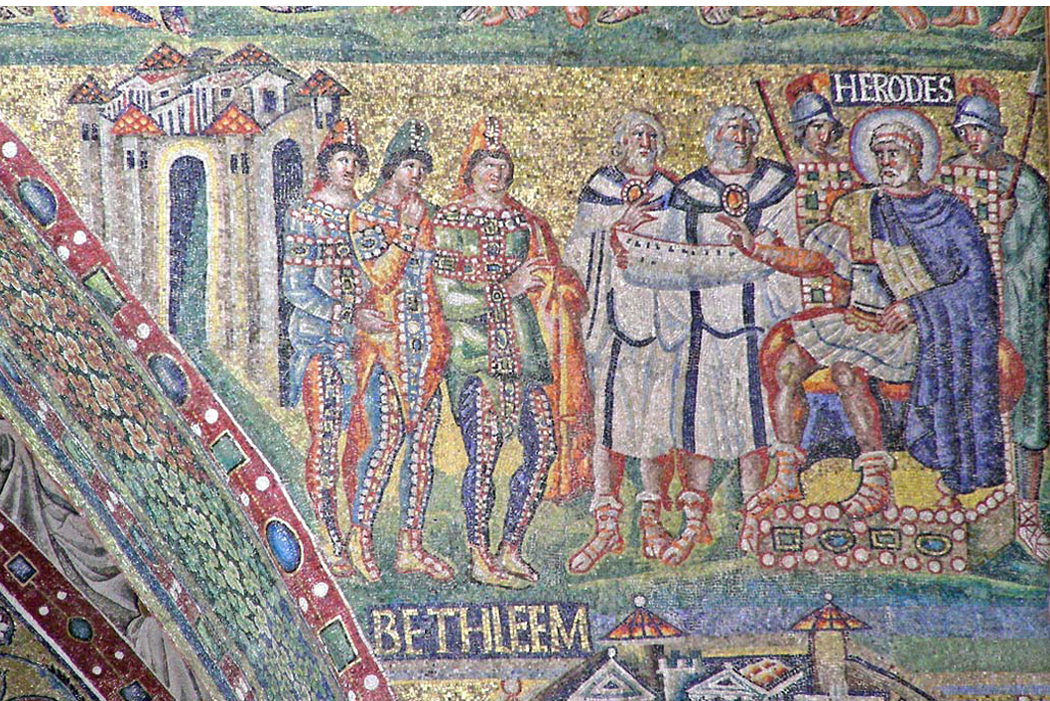
This paper seeks to expand upon recent scholarly ideas that Constantinople and Rome were much more in contact in the 8th and 9th century than has been acknowledged so far. The mosaic program in the Santa Prassede presents an excellent starting point for a more elaborate and in-depth analysis of the larger historical context of the political, cultural, and religious exchange and contacts between the Western and Byzantine Middle Ages.
Popes and Roman Power: Anchoring Religious Politics and Constraints of Tradition in Late Antiquity and in the Early Middle Ages
Two papers will explore the process of the invention and appropriation of Petrine traditions in late antique (paper -a) and early medieval (paper -b) papal discourse. They analyse in what ways and at what defining moments the bishops of Rome anchored their pontificates and the papacy as an institution in Petrine foundations through both their communication and self-representation within and outside Rome.
The Role of the Muslims in Papal Relations with the Carolingians
This paper will focus on the growing importance of Muslim power in the Italian peninsula in the 9th century and its impact on the relationship between the Popes and the Carolingian dynasty. It will consider the way contact with the Saracens changed papal interaction with the Frankish rulers by placing new imperatives upon the pontiff.
‘A City in Amber’: Rome and the Preservation of History in the Regionary Catalogues, 400-850
This paper will focus on the image of the City of Rome as it is transmitted in the early medieval manuscripts of Regionary Catalogues . It will examine their uses and ascertain the value placed on Roman history and traditions during a period that saw the dominance of Christianity over the Empire, with a particular focus on the problem of the absence of Christian buildings in the document.
The Roman Past in the Consciousness of the Roman Elites in the 9th and 10th Centuries
This paper asks: ‘Ubi ecclesia’? In the 3rd century the answer would have been: where the bishop was! This paper will look at how the ideological, metaphysical concept of ‘Church’ develops into a concrete, physical presence in the city of Rome in the 5th and 6th centuries – in its people and buildings. The agendas and interventions of the Roman aristocracy, and the bishops of Rome, sometimes combined, sometimes separate, had a decisive impact on the Christianisation of both the topography and the population of the Eternal City.