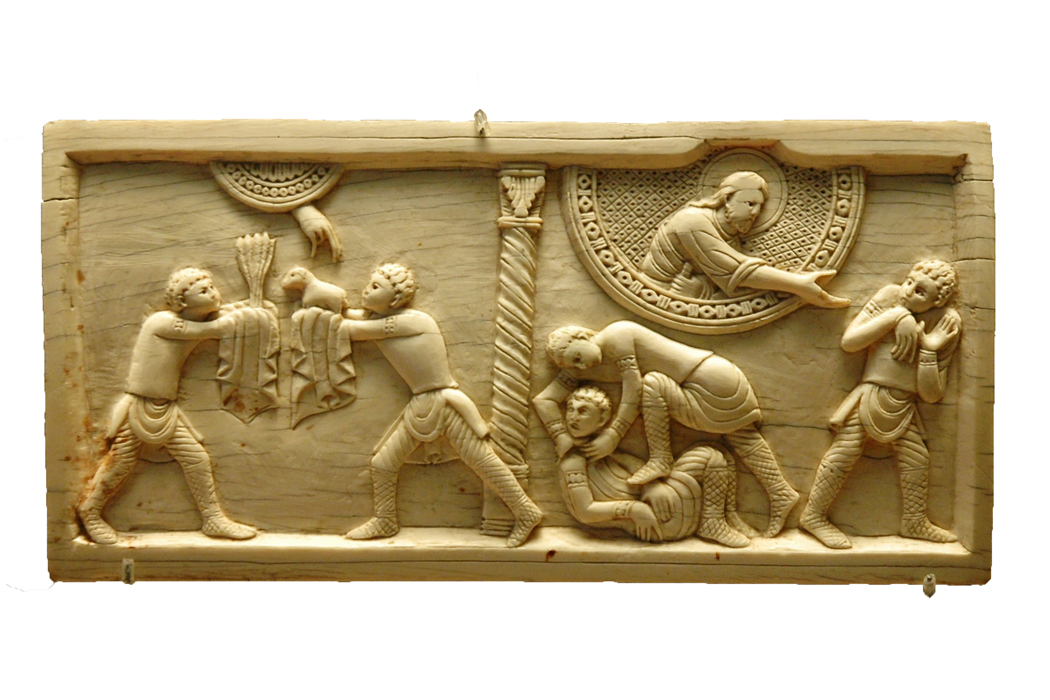
This summer the “Kunsthistoriches Institut in Florenz” hosts a conference on “The Tusk and the Book: The Salerno/Amalfi Ivories in their Mediterranean Contexts. “
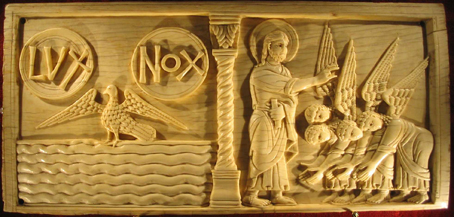
The conference aims to assemble specialists in various fields who can contribute specifically to a better understanding of some of the most notable ivory ensembles of the Middle Ages, the so-called ‘Salerno’ ivories – also called the ‘Grado’ and the ‘Amalfi’ ivories – , dated between the late eleventh and mid-twelfth century and were probably carved in the Norman kingdom of Southern Italy.
The Florence meeting seeks not only radically to review the traditional questions of style, iconography, and program, and the much-discussed – although never fully investigated – function of the object, but also to scrutinize the information conveyed by peculiar carving techniques, to explore the African origin and points of exchange of the raw material, to discuss the possible political and theological impulses in the conception of the Salerno ensemble, to contextualize its deployment within ecclesiastical performance of the time, to frame the attraction it exerted within the long-attested appreciation of ivory throughout antiquity and the medieval period, and to ponder how the Salerno ivories reflect artistic exchange and cultural identity in the Mediterranean basin during the early Middle Ages.
More pragmatically the meeting will try to solve the questions about dating, patronage, the place of the production, their original function and their artistic relationship with different centers
of art A multifaceted analysis of this ivory ensemble can decidedly help in understanding other coeval artifacts of complex cultural identity, prestigious as well as ordinary objects, like the oliphants with Islamic, Byzantine and western accents; the sculpture of Southern Italy and the Crusaders’ domains in the Eastern Mediterranean; the serial metal objects from the loca sancta of the Mediterranean; the glass beakers with Christian iconography produced in the islamized Syria, etc.
SOURCE:
The Salerno Ivories are exhibited at the tessoro of the Cathedral of Salerno
Program for the conference at the “Kunsthistoriches Institut in Florenz”