The relation between Christianity, its repertoire of identification, and ethnic identity, both as forms of discourse and as social practices, is the focus of a group of scholars from the University of Vienna
In the early Middle Ages, Europe’s political landscape was significantly shaped by the emergence of new fundamental modes of identification, both ethnic and religious. These processes created new forms of social cohesion and conflict.
The SCIRE project, an ERC Advanced Grant project based in Vienna and led by Walter Pohl is dealing with these problems. Four sessions at this year’s IMC presents results of the project which is going to end in 2016. Scire collaborates closely with Viscom, Visions of Community, which explores the Comparative Approaches to Ethnicity, Region and Empire in Christianity, Islam
and Buddhism (400-1600 CE)
Social Cohesion, I: Concerns for Cohesion in Italy and the Carolingian Realms, 9th and 10th Centuries [Session No: 1008]
With the Bible, Christianity provided a repertoire of patterns suitable to give order and orientation that were significant for the shaping of ethnic identities. In the first session Graeme Ward will deal with Amalarius of Metz’s Liber de ordine antiphonarii and ask in which ways this very specific text can address two big but contentious topics: ecclesiastical ‘unity’ and Roman renovatio. Clemens Gantner will then look at the impact of north alpine Carolingian political strife on the imperium of Louis II in Italy. Finally, Caroline Goodson will explore the significance of interest and investment in Southern Italian cities. She will argue that the built environment was no mere backdrop but a critical tool of consensus-building among the southern polities.
Social Cohesion, II: In and through Texts [Session No: 1108]
This second session of the SCIRE project deals with more subtle forms of social cohesion, which did not only work on the grand political or theological stage shown in the first session, but can also be detected in medieval texts. Cinzia Grifoni will show that grammars or, more generally, texts conceived as tools for early medieval school teaching do bear hints of social perceptions of that time. Bojana Radovanovic will look at how the notion of hierarchy was understood in interpretations of St Paul’s Epistle to the Romans in the works of Gottschalk of Orbais, Hrabanus Maurus and Hincmar of Reims. In the third paper, Ingrid Hartl will explore the positive and negative aspects attributed to multilingualism by taking a look at examples from Middle High German literature.
Social Cohesion, III: The Bible and Historiography in the Euromediterranean World [Session No: 1308]
This session will show how the Christian transcultural societies of the Early and Central Middle Ages compared themselves with the peoples known from the Old Testament and with their cultural and religious circumstances. This will be done from the perspective of selected Bible manuscripts and historical works. Philipp Dörler looks at the works of 6th-century historian Jordanes and the 7th-century bishop Isidore of Seville who pursue different strategies to anchor the Goths in universal history. He will investigate how biblical concepts found in these texts could be used either to integrate the Goths in or to distinguish them from the cultural and religious ‘Other’. Matthias Tischler and Patrick Marschner then concentrate on the Iberian Peninsula under Muslim rule: The presence of Muslims and Christians entailed numerous changes of perspective of the respective cultural and religious ‘Other’. The two papers try to show from the perspective of selected Bible manuscripts and historical works how the Christian Iberian transcultural societies placed themselves with regard to the Old Testament.
Social Cohesion, IV: Methods to Reconstruct Migration – History, Archaeology, and Genetics [Session No: 1606]
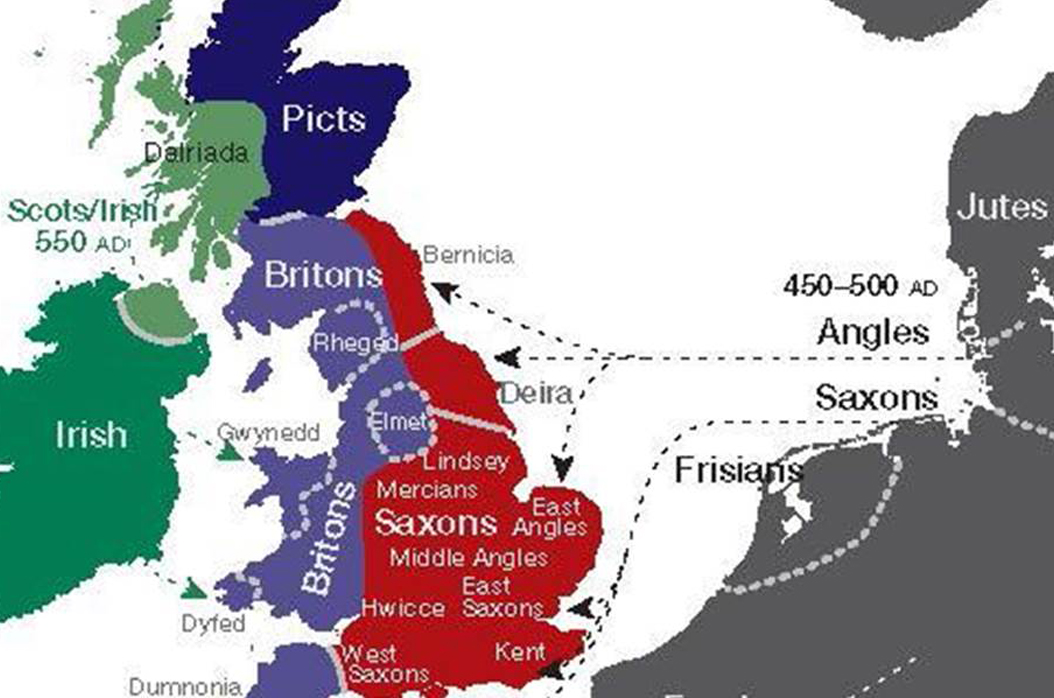
The ‘Social Cohesion’ strand will end with this experimental and innovative session dedicated to hybrid methods and the use of genetic analysis in medieval research: How do we arrive at historical conclusions on the basis of genetic evidence without methodological shortcuts? Walter Pohl will offer a short introduction on the aims of this part of the SCIRE project. Mark Jobling, a leading expert in the field of genetic history, will give a general introduction about the power and limitations of genetic data in studying the past and present some of his current data on Viking and other influences on the British Isles. Subsequently Francesca Conselvan will summarize the archaeological evidence for Anglo-Saxon migration to the British Isles and will then compare that evidence with results of genetic analysis. In a final paper, Celine Wawruschka will review potential changes in research questions on Anglo-Saxon ethnogenesis from a comparative perspective, focusing on projects that use methods from biological anthropology and biomolecular anthropology and interpret the results from the perspective of national identities.
READ BEFORE:

Garland Science 2013
ISBN-10: 0815341482
ISBN-13: 978-0815341482
ISBN-10: 0815341482
ISBN-13: 978-0815341482
 Freunde Roms und Völker der Finsternis. Die päpstliche Konstruktion von Anderen im 8. und 9. Jahrhundert
By Clemens Gantner
Böhlau Verlag, Wien 2014
ISBN-10: 3205795938
ISBN-13: 978-3205795933
Böhlau Verlag, Wien 2014
ISBN-10: 3205795938
ISBN-13: 978-3205795933