Treasures of the Royal Courts of the Tudors, Stuarts and the Russian Tsars shown at V&A…
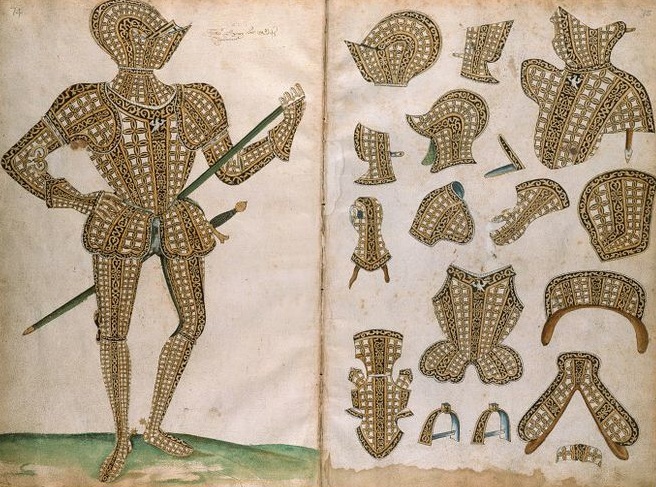
Treasures of the Royal Courts of the Tudors, Stuarts and the Russian Tsars shown at V&A…
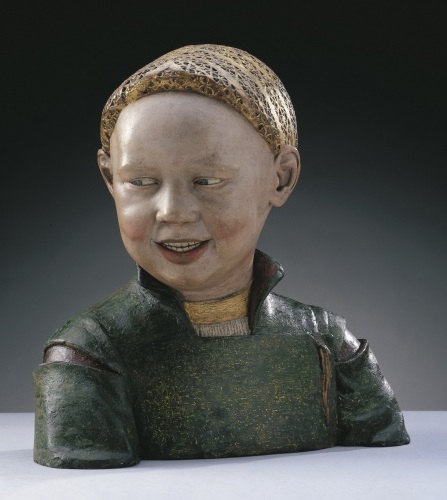
In Fine Style shows the art of Tudor and Stuart Fashion at Buckingham Palace this summer...
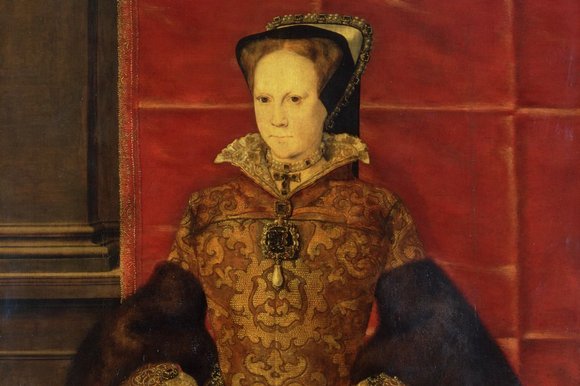

Between 1526 and 1539 an outstanding pearl entered the jewellery collection of the Empress Isabella of Portugal (1503-1539). Either it was a diplomatic gift or the Empress purchased it. When she died in 1539 the pearl was inherited by her daughter, Juana of Austria (1535-1573). Following a short marriage to Prince John of Portugal (1537 – 1554), Juana returned to Spain to assume regency for her brother, Philip II. Thus the pearl became part of Philip’s dowry for his new bride, Mary Tudor (1516-1558), after whom the pearl has been christened.
It is an outstanding asymmetrical drop-shaped pearl that was much admired by the Tudor courts and is featured in at least three Royal portraits of Mary Tudor, namely one by Anthonis Mor currently at the Prado, one by Hans Eworth in the National Portrait Gallery and a third owned by owned by the Society of Antiquaries.
Since the pearl’s disappearance in the late 16th century the pearls depicted in these portraits have – it is claimed now – mistakenly been identified as La Peregrina, a different pearl which is 53.57 grains smaller than the Mary Tudor pearl. However, Mary Tudor could never have worn the Peregrina as it was first recorded in 1579, 21 years after her death. However, in 2004 – what is presumed to be the real Tudor Pearl -surfaced at an auction and was bought by the select Jewellers Symbolic & Chase . This year it will be exhibited at the Antiques fair, Masterpiece London. The fair will take place from 27 June – 3 July 2012 (with a Preview on Wednesday 26 June) in the South Grounds of The Royal Hospital Chelsea, London SW3. The exhibition of the pearl is accompanied by a certificate from the Swiss Gemmological Institute stating that the pear weighs 64.5 carats (258.12 grains) and measures 16.50 -17.80 x 31.95 mm and is of natural saltwater origin. The Mary Tudor Pearl is the third largest well-formed pearl documented today.

Following its debut at Masterpiece London, the Tudor Pearl will be exhibited at the V&A as part of the Pearls exhibition, which will run from 21st September 2013 to 19th January 2014.
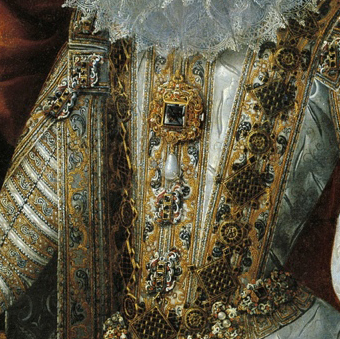
Continuing with the Queen Mary I theme, Philip Mould will be exhibiting a recently discovered English School portrait of Queen Mary I at the Fair. In the presentation of the portrait at his website it says that the new portrait is taken from the “larger portrait by Antonis Mor” in Prado. Curiously enough, however, Mary Tudor in the new portrait is not showing off her pearl but another magnificent jewel with three pearls hanging on her neck.
Provenance
Whether or not the “new” pearl is in fact the one presented to Queen Mary or whether – as is generally believed – it was the peregrina awaits to be seen. For one thing, Symbolic and Chase has not so-far published anything about the provenance apart from the tidbit, that it surfaced on an auction in 2004. As opposed to this the provenance of the Peregrina is well documented. After the death of Mary Tudor the pearl reverted to Spain and became part of the Spanish Crown Jewels, as is documented by a number of later paintings of Spanish Queens. Later, when Napoleons brother left Spain in 1813 he brought the peregrina with him. His nephew, the later emperor Napoleon III, sold it during his English exile to the Hamiltons, who put it up for sale at Sotheby’s in 1969, where Richard Burton bought it for Liz Taylor.
Currently on show in Prague for only ten days, the Bohemian crown was made for the coronation of Charles IV in 1347
The Bohemian crown – the so-called Crown of Saint Wenceslas – has a somewhat curious form due to the setting of the jewels. It consists of a golden headband with a diameter app. 19 – 20 cm and 4.8 cm wide, and divided into four pieces. Each of these pieces is adorned with a curious fleur-de-lis composition, which rises up from the headband. All in all they each measure 12 cm in the height. Fixed to these are four arches in the form of bejewelled bands ending in a hollow cross at the apex, presumably filled with a relic, a thorn from the Crown of Thorns, which was presented to the Queen Elisabeth in 1326 by the French King.

However, the jewels adorning the crown are the most spectacular part. At the front is an uncut sapphire weighing more than 40 carat. Around it are placed six spinels. Together the ensemble looks like a cross. Corresponding jewels are found on the other four sites. Originally it was adorned with only red and blue jewels. However Charles IV kept elaborating on the design, probably reusing a belt, which was presented to his Queen, Blanche, from her brother, the king of France. In its present – imperial – form it was finished in 1374 – 1378 and carries 19 sapphires, 44 spinels, 1 ruby, 30 emeralds and 20 pearls. Apart from the six magnificent sapphires (belonging to the group of the ten largest in the world), the cross at the apex of the crown holds a small but beautiful cameo with a rendering of the crucifixion. Probably this Byzantine cameo was part of an earlier Bohemian crown – the crown of Ottokar II – which it was definitely designed to emulate. All in all it weighs app. 2.5 kilo. The curious look stems from the way in which the jewels have been set on small protruding postaments. With a background of solid gold the jewels are stopped from being enlightened, which gives the viewer a less than ephemeral experience. On the other hand the massive ostentatious character as seen from afar must have been impressive.
The crown was made to serve two purposes. One was to be used as the crown of the residing king and his dynasty at coronations or other likeminded occasions. If used as such it was to be returned the same day to its regular place of keeping in the Cathedral of St. Vitus, where another purpose was to serve as a reliquary for the thorn, to be kept in the new chapel of Saint Wenceslas (907 -935), which Charles IV had built in the Cathedral of St. Vitus as a parallel to the Sainte-Chapelle in Paris. As such the crown was supposed to be placed on the head of a bust in which the skull of the saint was kept, literally crowning him with a thorn from the Crown of Thorns. In connection with this, the king composed a liturgy for a special annual feast, which was supposed to culminate in showing off the imperial treasury in the centre of Prague, including the crown, thus advertising the protection of the saint of the land, the dynasty and the city of Prague.

Apart from the Crown of Saint Wenceslas, The Bohemian Crown Jewels, include a royal orb and sceptre from the beginning of the 16th century, the coronation vestments of the kings of Bohemia, a gold reliquary cross, and St. Wenceslas’ sword with a blade from the 10th century.
A curious ritual
The ancient Bohemian Royal Insignia are kept under lock in the cathedral of St. Vitus by seven Czech dignitaries – the President of the Republic, the Prime Minister, the Prague Archbishop, the Chairman of the House of Deputies, the Chairman of the Senate, the Dean of the Metropolitan Chapter of St. Vitus Cathedral and the Mayor of Prague. According to a tradition from the 18th century all must convene in order to facilitate the opening up of the impenetrable door into the crown chamber found in the chapel of St. Wenceslaus in the St. Vitus Cathedral at Prague Castle. Here the crown has been kept since 1867 apart from short periods, when it was walled away in 1945 or on show.
This happens very seldom. In the course of the twentieth century the coronation jewels have only been exhibited eight-times – in 1929, 1945, 1955, 1958, 1968, 1975, 1978 and 1993. The show this year is occasioned by the election of a new president, Miloš Zeman, but will last only for ten days. Further it is only about 5000 people, who are allowed into the hallowed hall every day, which means that no more than 50.000 will have the opportunity to see the crown jewels before they are locked away again for at least five years.
To say it mildly, this is a curious ritual in a modern secularised state, where the population by far is one of the most atheist in Europe. According to a Eurobarometer Poll from 2005 nearly a third of the Czechs do not believe believe in any kind of spirit, God or life force. Of the rest only 19% believe in God or consider themselves religious. These results were confirmed by a Gallup Poll in 2012. Sociologists might consider the unveiling and exhibiting of the crown jewels in Prague a kind of civil religion. However, the interplay between the elected politicians and the Catholic dignitaries holding the keys to royal insignia witness to a nation with a slightly muddled identity. Elsewhere in the 21st century such national treasures are continuously exhibited to the delight of art historians and cultural tourists be it in Royal Collections or treasuries of Cathedrals…
About the exhibition at the official website of the Castle of Prague
see a video from the opening of the door in the Chapel of St. Wenceslas
See a photo gallery of the Crown of Wenceslas here
READ MORE:
The Czech Coronation Jewels.
Unknown History – Hidden Messages – Long-lost Symbols
By Jan and Thomas Bonek.
Eminent 2005
ISBN: 978-80-7281-221-9
Autobiography of Charles IV of Luxemburg, Holy Roman Emperor and King of Bohemia (Central European Mediaeval Texts)
Edited and translated by Balazs Nagy, Paul W. Knoll and Frank Schaer
Publisher: Central European University Press 1999
ISBN-10: 9639116327
ISBN-13: 978-9639116320
Die Sankt Wenzelskrone im Prager Domschatz und die Frage der Kunstauffassung am Hofe Kaiser Karls IV.
By Karel Otavsky
European University Studies. Series XXVIII, History of art.
Peter Lang 1993
ISBN-10: 3261045167
ISBN-13: 978-3261045164
In Heaven and on Earth: Church Treasure in Late Medieval Bohemia
By Katerina Hornícková
Thesis submitted to Central European University
Department of Medieval Studies, Budapest 2009
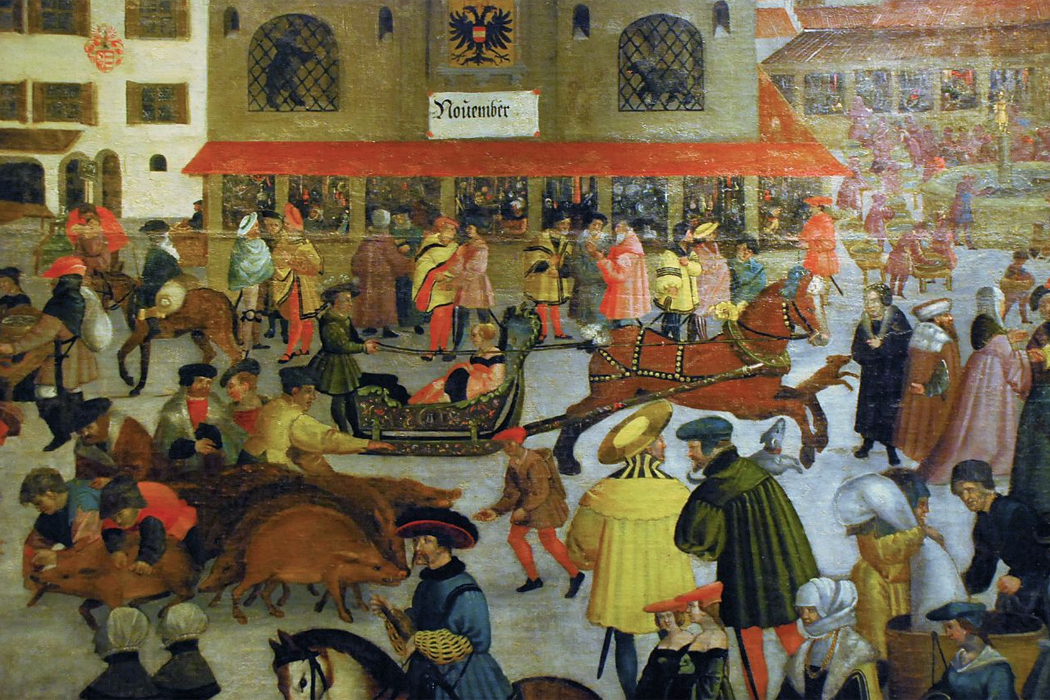
In 1530 Matthäus Schwarz from Augsburg, was man in his prime: slim, smart and successful...

Did the Esrick Ring belong to King Edwin or his son Osfrid, who both died at Hatfield Chase in 633?
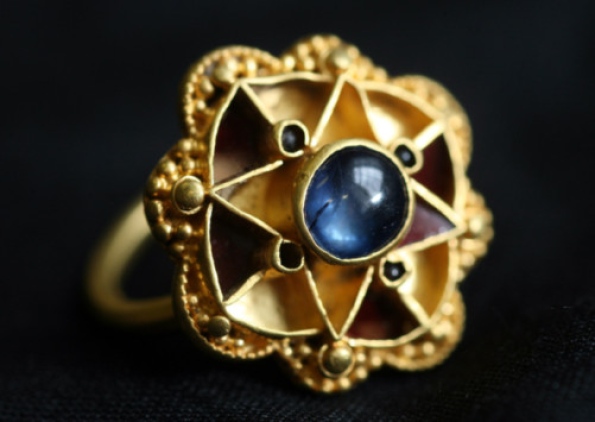
Expert believe that The Escrick ring is probably from the 5th or 6th century and possibly royal…
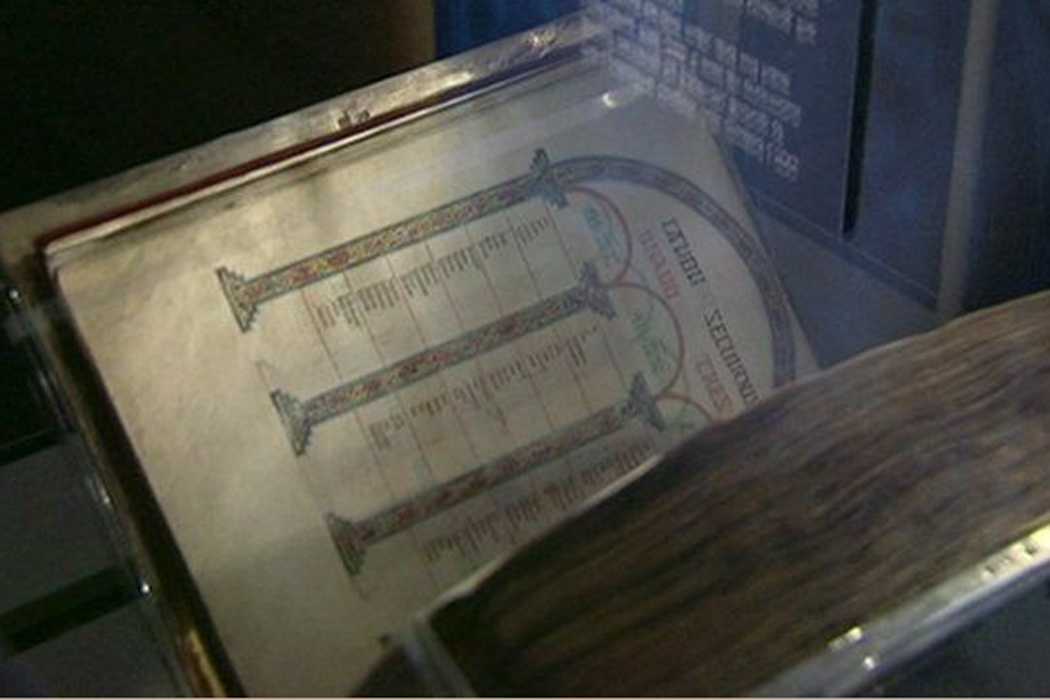
The Lindisfarne Gospels book is one of the greatest landmarks of human cultural achievement. Created by the community of St Cuthbert on Lindisfarne it is one of the best examples of creativity and craftsmanship from Medieval times.