Home » Medieval Books

Tag: Medieval Books

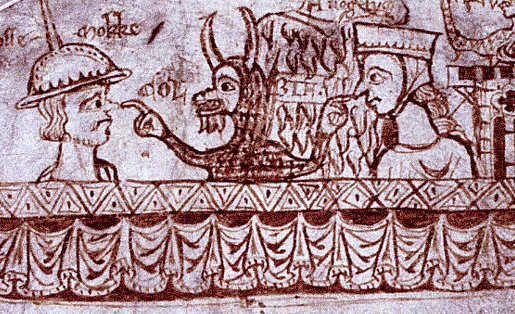
Anti-Semitic cartoon from a Tax Roll from Norwich 1233 - (E 401/1565) The National Archives - Source Wiki

Into the Light

REVIEW: Into the Light – The Medieval Hebrew Poetry of Meir of Norwich.

In 1290 a learned Jew in Norwich, Meir ben Eliahu, was expelled to the continent together with approx. 2000 other Jews. Around that time, he wrote a collection of poems imbued with a mixture of fear, anger, sorrow, hope – in short a concoction of all sorts of those emotions, which the Jewish community in England must have lived through, when they finally lost their livelihoods and homes after more than 200 years of anti-Semitic persecution.

For centuries the collection of poems was “hidden” in the Vatican until they were discovered in the middle of the 19th century. Until now only parts of this collection have been translated and thus made available to a wider audience. However, in a brand new edition we are treated to the Hebrew texts as well as an English translation of the poems accompanied by an introduction and partially annotated. In itself this is a feat and the editors and translators are to be congratulated.

The edition holds all the 22 poems of Meir from Norwich. (We know they were composed by him, because of his proclivity to embellish them with rather lengthy acrostics, carefully explained in the book by the translators.)
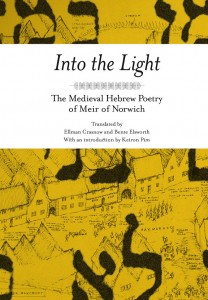
into-the-light-cover-the medieval hebrew poetry of meir of Norwich

The collection opens up with a poem “On the Termination of the Sabbath”, which was set to a dancing tune. Then it continues with “A Liturgical Poem on the Burden of Exile, Suffering and Ruin” also called: “Put a curse on my enemy.” What is immediately apparent from the tile is that now we move towards the woes of Meir of Norwich and his friends and family stemming from the local racist harassment as well as that which was fed on the national level.  Nonetheless one of the next poems: “Who is like you”, which is basically a poetic rendering of Genesis and Exodus holds (at least to me) one of the most moving stanzas. Following upon the expulsion from Paradise, Meir writes:

Forced away from where we dwelt
We go like cattle to the slaughter.
A slayer stands above us all.
We burn and die.
(Verse 55 -56, p. 58)

Obvious witness to an early holocaust, the words vibrate with pain and desperation, hardly contained; elsewhere the poet finds comfort in steadfast belief in how the luminous light of God will “irradiate our darkness with light”. Here, however, the tone is raw with pain, reminding us of the remains of the pitiful slayed Jewish family which were found in a well in Norwich, identified through their DNA and recently buried in the Jewish Cemetery in Norwich.
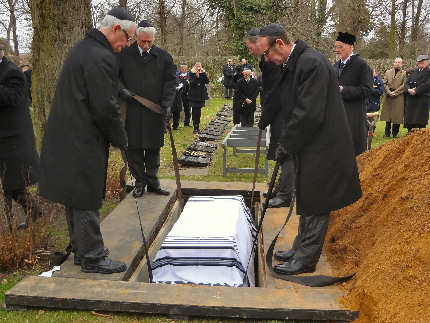
Remains of seventeen members of a slaughtered Jewish family found in a well in Norwich, were recently reburied in the Jewish cemetery
Friends of Meir ben Eliahu?
Remains of seventeen members of a slaughtered Jewish family found in a well in Norwich, were recently reburied in the Jewish cemetery

According to an introductory note a literal translation was first produced; after this a freer version was made. At the same time the translators have sought to preserve the essential meaning of the poems, while striving to “produce a text in English, which reads well.” Indeed, the translation does read well.

In this the translators have obviously succeeded. On the other hand the graphical layout is cumbersome. It is not apparent why it should be marred by the use of Latin ligatures. To be cool? Make it look at bit “Medieval”? Match the “otherness” of the Hebrew writing? Whatever the explanation, it disturbs the reading and thus to a certain extent mars the edition.

It is another – although minor quibble – that although at least some of the poems have obviously been woven together from quotations from the Hebrew Bible, only a few of those have been identified in the footnotes, even though many more may be found in the work of Einbinder, e.g. in her scholarly work on one of the poems (“Put a curse on my enemy”). Obviously the editors and translators have made a choice here, which however is not stated in the introduction. An unprepared reader may thus mistake the poems for something else than what they are – highly skilled and sometimes even beautiful heart-rendering textual patchworks steeped in the hebrew Bible as well as the the poetic traditions of Jewish Liturgical Poems from France, Germany and Spain.

Meir ben Eliahu was – if nothing else – obviously a very learned man!

Into the Light – The Medieval Hebrew Poetry of Meir of Norwich.
Translated by Ellmann Crasnow and Bente Elsworth. With an introduction by Keiron Oim.
East Publishing, Norwich 2013

Karen Schousboe

READ MORE:

Meir ben Elijah of Norwich: persecution and poetry among medieval English Jews.
By Susan B. Einbinder.
In: Journal of Medieval History Vol. 26, no. 2. Pp. 145 – 162

SOURCE OF PHOTO:
1233: A tax roll with a nasty tale to tell (E 401/1565– National Archives)
 

Magna Carta and the England of King John

Magna Carta and the England of King John BoydellMagna Carta and the England of King John
Janet S. Loengard (Editor)
Contributors: Janet S. Loengard, Ralph V. Turner, John Gillingham, David Crouch, David Crook, James A. Brundage, John Hudson, Barbara Hanawalt, James Masschaele
Publisher: Boydell Press 2010
ISBN-13: 978-1843835486

BOOK DESCRIPTION:
Magna Carta marked a watershed in the relations between monarch and subject and as such has long been central to English constitutional and political history. This volume uses it as a springboard to focus on social, economic, legal, and religious institutions and attitudes in the early thirteenth century. What was England like between 1199 and 1215? And, no less important, how was King John perceived by those who actually knew him? The essays here analyse earlier Angevin rulers and the effect of their reigns on John’s England, the causes and results of the increasing baronial fear of the king, the `managerial revolution’ of the English church, and the effect of the ius commune on English common law. They also examine the burgeoning economy of the early thirteenth century and its effect on English towns, the background to discontent over the royal forests which eventually led to the Charter of the Forest, the effect of Magna Carta on widows and property, and the course of criminal justice before 1215. The volume concludes with the first critical edition of an open letter from King John explaining his position in the matter of William de Briouze.


CONTENTS:

1  Introduction

2  England in 1215: An Authoritarian Angevin Dynasty Facing Multiple Threats

3  The Anonymous of Béthune, King John and Magna Carta

4  Baronial Paranoia in King John’s Reign

5  The Forest Eyre in the Reign of King John

6  The Managerial Revolution in the English Church

7  Magna Carta, the ius commune, and English Common Law

8  Justice without Judgment: Criminal Prosecution before Magna Carta

9  What Did Magna Carta Mean to Widows?

10  The English Economy in the Age of Magna Carta

11  The Complaint of King John against William de Briouze


Medieval Law in Context – From Magna Carta to The Peasants’ Revolt

medieval-law-in-context-growth-legal-consciousness-from-anthony-musson-cover-Manchester University PressMedieval Law in Context: The Growth of Legal Consciousness from Magna Carta to The Peasants’ Revolt (Manchester Medieval Studies)
Anthony Musson
Publisher: Manchester University Press 2001
ISBN-13: 978-0719054945

BOOK DESCRIPTION
Offering an important new perspective on medieval political, legal, and social history in England, Anthony Musson examines how medieval people at all social levels thought about law, justice, politics, and their role in society. He provides a history of medieval law and judicial developments in the 13th and 14th centuries, while interweaving within each chapter a special focus on different facets of legal culture and experience. This illuminating approach reveals a comprehensive picture of two centuries worth of tremendous social change.


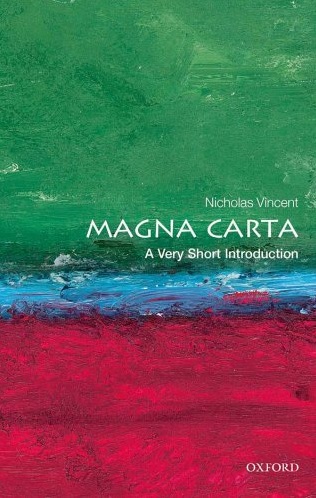
Magna Carta: A Very Short Introduction

Magna Carta a very short introduction oxford University press coverMagna Carta: A Very Short Introduction 
Nicholas Vincent
Publisher: Oxford University Press (September 7, 2012)
ISBN-13: 978-0199582877

BOOK DESCRIPTION
The Magna Carta is arguably the greatest constitutional document in recorded history, yet few people today understand either its contents or its context. This Very Short Introduction, which includes a full English translation of the 1215 Magna Carta, introduces the document to a modern audience, explaining its origins in the troubled reign of King John, and tracing the significant role that it played thereafter as a symbol of the subject’s right to protection against the absolute authority of the sovereign. Drawing upon the great advances that have been made in our understanding of thirteenth-century English history, Nicholas Vincent demonstrates why the Magna Carta remains hugely significant today. The book is the result of

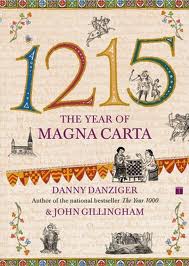
1215 – The Year of Magna Carta

the year of Magna Carta - Simon and schuster cover1215: The Year of Magna Carta
Danny Danziger (Author), John Gillingham (Author)
Publisher: Touchstone; Touchstone Edition edition (May 17, 2005)
ISBN-13: 978-0743257787

BOOK DESCRIPTION: 
Surveying a broad landscape through a narrow lens, 1215 sweeps readers back eight centuries in an absorbing portrait of life during a time of global upheaval, the ripples of which can still be felt today. At the center of this fascinating period is the document that has become the root of modern freedom: the Magna Carta. It was a time of political revolution and domestic change that saw the Crusades, Richard the Lionheart, King John, and — in legend — Robin Hood all make their marks on history.

The events leading up to King John’s setting his seal to the famous document at Runnymede in June 1215 form this rich and riveting narrative that vividly describes everyday life from castle to countryside, from school to church, and from hunting in the forest to trial by ordeal. For instance, women wore no underwear (though men did), the average temperatures were actually higher than they are now, and the austere kitchen at Westminster Abbey allowed each monk two pounds of meat and a gallon of ale per day. Broad in scope and rich in detail, 1215 ingeniously illuminates what may have been the most important year of our history.


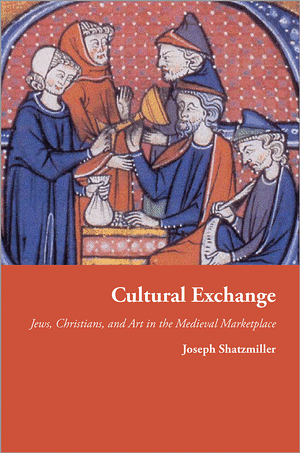
Cultural Exchange – Jews, Christians, and Art in the Medieval Marketplace

 Cultural Exchange - Jews, Christians, and Art in the Medieval Marketplace-book coverCultural Exchange: Jews, Christians, and Art in the Medieval Marketplace (Jews, Christians and Muslims from the Ancient to the Modern World)
Joseph Shatzmiller
Princeton University Press 2013
ISBN-13: 978-0691156996

Demonstrating that similarities between Jewish and Christian art in the Middle Ages were more than coincidental, Cultural Exchange meticulously combines a wide range of sources to show how Jews and Christians exchanged artistic and material culture. Joseph Shatzmiller focuses on communities in northern Europe, Iberia, and other Mediterranean societies where Jews and Christians coexisted for centuries, and he synthesizes the most current research to describe the daily encounters that enabled both societies to appreciate common artistic values.

Detailing the transmission of cultural sensibilities in the medieval money market and the world of Jewish money lenders, this book examines objects pawned by peasants and humble citizens, sacred relics exchanged by the clergy as security for loans, and aesthetic goods given up by the Christian well-to-do who required financial assistance. The work also explores frescoes and decorations likely painted by non-Jews in medieval and early modern Jewish homes located in Germanic lands, and the ways in which Jews hired Christian artists and craftsmen to decorate Hebrew prayer books and create liturgical objects. Conversely, Christians frequently hired Jewish craftsmen to produce liturgical objects used in Christian churches.

With rich archival documentation, Cultural Exchange sheds light on the social and economic history of the creation of Jewish and Christian art, and expands the general understanding of cultural exchange in brand-new ways.

ABOUT THE AUTHOR:

Joseph Shatzmiller is the Smart Family Professor of Judaic Studies at Duke University. He is the author of Shylock Reconsidered and Jews, Medicine, and Medieval Society.

TABLE OF CONTENTS:

  • List of Illustrations vii
  • Preface xi
  • Introduction 1
  • Part 1 Pawnbrokers: Agents of Cultural Transmission 5
  • Chapter 1 Financial Activities in the Medieval Marketplace 7
  • Chapter 2 Securities for Loans: Church Liturgical Objects 22
  • Chapter 3 High Finance: Urban and Princely Pledges 45
  • Part 2 Human Imagery in Medieval Ashkenaz 59
  • Chapter 4 The Decorated Home of the Rabbi of Zurich 61
  • Chapter 5 German Jews and Figurative Art: Appreciation and Reservation 73
  • Part 3 At the Marketplace: Professionals in the Service of the “Other” 111
  • Chapter 6 Christian Artists and Jewish Patronage 113
  • Chapter 7 Jewish Craftsmanship at the Service of the Church 141
  • Conclusions 158
  • Appendix Jewish Traditions and Ceremonies: How Original? 162
  • Select Bibliography 167
  • Index 177

The Book is published in the series: Jews, Christians, and Muslims from the Ancient to the Modern World

READ MORE:

Introduction


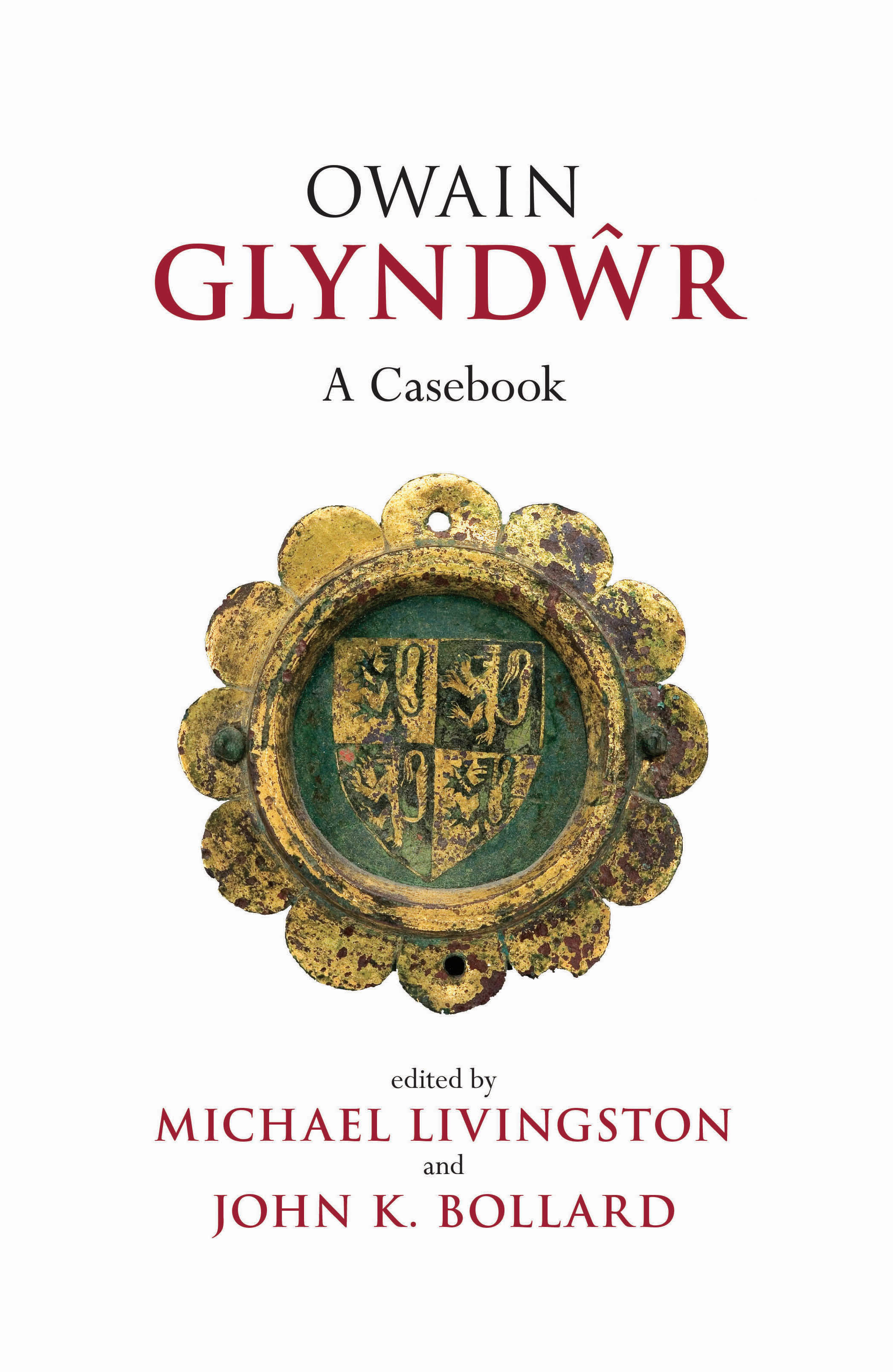
Owain Glyndwr – Prince of Wales and Revolutionary

Owain Glyndwr- A Casebook - book CoverOwain Glyndwr: A Casebook (Exeter Medieval Texts and Studies)
Michael Livingston (Editor), John K. Bollard (Editor)
Liverpool University Press 2013
ISBN-13: 978-0859898843

BOOK DESCRIPTION:

Owain Glyndwr (1357?-1415) was the last native Welshman to hold the title Prince of Wales and a revolutionary. This book presents the original text and English translations of the medieval and post-medieval records, documents, poems and chronicles relating to him, his career and his legacy. In addition, textual notes and essays on the historical, social and literary context of these documents will provide up-to-date perspectives and commentary on the man and his times. For the first time, historians, literary scholars, students and the general reader will be able to view a wide range of materials collected in a single volume and will be able to assess for themselves the significance of Glyndwr in Welsh, English and European history from the late Middle Ages into the Renaissance and to redress the imbalance of historical accounts past and present. The high profile international contributors include: John K. Bollard, Independent Scholar of Welsh Kelly DeVries, Loyola University, Maryland Helen Fulton, University of York, UK Rhidian Griffiths, Independent Scholar Elissa Henken, University of Georgia Michael Livingston, The Citadel Alicia Marchant, University of Western Australia Scott Lucas, The Citadel William Oram, Smith College Gryffydd Aled Williams, Aberystwyth University, UK

ABOUT THE AUTHORS:

Michael Livingston is an Associate Professor at The Citadel, The Military College of South Carolina. He is the editor of The Battle of Brunanburh: A Casebook (2011), along with scholarly editions of Siege of Jerusalem (2004), In Praise of Peace (2005), and The Middle English Metrical Paraphrase of the Old Testament (2011).

John K. Bollard is a Medieval Welsh scholar, editor, and lexicographer. He has published extensively on The Mabinogi and other early Welsh works, including popular translations of The Mabinogi (2006), Companion Tales to The Mabinogi (2007), and Tales of Arthur (2010).

Medieval Clothing and Textiles 9

medieval clothing and textiles 9 .book CoverMedieval Clothing and Textiles 9
Robin Netherton (Editor), Gale R. Owen-Crocker (Editor)
Hardcover: 182 pages
Publisher: Boydell Press (18 July 2013)
ISBN-13: 978-1843838562

BOOK DESCRIPTION:
Topics in this volume range widely throughout the European middle ages. Three contributions concern terminology for dress. Two deal with multicultural medieval Apulia: an examination of clothing terms in surviving marriage contracts from the tenth to the fourteenth century, and a close focus on an illuminated document made for a prestigious wedding. Turning to Scandinavia, there is an analysis of clothing materials from Norway and Sweden according to gender and social distribution. Further papers consider the economic uses of cloth and clothing: wool production and the dress of the Cistercian community at Beaulieu Abbey based on its 1269-1270 account book, and the use of clothing as pledge or payment in medieval Ireland. In addition, there is a consideration of the history of dagged clothing and its negative significance to moralists, and of the painted hangings that were common in homes of all classes in the sixteenth century. Robin Netherton is a professional editor and a researcher/lecturer on the interpretation of medieval European dress; Gale R. Owen-Crocker is Professor of Anglo-Saxon Culture at the University of Manchester. Contributors: Antonietta Amati, Eva I. Andersson, John Block Friedman, Susan James, John Oldland, Lucia Sinisi, Mark Zumbuhl

CONTENTS:

  • Preface
  • Bridal Gifts in Medieval Bari
  • The Marriage of the Year [1028]
  • Clothing as Currency in Pre-Norman Ireland?
  • Cistercian Clothing and Its Production at Beaulieu Abbey, 1269-70
  • Clothing and Textile Materials in Medieval Sweden and Norway
  • The Iconography of Dagged Clothing and Its Reception by Moralist Writers
  • Domestic Painted Cloths in Sixteenth-Century England: Imagery, Placement, and Ownership
  • Recent Books of Interest
  • Contents of Previous Volumes


Medieval Life Cycles – Continuity and Change

Medieval Life Cycles - Continuity and change - book CoverMedieval Life Cycles: Continuity and Change (International Medieval Research 18)
Isabelle Cochelin (Editor), Karen Smyth (Editor)
Hardcover: 357 pages
Publisher: Brepols Pub (30 July 2013)
ISBN-13: 978-2503540696

BOOK DESCRIPTION:

The essays in this collection present new research into a variety of questions on birth, childhood, adolescence, adulthood, middle age, and old age, ordered in a more or less chronological manner according to the lifecycle. The volume exposes attitudes and representations of the lifecycle from the Anglo-Saxon period to the end of the Middle Ages as being full of inconsistencies as well as definitive categories, and of variation and stasis. This attests to the fact that medieval conceptions and representations of the stages of life and their interrelationships are much more nuanced and less idealized than is usually credited. Medieval conceptual, mental, artistic, cultural, and sociological processes are scrutinized using various approaches and methods that cross disciplinary boundaries. What is emphasized across the volume is that there were varying, context-dependent rhythms of continuity and change in every stage of life in the medieval period. The volume’s selection of authors is international in scope and represents some of the leading current scholarship in the field.

LIST OF CONTENT:

  • Introduction: Pre-Thirteenth-Century Definitions of the Life Cycle by Isabelle Cochelin
  • Baptism and Infant Burial in Anglo‑Saxon England by Sally Crawford
  • Wanton Boys in Middle English Texts and the Christ Child in Minneapolis, University of Minnesota, MS Z822 N81 by Mary Dzon
  • Adolescence Uncloistered (Cluny, Early Twelfth Century) by Isabelle Cochelin
  • Rebellious Youth and Pliant Children: Jewish Converts in Adolescentia by Jessie Sherwood
  • Generational Discourse and Images of Urban Youth in Private Letters: The Nuremberg Tucher Family around 1550 by Christian Kuhn
  • Adulthood in Medieval Europe: The Prime of Life or Midlife Crisis? by Deborah Youngs
  • The Middle-Aged Meanderings of Margery Kempe: Medieval Women and Pilgrimage by Sue Niebrzydowski
  • ‘Byð se ealda man ceald and snoflig’: Stereotypes and Subversions of the Last Stages of the Life Cycle in Old English Texts and Anglo‑Saxon Contexts by Philippa Semper
  • Imagining Age in the Fifteenth Century: Nation, Everyman, and the Self by Karen Smyth
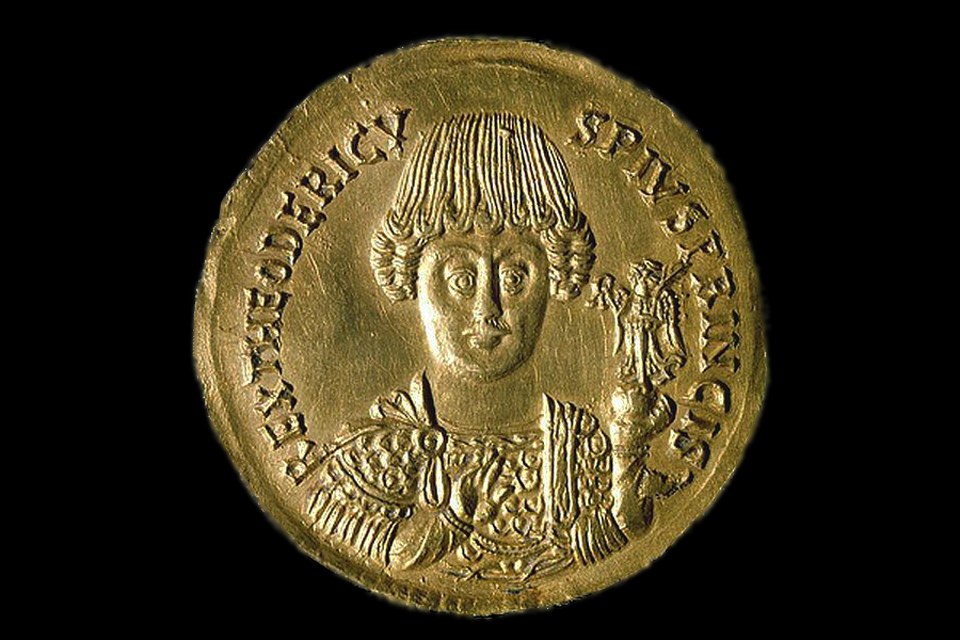
Theoderic memorial medial. Source: Wikipedia

The Restoration of Rome – Barbarian Popes and Imperial Pretenders


New book by Peter Heather on the restoration of Rome picks up the story of Empire where the Fall of Rome left off in 2006

The Restoration of Rome: Barbarian Popes and Imperial Pretenders
By Peter Heather
524 pages

Publisher: Macmillan; 1 edition (4 July 2013)
Language: English
ISBN-10: 0230700152
ISBN-13: 978-0230700154

BOOK DESCRIPTION:

Restoration of Rome Peter Heather CoverIn 476 AD the last of Rome’s emperors was deposed by a barbarian general, the son of one of Attila the Hun’s henchmen, and the imperial vestments were despatched to Constantinople. The curtain fell on the Roman Empire in Western Europe, its territories divided between successor kingdoms constructed around barbarian military manpower. But if the Roman Empire was dead, the dream of restoring it refused to die. In many parts of the old Empire, real Romans still lived, holding on to their lands, the values of their civilisation, their institutions; the barbarians were ready to reignite the imperial flame and to enjoy the benefits of Roman civilization, the three greatest contenders being Theoderic, Justinian and Charlemagne.U

Ultimately, they would fail nevertheless fail. It was not until the reinvention of the papacy in the eleventh century that Europe’s barbarians found the means to generate a new Roman Empire, an empire, which has lasted a thousand years.

ABOUT THE AUTHOR:

Peter Heather is currently Professor of Medieval History at King’s College London. He is the author of the acclaimed and bestselling Fall of the Roman Empire also published by Pan Macmillan.


The Conversion of Scandinavia

the Conversion of ScandinaviaThe Conversion of Scandinavia. Vikings, Merchants, and Missionaries in the Remaking of Northern Europe

Winner of the 2013 Gustav Ranis International Book Prize awarded by the MacMillan Center at Yale University.

In this book a MacArthur Award-winning scholar argues for a radically new interpretation of the conversion of Scandinavia from paganism to Christianity in the early Middle Ages. Overturning the received narrative of Europe’s military and religious conquest and colonization of the region, Anders Winroth contends that rather than acting as passive recipients, Scandinavians converted to Christianity because it was in individual chieftains’ political, economic, and cultural interests to do so.

Through a painstaking analysis and historical reconstruction of both archaeological and literary sources, and drawing on scholarly work that has been unavailable in English, Winroth opens up new avenues for studying European ascendency and the expansion of Christianity in the medieval period.

ABOUT THE AUTHOR:

Anders Winroth is professor of history at Yale, is the author of The Making of Gratian’s Decretum, for which he was awarded a MacArthur Fellowship in 2003. He lives in New Haven, CT.

The Conversion of Scandinavia. Vikings, Merchants, and Missionaries in the Remaking of Northern Europe
By Anders Winroth
Yale University Press (January 24, 2012)
ISBN-13: 978-0300170269

Winner of the 2013 Gustav Ranis International Book Prize awarded by the MacMillan Center at Yale University.

Vikings – The North Atlantic Saga

Vikings-the North Atlantic SagaVikings: The North Atlantic Saga

The story of the Viking expansion west across the North Atlantic between AD. 800 and 1000, the settlement of Iceland and Greenland, and the exploration of northeastern North America, is a chapter of history that deserves to be more widely known. Norse discoveries in the North Atlantic are the first step in the process whereby human populations became connected into a single global system. The Norse, and their Viking ancestors, are little known, misunderstood, and almost invisible on the American landscape. Although Norse voyages were known since the early 1800’s, the near absence of physical evidence of Vikings in the New World has rendered the information, and the possibility that Norse explorers reached the North American mainland five hundred years before Columbus, speculative, at best. Yet, discovery of a Viking site in Newfoundland in 1960 confirmed a pre-Columbian European presence in the Americas, and Norse artifacts found in archaeological sites scattered throughout the eastern Canadian arctic and sub-arctic, raise the issue of how far south of Newfoundland the Norse did explore, and what impact their contacts had on Native Americans.

The term “Viking” is indelibly associated with seafaring warriors. Carpentry, and especially boat building, were skills known to all Viking men, and along with maritime skill, was the characteristic upon which Viking expansion and influence depended. Viking craft had an advantage over all other watercraft of their day in speed, shallow draft, weight, capacity, maneuverability, and seaworthiness, giving Vikings the ability to trade, make war, carry animals, and cross open oceans safely. The territorial expansion of the Vikings from their Scandinavian homelands began in the last decades of the eighth century, and started as seasonal raids on the British Isles. Those Vikings who ventured west settled the islands of the North Atlantic. Many theories attempt to explain what propelled Vikings outward from their northern homelands: developments in ship construction and seafaring skills; internal stress from population growth and scarce land; loss of personal freedom as political and economic centralization progressed; but the overriding factor seemed to be an awareness of the opportunities for advancement. By taking on lives as soldiers of fortune, Vikings could dramatically alter their prospects: becoming wealthy, reaping glory and fame in battle, and achieving high status as leaders and heroes based on their own abilities and deeds. Although there is reason for speculation about how far the Norse traveled south of Newfoundland, recent archaeological research provides a solid basis for understanding more about Norse explorations and contacts in the north. Archaeologists found Norse artifacts in early Inuit (Eskimo) sites in the Canadian arctic and Greenland. That people of the Dorset culture had begun to replace their stone blades with metal after AD. 1000 seemed curious, although understood when both late Dorset and Early Thule sites began to produce not only Norse iron and copper, but a host of other Norse materials. Soon Norse materials were reported from many eastern Canadian arctic and northwest Greenland sites dating to the Norse period. These finds suggest that Native Americans interacted with the Norse in a variety of ways: by casual contacts, scavenging Norse wrecks, or outright skirmishes

This volume celebrated the Vikings’ epic voyages, which brought the first Europeans to the New World. In doing so, the ring of humanity that had been spread in different directions around the globe for hundreds of thousands of years, was finally closed. Even though Leif Eriksson’s was not the first—nor the last—voyage of Viking exploration, nor did it lead to permanent settlement in the Americas, his voyage achieved an important and highly symbolic goal that made the world an infinitely smaller place.

This book is a catalogue published in connection with an exhibition in Washington 2000 celebrating the Viking Passage to America in the 1000. It is still worth a read.

Vikings : The North Atlantic Saga
William F. Fitzhugh and Elisabeth I. Ward
Smithsonian Books; First Edition 2000
ISBN-13: 978-1560989950

Ships and Men in the Late Viking Age

ships and men in the viking world judith jeschShips and Men in the Late Viking Age: The Vocabulary of Runic Inscriptions and Skaldic Verse

The Vikings were the master mariners and ship-builders of the middle ages: their success depended on these skills. Spectacular archaeological finds of whole or partial ships, from burial mounds or dredged from harbours, continue to give new and exciting evidence of their practical craftsmanship and urge to seek new shores. The nautical vocabulary of the Viking Age, however, has been surprisingly neglected – the last comprehensive study was published in 1912 and was heavily dependent on post-Viking Age sources.

Far better contemporary sources from the later Viking Age are available to document the activities of men and their uses of ships from c.950-1100, and Judith Jesch undertakes in this book the first systematic and comparative study of such evidence. The core is a critical survey of the vocabulary of ships and their crews, of fleets and sailing and battles at sea, based on runic inscriptions and skaldic evidence from c.950-1100. This nautical vocabulary is studied within the larger context of ‘viking’ activity in this period: what that activity was and where it took place, its social and military aspects, and its impact on developments in the nature of kingship in Scandinavia.

ABOUT THE AUTHOR:

JUDITH JESCH is Reader in Viking Studies at the University of Nottingham, and author of Women in the Viking Age.


Ships and Men in the Late Viking Age: The Vocabulary of Runic Inscriptions and Skaldic Verse
By Judith Jesch
Boydell Press 2008
ISBN-13: 978-0851158266

The Viking World

the-viking-world-bookThe Viking World (Routledge Worlds)

Filling a gap in the literature for an academically oriented volume on the Viking period, this unique book is a one-stop authoritative introduction to all the latest research in the field.

Bringing together today’s leading scholars, both established seniors and younger, cutting-edge academics, Stefan Brink and Neil Price have constructed the first single work to gather innovative research from a spectrum of disciplines (including archaeology, history, philology, comparative religion, numismatics and cultural geography) to create the most comprehensive Viking Age book of its kind ever attempted.

Consisting of longer articles providing overviews of important themes, supported by shorter papers focusing on material of particular interest, this comprehensive volume covers such wide-ranging topics as social institutions, spatial issues, the Viking Age economy, warfare, beliefs, language, voyages, and links with medieval and Christian Europe.

This original work, specifically oriented towards a university audience and the educated public, will have a self-evident place as an undergraduate course book and will be a standard work of reference for all those in the field.

The Viking World (Routledge Worlds)
Stefan Brink (Editor), Neil Price (Editor)
Routledge 2011

The Viking Way – Religion and War in Late Iron Age Scandinavia

The_Viking_WayThe Viking Way: Religion and War in Late Iron Age Scandinavia

Magic, sorcery and witchcraft are among the most common themes of the great medieval Icelandic sagas and poems, the problematic yet vital sources that provide our primary textual evidence for the Viking Age that they claim to describe. Yet despite the consistency of this picture, surprisingly little archaeological or historical research has been done to explore what this may really have meant to the men and women of the time.

This book examines the evidence for Old Norse sorcery, looking at its meaning and function, practice and practitioners, and the complicated constructions of gender and sexual identity with which these were underpinned. Combining strong elements of eroticism and aggression, sorcery appears as a fundamental domain of women’s power, linking them with the gods, the dead and the future. Their battle spells and combat rituals complement the men’s physical acts of fighting, in a supernatural empowerment of the Viking way of life. What emerges is a fundamentally new image of the world in which the Vikings understood themselves to move, in which magic and its implications permeated every aspect of a society permanently geared for war. In this fully revised and expanded second edition, Neil Price takes us with him on a tour through the sights and sounds of this undiscovered country, meeting its human and otherworldly inhabitants, including the Sami with whom the Norse partly shared this mental landscape. On the way we explore Viking notions of the mind and soul, the fluidity of the boundaries that they drew between humans and animals, and the immense variety of their spiritual beliefs. We find magic in the Vikings’ bedrooms and on their battlefields, and we meet the sorcerers themselves through their remarkable burials and the tools of their trade.

Combining archaeology, history and literary scholarship with extensive studies of Germanic and circumpolar religion, this multi-award-winning book shows us the Vikings as we have never seen them before.

The Viking Way: Religion and War in Late Iron Age Scandinavia
By Neil Price
Published by the Department of Archaeology and Ancient History, Uppsala University 2002. New edition will be published 2014 by Oxbow
ISBN:         91-506-1626-9