What can Avar cemeteries and a twentieth-century Hungarian village tell us about the extraordinary persistence of family traditions?
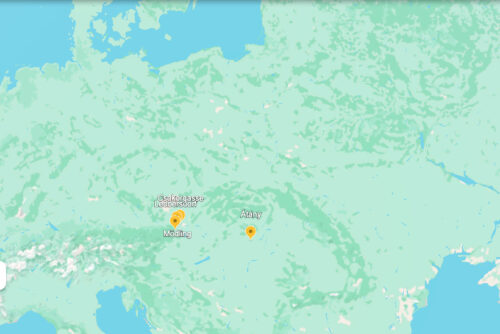
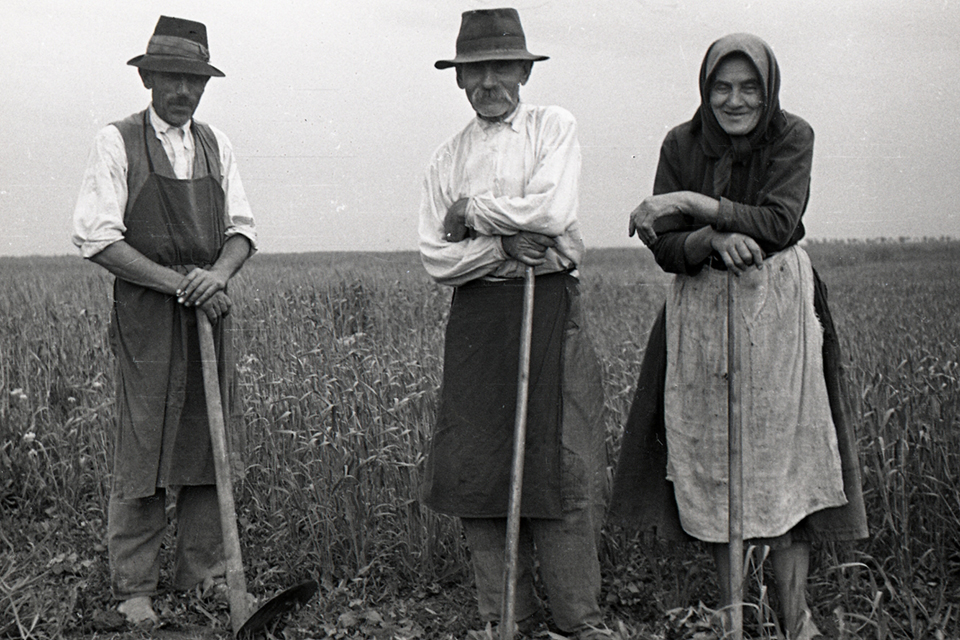
In the 1960s, two anthropologists, Edit Fél and Tamás Hofer, carried out a series of studies focusing on the village of Átány in northern Hungary. The studies were published in three major volumes, each representing a particular historical-anthropological approach (1). Of these, the English-language study published in 1969 presented a fascinating picture of what was then considered the traditional Hungarian family structure, characterised by patrilineality and patrilocality: a social system in which newly married couples moved into the household of the husband’s family, while property, land, titles and lineage were passed down through the male line (2). Moreover, Fél and Hofer specifically noted that sororate marriages were just as frequent in the village as levirate marriages (3).
This typically patriarchal and agnatic organisation became the subject of considerable debate among historians in the later twentieth century (4), who remarked on the differences between Hungarian, Mediterranean and Northern European family structures, characterised by diverse forms of bilateral, cognatic and agnatic kinship and inheritance patterns (5). Although later studies have shown that reality did not always conform to the carefully outlined model presented by Fél and Hofer, they have nevertheless confirmed that differences existed between the traditional forms of family and kinship organisation in these three parts of Europe.
But how old were these traditions? And to what extent were they shaped by the economic circumstances of the people who practised them?
These questions have acquired new relevance following recent archaeological and genetic studies of the Avars, who settled in the Carpathian Basin during the sixth century. Their family organisation appears to have shared striking features with the patterns documented by Fél and Hofer some fourteen centuries later. Yet the two populations lived under profoundly different economic circumstances. While the Avars originated in the world of Eurasian steppe pastoralism, the inhabitants of twentieth-century Átány were settled agriculturalists.
The comparison raises a fascinating possibility: that certain patterns of kinship and marriage were not merely functional adaptations to a particular way of life but enduring cultural traditions, capable of surviving fundamental changes in how people made their living.
Levirate Marriages?
New evidence suggests that some of these patterns may indeed have very deep roots, perhaps reaching back to the successive migrations of steppe peoples into the Carpathian Basin. Here, however, we will focus on the later movements of the Huns (AD 400–453), the Avars (AD 567–c. 800) and the Magyars (AD 895–900).
Recently, this question has been raised again, this time prompted by detailed genetic studies of human remains excavated from the Avar cemeteries of Leobersdorf and Mödling near Vienna. These findings have been widely reported in the media, drawing renewed attention to the custom of levirate marriage, which was prominent for centuries among the nomadic peoples who settled in medieval Eurasia.
First of all, though, we need to explain what a levirate marriage is. Known in Hebrew as yibbum, the custom required a widow whose husband had died childless to marry the deceased’s brother, thereby securing an heir who would carry on the paternal lineage or stirps.
The term derives from levir, the Latin word for a husband’s brother, while its biblical basis is found in Deuteronomy 25:5–10. Although the custom continued to be practised among Jewish families, such marriages were prohibited by emperors and bishops in Late Antiquity. Later, Muslim authorities also issued strong condemnations. These taboos were subsequently reinforced by prohibitions on marriage within numerous degrees of kinship, instituted partly to prevent wealth from becoming concentrated among the new dynasties that emerged in the tenth century.
Meanwhile, levirate marriages were evidently widely practised in pagan communities sharing particular kinship structures organised around patrilineality, patrilocality and bridewealth. Although known from the Icelandic sagas and perhaps also from Viking Age Scandinavia, the levirate was traditionally discussed as a custom found primarily among Eurasian pastoralist societies. Until recently, however, most family historians regarded the evidence as little more than rumours transmitted through Herodotus and perpetuated in the often defamatory ethnographic descriptions of the barbarians living on the fringes of Christian Europe. In a recent survey, the authors have provided a comprehensive account of what we appear to know about these peoples and their marriage customs, supported by an extensive review of the evidence concerning the Xiongnu, widely believed to have been among the ancestors of the Huns.
Levirate Marriages among the Avars
Recently, however, a group of geneticists, archaeologists and historians have uncovered remarkable genetic evidence suggesting that both sororate and levirate marriages were practised among the Avars in the Carpathian Basin. More precisely, they have done so by reconstructing family relationships among individuals buried alongside one another.
Originally a horse-riding people from the Mongolian steppes, the Avars dominated large parts of Central and Eastern Europe between AD 560 and 800, having arrived to subjugate the Gepids and help send the Lombards on their way to northern Italy. They soon became notorious for their campaigns of warfare and plunder in the Balkans. One of their greatest military undertakings was the ten-day siege of Constantinople in 626. This remarkably well-organised siege terrified the Byzantines so profoundly that its memory survives in Orthodox worship to this day. The Akathist Hymn is still sung in thanksgiving to the Mother of God “for the miraculous deliverance of the city from the Avar threat”.
At the same time, the Avars were remarkably successful in establishing a well-organised and peaceful realm despite the ethnic heterogeneity of the population they ruled. Over time, they abandoned their nomadic way of life and settled in villages. Around Vienna, they sometimes reused the remains of Roman buildings, while their material culture became increasingly uniform. Yet their history also challenges the familiar stereotype of the “savage Avars”. From the later seventh century onwards, they enjoyed more than a century of what has been described as one of the most peaceful periods in the entire history of the Carpathian Basin.
Their presence is attested by numerous Avar cemeteries in present-day Austria and Hungary. The bones, weapons and jewellery buried with the dead offer glimpses into the lives of these communities, although much remains open to interpretation. The Avars themselves left no written records. What we know about them comes from the accounts of their neighbours and enemies, as well as careful studies of their human remains, material culture and artefacts.
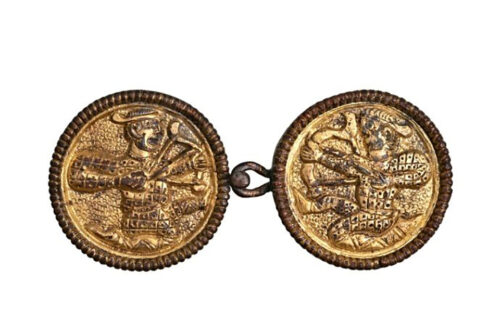
Of particular interest are the exceptionally detailed studies carried out at Mödling and Leobersdorf. Several findings are worth highlighting. The grave goods from Mödling and Leobersdorf are often virtually indistinguishable, ranging from horse-riding equipment to necklaces and earrings. If you were a man of substance, you sported bronze belt fittings, often decorated with griffins. A woman of corresponding standing might be buried with a set of clasps for her cape, depicting archers aiming at their prey. Many such objects were buried with people who died in their twenties or thirties, suggesting that this age group may have enjoyed particular importance within these communities.
There are also few signs of injuries sustained in combat and very little evidence of nutritional deficiencies. This suggests that the population was generally well fed. Few weapons were found in either cemetery, while the proportions of men and women were roughly equal. This, too, points towards a period of limited warfare, since military campaigns might otherwise have been expected to leave some communities short of men. These findings may, however, be compared with those from a third cemetery at Csokorgasse (6), where archaeologists have shown that men buried with their horses were, on average, 6 cm taller. The researchers also looked for evidence of severe violence against women but found none.
In general, the differences in grave goods were relatively small. Together with the fact that almost everyone was buried with some possessions, this suggests a comparatively egalitarian society. There is little doubt that the inhabitants of the two villages belonged to the same cultural world. Based on this evidence, archaeologists a generation ago would probably have assumed that they also inhabited the same social world. This, however, was emphatically not the case.
The genetic evidence tells a strikingly different story.
To be precise, the researchers have demonstrated that the inhabitants of Leobersdorf, represented by around 150 graves, predominantly carried a genetic profile characteristic of East Asian ancestry. By contrast, the approximately 500 individuals tested from Mödling displayed a much more mixed European ancestry. The scale of this genetic difference took the researchers by surprise.
According to the researchers, this is the first time such large communities have provided evidence that cultural, ethnic and genetic integration did not necessarily go hand in hand. Grave goods, in other words, cannot reliably be used to identify someone’s ancestry.
What we now know is that the people of Leobersdorf were genetically descended from East Asian ancestors – mounted nomads accompanied by women of the same heritage. They did not arrive as an exclusively male band of warriors.
Moreover, the people of Leobersdorf were apparently able to retain this distinct genetic profile even though the genetic evidence demonstrates that they practised exogamy. Ancestry and pedigree evidently played an important role in choosing marriage partners, with the aim of preserving a genetically homogeneous population over successive generations. Yet somehow, the inhabitants also managed to avoid inbreeding. Thus, some of the women at Leobersdorf came from the central regions of present-day Hungary.
Historians have speculated about how they managed to find suitable partners among communities scattered across considerable distances. Perhaps major festivals or funerals brought people together from afar at particular times of the year? We do not know.
What we do know, however, is that the good people of Mödling, located just 20 km from Leobersdorf, were apparently NOT invited. At least, no intermarriages took place between the inhabitants of the two villages. The women at Mödling, meanwhile, showed few long-distance family connections, although close kinship ties could be established with individuals buried at Vienna-Csokorgasse (7).
Finally, we know that these people must have been obsessively engaged in tracing and remembering their ancestry and kin. At Leobersdorf, genealogies extended back at least six generations. Elsewhere, geneticists have been able to trace the Avars’ apparent inclination to preserve genetic “purity” through the control of intermarriage over nine generations.
While the two communities thus practised strict endogamy within their respective genetic spheres, they nevertheless appeared remarkably alike in terms of culture. Moreover, they apparently shared the same strict patrilineal organisation and the practice of levirate marriage. At Mödling, geneticists uncovered seven possible instances involving three pairs of fathers and sons who had children with the same woman, two pairs of full brothers, one pair of paternal half-brothers and one pair of an uncle and nephew. At Leobersdorf, three levirate unions were identified.
Back to Átány in the Twentieth Century
The careful genetic studies of the Avars have demonstrated how these people practised strict patrilineal descent and patrilocality, coupled with occasional levirate marriages.
They have also shown that although the inhabitants of the two villages presented two markedly different genetic profiles – one predominantly European, the other East Asian – they organised themselves according to the same social patterns and adorned themselves with the same cultural artefacts. They may have looked different in terms of facial characteristics and colouring. Yet they would have sported the same belts.
The fascinating conclusion, however, is that this particular form of social organisation was strikingly similar to the one Fél and Hofer documented through their extensive ethnographic studies at Átány 1400 years later. Not because it was necessarily a functional consequence of a particular livelihood – namely, nomadic existence – but rather because this appeared to be how things had seemingly always been done. This does not prove an unbroken tradition stretching from the Avars to modern Hungary. That would require evidence of another scale. But it challenges the assumption that family structures are primarily shaped by economic circumstances. Perhaps they are also inherited cultural habits, passed down through generations long after the conditions that originally fostered them have disappeared.
The possibility of such enduring cultural continuity is, quite simply, staggering.
Karen Schousboe
NOTES:
(1) Edit Fél and Tamás Hofer were curators at the Néprajzi Múzeum, the Hungarian Museum of Ethnography in Budapest, before and after the Second World War. Together, they produced a series of monographs studying the village of Átány in detail and from a holistic perspective, examining village life from three different scholarly perspectives: material culture, daily life and social relations. Their publications included Bäuerliche Denkweise in Wirtschaft und Haushalt (1972) and Proper Peasants (1969). Their studies remain part of the legacy of Hungarian ethnographic museums. At the time, they attracted considerable international attention as paradigmatic examples of historical-anthropological community studies.
(2) Edit Fél and Tamás Hofer, Proper Peasants: Traditional Life in a Hungarian Village. Viking Fund Publications in Anthropology, no. 46. Corvina Press, 1969, pp. 132 ff.
(3) Proper Peasants, p. 145.
(4) See especially “Family and Household as Work Group and Kin Group: Areas of Traditional Europe Compared”, In Lasslet:
pp. 513–564.
(5) Rudolf Andorka, “The Historical Demography of a Proper Hungarian Village: Átány in the Eighteenth and Nineteenth Centuries”, Journal of Family History, 19, no. 4 (1994).
(6) Sylvia Kirchengast, Birgit Bühler and Dominik Hagmann, “Sexual Dimorphism in the Association Between Status Symbols and Body Height in the Early Medieval Avar Population from the Csokorgasse Burial Ground (Vienna, Austria)”, Nature and Anthropology, 4 (2026).
(7) Guido Alberto Gnecchi-Ruscone et al., “Network of Large Pedigrees Reveals Social Practices of Avar Communities”, Nature, 629 (2024), pp. 376–383 and
Ke Wang et al., Ancient DNA Reveals Reproductive Barrier Despite Shared Avar-Period Culture, Nature (2025) Vol 638 pp 1007-1014.