
A conference entitled “The Influences of the Dominican Order in the Middle Ages” will be held at the University of Oxford in September 2016
A conference entitled “The Influences of the Dominican Order in the Middle Ages” will be held (primarily) at the Taylor Institution at the University of Oxford this September 10-12. Here is the description from the conference website:
From its modest foundations in 1216, the Dominican Order grew rapidly in the first century of its existence, establishing itself across Europe as a learned Order of Preachers. This interdisciplinary conference will explore the influences of the Dominican Order on all aspects of medieval life, encompassing the large-scale influences of the Order and the legacy of its prominent figures, as well as the impact that the Order had on those that came into contact with it.
Papers to be given:
-

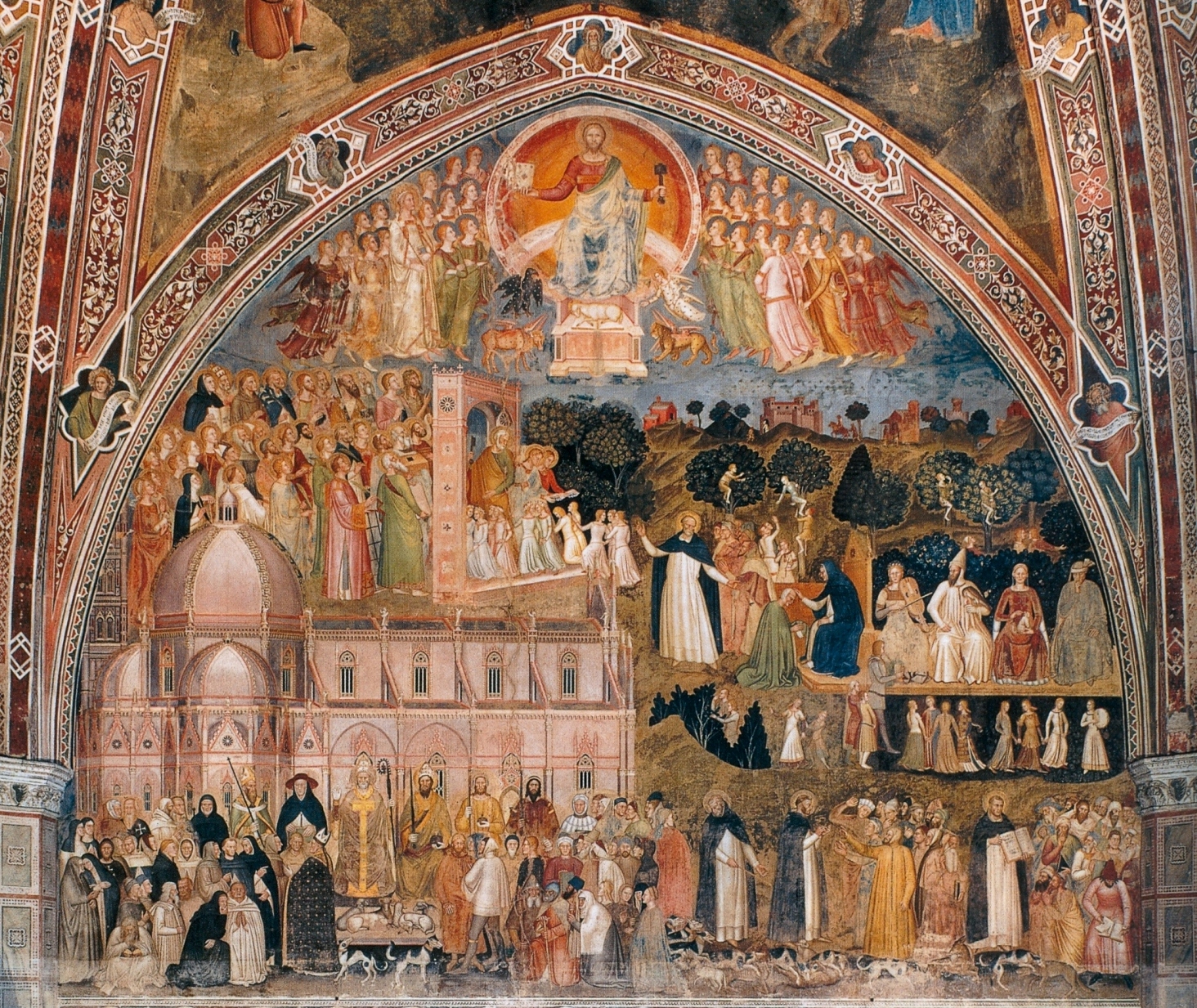
Mural painted by Andrea di Bonaiuto in Santa Maria Novella 1366 -1388. Source: Wikipedia Cornelia Linde – Qui debet predicare oportet ut habet sufficientiam doctrine: Shaping Friars Preachers at Oxford
- George Lambrick – Food for Thought: Living Standards, Architecture, and Life and Death at the Dominicans’ Studium Generale in Medieval Oxford
- Johnny G. G. Jakobsen- Friars Familiar for Folks on Foreign Soil: Dominican Relations to Foreigners around Medieval Northern Europe
- Christian Oertel – The Dominicans of Sigtuna and their Influence on the Upplandian Society (Late Thirteenth–Early Fourteenth Centuries)
- M. Alison Stones – Illustrated Dominican Books in France 1221–1350
- Laura Albiero – The Spread and Circulation of the Dominican Pocket Breviary
- Eleanor Giraud – The Origins and Influences of Dominican Chant Books
- Mary Rouse – The Vital Impact of the Dominicans on Books at the University of Paris, 1217–1350 (Keynote paper)
- Dominic Legge, OP – Reasonable Belief: The Contribution of Aquinas and his Dominican Followers on the Act of Faith and its Reasonableness
- Antonia Fitzpatrick – Thomas Aquinas on Bodily Identity
- Timothy Bellamah, OP – Irrationabile enim est et pravum quod homo non attendat ad virtutem intentionis. Authorial Intention and the Literal Sense in Dominican Biblical Interpretation
- Harald Bollbuck – St. Thomas in Wittenberg: Thomism before and in the Early Reformation, the Case of Karlstadt
- Andrea Riedl- Varietas est mater et initium discordiae. The Dominicans’ Key role in Thirteenth- Century Controversial Theology between Latins and Greeks
- Judith Ryder – Dominican Influence in Eastern Europe and the Byzantine World
- Panayota Volti – The Dominicans and the Eastern Mediterranean in the late Middle Ages: Artistic and Spiritual Impact
- M. Michèle Mulchahey – Thomas Aquinas, Dominican Theology, and the Feast of Corpus Christi
- Yossi Maurey – Whose Crown is it? The Dominican Liturgy and the Sainte-Chapelle
- Innocent Smith, OP – Ne sorores devotionem amittant: Dominican Liturgy and the Cura Monialum Question in the Thirteenth Century
- Christian Leitmeir – Compilation and Adaptation: How “Dominican” is Hieronymus de Moravia’s Tractatus de Musica
- Błażej Matusiak, OP – Jerome of Moravia’s De musica—Between Tradition and Originality
- Eva Maschke – On Dominican Conductus Collections and Their (Re-)Use: The Mendicant Orders and the Notre Dame Repertoire
- Emily Davenport Guerry The Sainte-Chapelle as a Dominican Vision: New Evidence for the Influence of
- Joanna Cannon – Reciprocal Influences: Dominicans, Laypeople, Artists and Images of the Virgin in Thirteenth-Century Italy
- Claire Bonnotte – Antonino Pierrozzi (1389–1459) and his Influence on the Florentine Arts: The Example of his Trialogus on Emmaus and a Fra Angelico’s Fresco in San Marco
- Haude Morvan – The Involvement of the Order of Preachers in New Disposition of Liturgical Space in Italy (1400–1550)
- Ezra Sullivan, OP – Nova et Vetera: Antoninus Pierozzi as a Locus of Dominican Influence on Late Medieval and Early Renaissance Florence
- Delphine Carron – Remigio dei Girolami and the Commune of Florence (1293–1303)—The Influence of the Political Writings of a Florentine Dominican in the Age of Dante
- Steven Watts – ‘A harvest of virgins, widows, and true penitents’: Exploring the Influence of Master Jordan of Saxony (d. 1237) on the Growth of the Friars’ Interaction with Devout Women in Late Medieval Germany
- Görge Hasselhoff – A Neglected Chapter: The Dominicans and the Talmud as Exemplified with Raymond Martini
- Mathilde van Dijk – The Devotio Moderna and the Dominicans: Appropriation and Rejection
- Katie Lindeman – Lay Inquisitors: Feuding, Religious, Minorities and Saint Vincent Ferrer in Late Medieval Valencia
The programme is interspersed with concerts, guided tours and other arrangements.
Abstracts of the conference papers
SEE MORE:
The presence of both Greyfriars and Blackfriars in Oxford dominated the city early on. For some time a project has been trying to reconstruct the history of the physical presence of the mendicant orders
Great Houses Make Not Men Holy: Mendicant Architecture in Medieval Oxford (High Res) from Jim Knowles on Vimeo.