At the head of the Bay of Arcachon, west of Bordeaux, lies the small town of Lège, nestled within a nature reserve that still preserves something of the landscape that characterised this corner of the Atlantic coast in the Middle Ages – before the drainage canals, the vast pine forests, and the arrival of mass tourism.
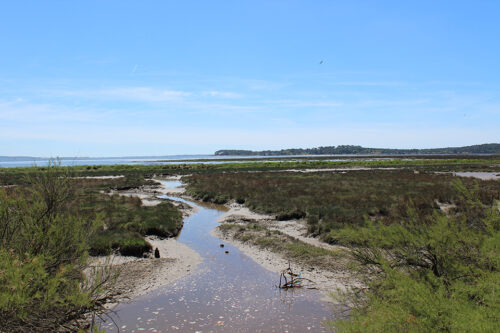
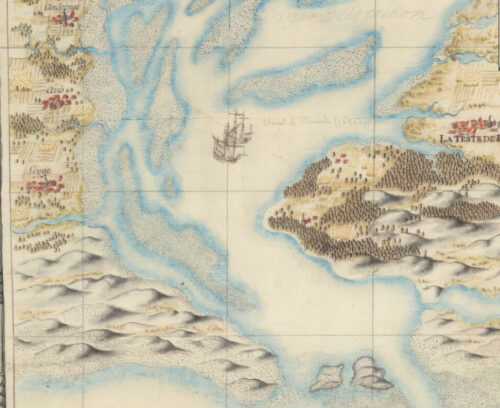
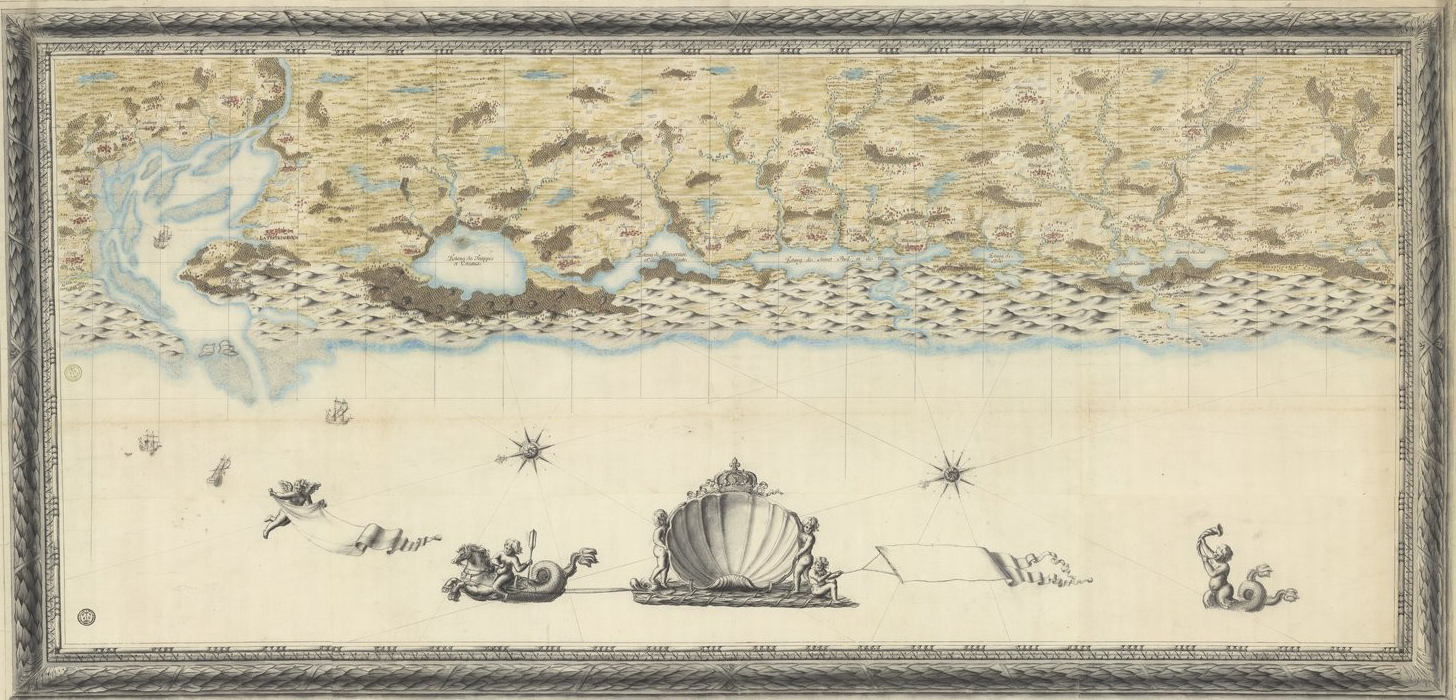
In the Middle Ages, Lège stood at the edge of a fluid and ever-changing environment shaped by the powerful Atlantic tides. Twice each day, the retreating waters exposed broad expanses of mudflats, sandbanks and oyster beds, while the surrounding coastline merged almost imperceptibly into the immense inland moors south of the Garonne. Until the close of the eighteenth century, this region formed part of one of Western Europe’s largest stretches of uncultivated land. Later known as the Département des Landes, it extended across some 600,000 hectares of heath, moorland and low scrub, punctuated by open pools of water, winding streams (courants), and scattered flocks of sheep grazing beneath an apparently endless horizon.
Beneath this seemingly boundless landscape lay a deceptively fragile foundation. A thin layer of fine sand, rarely more than 35 to 50 centimetres deep, covered an almost impermeable stratum of sand, clay, and decayed vegetation. Known locally in Gascon as aliòs – or hardpan in English – this natural cement prevented rainwater from draining into the subsoil. As a result, the landscape was governed almost entirely by the rhythms of glare of the sun, the rainfall and the tides.
The Landes was therefore a land of striking seasonal contrasts. During the long summer months, the shallow soils dried rapidly beneath an unforgiving sun. The heath withered, the sand became scorching hot, and the country assumed the appearance of a desolate steppe shimmering in the heat. With the return of the autumn rains, the transformation was dramatic. Unable to penetrate the aliòs, the water spread slowly across the level ground, turning vast areas into boggy heath and marshland. Throughout the winter, the landscape remained muggy, waterlogged and difficult to traverse, the still waters reflecting the grey skies until they gradually evaporated beneath the warmth of the following summer.
Few European landscapes displayed such pronounced seasonal extremes. Within a single year, the Landes oscillated between drought and inundation, between a sun-scorched wilderness and an immense inland wetland. It was a demanding yet remarkably beautiful environment, whose rhythms shaped every aspect of life for those who inhabited it.
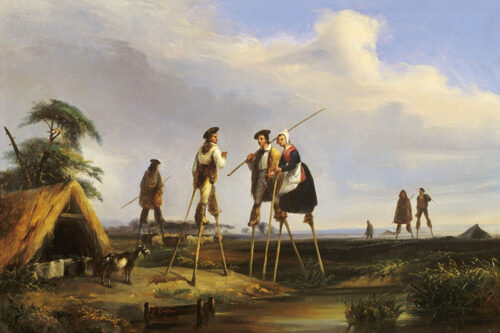
From the sixteenth century onwards, successive governments sought to reclaim France’s great Atlantic marshes. Initial drainage schemes concentrated on the marshes of Poitou before attention gradually turned to the Landes. The first large-scale planting of maritime pines was intended to stabilise the shifting coastal dunes, but by the nineteenth century these efforts had developed into an ambitious programme of landscape transformation. Drainage canals, extensive forests, and new agricultural settlements converted what many contemporary observers regarded as an inhospitable wilderness into a productive commercial landscape.
This transformation reached its symbolic culmination under Napoleon III. Fascinated by the region, he acquired not only a holiday home, but the estate at Solférino, where he established a model village complete with modern farmhouses, a town hall, a church, and a presbytery. Together with the new forests, roads, and drainage systems, such projects created the landscape that visitors to the Landes largely recognise today.
Yet this orderly landscape conceals a much older one. Here, before the pines, before the canals, and before the imperial reforms, medieval Lège occupied a frontier between land and sea, where shifting sands, tidal waters, marshes, and heath dictated the possibilities for settlement, agriculture, and power. Recovering that vanished landscape is the first step towards understanding the world in which the people of medieval Lège lived around 1200.
“This is a desolate region deprived of all good: there is here no bread, wine, meat, fish, water or springs; villages are rare here. The sandy and flat land abounds none the less in honey, millet, lymegrass, and wild boars. If perchance you cross it in summertime, guard your face diligently from the enormous flies that greatly abound there and which are called in the vulgar wasps or horseflies; and if you do not watch your feet carefully, you will rapidly sink up to the knees in the sea-sand copiously found all over.”
The Pilgrim’s Guide to Santiago de Compostela from the 12th Century (Codex Calixtinus, Book V, chapter 4).
No Bread but Polenta
We can almost hear the dismay of the twelfth-century pilgrim who, having crossed the Garonne at Blaye north-west of Bordeaux, entered the bleak and inhospitable heathlands of the Landes. There was no white bread, the guide complains, yet it also hints at local fare that may have been better than its reputation: a rustic polenta made from millet, sweetened with honey and served with salted goose or roasted kid and local cheese. Such a meal is not easily found in the region today, but it can readily be recreated at home. (Cook the millet thick in goat’s milk, drizzle with honey and serve it to a roast).
The Landes was undoubtedly a harsh landscape, yet it was also economically productive, and its distinctive way of life can be traced back at least to the High Middle Ages. To understand its vitality, however, we must turn to the medieval sources explored so thoroughly by Frédéric Boutoulle and generously published over many years. Of particular importance is his study Moors, Dunes and Men, which provides an exceptionally rich insight into the cultural and social life of Lège around 1200.
One of these sources is a remarkably detailed agreement concluded between the canons of Bordeaux Cathedral and the bailiff responsible for administering their estates at Lège. Dating from about 1208–1212, it opens a rare window onto the small and apparently fortified castellar, or bourg, of Lège. Whether only the castle itself was fortified, or whether the surrounding settlement was enclosed as well (turning it into a bourg, proper, cannot be determined.) Archaeological investigation appears not to have been undertaken. The document nevertheless suggests that the site comprised at least a residence together with a chapel or church. The Lège today, however, is not located in the same position than it once was.
Because of centuries of sand drift and silting, we may assume that the landscape looked very different 800 years ago. Parts of the surrounding terrain were subject to tidal inundation and occasional flooding during Atlantic storms. Drifting sand must also have posed a constant challenge, requiring settlements to adapt repeatedly. At least three successive locations of Lège occupied between AD 1000 and 1600 have been identified.
From at least 1089–90 the estate belonged to the Archbishop of Bordeaux. At that time it consisted of a curtis, that is a fortified domanial court. In 1169 the Archbishop donated Lège to the chapter of canons attached to Bordeaux Cathedral. By then, the estate possessed flourishing fisheries and woodland. Finally, in a papal privilege issued in 1228, the property is described as:
“The castle at Lège with its churches, its forests, its fisheries, and all the other possessions belonging to it.”
(castrum de Legia cum ecclesiis suis cum nemoribus, piscationibus et aliis que ibi habetis)
What this privilege tells us is that, by 1228, the chapter regarded Lège as a proper castellum. We may also note that the estate possessed more than one church, apparently consisting of a local church together with a chapel inside the castrum. Finally, in 1214, King John placed Lège under his protection, describing it as a villa with fisheries and a port.
Although Boutoulle’s excavations at another nearby site, Bisqueytan, demonstrate that archaeology does not always correspond neatly with the written record, John Lackland’s decision to place Lège under royal protection suggests that the settlement possessed genuine strategic importance.
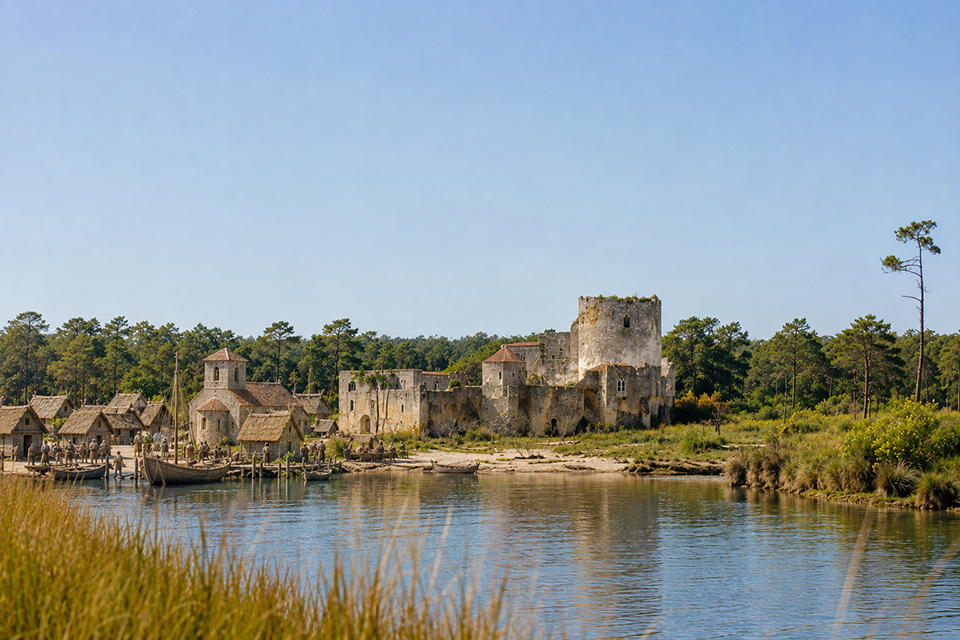
We might therefore imagine Lège around 1200 as a small stone-built castle with a tower (a castellar?), a palatium, a domus, and a chapel, surrounded by a village or bourg – perhaps fortified – equipped with a church, a small port, and extensive fisheries. (The featured photo is an AI-Created visualisation of this based on the remains of the Chateau de Langourain).
The Guerra, 1208–1210
The agreement, concordia, reveals that, in the opening years of the thirteenth century, a serious dispute erupted between the canons of Bordeaux, their provost or bailiff responsible for administering Lège, and the inhabitants of the settlement. The conflict had evidently been intense, for it ended only after a solemn agreement had been concluded, first in Bordeaux and subsequently at the curtis near the bourg of Lège.
The document sets out, in seventeen clauses, the points upon which the three parties reached agreement. As with most texts of this kind, it would be mistaken to regard it as a comprehensive statement of the rights attached to the lordship. Matters that were never disputed naturally required no mention. For instance, the question of customs on the ships entering the port, we hear nothing (perhaps the large port was not lacted at Lège at this time?). Nevertheless, the fragments of dominium revealed by the agreement are sufficiently varied – and encompass a sufficiently wide range of revenues and jurisdictions – to illuminate the economic foundations of the lordship at Lège.
The revenues of the estate derived from a remarkably varied collection of dues, pledges, sureties, and judicial fines. Among those mentioned specifically were penalties imposed for stray livestock, suggesting that the villagers may have enjoyed rights of common pasture while the castle retained its own reserved precinct. Additional income derived from taxes levied at the discretion of the canons. The cultivated holdings themselves appear to have been modest, ranging between two and fourteen sadons, equivalent to roughly 0.16–1.1 hectares. These were, by any standard, small farms. Other studies indicate that millet – and perhaps rye – formed the principal crops cultivated in the district.
The fisheries likewise generated significant revenue, probably through shore-based net fishing, as the agreement appears to indicate. Likely, fishing was also carried out from smaller boats operating off-shore. The document perhaps alludes to the traditional practice of setting nets before nightfall and hauling them ashore the following morning when the tides were low.
A particularly valuable source of income was the right of wreck (jus naufragii), which is treated in several clauses of the agreement. Although condemned by canon law, this right was nevertheless regarded as a valuable royal prerogative and was occasionally granted to powerful territorial lords. At Lège, the agreement stipulates, the right belonged to the canons. Because the proceeds were to be divided between them and their local bailiff, the document provides a remarkably detailed inventory of the goods concerned.
The canons’ share included agricultural produce such as wheat and wine, together with gold, silver, coin, silk cloth, silk thread, riding equipment, armour ornamented with gold or silver, hawks, rabbit skins, cloth from France, and similar valuable cargoes. By contrast, much of the equipment belonging to the ships themselves—rigging, sails, anchors, and ropes, with the exception of the two best ropes – fell to the bailiff. Curiously, the agreement says nothing about whales or other large marine mammals washed ashore.
The provisions concerning hunting are scarcely less revealing. Although the forest belonged exclusively to the canons, who retained the right to hunt there as lords, the bailiff was likewise permitted to hunt, provided he surrendered the shoulder of every wild boar and two-thirds of all squirrels to the canons, in accordance with ancient custom.
The Guerra, 1208–1210
The agreement reveals that, in the opening years of the thirteenth century, a serious dispute erupted between the canons of Bordeaux, their provost or bailiff responsible for administering Lège, and the inhabitants of the settlement. The conflict had evidently been intense, for it ended only after a solemn agreement had been concluded, first in Bordeaux and subsequently at the curtis near the bourg of Lège.
The document sets out, in seventeen clauses, the points upon which the three parties reached agreement. As with most texts of this kind, it would be mistaken to regard it as a comprehensive statement of the rights attached to the lordship. Matters that were never disputed naturally required no mention. Nevertheless, the fragments of dominium revealed by the agreement are sufficiently varied, and encompass a sufficiently wide range of revenues and jurisdictions which illuminate the economic foundations of the lordship at Lège.
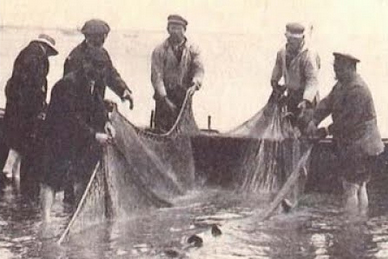
The fisheries likewise generated significant revenue, probably through shore-based net fishing, as the agreement appears to indicate, or from smaller boats operating in the lagoon. The document perhaps alludes to the traditional practice of setting nets before nightfall and hauling them ashore the following morning.
A particularly valuable source of income was the right of wreck (jus naufragii), which is treated in several clauses of the agreement. Although condemned by canon law, this right was nevertheless regarded as a valuable royal prerogative and was occasionally granted to powerful territorial lords. At Lège, the agreement stipulates, the right belonged to the canons. Because the proceeds were to be divided between them and their local bailiff, the document provides a remarkably detailed inventory of the goods concerned.
The canons’ share included agricultural produce such as wheat and wine, together with gold, silver, coin, silk cloth, silk thread, riding equipment, armour ornamented with gold or silver, hawks, rabbit skins, cloth from France, and similar valuable cargoes. By contrast, much of the equipment belonging to the ships themselves—rigging, sails, anchors, and ropes, with the exception of the two best ropes—fell to the bailiff. Curiously, the agreement says nothing about whales or other large marine mammals washed ashore.
The provisions concerning hunting are scarcely less revealing. Although the forest belonged exclusively to the canons, who retained the right to hunt there as lords, the bailiff was likewise permitted to hunt, provided he surrendered the shoulder of every wild boar and two-thirds of all squirrels to the canons, in accordance with ancient custom.
The Social Landscape of the Lords of Lége
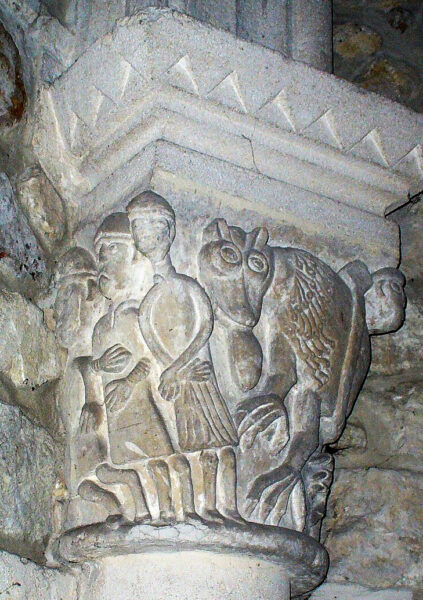
Because the right of wreck and hunting are discussed in considerably greater detail than many of the estate’s other revenues, one might initially suppose that these were the principal causes of the dispute. A closer reading suggests otherwise. The painstaking division of rights and revenues seems to have served a broader purpose: not simply to allocate income, but to define and perform lordship itself.
The agreement is therefore less concerned with the precise value of individual revenues than with determining who was entitled to act as lord in particular circumstances, who possessed the authority to levy taxes, who presided over justice, and who bore the costs of hospitality on ceremonial occasions.
Seen in this light, it becomes striking how meticulously the agreement specifies what the bailiff was expected to do –and, equally importantly, what he was forbidden to do. Although he occupied a position well above that of the ordinary villagers, he was clearly not regarded as the social equal of the canons whom he served.
The first indication of this concern may lie in the curious omission of the bailiff’s name. In the concluding witness list, he is identified only by the initial “P”. One wonders whether he may have wished to present himself as “P. de Lège” emuliating the local chatelans. The speculation is tempting, for the agreement also names his son, Gaucelm de Blaye, and his kinsman Bernard de Canal, both of whom carry a territorial designation “de”. As Dominique Barthélemy among others has shown, naming practices were still evolving at this period. Nevertheless, the agreement belongs to a time when the use of “de” increasingly signalled an association with lordship over a particular place. By contrast, the chapter’s own guarantors, together with the retainers of the lord of the castle at Bourg, are carefully identified by their full names and knightly rank. Even more revealing than these naming practices, however, are the detailed provisions regulating who was entitled to exercise which visible attributes of lordship.
The opening clauses make clear that the bailiff presided over the routine administration of justice. Whenever a canon was present, however – unless serving in his capacity as chaplain – the bailiff was required to step aside. Nor was the bailiff permitted to obtain a higher payment for this sgreater than the value of a small cask of wine.
The agreement also reveals that the dean and the canons travelled to Lège several times each year to supervise the administration of their estate, oversee the harvest, hunt, and make their presence felt. On these occasions, the bailiff was expected to receive the canons and their entourage in his hall. Once they had arrived the social roles and distance were expected to unfold visibly. The canons were present as lords, qui ibi fuerint sicut domini, and therefore possessed the exclusive right to invite guests to dine at their table. The bailiff, by contrast, was expressly forbidden to invite anyone.
As one would expect, the villagers were obliged to provide the necessary provisions. Thus, in the background of this social landscape stands a diverse group of people – the villagers – who remain largely obscure. The agreement mentions them chiefly as a collective, described as the “community of the village” (commun de la ville), together with the adjoining hamlets. Some of these people may have been serfs, as other contemporary texts refer to the villagers or townspeople as questaux. Later documents mention freeholders. These people appear in the text only as dependants of the Chapter. Accordingly, the bailiff’s obligation is not to harm them or enroll them in his own projects. A few individuals also seem to have occupied something of a social no-man’s-land, such as the herdsman, the courier, and perhaps the chaplain. Apart from these individuals, we get a distinct sense of the locals as organised collectively. For instance, should the canons remain for more than a single day at Lège during harvest, they were after the first dinner hosted by the bailiff, expected thereafter to meet their own expenses and to hold their dinner(s) at the local communal cellar. On these occasions, the bailiff was free to invite guests of his own choosing. Perhaps the agreement affords a fleeting glimpse of what may have been a communal harvest celebration, during which the canons themselves bore the costs of the feast and the bailiff and his wife were permitted to participate. Might this have been an example of a traditional celebration of the harvest shared by both lordship and village?
The ambiguity of the bailiff’s position emerges even more clearly in the provisions governing hunting and the right of wreck. The forest, the agreement states unequivocally, belonged to the chapter, and the dean and his canons alone enjoyed the right to hunt there as lords – In foresta si canonici venari voluerint venari potuerunt sicut domini. Further, whenever distinguished visitors came to Bordeaux, the canons might invite them to participate in a hunt at Lège. On such occasions, the bailiff was expected not merely to organise the hunt but also, should he himself kill an animal, to surrender this to the canons so that they, in turn, might present it to their guests.
Conclusion
The agreement reveals in remarkable detail how carefully the canons sought to distinguish their own authority from that exercised by their hereditary bailiff and his extended kindred. It appears, its purpose was not to define administrative responsibilities or divide revenues, but to establish, publicly and unambiguously, who possessed the rights and privileges of lordship in a number of specific situations.
Read in this light, it becomes apparent that the document is less concerned with determining how many fish were taken from the lagoon than with regulating the symbolic enactment of power. Who presided over the court, who levied taxes, who invited guests to dine, who received distinguished visitors, who gifted whom game after a hunt, and who exercised authority along the coast – each of these seemingly practical matters foremost served to define social rank. The text was much more than a prescriptive inventory of Lège.
The bailiff and his kindred occupied an inherently ambiguous position. Entrusted with administering the castle on behalf of the chapter, he nevertheless belonged to a family that must have exercised some authority at Lège for generations. The agreement therefore repeatedly reminded him that, however dearly he had to pay for his privileges, and how extensive his responsibilities appeared, he remained the chapter’s representative rather than its equal. He might administer justice, but only in the absence of a canon. He might hunt, but not as lord. He might receive the canons in his hall, but he could not invite guests to their table. Even the spoils of the hunt and the proceeds of shipwreck were carefully apportioned to reinforce this distinction.
In the shifting landscape of the Landes, where marsh, forest and tidal shore created a frontier between land and sea, lordship in the beginning of the 13th century, rested on more than legal title or economic resources. It also depended upon the careful performance of authority and status through countless public acts, rituals and gestures. And the constant negotiations thereof. The agreement from Lège offers a rare glimpse of this process. It reminds us that medieval lordship in the 11th and 12th centuries was not simply exercised; it had continually to be enacted.
Karen Schousboe
A special thank should be given to Frédéric Boutoulle who discovered the agreement and who in his writings have generously provided an edition of the Latin text and a French translation, on which this short essay is based.
SOURCES:
The original agreement:
A. Original lost.– B. Copy from the 14th century. In: Liber villosus (Cartulary of Saint-André de Bordeaux) AD Gironde, 4 J 73, f. 91 v.-94 v. presently: the Departmental Archives of the Gironde in Bordeaux (under shelfmark MS 1007).
La fin du paradigme du désert landais : histoire de la végétation et de l’anthropisation à partir de l’étude palynologique de quelques lagunes de la Grande-Lande.
By Élodie Faure and Didier Galop.
Aquitania, 2011, vol 24, pp 43-59
The Environmental Transformation of “Empty Space”: From Desert to Forest in the Landes of Southwestern France
By Caroline Ford
In: Comparative Studies of History and Society (2023) 20. Jan.
Des landes, des dunes et des hommes. La seigneurie du chapitre cathédral de Saint-André de Bordeaux à Lège au XIIIe siècle [Lège-Cap-Ferret, Gironde] .
Suivi de l’édition et traduction de l’arbitrage devant l’archevêque Guillaume [Amanieu] de Bordeaux entre les chanoines de la cathédrale de Bordeaux et leur prévôt de Lège.
By Frédéric Boutoulle
In: La propriété ecclésiastique dans l’Europe atlantique au Moyen Âge et à l’époque moderne IXe-XIXe siècle, dir. Cédric Jeanneau et Philippe Jarnoux, [2023) pp. 515-559.
La tour et le château de Bisqueytan en Bordelais : une forteresse ducale révélée par l’archéologie et par les textes (XIe-XIVe siècle)
By Frédéric Boutoulle and Jean-Luc Piat
Archéologie du Midi Médiéval (2006) Suppl. 4 pp. 195-214
Fait partie d’un numéro thématique : Résidences aristocratiques, résidences du pouvoir entre Loire et Pyrénées, Xe-XVe siècles. Recherches archéologiques récentes, 1987-2002
Royal bailiffs and village communities in Gascony during the reign of Henry III (1216-1272).
By Frédéric Boutoulle.
In: Pépin, G. Anglo-Gascon Aquitaine-Problems and perspectives
Boydell, pp.13-25, 2017. ⟨hal-017932
Note sur le titre seigneurial, en France, au XIe siècle
By Dominique Barthélémy
In: Archivum Latinitatis Medii Aevi Année 1996 54 pp. 131-158
READ MORE:
Lordship in the County of Maine, c. 890–1160
Richard E. Barton,
Boydell, 2004.
The Serf, the Knight, and the Historian
Dominique Barthélemy
French 1997, English translation Cornell UP, 2009
Cultures of Power. Lordship, Status and Process in Twelfth-Century Europe
Thomas N. Bisson
University of Pennsylvania Press 1995
Le duc et la société: Pouvoirs et groupes sociaux dans la Gascogne bordelaise au XIIe siècle (1075-1199) (Scripta Mediævalia)
Frédéric Boutoulle
Ausonius Éditions 2007
Cultures villageoises au moyen âge et à l’époque moderne
Frédéric Boutoulle and Stéphane Gomis
PU Midi 2017
Those of My Blood: Constructing Noble Families in Medieval Francia
Constance Brittain Bouchard,
University of Pennsylvania Press, 2001
Ermengard of Narbonne and the World of the Troubadours
Fredric Cheyette
Cornell UP, 2001
The Birth of Nobility: Constructing Aristocracy in England and France, 900–1300
David Crouch,
Longman, 2005
La société aux XIe et XIIe siècles dans la région mâconnaise
Georges Duby
Ehess (1953)1995
The Aristocracy in the County of Champagne, 1100–1300
Theodore Evergates,
University of Pennsylvania Press, 2007
Begging Pardon and Favor: Ritual and Political Order in Early Medieval France
Geoffrey Koziol,
Cornell UP, 1992
The Medieval Nobility: Studies on the Ruling Classes of France and Germany from the Sixth to the Twelfth Century
Timothy Reuter, ed., Amsterdam, 1979