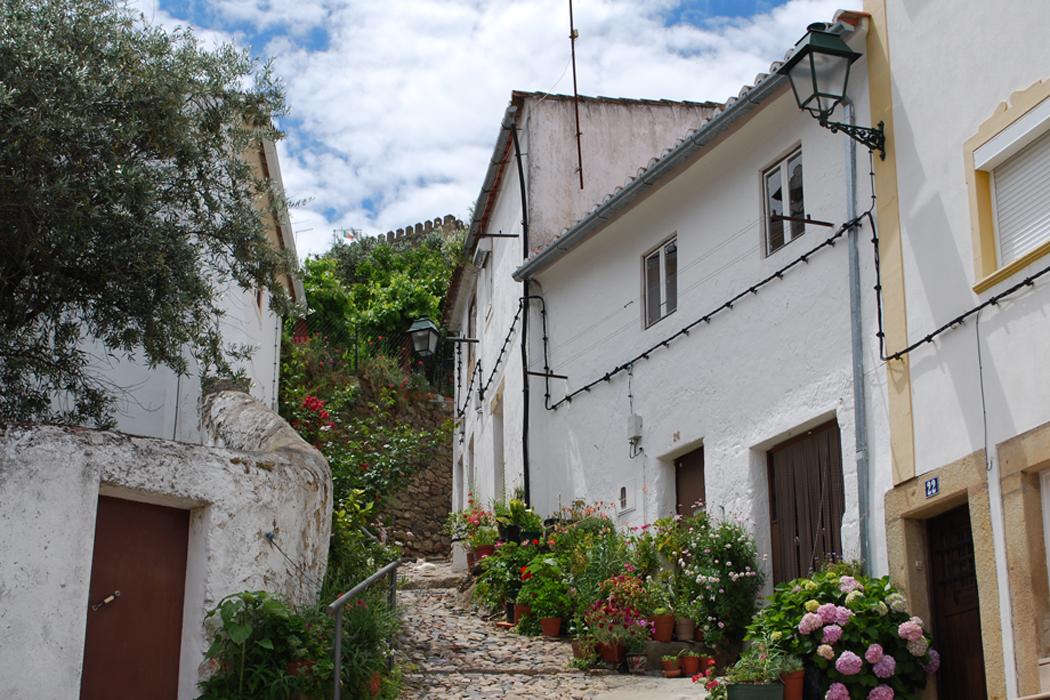
Towns in Medieval Europe were small and seemingly insignificant. Portuguese conference aims to zoom in upon their role and function
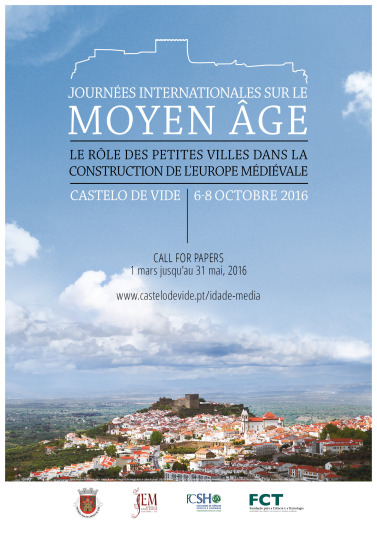
The role of small towns in the construction of Medieval Europe
Castelo de Vide
06.10.2016 – 08.10.2016
Deadline for CFP: 31.05.2016
Contact: imcv2016@fcsh.unl.pt
The goal of this conference is to promote the study of small medieval towns by looking at the role they played while at the same time disregarding the large (but rare) cities that normally feature in medieval urban history. These include, for example, coastal nuclei where trade passed by, or others located in the mountains and functioning as centres for sub-regions. Another type is represented by the small towns located along roads and welcoming pilgrims. .
Thematic panels:
 1 – urban hierarchies in the Middle Ages: the cores and flows.
2 – Comparative Studies medieval towns: scales of analysis (the “region” in Europe).
3 – The materiality of medieval towns – archaeological perspective.
4 – virtualization medieval towns: the e-heritage preservation.
5 – The medieval towns in art and art in the medieval urban world.
6 – Echoes in the literature of medieval towns.
7 – Castelo de Vide in the Middle Ages, a frontier town – multidisciplinary approaches
The International Days of the Middle Ages are formed in a partnership between the Instituto de Estudos Medievais (EMI / FCSH / NOVA) and the town of Castelo de Vide, to unite the research center that articulates scientific research with the transfer of knowledge to society, and a City Hall, which has decided to sustainably invest in culture, heritage preservation and education.
Both partners want to make these meetings an annual event, a discussion forum on major themes and issues of the Middle Ages between experts from different scientific fields, particularly history, archeology, art history and literature.
The aim is to include the International Medieval Days of Castelo de Vide on the international agenda for regular meetings devoted to the Middle Ages.
Background
Part of the background for the location of the conference at Castelo de Vide is the predicament of such towns in present-day Portugal, which suffer from depopulation
Hope is, the conference will help enhance
the attractions and heritage potential of this city and the border region, in which it is located.
But it also reflect the multidisciplinary character of the IEM where both historians, archaeologists and literary scholars work together by developing medieval community studies.
Rural Archaeology
Another important contribution is the ongoing archaeological research project focusing on early medieval rural settlements in the territory of Castelo de Vide, the PramCV. The general objective of PramCV is to reconstruct the way of life of peasant communities in the early medieval period. It’s a four-year archaeological research project running between 2014 and 2017.
PramCV is a four-year project in archaeology approved by the Directorate-General for Cultural Heritage (DGPC), the organism responsible for managing the cultural heritage in mainland Portugal
SOURCE:
O papel das pequenas cidades na construção da Europa Medieval