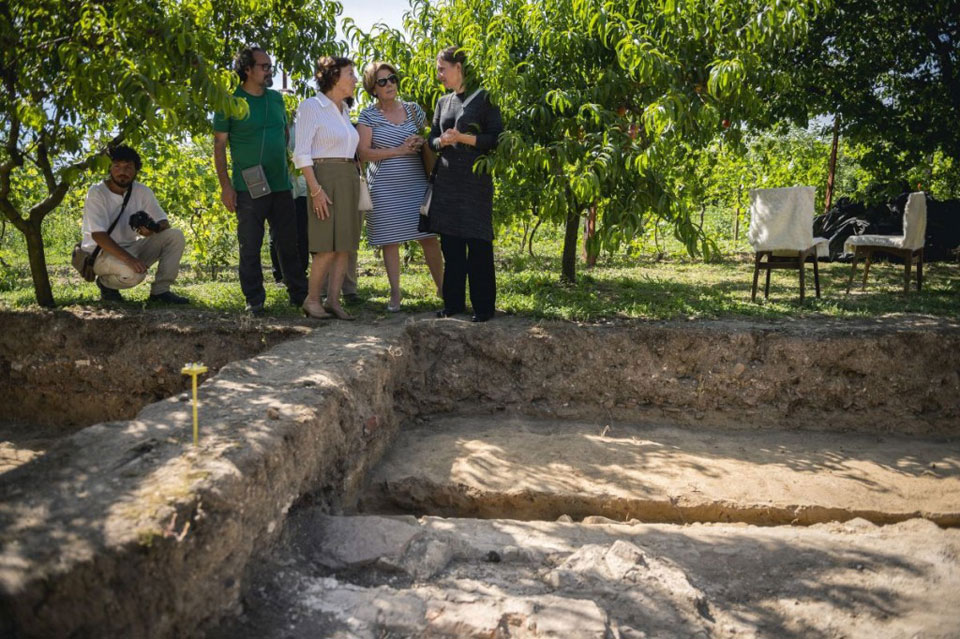
When Suleiman the Magnificent died of old age in a tent in Szigetvár in Southern Europe, his body was shipped home while his heart and entrails were buried there in a golden casket. His rediscovered mausoleum promises to become an important magnet for Turkish pilgrims trying to raise Turkey to its former glory.
Exploration in search of the tomb of Sultan Suleiman I and the buildings around it in the vicinity of Szigetvár, Baranya county, in southern Hungary, has been going on more than ahundred years. During this period a number of sites (on the banks of Almás stream or at St. Mary’s Church in Turbék) have been identified. Recently, however a team of geographers and archaeologists set out to try and locate the site more precisely. On the basis of newly discovered documents and map representations, they carried out a reinterpretation of earlier known sources and have abstracted from these information appropriate for a renewed geographical identification of the site of the tomb.
Suleiman the Magnificent
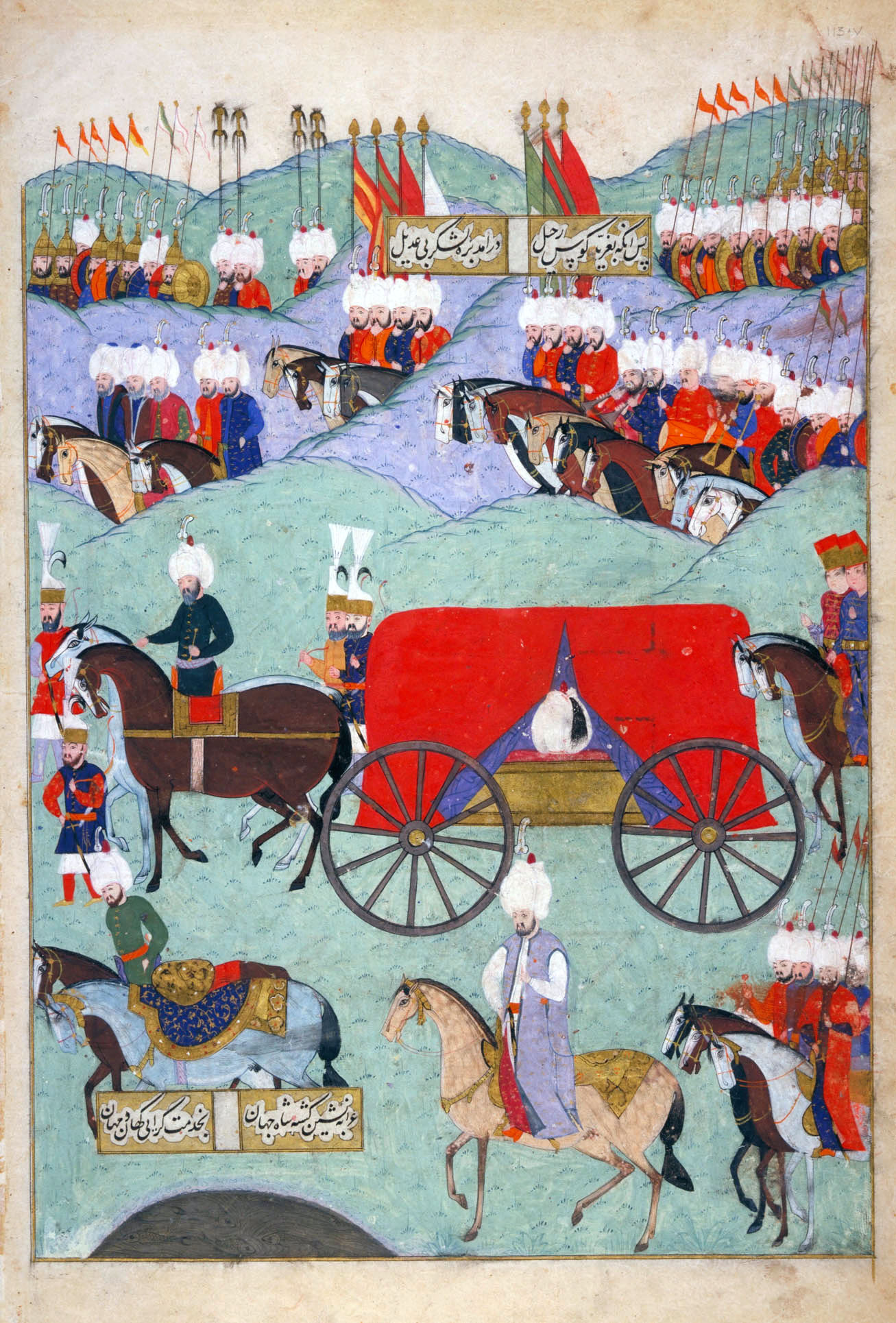
Under Sultan Suleiman (1494 – 1566) popularly known as “the Magnificent” or “the Lawmaker,” the Ottoman empire reached the apogee of its military and political power. Süleyman’s armies conquered Hungary after 1521. Later the Ottomans advanced as far west as Vienna, threatening the Habsburgs. To the east, the Ottoman waged war on Iraq and the Safavids of Iran, while the Ottoman navy captured all the principal North African ports. For a time the Ottoman fleet completely dominated the sea. By the end of Suleiman’s reign, Ottoman hegemony extended over a great portion of South-Eastern Europe, the Middle East and Northern Africa.
Suleiman I, died in Hungary of old age in his tent during a siege of Szigetvar in 1566. According to legend, his death was kept a secret for the next 48 days so that his troops should not loose their courage. Afterwards, his body was sent back to Istanbul. However, his heart and entrails were buried at the site of his tent. Afterwards at Türbe or Turbék an Ottoman Mausoleum was built. However, around 1692 – 3, when Hungary had been retaken, this settlement was demolished together with a number of surrounding buildings: a mosque, military barracks and a palisade. Later, the exact location was lost to memory.
Recently a group of geographers has worked to examine the contours of the landscape and reconstructed the exact 16th century lay-out – especially of the streams and forests, in order to try and pinpoint it and perhaps find the golden shrine, which was said to hold his entrails. This could then be compared to the evidence from the written sources.
According to these, the Turkish camp or Türbe (Turbék), stood on a hilly relief about and hour (4 km) north of the Szigetvár Castle, which the Turks were besieging. Inside the encampment, the sheik and the dervishes dwelt surrounded by the Muslims. Outside this fortification, the Christians were settled. Traditionally, it was believed that the local church of St. Mary, built after the Hungarian retake in the end of the 17th century, was built on top of the tomb. However, the new explorations place it much closer to the former settlement at Turbék to the north-east at the Turbék-Zsibót Vineyard Hill.
Archaeology

By combining these sources with the geographical exploration the archaeologists on the team were able to find traces of a dyke as well as collect a lot of Ottoman brick rubble as well as shards of green-glazed bowls, Balkan pottery, red-glazed containers as well as a smattering of Ming age Chinese porcelain. Other finds consist of painted walls and carved decorations. Geophysical examinations revealed the existence of three buildings – a square building facing Mecca. The other major building is made of small cells – the dervish monastery. Finally there is a large building to the north, which seemed to have been surrounded by a dyke. This measured 7.8 x 7.8 meters and was presumably covered with a dome – mirroring his tomb in Istanbul. Since the presentation of this initial survey, excavations during the summer of 2016 have confirmed the initial conclusions. However, the archaeological excavations have also yielded information about what is probably a unique Turkish settlement from that time. Usually the Turks reused and resettled the conquered settlements rather than building anew.
Future Memorial

The plans are to turn the entire excavation site into a more fitting memorial to the Sultan than that which is located down by the stream. Some months ago invitations were sent out to three presidents, Janos from Hungary, Kolinda Grabar-Kitarovic from Coratia and Recep Tayyip from Turkey in order for them to participate in the 450-year-anniversary of the death of Suleiman. Unfortunately for the organisers the coup in Turkey is hindering Erdogan’s visit. Probably, Erdogan is probably also chagrined. His own political posture is overtly involved in resurrecting Turkey as the heir of the Ottoman Empire and of Suleiman; with ,of course, himself in the role as Sultan. Erdogan already visited the site in 2005. Perhaps, he began to envision his present dictatorial takeover of Turkey while contemplating the rule of Suleyman.
Currently, the Turks are said to pay quietly for the restoration of a number of other Iconic Ottoman sites in Eastern Europe. The excavations at Szigetvár have been paid partly by the Hungarian government, partly by the Turkish.
SOURCE:
Finding the tomb of Suleiman the Magnificent in Szigetvár, Hungary: historical, geophysical and archeological investigations
By Norbert Pap, Maté Kitanics, Péter Gyenizse, Erika Hancz, Zita Bognár, Tamás Tóth, Zoltán Hámori
In: Die Erde. Journal of the Geographical Society of Berlin (2015) Vol 146, no. 4,
Erdogan’s New Sultanate
From: The Economist 05.02.2016
The Tomb of Sultan Suleiman in Szigetvár – University of Pécs
FEATURED PHOTO:
University of Pécs/ Kitanics Mátés
SEE MORE: