It took less than a week to sail from the tip of Bretagne to Lisbon with a Viking ship. No wonder the ‘Northmen’ occasionally carried out raids in Iberia as well as in the Meditterranean. New book tells the story
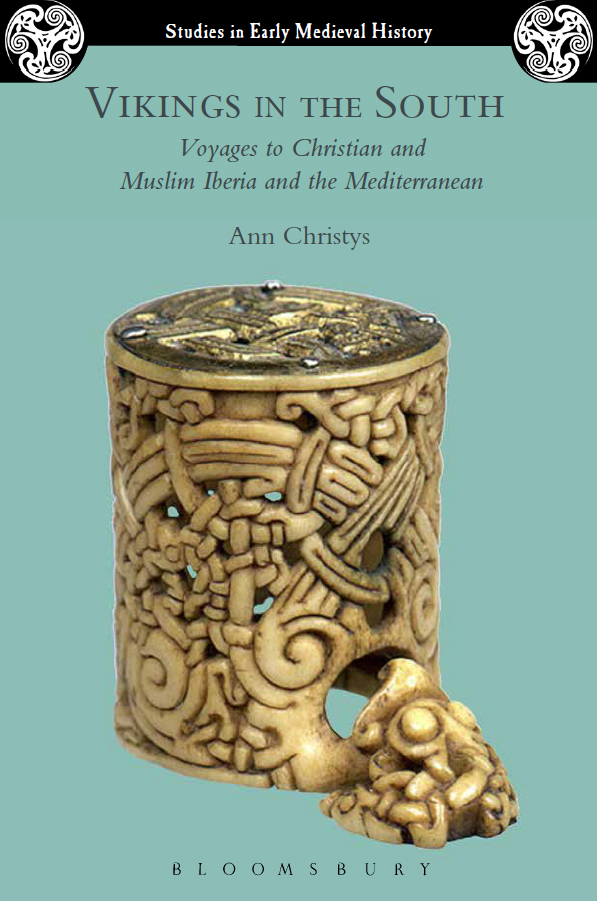
Vikings in the South. Voyages to Iberia and the Mediterranean
By Ann Christys
Bloomsbury 2015
In 1015 Amerelo Mestaliz from Moreiro on the border of the estuary of the river Ave in Portugal had to sell a piece of land to pay his debt. According to the charter, he explains why: “A great number of Vikings (Lotnimis) arrived in July and occupied the territory between the rivers Duoro and Ave for nine months. These Vikings (Leudemanes) captured my three daughters, called Serili, Ermesenda and Faquilo, and reduced me to poverty, for, when they were about to sell their captives, I had no choice but to pay the Vikings (Lotmanes) a ransom of silver for them” (Here quoted from Chrystys, p. 96)
 It is frustrating, writes Ann Christys, in a new book on the Viking raids in Iberia and the wider Mediterranean, how few of such documents as this charter exist; especially as a remarkable number of chronicles and geographies in both Arabic, Latin and Norse spun an incredible amount of yarn, outlining the ferocious and calamitous events following the southern raids of these bogeymen in the 9th and 10th centuries. The interface between these few facts and the many marvellous myths and retellings is the subject of a new book by Ann Christys on the Viking Voyages to Iberia and further south.
There is no doubt that Vikings in the 9th century carried out raids on the Christian north and Muslim south of the Iberian peninsula (modern Spain and Portugal), going on to attack North Africa, southern Francia and Italy and perhaps sailing as far as Byzantium. A century later, Vikings killed a bishop of Santiago de Compostela and harried the coasts of al-Andalus. Most of the raids after this date were small in scale, but several heroes of the Old Norse sagas were said to have raided in the peninsula. Arguably, the last raids were carried out in the beginning of the 12th century by Sigurd I (Jorsalfara) on his way to partake in the crusades. Heimskringla tells the story that Sigurd on his way to Jerusalem encountered a large fleet of Vikings, who had been raiding on the west coast of Iberia. From these he conquered eight ships before raiding the Muslim fortress at Sintra and sailing up the Tagus to Lisbon.
Until now, these Vikings have been only a footnote to the history of the Viking Age. Nevertheless, many stories about their activities survive in elaborate versions written centuries after the event, and in Arabic, Latin and Norse.
This book reconsiders the Arabic material as part of a dossier that also includes the Latin chronicles and charters as well as archaeological and place-name evidence. Arabic authors and their Latin contemporaries remembered Vikings in Iberia in surprisingly similar ways. What becomes apparent reading the book is that the Vikings got a really bad press, a kind of ‘chronicle noir’, writes Ann Christys, who has diligently sifted all the material to find out whether and to what extent Vikings really roamed the rivers of the Iberian peninsula.
Reading the book, it is easy to succumb to the feeling that more than anything else, the Vikings were the epiphenomena of what ought to be feared: pagan pirates bent on capturing slaves. Perhaps this was clearly mirrored in the Arabic term for the Vikings, Majus, which had a wider range of meaning than just Norman and its variants, writes Christys (p. 17). Less apparent is the actual evidence, that they really caused rampant havoc along the shores of Iberia or even settled anywhere permanently. As it is, few place-names witness to more than overwintering, and a near-total lack of “Andalusi coins” in the recovered treasures In Scandinavia tells a story of only sporadic and intermittent contact. The Iberian events were seemingly no more than occasional outliers performed by adventurers. It appears the Vikings even went to Madeira, since the mice there is of Norwegian descent. Apart from that, though, they left few traces.
But feared they were! We owe profound thanks to Ann Christys for sifting the available sources and telling this story to us. It neatly delimits the story of the diaspora of the Vikings to a North-Western or Russian story and establish the Southern European events as occasional hit-and-runs. Good stuff for later novellas, though, it appears!
Karen Schousboe
Table Of Contents
- List of Illustrations
- Preface and Acknowledgments
- Introduction: Don Teudo Rico Defeats a Viking raid
- From the Encircling Ocean
- So the Story Goes
- A Mediterranean Adventure
- Waiting for the Barbarians
- The Wars of Santiago and Cordoba against Vikings
- Conclusion: from Charter to History to Saga
- Appendix 1: Glossary of Histories and Historians
- Appendix 2: Timeline
- Bibliography
- Index
ABOUT THE AUTHOR:
Ann Christys is an independant scholar, who read medicine at Edinburgh University and works an anaesthetist. But she also has a Phd in history from the University of Leeds. She is widely known for her work on the history of Early Medieval Iberia and more specifically the interface between Muslims and Christians AD 700 – 1000. She has published a major work on Christians in Al-Andalus.
 Christians in Al-Andalus 711-1000
by Ann Rosemary Christys
Series: Culture and Civilization in the Middle East
Rutledge 2002. Paperback edition 2013
ISBN-10: 0700715649
ISBN-13: 978-0700715640
FEATURED PHOTO:
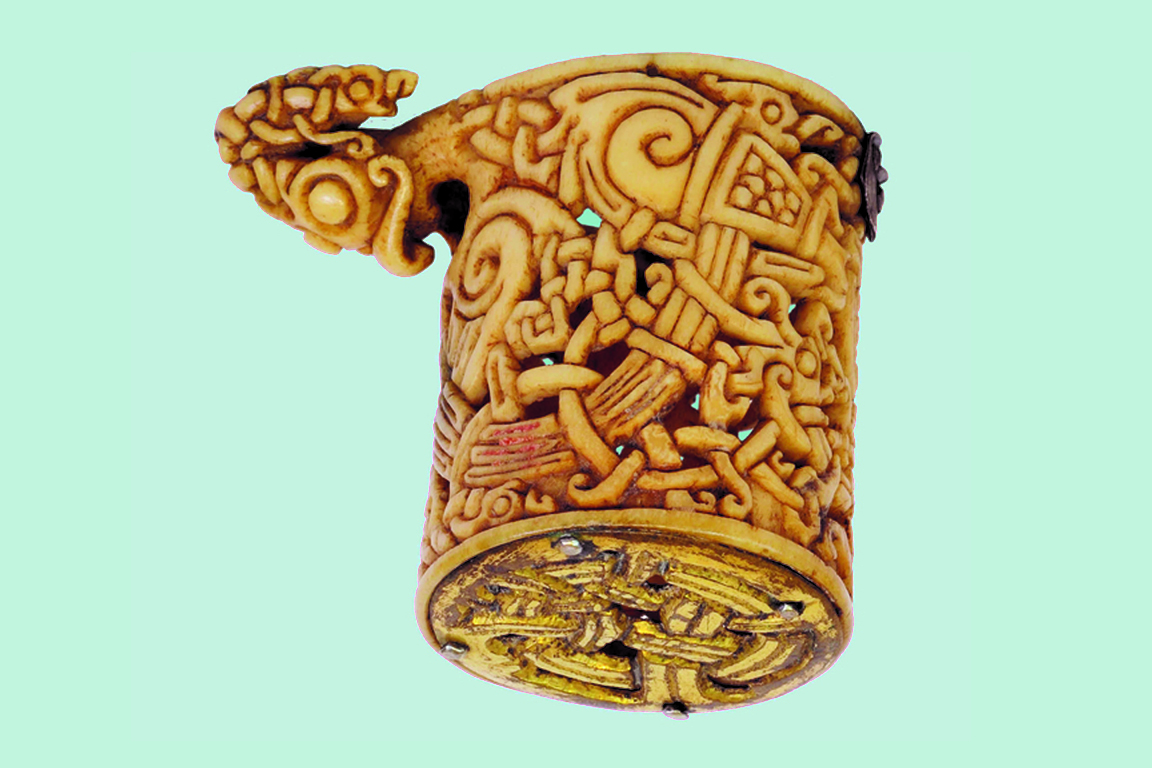
 The Léon box is part of the treasury of the collegiate church of san Isodoro in Léon. It is one of the very few “viking” objects to be seen in present day Iberia. It measures 4.5 cm x 3.3. cm in diameter and cylindrical with a protruding ear at the top and with a hinged lid; the hinge itself is not original. The box is made of antler and not ivory or bone, as it is often reported. The lid and the base are of guilt-copper alloy. The whole piece, including lid and bottom was richly ornamented in openwork in the Viking mammen style. The base is reminiscent of Scandinavian disc brooches from the late 10th century. It is not known how the box – which was used as a reliquary – came to enter the treasury of San Isodoro. It has been speculated whether it was a diplomatic gift or a spoil from the Viking incursions into Galicia in 968 – 71. Source: Else Roesdahl: Viking Art in European Churches. In: Viking Trade and Settlement in Continental Western Europe. Ed. by Iben Skibsted Klæsøe. Museum Tusculanum Press 2010. (It is often shown upside down – as is the case on the cover of the book).