New Book: Anglo-Saxon Graves and Grave Goods of the Sixth and Seventh Centuries AD. A chronological framework
When did the Anglo-Saxons stop furnishing the graves of their deceased relatives? Was it a prolonged and mixed process? Or rather a quick and decisive shift?
New archaeological methods seem to offer new and astonishing answers to these questions. The published evidence consists of a series of charts refining the carbon dates from some 572 Anglo-Saxon burials, using Bayesian algorithms to narrow the dates based on site stratigraphy and the typological sequences for such grave goods as clothing, weapons and dress fittings.
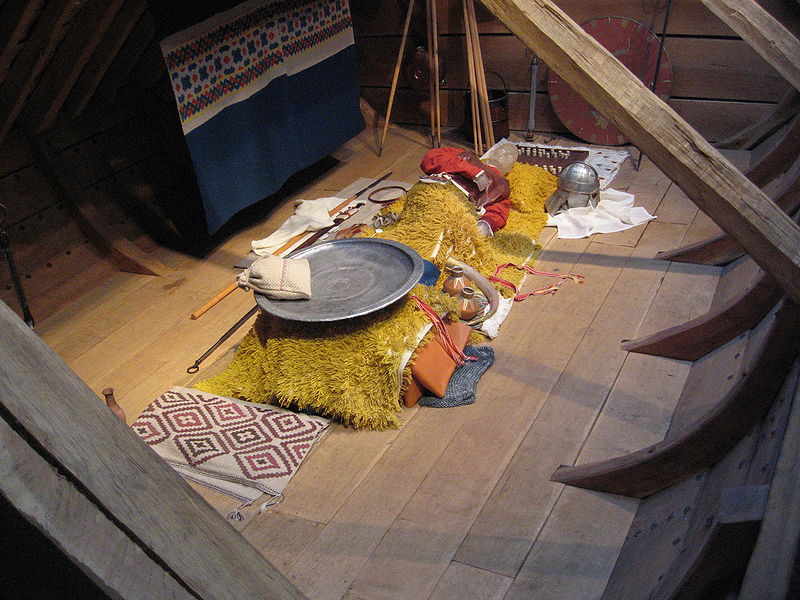
The results suggest that furnished burial, seen as indicative of pagan practice, ended abruptly in the AD 670s and 680s, and that the switch to Christian burial practice was swift, universal and considerably earlier than previously thought. Significantly, the sudden end of furnished burial coincided almost exactly with the period when Theodore of Tarsus was Archbishop of Canterbury (AD 669―90).
According to Bede’s Ecclesiastical History of the English People, Theodore of Tarsus ‘was the first archbishop whom the whole church in England agreed to obey’. He arrived in England in May AD 669 and swiftly visited all of the Anglo-Saxon parts of Britain, issuing instructions on orthodox Christian practice. This conclusion suggests that proper burial rites were seen as a major concern, something not recorded in historical sources.
In a press release put out by English Heritage, joint sponsor of the project with Cardiff University and the Queen’s University Belfast, our Fellow Professor John Hines from Cardiff University said: ‘Over a period of at least a century starting in the second half of the sixth century, a series of radical changes in burial practice coincided with hugely important developments in social and political organisation, economic life and institutional religion in England. All of these must be interrelated. However, the exact contemporaneity of the end of traditional furnished burial and Theodore’s reign as Archbishop of Canterbury is striking, and unlikely to be a mere coincidence. It sheds new light on how Christianity consolidated its hold over the lives and experiences of everyone in England, and how ideas and practices that have prevailed for centuries took shape in this turning point in our history.
‘Theodore was remembered and admired as an outstanding executive of the early Church in England. If our interpretation of the abrupt and comprehensive change in burial practice which saw the final demise of the older tradition is correct, he effected a truly comprehensive shift which brought the lives of everybody in Anglo-Saxon England into a common framework defined by the anticipation of how their body would be treated in death, and not even the Viking invasions and conquests two centuries later would alter this.’
READ MORE:
Anglo-Saxon Graves and Grave Goods of the Sixth and Seventh Centuries AD: a chronological framework
Edited by John Hines, Alex Bayliss, Karen Hoilund Nielsen, Gerry McCormac and Christopher Scull
Society for Medieval Archaeology Monograph 33, 2013
ISBN 9781909662063;
Archive: Anglo-Saxon Graves and Grave Goods of the 6th and 7th Centuries AD: A Chronological Framework
The archive makes material collected and produced under the English Heritage-funded project ‘Anglo-Saxon England c. 570–720: the chronological basis’ available in a range of digital files, both to support the printed report of this project, Anglo-Saxon Graves and Grave Goods of the 6th and 7th Centuries AD: A Chronological Framework (Society for Medieval Archaeology, Monograph Series 33, 2013), and to enable future researchers to undertake further research using the material.
The archive comprises downloads and a live on-line version of the project database. Note, however, that the downloads include a Microsoft Access format copy of the database which users can download in order to add to, modify and explore data collected by the project for their own purposes.