
Wolin on the southern Baltic remains a Viking-Age enigma. Chronicles describe warriors and violent conflict between Danes and Slavs, yet archaeological discoveries reveal a thriving trading hub. A new research project seeks to reconcile these contrasting perspectives.
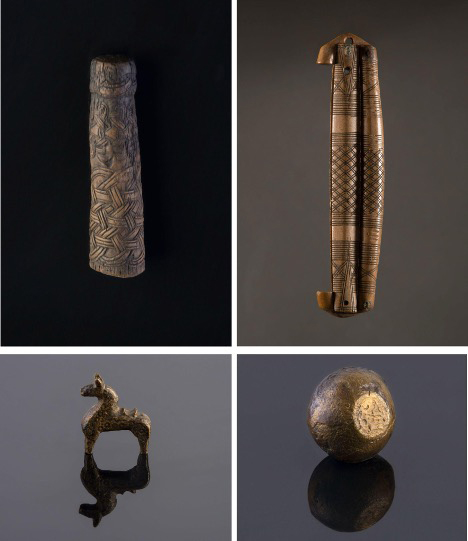
Archaeologists working in the northwestern Polish town of Wolin, on the Baltic island of the same name, have uncovered the remains of unusually constructed early medieval huts, hundreds of artefacts, and what may be traces of an early port. The discoveries are raising new questions about the town’s origins.
The finds were made during excavations in the northern part of early medieval Wolin, an area known as Srebrne Wzgórze (Silver Hill), which is believed to have housed a market and craft workshops during the settlement’s early phases.
“We uncovered four hut remains built in a way we have not previously seen in Wolin,” said Wojciech Filipowiak of the Institute of Archaeology and Ethnology at the Polish Academy of Sciences, who led the excavation season. He added that three additional structures were identified, though they were in poorer condition.
The huts appear as square platforms made of clay and sand, surrounded by ditches. Each structure measures approximately five by five metres. Some contain evidence of hearths, while others appear to have housed ovens. The buildings are located very close to one another, separated only by narrow drainage ditches around 50 centimetres wide, according to Filipowiak.
Researchers believe the structures date to the 11th or 12th century, a period that remains poorly documented archaeologically in Wolin. The settlement itself is known to have existed from at least the late 8th century and, by the mid-9th century, had developed into a major centre on the southern Baltic, closely tied to long-distance trade and contacts between the Slavic and Scandinavian worlds.
Filipowiak noted that the team suspects even older remains may lie beneath the newly uncovered huts. According to him, there is strong reason to believe that traces of a 9th- or 10th-century waterfront may exist below the structures, possibly linked to port infrastructure.
Alongside the buildings, archaeologists recovered tens of thousands of pottery fragments and animal bones, as well as more than 500 artefacts, including Norwegian whetstones, glass beads, metal ornaments, and vessels bearing distinctive marks. The meaning of these marks remains unclear. Filipowiak described them as a long-standing puzzle in early medieval archaeology, with interpretations ranging from magical symbols to potters’ marks passed down through generations.
The discoveries will feed into a new three-year research project led by scientists from the Institute of Archaeology and Ethnology of the Polish Academy of Sciences in collaboration with Denmark’s Aarhus University. The project aims to clarify the role Vikings may have played in the emergence of Wolin and to identify the location of the town’s early medieval ports.
Next year, the team also plans to re-examine material from excavations conducted in the 1960s, made possible through a grant from Poland’s National Programme for the Development of Humanities. Those earlier excavations uncovered a boat-shaped hut and a hearth containing intentionally elongated human skulls, a practice more commonly associated with the Huns, Avars, Magyars, and Mongolian groups that migrated into Europe.
Researchers have described this as a singular find for early medieval Poland. Key questions remain unanswered, including the identity of the individuals and the reasons why the remains were placed in a hearth.
Filipowiak suggests that the combined reanalysis of earlier finds and the results of new fieldwork could significantly alter existing assumptions about Wolin’s development. One possibility is that the settlement did not simply expand outward from a single centre. Instead, a Slavic community may have occupied the core area, while Scandinavians settled some distance away—close enough to maintain regular contact.
Viking Colonies
 The finds are some of the first resultats from a project led by Polish and Danish archaeologists. In a separate field near the village of Wolin, archaeologists from Aarhus University are investigating whether a Viking enclave existed in the area.
Since July, several hundred artefacts have been excavated, pointing to cultural exchange between Scandinavians and Slavs in Wolin. Due to its wealth and strategic location—within a short sailing distance of Denmark and Sweden—Wolin was an important target for Viking activity. Historians have suggested that the town may have been the site of the legendary Viking stronghold of Jomsborg.
However, as Professor Søren Sindbæk explains, the evidence also points to trade between Slavs and Vikings and possibly to a Scandinavian settlement within Wolin itself. This interpretation presents a more commercial and peaceful picture of the Danish–Polish past than has previously been assumed.
SOURCE:
Pozostałości chat i setki przedmiotów codziennego użytku sprzed tysiąca lat odkryto w Wolinie