
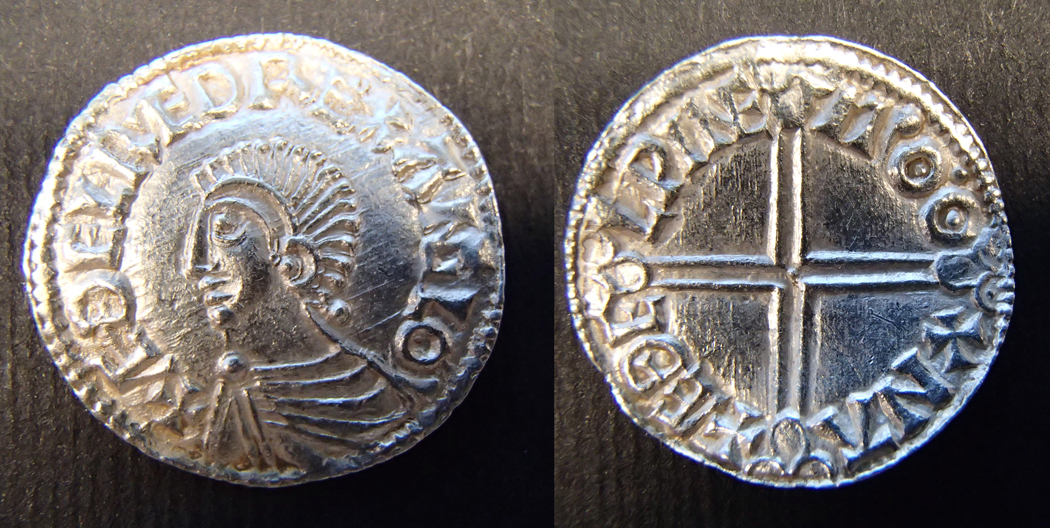
A hoard of Anglo-Saxon silver pennies of kings Æthelred II (r. 978-1016) and Cnut (r. 1016-35) have been found wrapped within a lead parcel at Lenborough. This important find is expected to reveal a great deal about monetary circulation in late Anglo-Saxon England
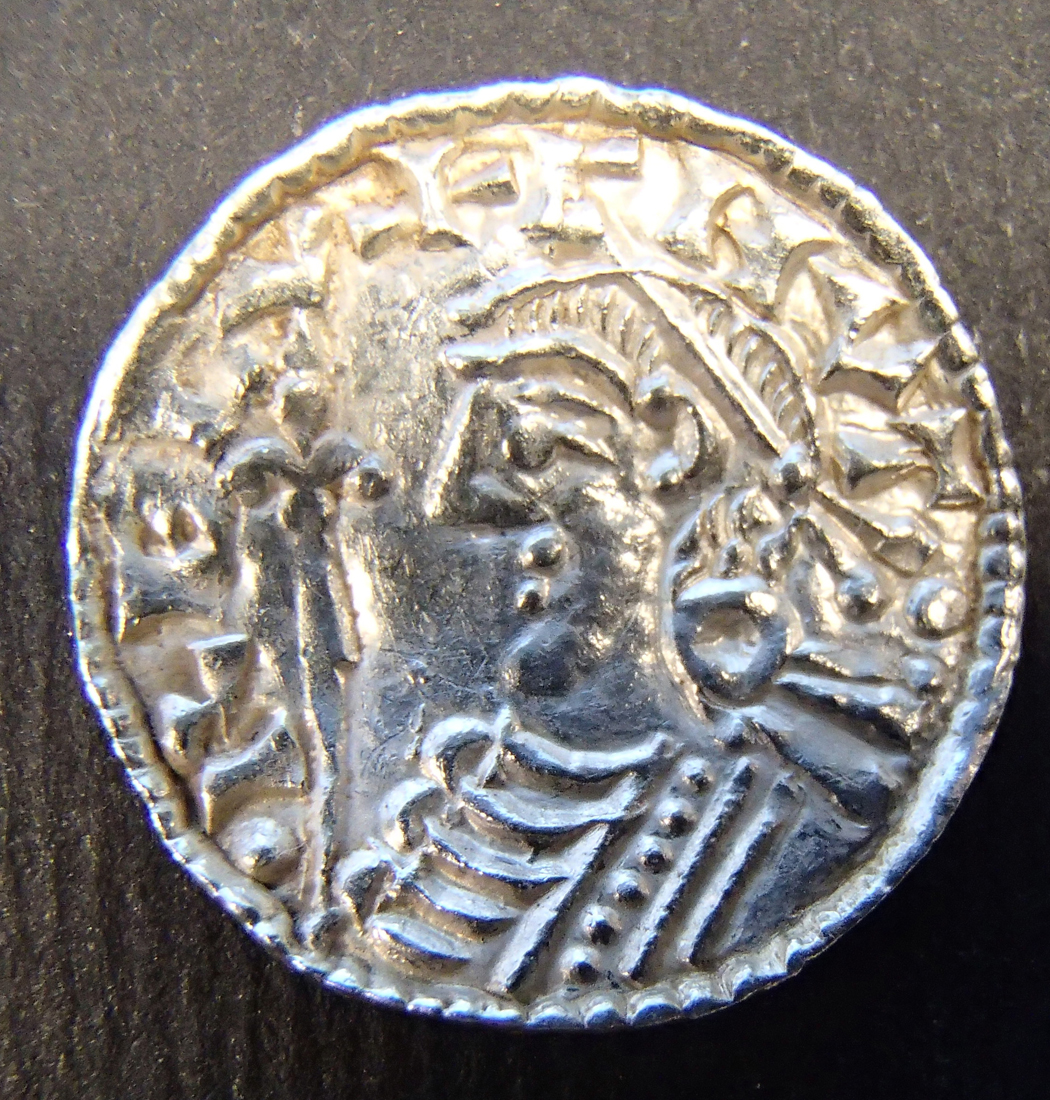
© The Trustees of the British Museum.
Just before Christmas 2014 a group of modern treasure-hunters brandishing metal-detectors found an amazing hoard of 5252 Anglo-Saxon silver pennies buried in a field near Lenborough in Buckinghamshire. The hoard was discovered on a field at the manor farm there, which is the site of a deserted medieval village with a Norman manor house and a medieval windmill. At present the exact location of the find has not been disclosed, which means that it is not known whether the hoard had been hidden inside a ditch, near the roadside or beneath the floor of a deserted Anglo-Saxon farm.
The coins were found wrapped in a lead sheet and buried in the ground for safekeeping. The coins are of Æthelred II (978-1016) and Cnut (1016-35), and were buried towards the end of Cnut’s reign. The lead wrapping provided protection against the elements while the hoard was in the ground, with the result that the coins are very well preserved.
“They are like mirrors, no scratching, and buried really carefully in a lead container”, says Paul Coleman to a local newspaper. It was a lucky find in more ways. Coleman barely had money to fill his car in order to take part in the days outing. Now he will probably split a couple of million pounds within the owner of the land.
In terms of “hoards” this is huge. In the contemporary system of account it would have amounted to £21 17s 8d, more than most estates recorded in the Domesday Book would be expected to produce in a year, writes Phil Dunshea. But it would not have been an exceptional sum.
Coinage of Æthelred and Cnut
Between 990 and 1042 a huge number of coins were produced. This was determined by the needs of the government to collect taxes and pay tributes, primarily to Scandinavian raiders and mercenaries. But the size of the mintage was limited by the the amount of silver available from hoarded or circulated coins, foreign coins and bullion imported by merchants. A special source were the treasures held by churches and other religious institutions. A major boost was silver imported from German mines, a major drain was the Danegeld extracted by Sweyn Forkbeard and his son Cnut during and after they conquered England. By the end of Æthelred’s reign payments of this tribute led to a distinct shortage of coins. However, this wealth was soon re-circulated by the invaders and it is obvious that abundant coinage obviously stimulated the economy in many ways.
The Treasure Act 1996
Under the Treasure Act 1996 there is a legal obligation for finders to report Treasure. Since the advent of the Act the number of finds reported has increased fivefold from 201 cases in 1998 (the first full year of the Act) to 993 in 2013, and 1008 in 2014.
The hoard contains coins from over forty different mints around England, and provides a rare source of information on the circulation of coinage at the time the hoard was buried. It is believed that knowledge about minting in the reigns of Aethelred and Cnut will be greatly advanced through this find. This knowledge would probably never have surfaced without the laws, which allows for private metal-detecting, but obliges the hunters to inform the Portable Antiquities Scheme.
Unfortunately the treasure Act does not oblige the detectors to inform the authorities when such a significant find surfaces. Nor does it expect the treasure-hunters to await the arrival of proper archaeologists. In this instance the coins were dug up and placed in unlabeled polygrip bags. This means that any internal structuring of the deposit was lost. This is a pity as the coins were obviously hoarded during a longer period, as they stem from a series of regents.
As of now trained archaeologists are deeply regretting the fact that the context has been irrevocably lost. See the video below, which documents the greed and lack of care of the excavating treasure-hunters.




SOURCES:
Largest Anglo-Saxon coin hoard tops list of latest nationwide treasure finds
Metal detector fan unearths 5,000 Anglo-Saxon coins in Buckinghamshire field
Lenborough Hoard: c’est foutaise!
READ MORE:
 The Wealth of Anglo-Saxon England
By Peter Sawyer
Oxford University Press 2013
ISBN-10: 0199253935
ISBN-13: 978-0199253937
 Money and Power in Anglo-Saxon England: The Southern English Kingdoms, 757-865
By Rory Naismith
Series: Cambridge Studies in Medieval Life and Thought: Fourth Series
Cambridge University Press 2014 (2011)
ISBN-10: 1107006627
ISBN-13: 978-1107006621
SEE MORE:
Saxon Pennies Hoard, Lenborough, Bucks Dec 2014