Home » Archives for Medieval Histories » Page 91

Author: Medieval Histories

Historiale at Berlin

History festivals may be the way forward to “sell” history in a serious yet popular manner

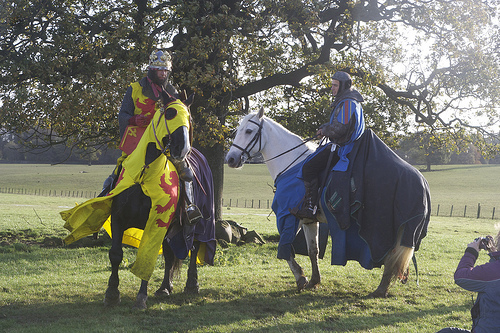
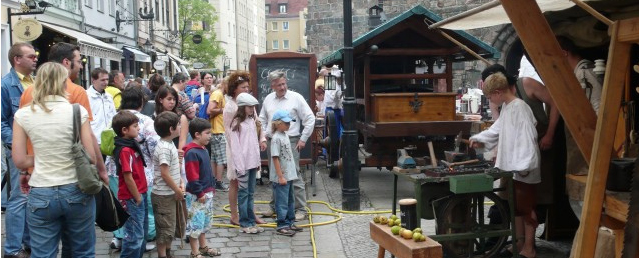
The Historiale in Berlin has the ambition to be the largest historical festival in Europe. Since 2006 The foundation behind this festival has been the driving force behind a magnificent staged series of events focusing on a wide variety of themes, from “Napoleon in Berlin” to “Haupstadt der Spione”. This year the Historiale celebrates the 775 anniversary of Berlin from the 20th to the 26th of August with a huge mixture of musical events, theatre-performances, lectures, public debates plus guided tours and much more. At the end of the week there will be a large parade where people who are willing to dress up can take part.

A significant part of this takes place around the Nikolaikircheviertel where there is also a marketplace. In the Nikolaikirche itself an exhibition tells the story of this 800-year old building and the personalities, who lived and worked there. At the same time eight small exhibitions along the former city walls show the results from excavations which were carried out in connection with work on the Metro.

However, the gate to the festival is the exhibition in the Berlin Museum where the changing fortunes of the city are told through a combination of multimedia installations, audioguides etc. For the really interested it might be worthwhile to start out by visiting the City Museum of Berlin (Märkisches Museum) where amongst other fascinating thing large models of the historical city from its early beginnings may be studied in detail. For the medieval buff the museum in itself is interesting: the building is more than a 100 years old and in full-blown “historismus” style with a tower built out of red brick and a “Gothic Chapel” with a remarkable collection of medieval sculptures; all newly restored to its former grandeur. At the Museum annex at Ephraim-Palais there is a special exhibition “Berlinmakers ‘n’ shakers. 775 Portraits – One Network” which showcases seven hundred present-day and seventy-five historical figures. Their stories shed light both on the lives of Berliners and also on the uniqueness of Berlin.

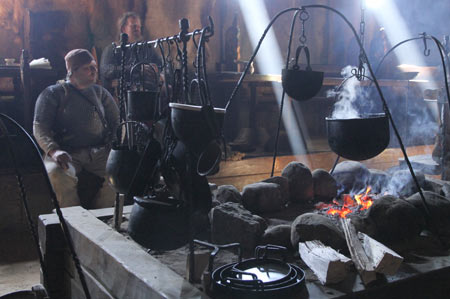
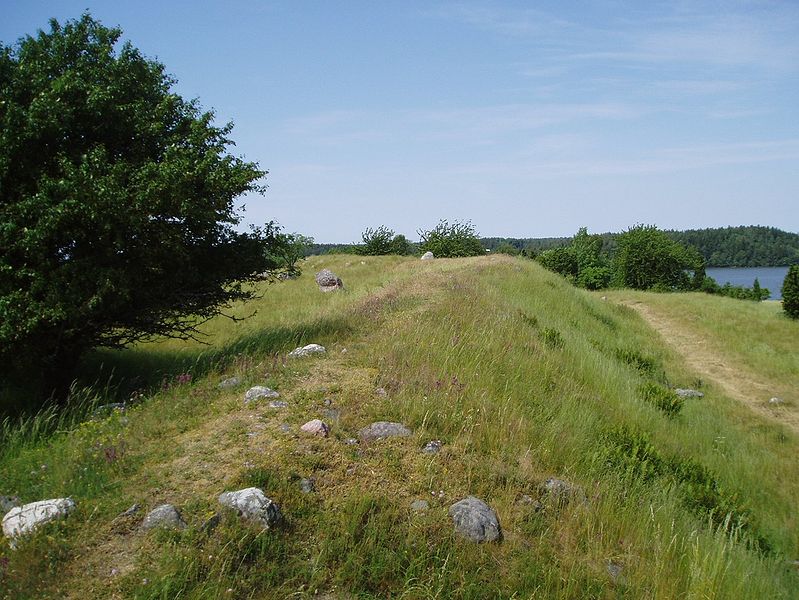
Tired of all the noise and jostling from more than 100.000 guests and participants? Maybe it is time to take the train out South and visit one of Berlin’s more hidden gems: The village of Düppel (Museumsdorf Düppel). Here guests can experience a medieval village complete with a fully-fledged farm cultivated with traditional three-year rotation and showcasing old grains as well as medieval gardens. On Sundays volunteers enliven the place with their handcrafts. All scientifically well-documented in an orderly way. (The Museumsdorf is part of the Stadmuseum of berlin).

The program for the Historiale

 Accompanying this years “Festivale” is a book about “Berlin im Mittelalter”:
 Berlin im Mittelalter: Berlin/Cölln unter den Askaniern. By Norbert F. W. Meier. Berlin Story / Alles Uber Berlin 2012
 

Medieval Publishing will be hit by EU Plan

Last year UK proposed to make research papers stemming from work paid by British Taxpayer’s free online by 2014. July 16 the proposal was confirmed. Next day the European Commission followed the plan of the UK government and made all EU-funded scientific research available for free from 2014. It is believed that scientists will benefit, as they will be able to more productive as no publishers will be able to act as gatekeepers and scholars – due to copyright issues will not be obliged to publish the same results twice albeit with different wording (so-called “slicing the salami thin”). Likewise voluntary and charitable organisations as well as independent scholars will be able to access information hitherto reserved for Universities. “Last, but certainly not least, citizens will have direct access to publicly-funded research in addition to benefitting from the indirect effects resulting from everybody else’s faster access”, says the Memo.

As a first step, the Commission will make open access to scientific publications a general principle of Horizon 2020, the EU’s Research & Innovation funding programme for 2014-2020. As of 2014, all articles produced with funding from Horizon 2020 will have to be accessible: Articles will either have to be made immediately accessible online by the publisher, which can get reimbursement of up-front for publication costs, or researchers will be obliged to make their articles available through an open access repository no later than six months (12 months for articles in the fields of social sciences and humanities) after publication (“Green” open access).

In a press release the European Commissioner for Research and Innovation, Máire Geoghegan-Quinn, declared that open access to scientific papers and data “will speed up important breakthroughs by our researchers and businesses, boosting knowledge and competitiveness in Europe.”

This will definitively hit the lucrative business of Medieval History Publishing as most European Research in the Humanities is funded by the member-states. Of course there will still be a market in US, but as much research here is dependent on grants from European Universities – hosting visiting overseas scholars working in Archives or Museums – matters will not be that simple.

From a recent roundtable discussion on “The Future of Academic Publication” in Leeds at the 19th International Medieval Congress it appeared that the usual print-run for a book is 300, with 50 presented to the authors, while app 200 – 250 are sold to (American) University Libraries. As most books published by the more prestigious publishers are sold on average for between €100 -120 (whether in print or as an E-Book) this is a lucrative business.

Although the publishers at the roundtable stressed the value of their work connected with the so-called “editorial process”, some scholars, who were present at a later reception, afterwards claimed, that they did most of the editing themselves. Further it was apparent that in a number of instances, these scholars had even been obliged to pay for the editing process, thus in reality the privilege to publish. Further some scholars had experienced that publications, they had contributed to, were not available at their national or academic libraries (in the minor European countries). As copyright was strictly policed, they were not even allowed to circulate their results among colleagues. Added to this should be the dissatisfaction with the fact that the large publishing houses routinely declined collections of papers from conferences. Finally a general dissatisfaction with the quality of the publications was sounded: photos and illustrations were printed in non-colours and LD.

“Something has to give”, as one scholar voiced it! Apparently sooner than later if the different European Countries follow up on the recent decisions by the Commission.

Karen Schousboe