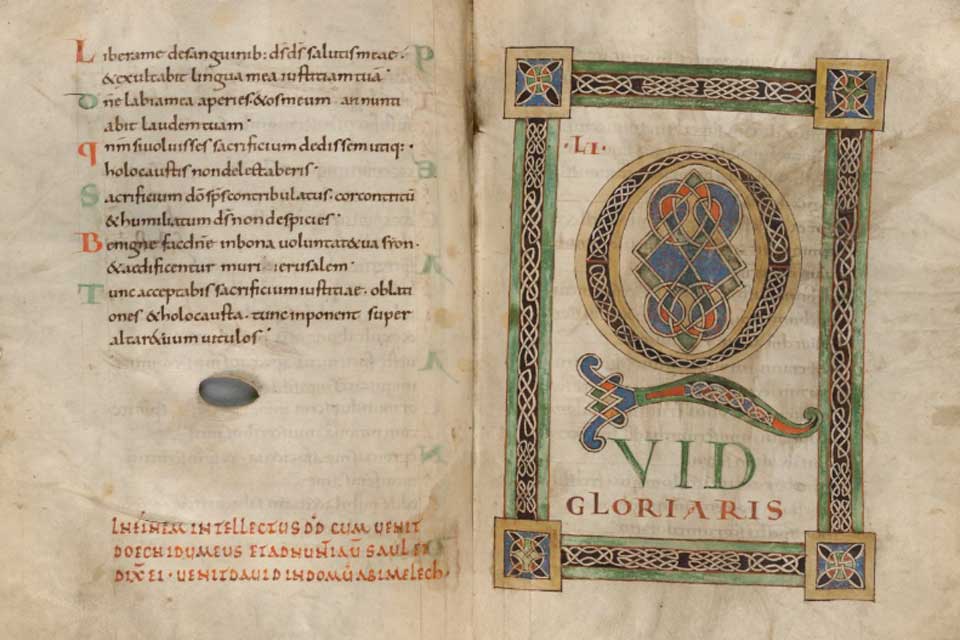
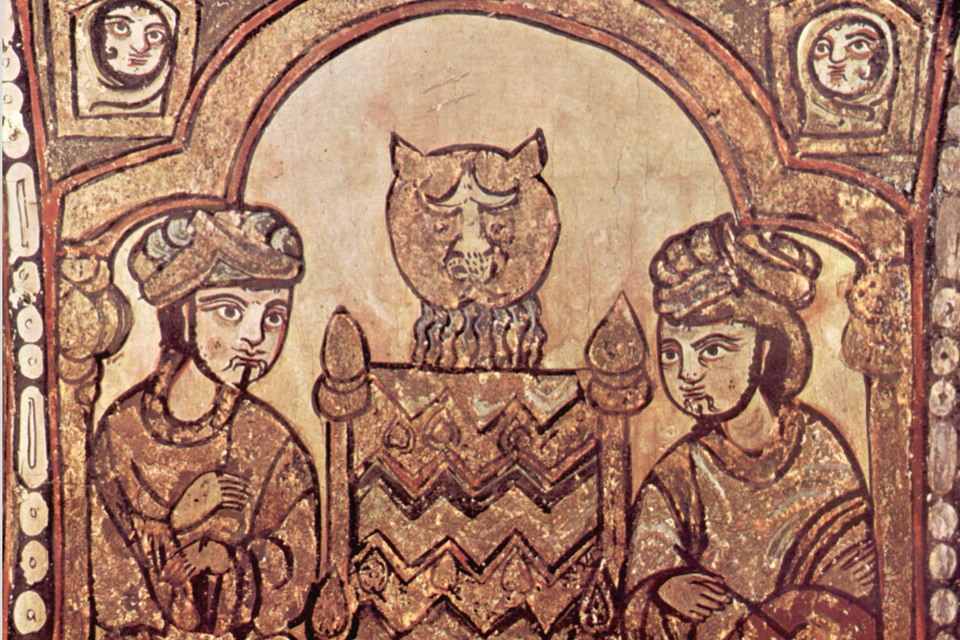
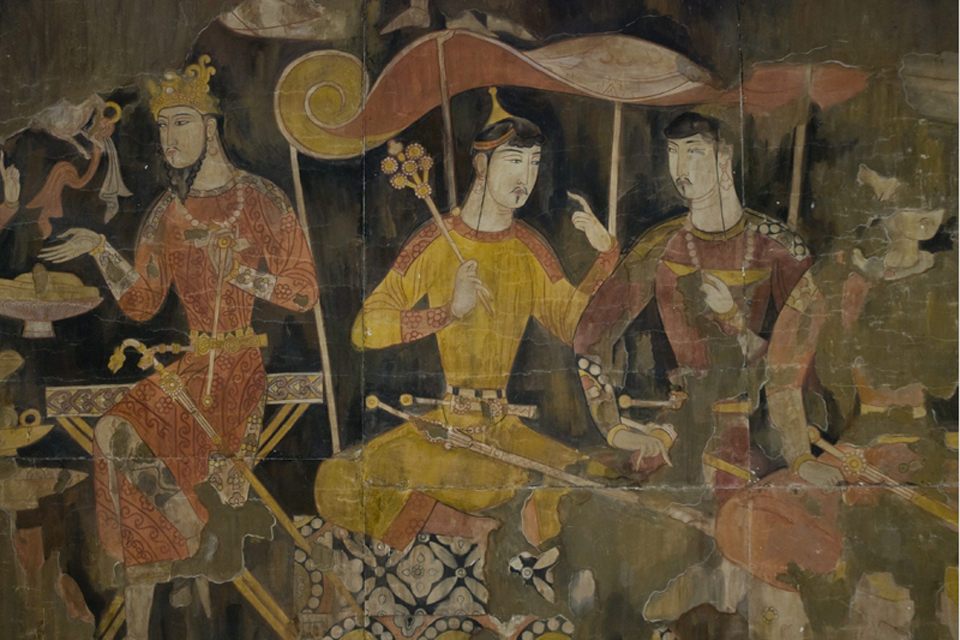
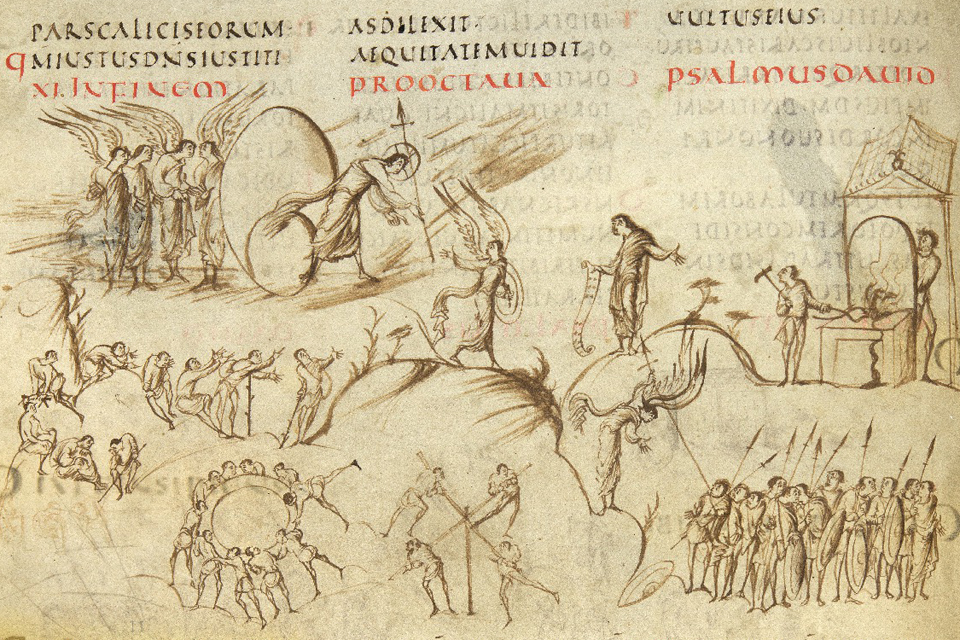
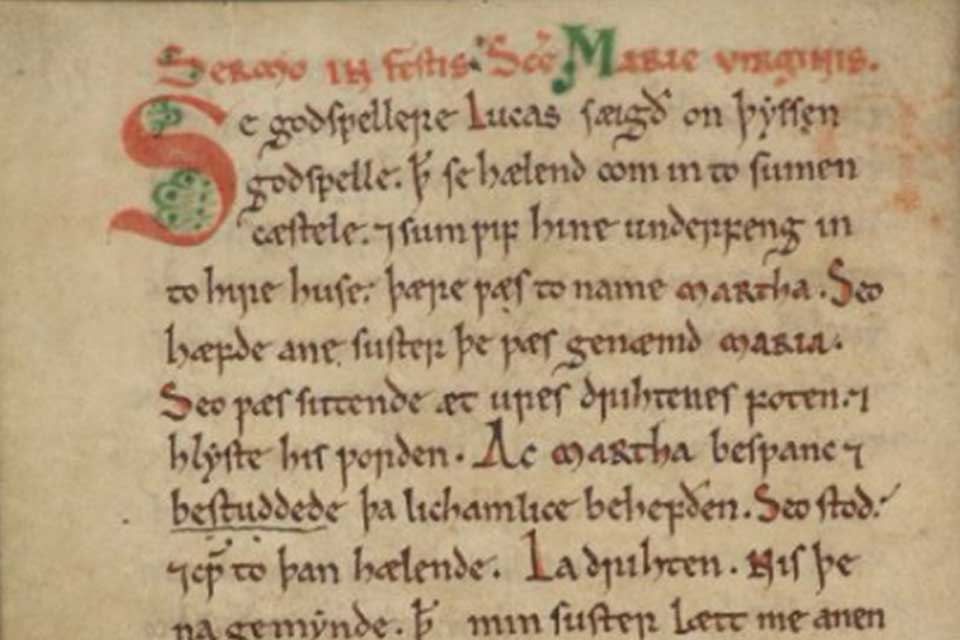
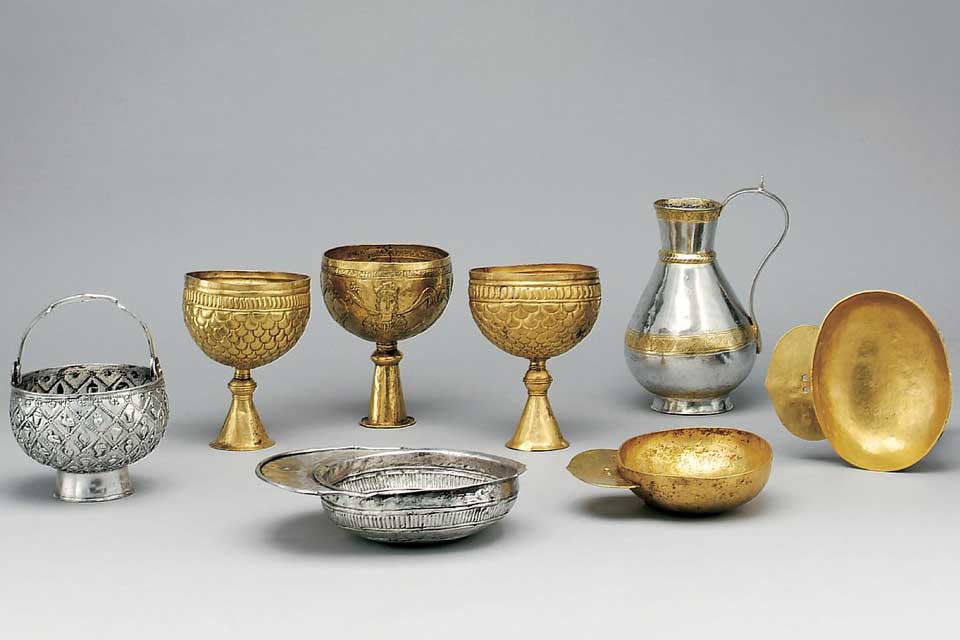
In the Middle Ages, craftsmen and jewellers in the Middle and Lower Danube Region were versatile and skilled in numerous techniques.
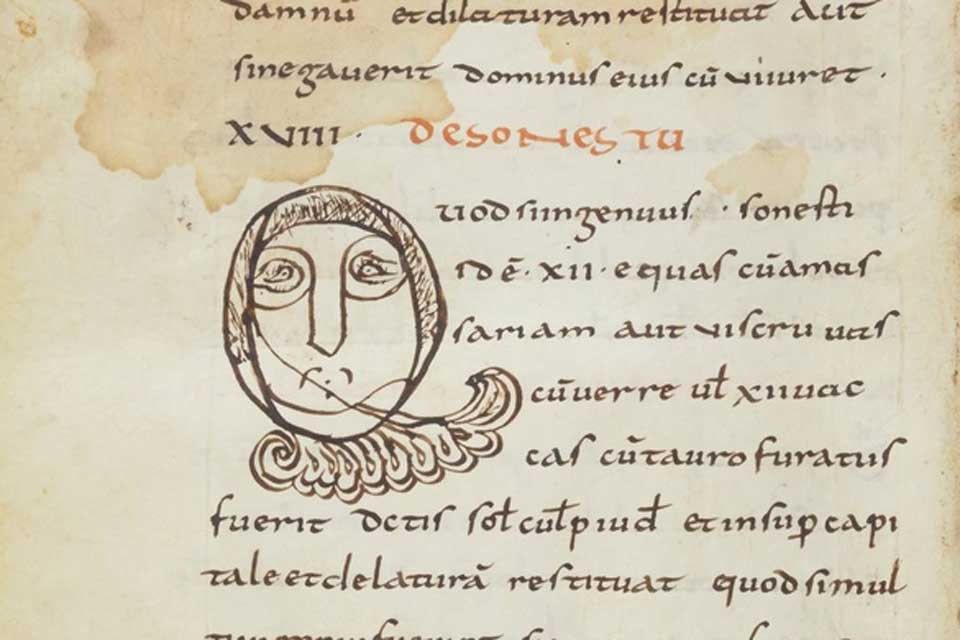
tudies of literacy and society has long since demolished the assumption that reading and writing were skills reserved for a small and distinct clerical elite. New book focus on the writing of charters
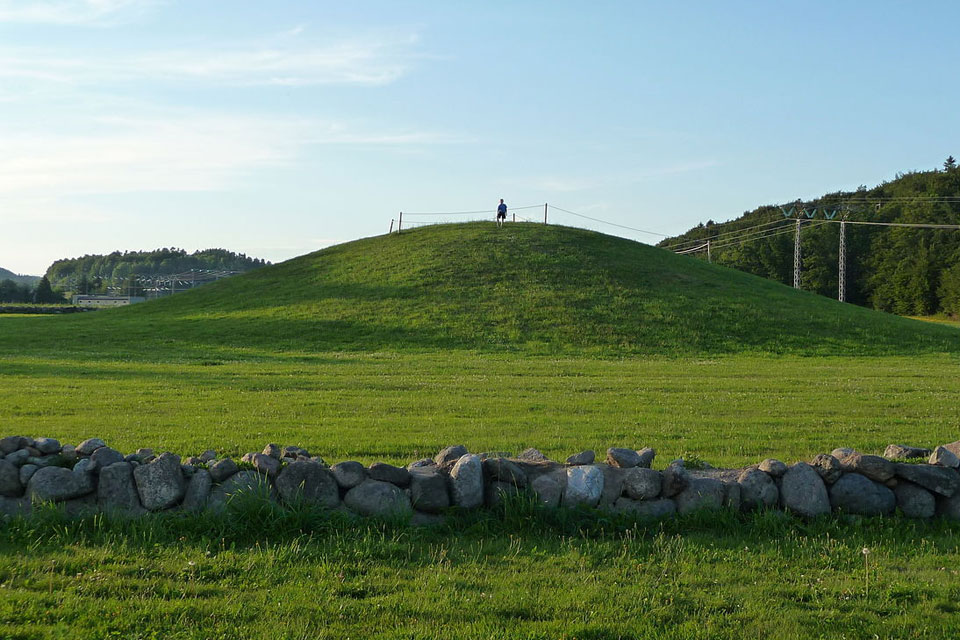
The Gokstad ship with the buried warrior and his grave gifts was discovered in 1880. Since 2011, archaeologists have reexamined the original find

In the unlikely event you only read one history book in 2020, the new book, Children of Ash and Elm, on The History of the Vikings should be it.
REVIEW: How do you recognise a king or a queen? Through splendid Magnificence, a new book reveals.
REVIEW: New book on “Ecclesiastical Landscapes” aims to explore the diversity and unity of how churches and monasteries set their mark on their surrounding landscape
REVIEW: In 2016, the City of Odense celebrated the 850th anniversary of the murder of Cnut IV in the church of St. Alban in Odense. A splendid report of the symposium has been generously published as open source.
Medieval historians hesitate to talk about medieval nation-states. Instead, they prefer to talk about kingdoms and their corresponding royal communities or assemblies. New book reviews the questions regarding terminology.
This book explores how sloppy medieval history has downplayed the European significance of what has been considered a minor "barbaric" proto-state, the Kievan Rus'.
Conservation carried out of the Gent Altarpiece since 2012 have revealed major overpainting covering the the original work of Jan and Hubert van Eyck. New book tells the story
How did common people engage with law in Late Medieval England? New book explores the legal culture of its time and how it touched upon the lives of common men and women.
How was power exibited? And what role did rules, regulations and rituals play. Gert Althoff is known as one of the medieval historians, who has explored these questions in detail. New book provides translations into English of his more recent contributions.
Alfonso X is on of the great rulers of Medieval Iberia. Known for his collections of Marian Folk Songs, he was also responsible for numerous works of history, philosophy, science and the laws known as Siete Partidas. New book introduces this law code
Northern Iberia at the end of the first millenium is a fascinating subject. New book offers a study of the kind of society which inherited the Late Roman Past
The Chivalric Turn explores the shift at the end of the 12thcentury when the pursuit of knightly excellence and social eminence gave rise to a new code of conduct: chivalry
A Companion to Chivalry
Edited by Robert W. Jones, Peter Coss
Boydell & Brewer 2019
In the Middle Ages, the idea of the warrior as one of the linchpins in society came to rule the minds of people. Following this, chivalry – the cultural code of conduct ruling these warriors – turned into a pregnant concept combining the ideas of military service, physical skills, horsemanship, and courteous behaviour. Rooted in various ideas about chivalry, the elite came to embody a certain habitus and mentalité – a way of life. Embodied by glorious knights and pretty damsels in distress, chivalry conquered not only the minds of poets, readers and artists but also the European elite from one end to the other. As such, chivalry did not just rule the day-to-day way of life among the privileged; chivalry also governed the politics of the day. Whether in diplomatic negotiations or warfare, chivalry was fundamentally another way of conducting “politics”.
Thus – as a way of life or habitus, a life style, and a code of conduct – chivalry set its mark on landscapes, clothes and armour, artefacts, gestures and legends, daily life and feasts, language, poetry and visual arts. Huizinga famously called it “an aesthetic ideal assuming the appearance of ethical ideal” (1919, p. 58). To reduce the idea of chivalry in this way, however, is to reduce its very real and bloody impact on the lives of people from the 11th century, and onwards until it petered out in the 16th century, when it was finally turned into a laughing matter, marked out by the novel of Don Quixote by Miguel de Cervantes (published 1605). And yet, it lingered on as a bottomless well of inspiration to be reinvented whenever politics became too messy and bloody. Ivanhoe created by Walter Scott in 1820 is an excellent example of such a reinvention of the chivalric tradition. From our day and age, the exploits of Jamie Lannister in ‘Game of Thrones’ is another such timely invention. In a world ruled by fear and terror, it seems we once more need armoured knights coming to our rescue.
Such media events partly explain why the last decade has once again seen a handful of major introductions to the proper medieval history of chivalry. Interest was reignited in 1999, when Richard Kaeuper published his introduction, Chivalry and Violence in Medieval Europe. In 2009, the same historian followed up with his book on “Holy warriors: the religious ideology of chivalry”, and again in 2016, Cambridge University Press published a textbook on Medieval Chivalry by the same author. Interspersed, we find such introductions as The Knight: The Warrior and World of Chivalry, which Robert W. Jones published in 2011. Mixed up are numerous monographs and scholarly studies of chivalry as it unfolded at specific times, in special locations and among particular groups of people.
According to Keuper, chivalry is foremost a tough and pragmatic warrior code with which the elite made sense of violence and cruelty in a world of constant feuds and wars. At seen through this lens, we are able to pinpoint a special way of life and how it helped the knights to deal with piety, women, victimhood, friendship, and not least power involving who would live and who would die; and how. Through Keuper’s work we are nearly able to listen in on the chivalric small-talk exchanged over a mug of beer in a soldier’s tavern. Thus Keuper offers a well-wrought thesis positioned to explain and convince.
However, chivalry was performative. As such it existed not just as word-play, but as a continued stage play, where the constant reworking of the ‘text’ supplied the audience with further inspiration as to their own reenactment. As such, the idea of chivalry was always practical and hands-on. Chivalry was constantly reworked, rethought, represented in new ways, while creating complexity and countless nuances.
The new handbook edited by Robert W. Jones and Peter Coss aims to tackle this set of challeges by providing an “accessible and more holistic survey of the subject”. Its chapters, by leading experts in the field, cover a wide range of areas: the tournament, arms and armour, the chivalric society’s organisation in peace and war, its literature and its landscape. They also consider the gendered nature of chivalry, its propensity for violence, and its post-medieval decline and reinvention in the early modern and modern periods. In short: this book aims to offer a synopsis of the diverging scholarship governing the field.
Each contributor has been asked to draw on their own areas of expertise, outlining the many diverging viewpoints and offering a guide through the perplexities. For instance one of the editors, Peter Coss opens the volume with a well-argued explanation of the difference between the Anglophone and Francophone historiographies, essential for anyone who grew up on a diet of Duby and the Annales School. And thus, the book proceeds, offering nuances in a much disputed scholarly field.
Chivalry is a debated and contested field. It eludes a formal definition, and yet it is central to our popular ideas of what the Middle Ages were all about. We need to be able to teach this complexity to secure a more nuanced attitude towards the history of these past times.
The past is a foreign country. We need robust and comprehensive travel-guides. This book will indeed be invaluable to the student and the scholar of chivalry alike.
Karen Schousboe
Robert W. Jones is a Visiting Scholar in History, Franklin and Marshall College
Peter Coss is Emeritus Professor of Medieval History, Cardiff University
Contributors: Richard Barber, Joanna Bellis, Matthew Bennett, Sam Claussen, Peter Coss, Oliver Creighton, David Green, Robert W. Jones, Megan G. Leitch, Ralph Moffat, Helen J. Nicholson, Clare Simmons, David Simpkin, Peter Sposato, Louise J. Wilkinson, Matthew Woodcock