Unique 11th-century earring made of gold with cloisonné enamelling from was recently discovered by a metal-detector in Western Jutland. The earring likely derives from Byzantium or Egypt.
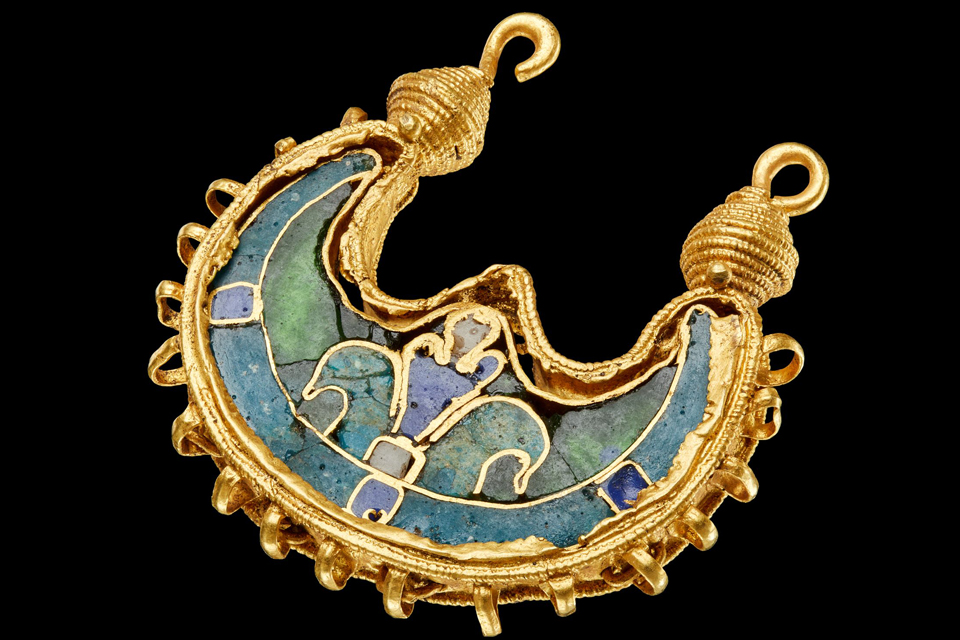
Unique 11th-century earring made of gold with cloisonné enamelling from was recently discovered by a metal-detector in Western Jutland. The earring likely derives from Byzantium or Egypt.
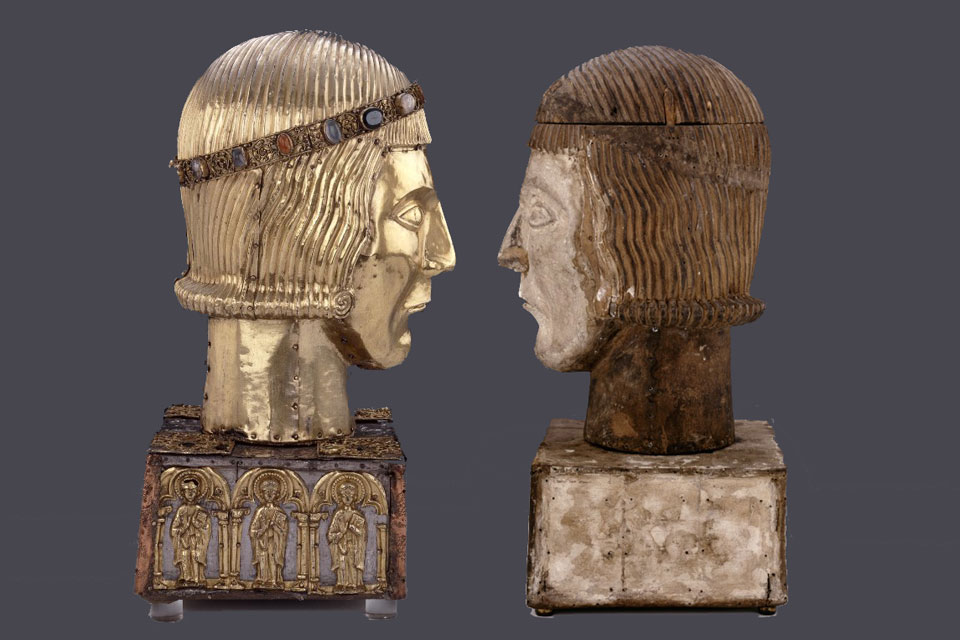
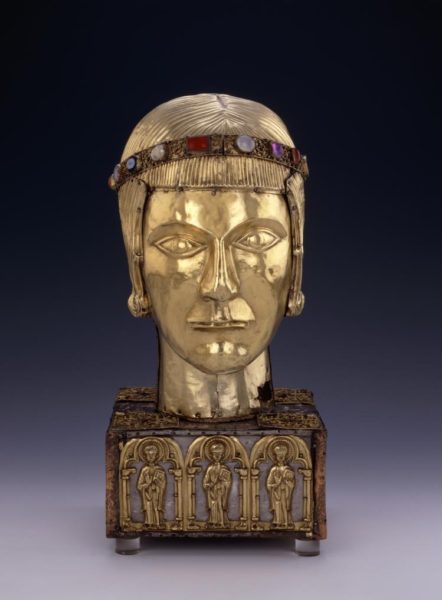
In the 19thcentury the treasures preserved in the Cathedral in Basle went on the market. One of the outstanding pieces was the reliquary of St. Eustace from the 12thcentury. Such head reliquaries, also known as `chefs’, were popular in the medieval period. They belong to the category of so-called “speaking” reliquaries, which through their form indicate their content. In 1850, the reliquary was acquired by the British Museum.
The head itself is made of silver-gilt repoussé metal sheets with a gem-set filigree circlet binding the straight hair. The head measures (H) 35 cm x (W)16,6 cm x (D)18,4 cm and weighs 1,6 kg. The head is supported by a fully carved core made of sycamore wood. Also in the shape of a head, the top forms a lid covering a hollow compartment for relics. The existence of the inner wooden head was not discovered until 1956, when the silver case was being cleaned. The relic compartment was then opened, and a number of fragments of bone wrapped in cloth and identified by vellum (relic tituli) were found, which hitherto had clearly not been disturbed. Some of these relics were supposedly fragments of the skull of Saint Eustace, a Roman military saint. The relics were returned to Basle, but the vellum `tituli’, cloth fragments and cotton wadding were retained by the British Museum.
It is thought that the wooden head was the original reliquary, which was then covered in silver-gilt sheets and fitted with the diadem.
The gem-set filigree circlet is especially valuable. Such circlets might be gifts from wealthy nobles. And may perhaps have been worn in a secular context before being donated. This diadem is made of filigree adorned with a series of gems recycles from the Roman past. Nine gems are composed of varieties of quartz (rock crystal, chalcedony, amethyst, carnelian), two of aragonite (pearl, mother of pearl), one of obsidian and six of glass. This use of Roman materials reveals the value placed on the classical past by medieval goldsmiths and their patrons.
Around the plinth are gold plaques in the form of the twelve apostles standing under an arcade of trefoil-headed arches. This will also have been decorated with recycles ems and glass fragments, but only two remain.
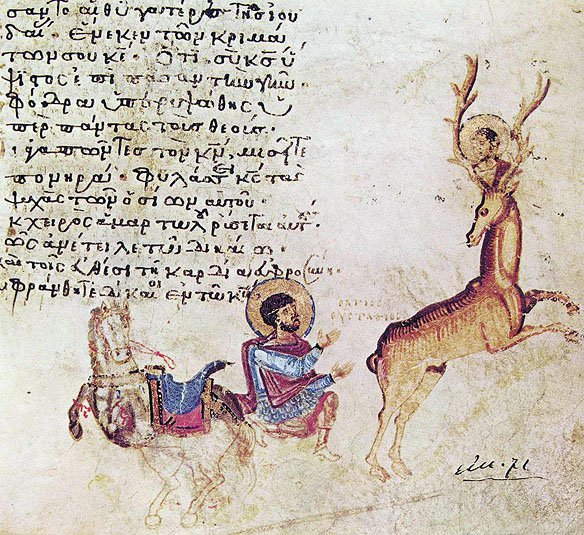
St. Eustace was a Roman soldier and Christian martyr. Before his conversion, legend has it he was a Roman general serving under Trajan and known under the name of Placidus. While hunting a stag near Tivoli, he saw a crucifix lodged in between the antlers of the stag. This led to the conversion of his whole family as well as the change of his name to Eustatius (from Greek, Eustachios, meaning fruitful, well standing, steadfast). His vita is preserved in the form of a highly romantic legend presenting him as a Job-figure, until his martyrdom in AD 118, when he was supposedly roasted to death with his family inside a bronze statue of an ox.
According to Pope Gregory II (731 – 41), an early church was dedicated to him in Rome. Veneration, though, is mainly dated to the 12thcentury. One of the earlier presentations, though may be found on the Harbaville Triptych from Byzantium, now in Louvre, showing a panoply of Roman soldiers turned martyrs – St Theodore the Recruit, St Theodore the General, St George, and St Eustace. Later, we find his relics at an altar in the royal basilica of St. Denis as well as depicted on a Romanesque capital at the Abbey in Vézeley. The saint may also be found in psalters illustrating Psalm 96, 2 – 12. St. Eustace obviously belonged to the group of martyrs celebrated for their conversion from Roman Soldier to Miles Christi.
St. Eustace Head reliquary c.1180-1200, Basle, Switzerland (British Museum)

By Martina Bagnoli, Holger Klein, C. Griffith Mann, and James Robinson.
London, British Museum Press, 2011

Edited by James Robinson, Lloyd de Beer and Anna Harnden
The British Museum Press 2018
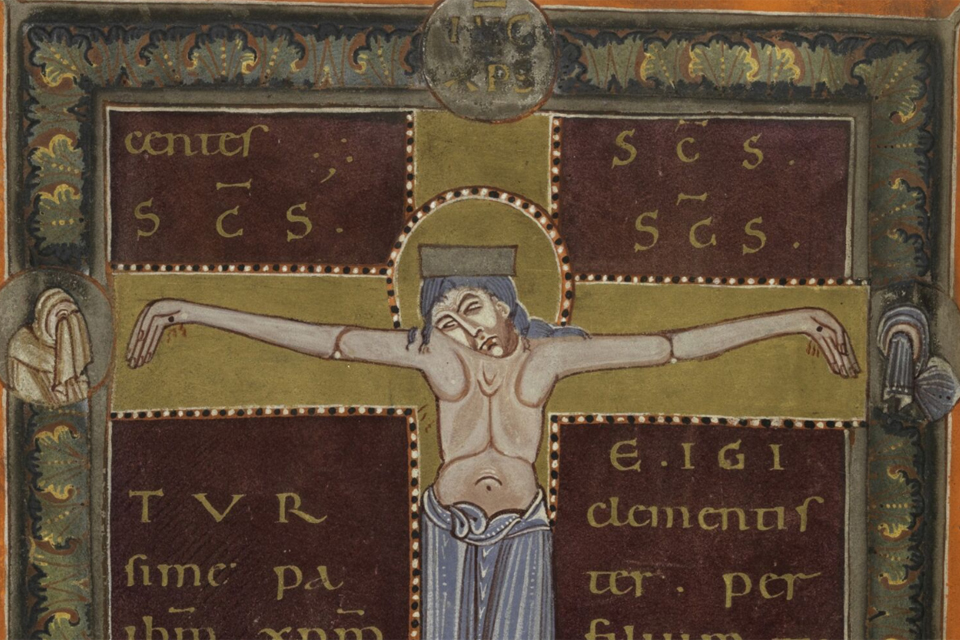
The Sacramentary from the Benedictine abbey in Tyniec from c. 1060 – 70 is one of the prized possessions of the National Library in Warsaw.
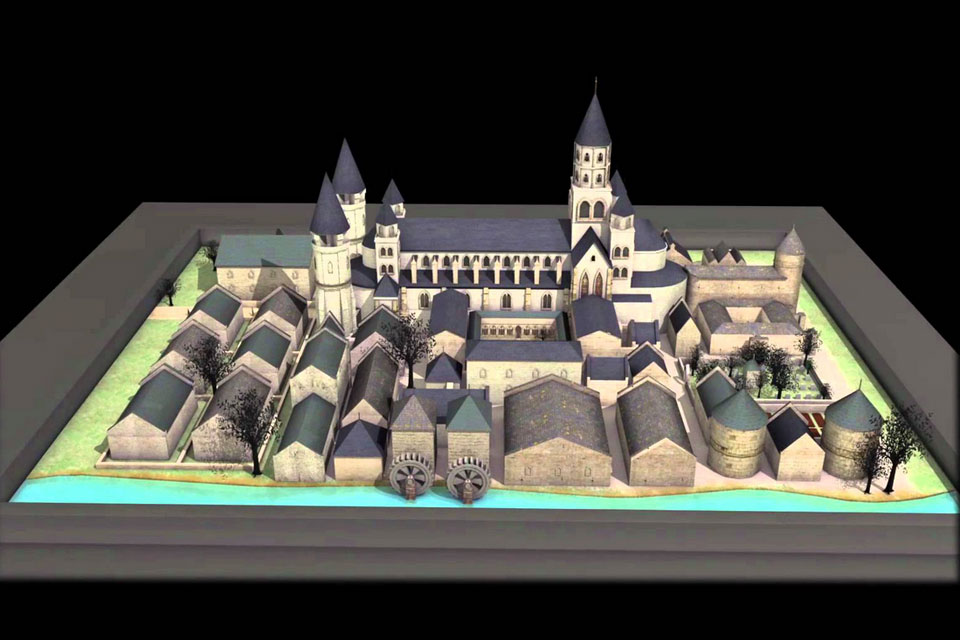
One of the treasures from the Carolingian Age is the Plan of St. Gall - a design for an ideal monastery – from the 9th century.

Henry III (1016 - 1056), Holy Roman Emperor, recieved a very fine education. This prompted him to commission several remarkable Golden Gospels at Echternach

Cleveland Museum of Art celebrates its centenary in 2016. For medievalist a particular exhibition of Cleveland’s Gothic Table Fountain is exciting
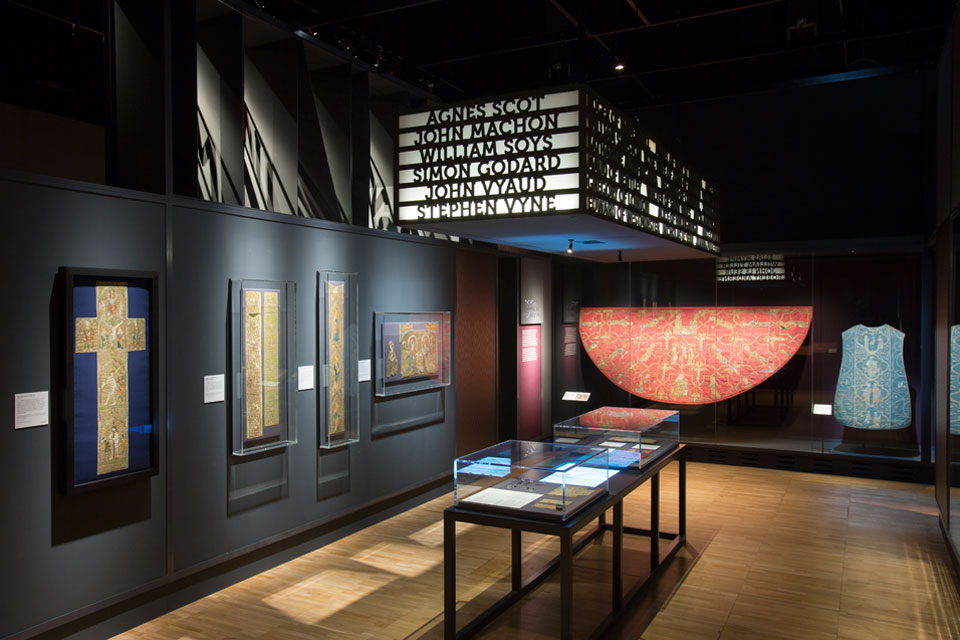
Popes, Bishops, Abbots, Kings and Queens! All were willing to do anything to lay their hands on the sumptuous English embroideries - Opus Anglicanum
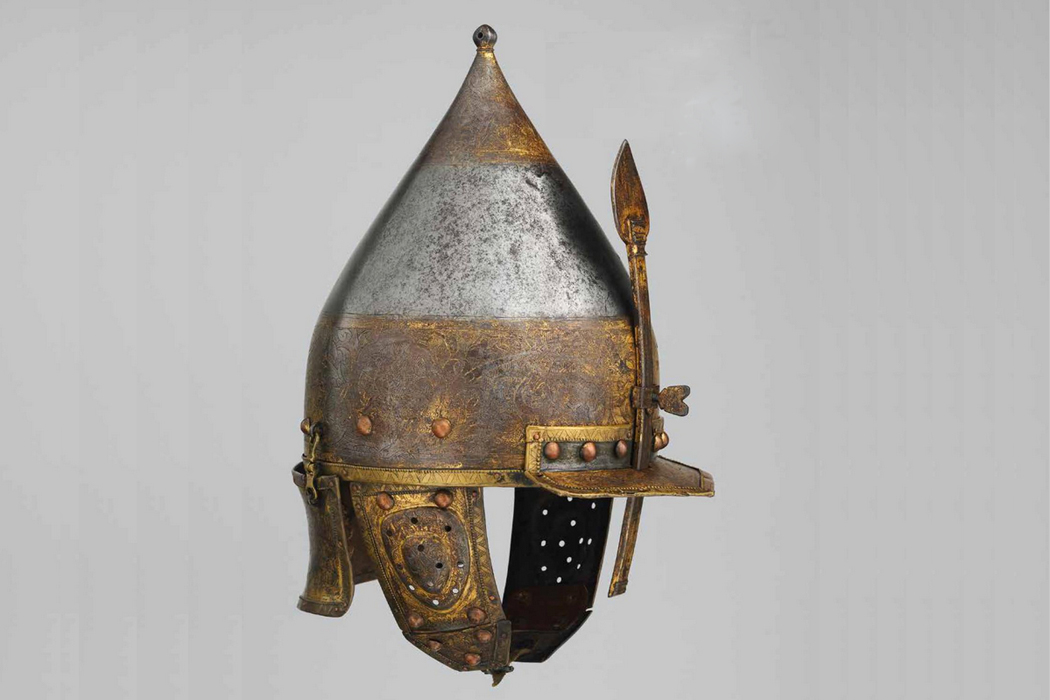
Islamic Arms and Armour were early on prestigious symbols of status, wealth, and power. New book beautifully presents the collection in the Met .
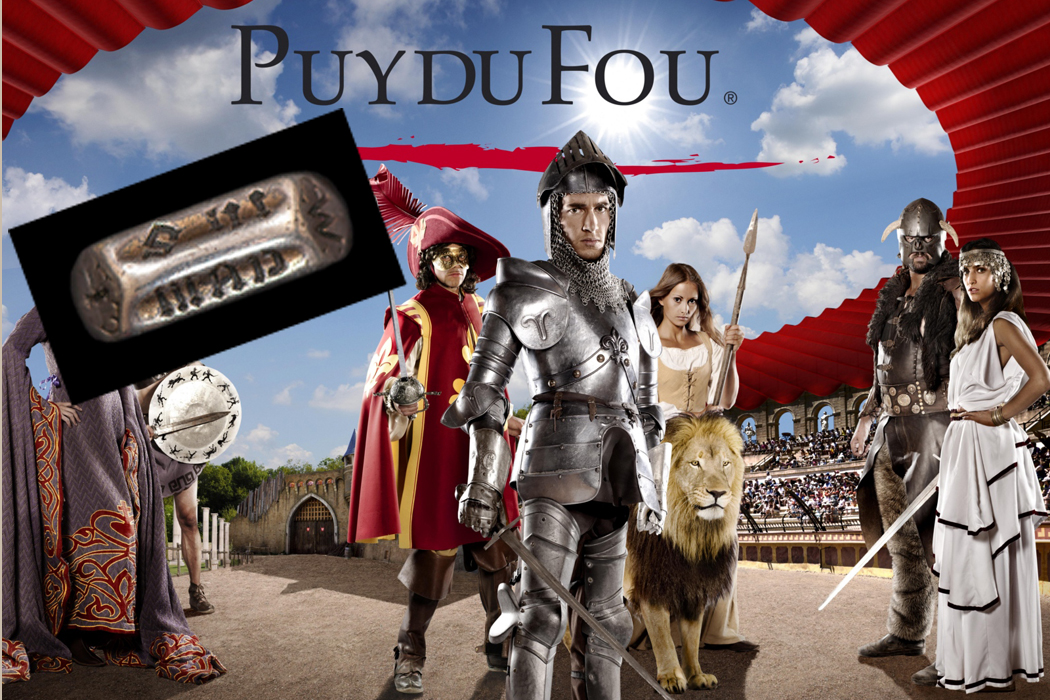
Recently the Puy du Fou foundation, which runs a historical theme park in Western France, bought the possibly authentic ring of Joan of Arc.
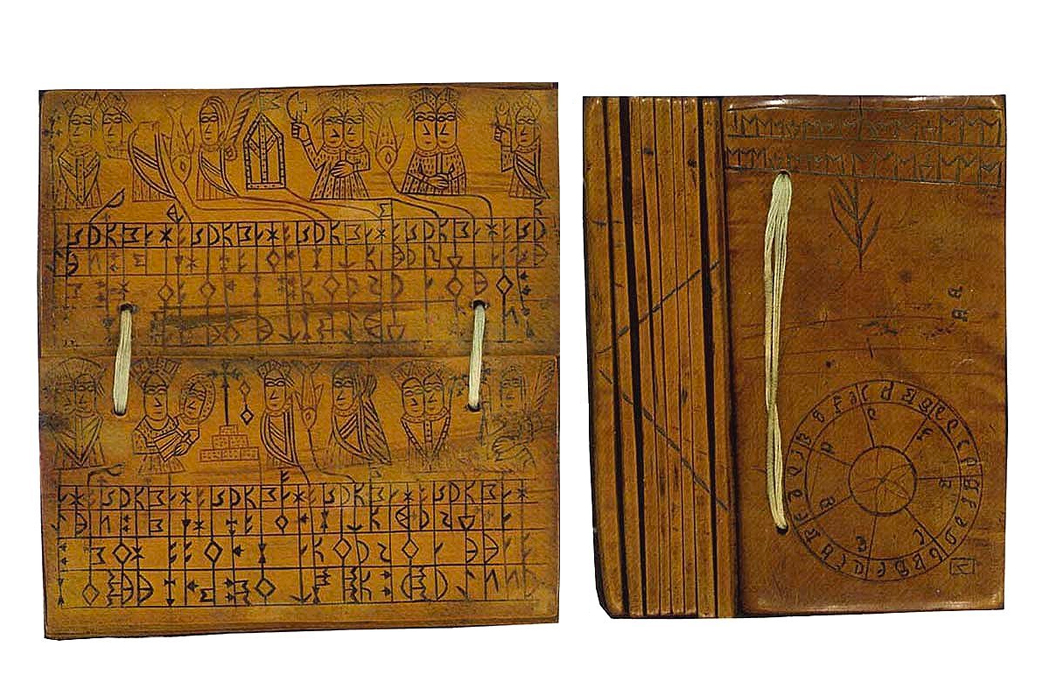
The Schøyen Collection holds manuscripts from around the world spanning 5000 years of human culture and civilisation. Many are medieval.

Frederic II, Holy-Roman Emperor, is known for his audacious life, his great Italian castles and his wars with the Pope. But he was also an avid patron of the arts. His hunting book is one of his great legacies.
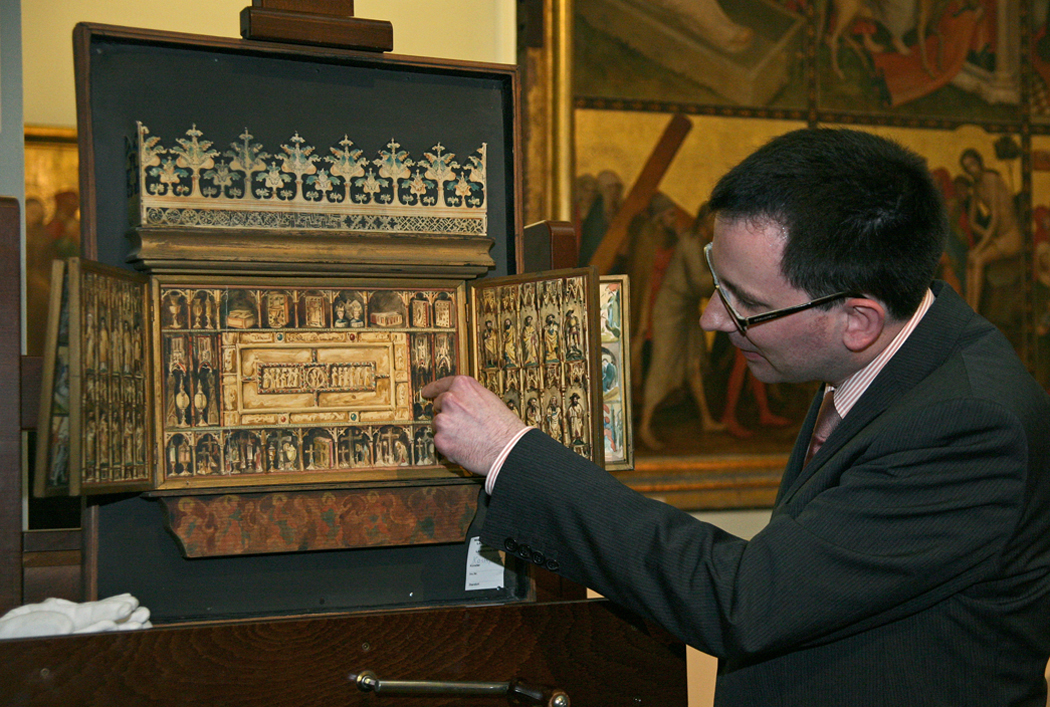
One of the highlights of Hannover Landesmuseum is the remains of the Golden Panel which once decorated the high altar of S. Michael's in Lüneburg
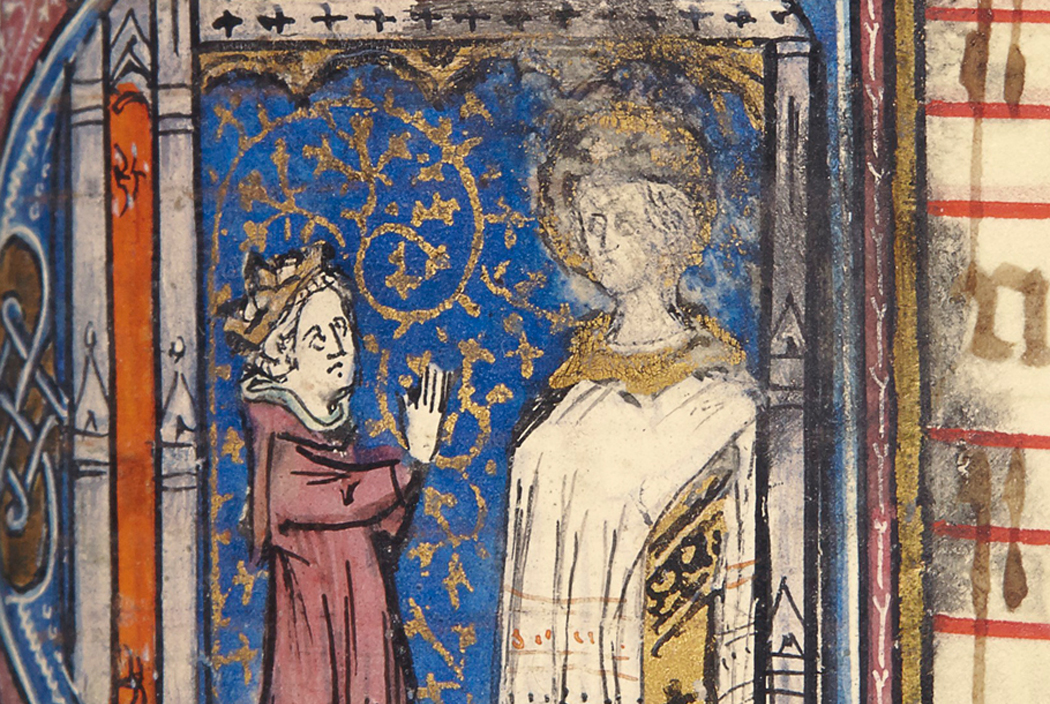
Classified as “National Treasure” in 2014, BnF is trying to raise the funds to buy the Royal Breviary of Saint Louis from Poissy
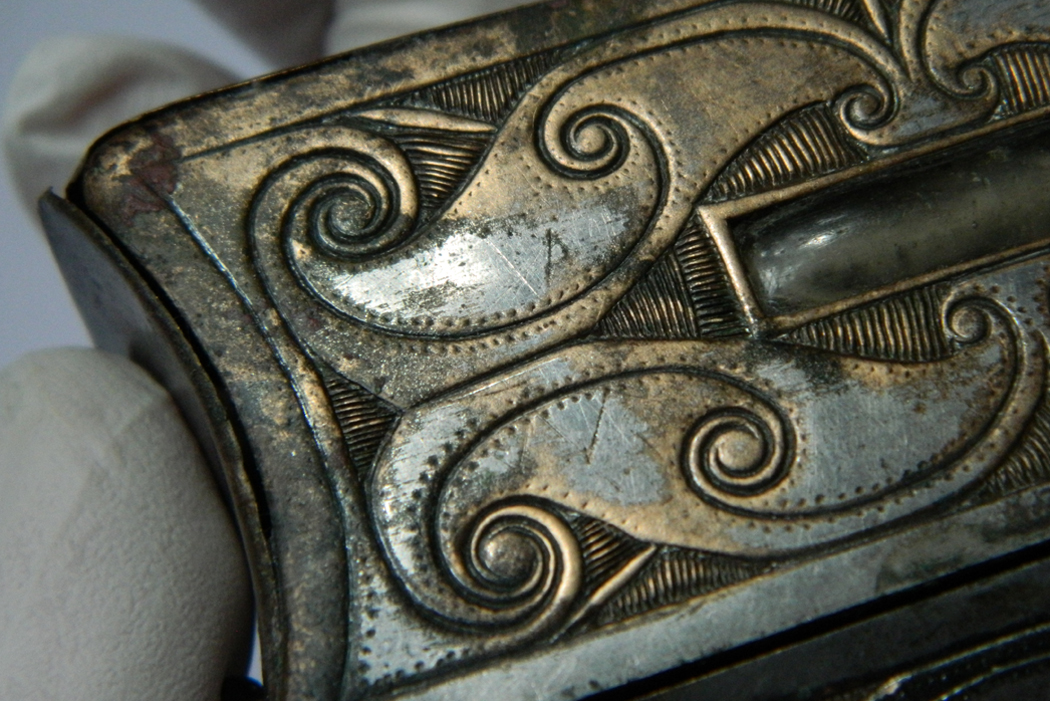
Various copper-alloy fragments found in Bobbio were identified in 1990 as part of a 7th century house-shaped shrine. Might it have belonged to Columbanus?
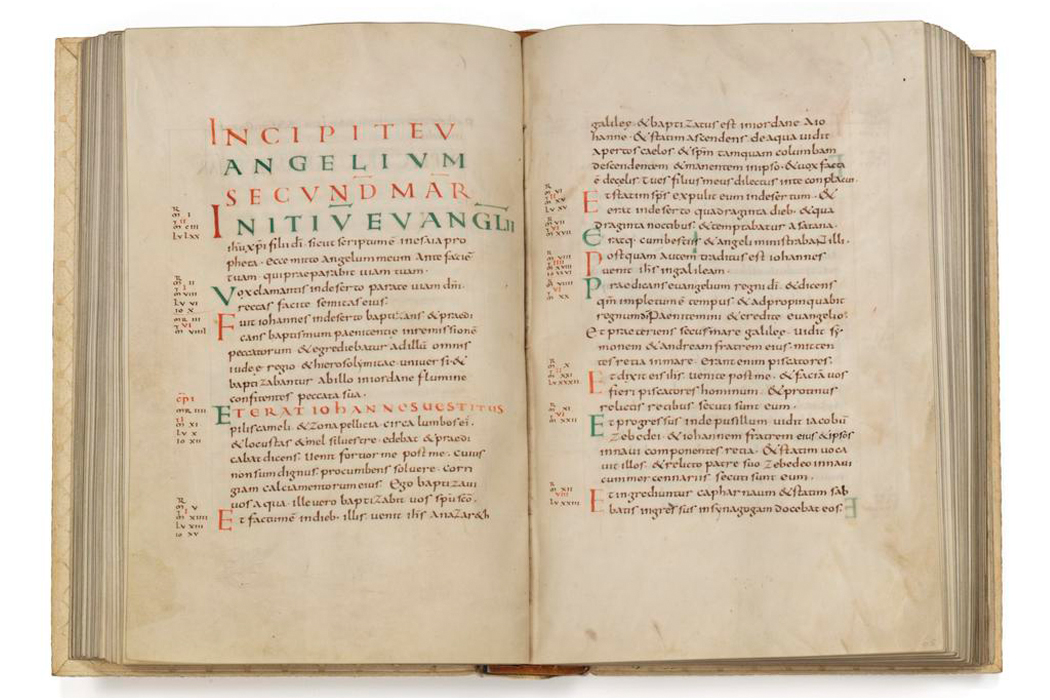
This summer Christies auctions off a priceless manuscript – the Gospels of Queen Theutberga” - from c. 825 – 850.
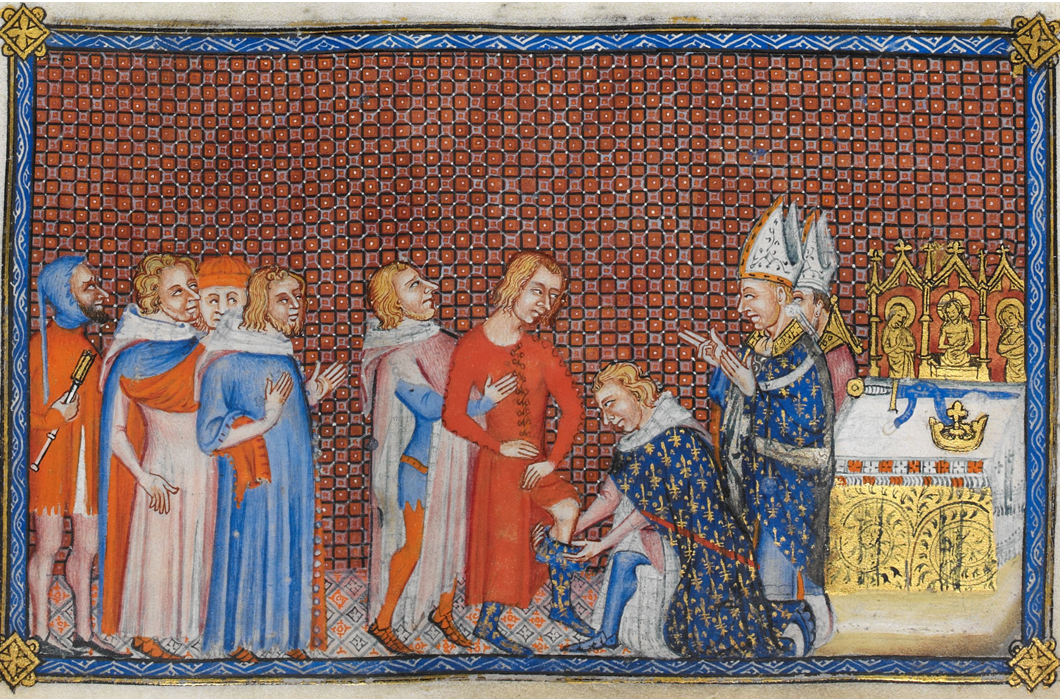
In 1364 Charles V (1338 -1380) was crowned as king of France in Rheims. The following year he commissioned a beautiful manuscript to commemorate the event – the so-called Coronation Book of Charles V.

