Does it pay to tell the real history about the Cathars to Cultural Tourists? Not really! And politically, it is silenced
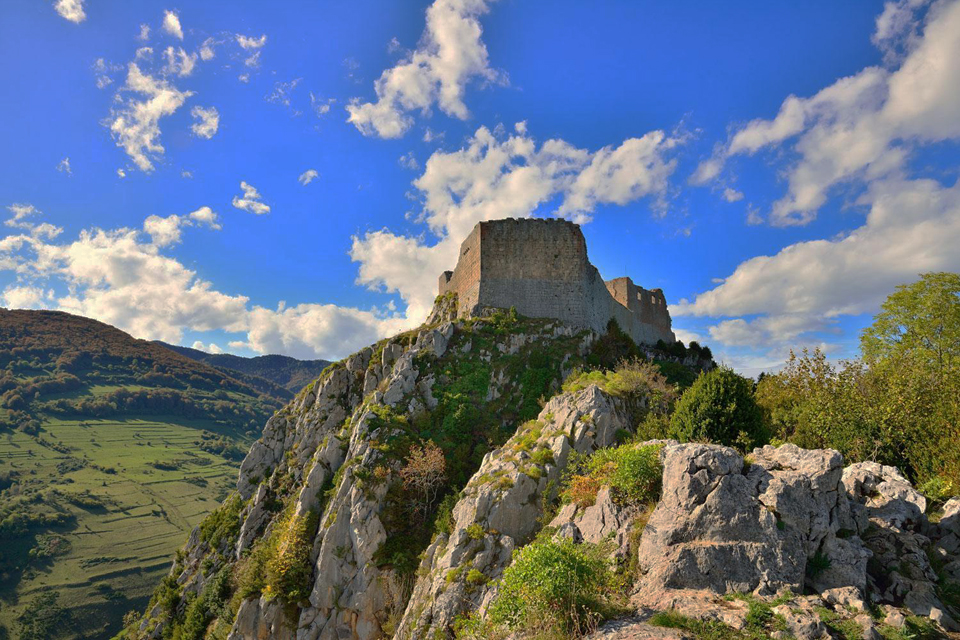
Anyone familiar with the history of the Cathars and the Albigensian crusade knows the story of the siege of Montségur in the Northern foothills of the Pyrenees. Here, in March 1244, the last Cathars took refuge in a castle situated high up on an impregnable hilltop. In the end, more than 10.000 soldiers took part in the siege of the castle, which was defended by approximately 100 fighters, 211 perfecti and a host of civilian refugees. The siege lasted for nine months before the Cathars finally surrendered. Afterwards c. 220 persons were burned en masse at the foot of the hill. They had refused to denounce their faith; those who did denounce were allowed to leave. Afterwards, the castle was destroyed.
But, as it stands today, the ruin of the castle has nothing to do with the events in 1244. Rather, it is a typical post-medieval royal French defensive architecture from the 17th century. As such it has also been excluded from the official Cathar itinerary promoted by the Aude Region
Nevertheless, it is marketed by the locals as well as the modern-day neo-Cathar enthusiasts as the most evocative centre of the “Pays Cathare”. Neither shies away from peddling ever more unpalatable myths, such as that the direction of the castle is said to be aligned towards the sun (this phenomenon – though never seen – should be visible on the morning of the summer solstice!). Also, the castle is known in esoteric circles as the castle of the holy-grail, irrespective of the fact that the Cathars did not believe in the corporeality of Christ, nor had any reverence for the Eucharist.
The question is, does this marketing work? According to a study carried out by the Catalan geographer, José Ma Prat Forga, it does indeed. Based on a survey conducted in the parking lot to the castle (417 individuals), he shows how there is a distinct correlation between prior knowledge of the real history of the Cathars and interest in visiting the site. However, such a correlation may also be detected among the people seeking out the place for its esoteric “qualities”. Thus app. 50% claimed that their interest was overwhelmingly historical, while app. 30% claimed that their interest had to do with knowing more about the Cathar religion and experiencing “the magic of the place”. The last 20% visited primarily because they had received a recommendation by others – family, friends, the internet etc.
However, how much did these visitors really “know” about the Cathar-phenomenon before visiting. To this end, the 417 visitors were also confronted with a series of questions intended to uncover their actual “knowledge”. For instance, one question asked was whether they believed that the Cathars believed in the sacraments of the Church and the Eucharist (an idea which has been circulated intensively by the “holy-grail industry”). About 53% of the visitors answered confirmative to this manifestly false statement. At the same time, more than 90% believed that the ruins on top of the hill were indeed those of the Cathar Castle, which was the scene of the last stand of the Cathars (which they are not).
The result was the same: the more people believed they knew, the more interest they had in visiting the place. The circumstance that they did not know anything factual did not seem to matter. Nor did it matter whether their “knowledge” was focused on the political (“real”) history or the more fancy fairy-tales peddled by the neo-Cathars. The result was the same: people visited.
One conclusion was that “to the promoters of tourism in the area, it seems much easier to maintain the stereotypes (whether pseudo-historical or esoteric) than to develop any sense of the real phenomena: the Cathars and the Albigensian Crusade”. If the object is to get tourists to pay tickets to the venues, buy the local produce and consume the food and wine of the terroir, it pays to maintain any false stereotype floating around. The object is not to disclose the strict truth about what happened at Montsegur or in the broader Cathar context. The objective is rather to promote a specific rural “non-place” as worth visiting. Of all the Cathar places, Montségur seems to be precisely this: the non-place par excellence. However, this has not deterred the local promoters, who seem to have succeeded.
The Story of the “Cathar Country”
An interesting fact is that this dilemma seems to have been a faithful component of the history of the development of the concept of the “Cathar Country”, as it unfolded from 1980 and onwards. As such, it continues to be a reflection well worth recapitulating for any medievalist dreaming of a job in the tourism Industry.
This story takes it beginning in the decentralisation processes, which were initiated in France after the socialists took over the government in 1981. As part of this shift, local groups were invited to go searching for their regional identities to develop the fringes of the French countryside, which was at that time undergoing a severe depopulation and at a frightening rate. The idea of the “Cathar Country” programme arose in this political context.
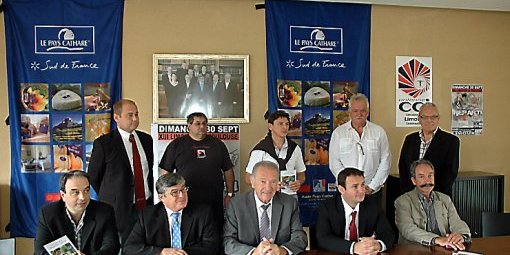
In this highly contentious landscape of the 80s, a peculiar institution, the Centre National d’Etudes Cathares or CEC, was established to fuel the administrative policing of the historical authenticity of the whole project. In the beginning, the work at the centre was deemed relevant by the managerial cadres of the project; not least because there was plenty of money being suffused into the programme from EU to develop this regional project, which Brussels, by the way, continues to regard as a state-of-the-art success story. Later, however, funds stopped dripping into the centre, and local in-fights between factions inside the centre succeeded in killing it off. Finally, in 2011 the regional coffers were closed, while the experts were sent packing.
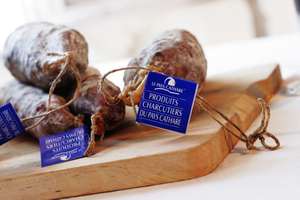
Today, the project has been monopolised by the local political leaders. They are busy turning it all into a well-managed business, building on the success of the implementation of the “Cathar Country Brand” (1994). With seemingly great success this effort has resulted in such diverse products as the “Cathar Country Chicken” and the “Cathar Country Charcuterie”. Needless to say, the right to use this brand is more heavily policed by the administrators than the right to market myths about the Cathar history!
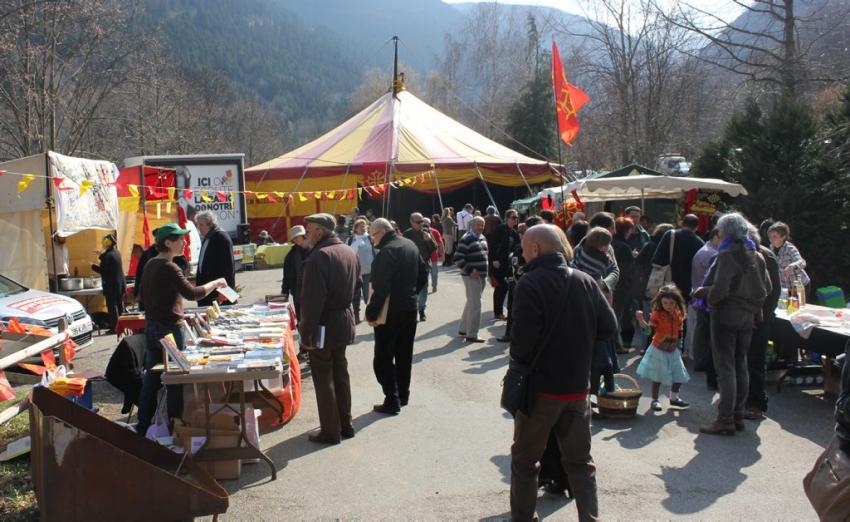
The result is that today’s visitors are invited to buy a passport to what is basically “a self-guided tour” through the territory, where road-signs point to places of special interest – primarily Carcassonne but also the ten castles, the eight abbeys and the ten small towns and villages singled out for their local atmosphere and authenticity. With their controlled visual stimuli, these sites are marketed as primarily material and architectural monuments intended to play the role as background for “medieval markets” peddling general medieval stuff. At the same time, the “real history” of the Cathars (both complex and contested) is subdued or even silenced. As well, the later re-imagining of the life and times of the Cathars, as it was used in the religious and political controversies between centre and periphery in France from the 19th century and onwards has turned into a story, which – certainly – is not told anywhere in the Pays Cathare today!
What the organisers in the Aude region seem not to have discovered is that this strict policy of disregarding the complex story of the Cathars basically creates a bland and indistinguishable local tourism industry. Akin to what was famously caricatured in Playtime, the film by Jacques Tati, when one of the American tourists asks, where they all are – and gets the reply: Well, today is Tuesday; then we must be in Paris! A quotation, Tati, by-the-way, pinched from the cartoonist, Leonard Dove.
Perhaps this is the future for the Cultural Tourism Industry: that tourists will stay away because it is no longer possible to tell Andalucia apart from the Pays Cathares?
The remedy? To refocus on the historical narrative of the Cathar movement and the Albigensian Crusade plus tell the specific story of the political and cultural reinventions of the Cathar tradition, which began in the 19th century and have continued up until now. And let this effort be inspired by the academic work, which has been carried out inside Cathar studies since the 1970s.
OFFICIAL TOURIST SITES:
SOURCES
La Revalorización de los territories de Interior desde la pseudohistoria: El Caso de Montsegur y los Cátaros.
By José Ma Prat Forga, Departanmento de Geografia, Universida Autónoma de Barcelona (UAB)
In: Turydes. revista de Investigacíon en turismo y desarrollo local 2013, Vol 6, n0 15
Negotiating authenticity: Cathar heritage tourism
By Lionel Bobot
In: Journal of Heritage Tourism, 2012, Vol 7, no.2 pp 163 – 177
The Use and Abuse of History: The Creation of the “Aude, Pays Cathare”. An example of the management of an historical and cultural patrimony?
By Pilar Jiménez Sánchez
In: Imago temporis. Medium Aevum, IV (2010): 373 – 398.
L’Histoire au service du territoire de projet: l’exemple du Pays Cathare
By: François Aussaguel
In: Yreballs de la Societat Catalana de Geografia, Num 74, desembre 2012, pp.199 -218
Pays Cathare, France: Case Study 2. Prepared for the European Commission 2009