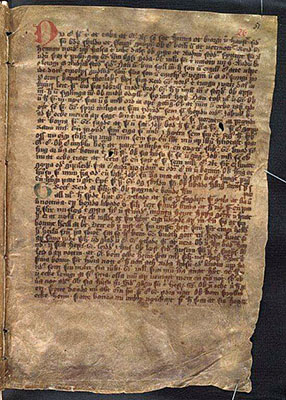
The Inscribing Environmental Memory in the Icelandic Sagas (IEM) is a new research project, which aims to link literary and historical studies of the Sagas to environmental records.
IEM aims to bring together scholars working on Icelandic/Scandinavian/North Atlantic history, literature, archaeology, environment, and climatic change.
Research clusters within NIES – Nordic Network for Interdisciplinary Environmental Studies , NABO The North Atlantic Biocultural Organization and GHEA The Global Human Ecodynamics Alliance, in cooperation with partner networks in the USA, the UK and the Nordic countries, have undertaken a major interdisciplinary research initiative that aims to examine environmental memory in the medieval Icelandic sagas, with a prominent focus on historical processes of environmental change and adaptation. The medieval Sagas of Icelanders constitute one key corpus, among numerous other literary and documentary corpora, to be investigated in this initiative:
The primary goal of the project is to consider evidence regarding environmental conditions and changes during the period ca. AD 850 to 1500. The information gathered will be related to how the environment was memorialized in the Sagas of Icelanders. There will be a particular focus on evidence of anthropogenic change to landscape and environment and how such developments may have shaped the writing of the sagas and their socio-environmental preoccupations. The sagas were committed to writing in the forms now largely preserved for posterity in the 13th through 15th centuries. The project thus also considers how changing environmental and societal conditions during this time period may have shaped an understanding of the past, including cultural foundation narratives and environmental lore.
These sagas are being examined alongside other textual sources and data sets that pertain to the period AD 850-1500. This time frame approximately covers the height and subsequent decline of Scandinavian sea-faring, migration and society building in the North Atlantic as inscribed in saga literature representing the Viking Age/Late Iron Age through the late medieval period. The period encompasses: the first large-scale human settlement and inhabitation of Iceland; major changes to landscape, environment and climate; various cycles of social turbulence and relative stability; the rise and fall of the Icelandic Free State; the transition of Iceland from a heathen to a Christian society; the rise of literacy and development of a particularly rich body of medieval narrative literature focused in large measure on the history, communities and environments of Icelanders, Greenlanders and other Norse and Celtic derived societies in the North Atlantic over the course of several hundred years. This time frame also happens to cover an extremely interesting period with regard to climatic and environmental changes. The project will examine historical sources that contain evidence regarding these changes, while also drawing on climate proxy data (already analyzed) in order to examine the relevance of terms such as the so-called “Medieval Climatic Optimum” and the “Little Ice Age”.
With a solid grounding in the environmental humanities and social sciences the IEM initiative examines environmental representation in the sagas alongside environmental markers in a variety of other documentary sources, in addition to material-cultural and palaeo-environmental data. The initiative seeks to foreground evidence of changing environmental conditions in Iceland, Greenland and Scandinavia from the late Iron Age through the pre-Industrial period, with a guiding focus on long-term human eco-dynamics and the relations among ecological change and adaptation, on the one hand, and resource management, social organization/conflict and resilience towards hard times on the other. Anchored in traditional fields of study (e.g. saga studies and various medieval-studies fields) as well as newer and emerging fields (e.g. integrated history and historical ecology, eco-criticism, digital and environmental humanities, etc.,), the initiative brings together literary scholars, anthropologists, archaeologists, historians, geographers, digital humanities specialists and environmental and life scientists in a coordinated set of sub-projects.
Irish scientists, who have dug into the Irish Annals and other written material to find evidence of major climatic changes and catastrophes, have recently published results demonstrating how to use such material.
SOURCE:
The Inscribing Environmental Memory in the Icelandic Sagas (IEM)
READ MORE:
Medieval Irish chronicles reveal persistent volcanic forcing of severe winter cold events, 431–1649 CE
By Francis Ludlow, Alexander R Stine, Paul Leahy, Enda Murphy, Paul A Mayewski, David Taylor, James Killen, Michael G L Baillie, Mark Hennessy and Gerard Kiely
In: Environmental Research Letters, Volume 8 Number 2
Read also about the recent analysis of a Midden in Hofstadir in Northern Iceland ca. 1300 (perhaps) revealing the response of the farmers and their families to changing climate and subsequent hard times.