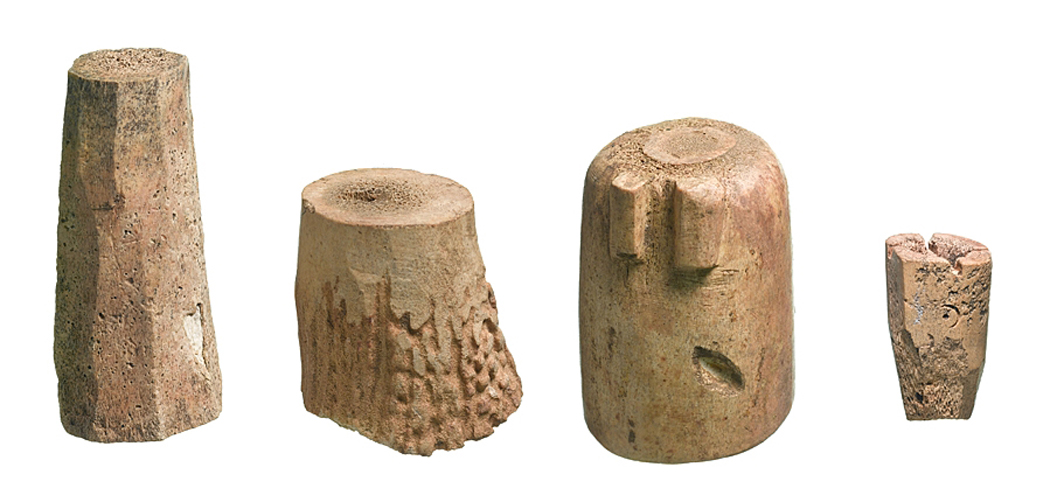
Excavations in Northampton have uncovered a 12th century workshop, where the owner developed a business carving chess pieces from antler-bones.
Northampton was originally a Saxon village, which Danish Vikings turned into a defended stronghold encircled by a ditch, an earth rampart and a wooden palisade. However, it was in the 12th and 13th century Northampton grew into a sizable city with a population of approximately 2.500-3000 around AD 1300. The impetus came from the first Earl of Northampton, Simon I de Senlis, who reportedly built the castle and the town walls. He also built the Holy Sepulcre, one of the three remaining round churches in England. Inspiration came from Simon’s participation in the First Crusade, which he joined in 1096.
Recent excavations in Angel Street in Northampton have revealed numerous artefacts and building structures from this early period. Some of the more prominent finds are two late 12th century chess pieces. The objects are unique in that they are both incomplete. Both were apparently discarded during their manufacture.
he recovery of numerous sawn offcuts from red deer and fallow deer antlers shows that there was a workshop here turning out sets of chess pieces in antler. This is the first time that such a workshop site has been identified, explains the archaeologist in charge of the Northampton excavations, Andy Chapman in the blog, run by MOLA (Museum of London Archaeology). He tells that
“The first piece found at Angel Street is a stylised head, 25mm long and 15mm in diameter. The flat top has been cross-cut to form a simple crown, and the face is marked by ring-and-dot eyes either side of an angled nose. The tapering lower part would have been inserted into the top of a larger cylindrical body to form either a King or Queen. It was discarded because in fashioning the right side of the face the spongy core of the antler was exposed, making it impossible to set a ring-and-dot right eye in the correct place, although a misplaced eye, too low and too close to the nose, was added, perhaps in a failed attempt to salvage the piece.
The second chess piece is a cylindrical length of antler, standing 42mm high and 28-32mm in diameter. The front has been cut back to form a pair of simple rectangular heads. One of the heads is broader than the other, probably because a sliver of antler broke away during manufacturing, and this may be why the piece was discarded. While some plain pieces have been discovered, it is more likely that they would have gone on to decorate the body with incised lines and ring-and-dot motifs. The paired heads indicate that the piece was intended to be a bishop, which in Europe had replaced the Arabic vizier, denoted by the tusks of the elephant on which he sat.”
The medieval chess pieces will be analysed by archaeologists alongside the other material from the Angel Street site: medieval pottery, a collection of bronze sewing pins, a finely-worked bone pin, fragments of rare medieval linen and serpentine marble etc.
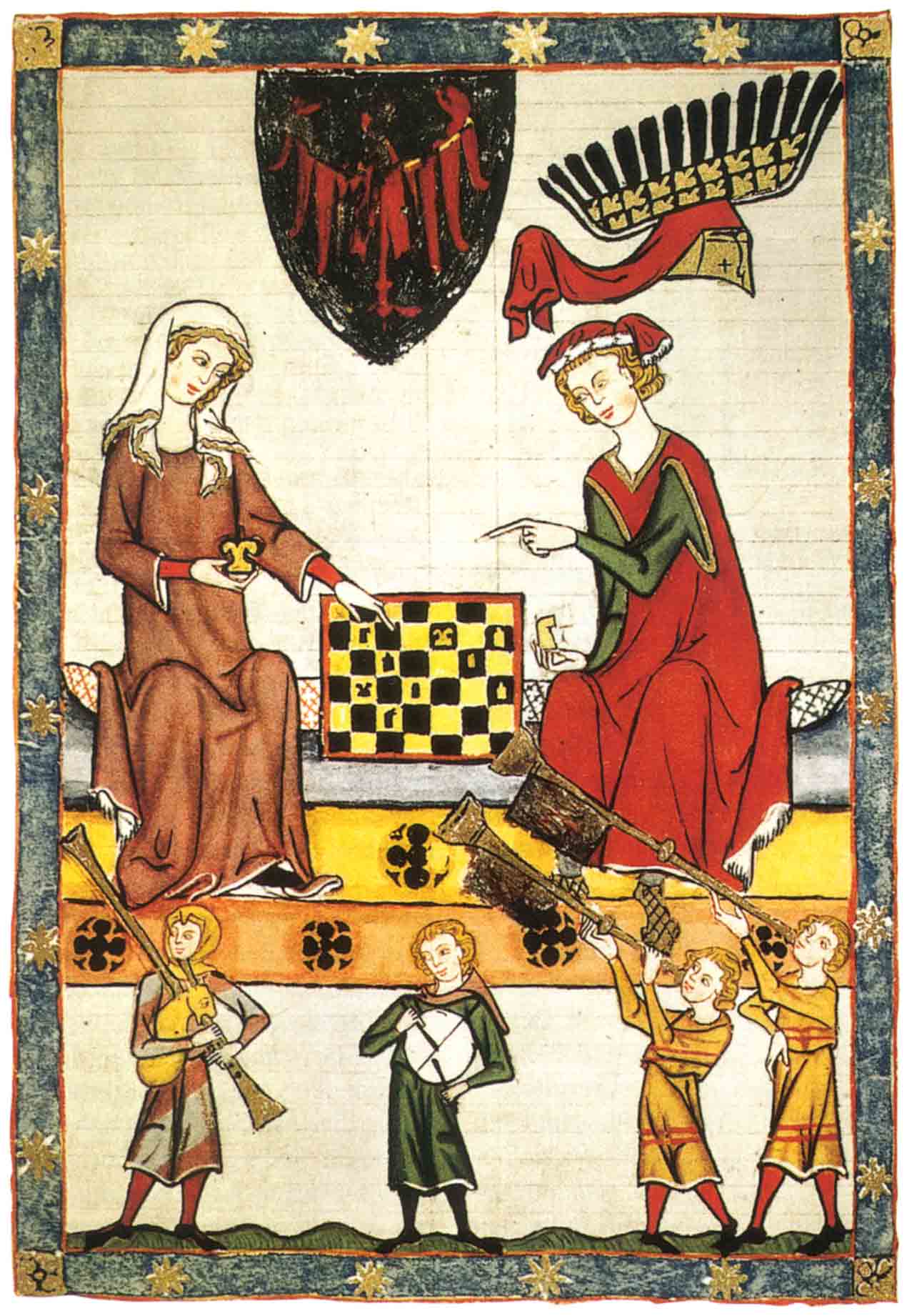
The game of chess came into Europe from the East through contact with the Arab world. A very early find is the Venafro chessmen found in Naples, which have been radio-carbon dated to AD 885 -1017. Other very early sets are the crystal chess-pieces built into the pulpit of Henry II in Aachen from about 1014. By the 12th century it was becoming a popular game at the upper levels of European society. The finest pieces were elaborately decorated and fashioned in ivory, and usually figurative, such as the famous chessmen found on the Isle of Lewis, Scotland.
However, the finds from Angel Street indicate that chess was gradually becoming a popular pastime in the population. This wider market was supplied by smaller pieces, which were often decorated with patterns of ring-and-dot motifs or with incised lines at the base. A number of such chess-pieces have been found in excavations at castles, abbeys, rural manors and larger town house. However, these finds are usual just stray finds of lost pieces. The finds from Angel Street are unique because they are the left-owners from what must have been a workshop located in the backyard of a small house or cottage located in a row in a backstreet in the medieval city, catering for ordinary people in search of some entertainment.