Neo-pagan Icelanders are planning to build a heathen temple in Reykjavik, but with a decidedly “Christian” Twist.
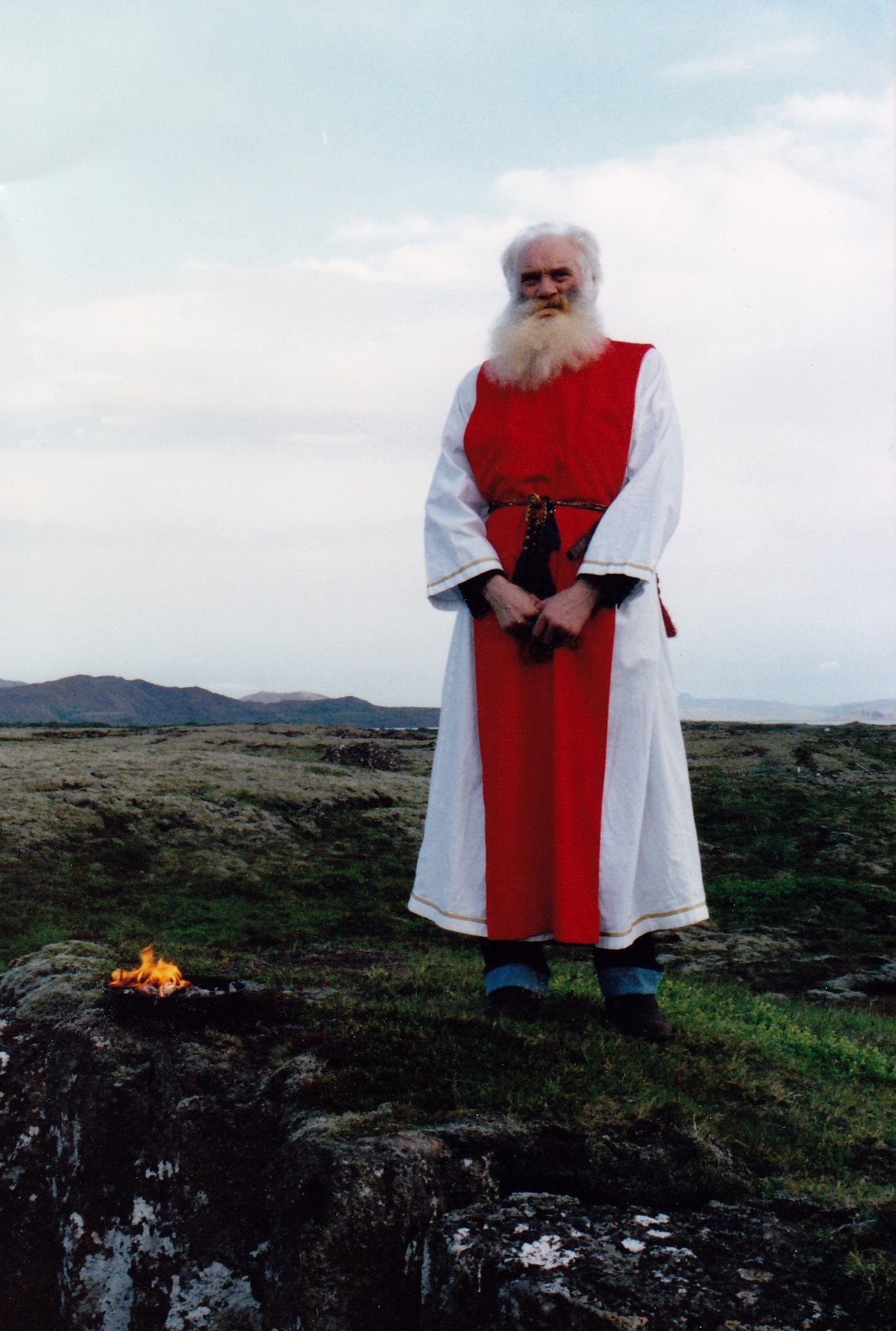
 Heathen Icelanders are planning to build a neo-pagan temple on the outskirts of Reykjavik. In an interview with Icelandic Radio the “alsherjargoði” (priest) Hilmar Örn Hilmarsson tells “that this will be the first heathen temple built on Iceland for a 1000 years. The amusing twist is of course that archaeologists and historians are unsure whether there ever were such buildings on Iceland, which might be characterised as “temples”.
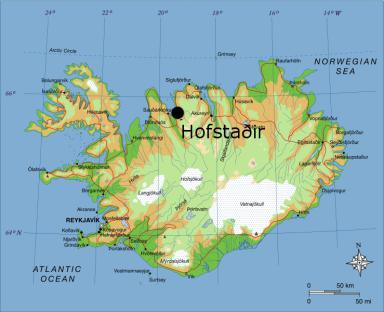
In late 19th century Iceland there was a surge in interest among historians to identify the temples and huge farms named in the Sagas. At the same time skeletons dug out of graves were cheerfully identified as historic persons named in the chronicles and other written material. One result was that the number of “known” temples soon reached almost a hundred. Although serious archaeologists soon began to dismantle the list, a few remained. Foremost among these was Hofstaðir, which was described in the Eyrbyggja saga. It tells how Thorolf Mostrarskegg had a temple built there
“…and it was a sizeable building, with a door on the side-wall near the gable. The high-seat pillars were placed inside the door, and nails, that were called holy nails, were driven into them. Beyond that point, the temple was a sanctuary. At the inner end there was a structure similar to the choir in churches nowadays and there was a raised platform in the middle of the floor like an altar, where a ring weighing twenty ounces and fashioned without a join was placed, and all oaths had to be sworn on this ring. It also had to be worn by the temple priest at all public gatherings. A sacrificial bowl (hlautbolli) was placed on the platform and in it a sacrificial twig (hlautteinn)—like a priest’s aspergillum—which was used to sprinkle blood from the bowl. This blood, which was called sacrificial blood (hlaut), was the blood of live animals offered to the gods. The gods were placed around the platform in the choir-like structure within the temple. All farmers had to pay a toll to the temple . . . The temple goði was responsible for the upkeep of the temple and ensuring it was maintained properly, as well as for holding sacrificial feasts in it.[1]
At first the description above – which so very obviously mimics a description of a Christian Church – was taken as the Gospel.
When Hofstaðir was first excavated in 1909 archaeologists thus found a very large feasting hall, 38 meters long and with a built-on extension in one end, which was identified as the inner sanctum or shrine of the heathen temple. Outside a large pit filled with ash, fire-cracked stones and animal bones was found. This pit was identified as a rubbish pit used for the remains of the large feasts, which the archaeologists imagined had taken place in the unusually large hall. Out of this grew the dominant hypothesis of the 20th century, the so-called “temple-farm” theory. The idea was that the heathens had gathered at the halls of the chieftains in order to sacrifice animals (as well as perhaps humans). Afterwards the chieftain and his clan would have feasted in the great hall.
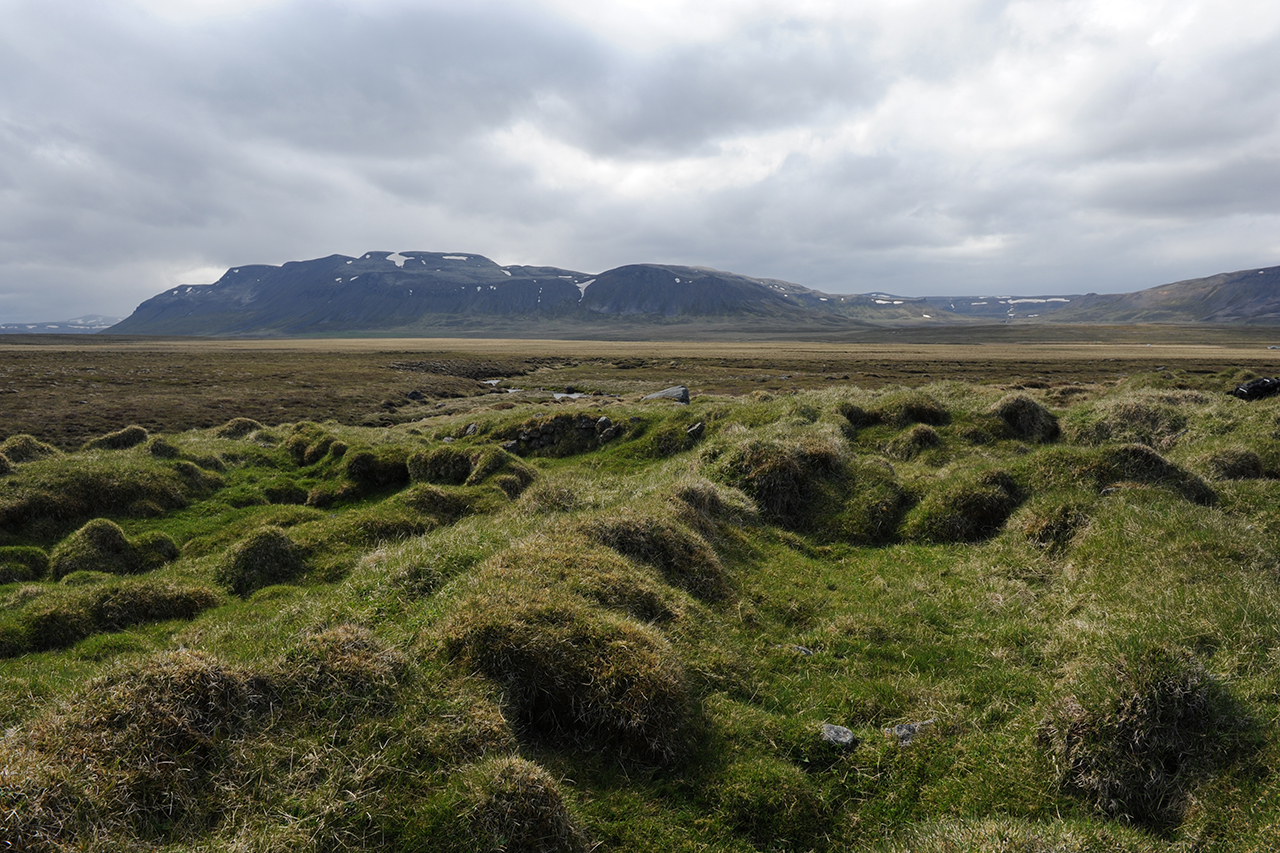
The following century witnessed a continued withering of this theory until only Hofstaðir remained on the list of potential “temples” in Iceland. Then, finally in 1992 archaeologists began once more to dig at the location and had to renew the evidence. Here they discovered that the pit was actually the ruined remains of a very early sunken hut built immediately after the Landnàm in 871 -72. Afterwards, when the hall had been built, the hut collapsed and the pit was used for refuse. The hall itself was now understood as the main building in a large Icelandic farm complex.
However, what they also found three groups of cattle skulls with abnormal butchering marks showing the animals had been slaughtered in a very peculiar way. Apparently one man had stood in front of the bull killing it with a blow between the eyes, while another person had simultaneously decapitated the beast by a powerful slash with his axe. The result would have been an animal with a still beating heart. This would have produced a spectacular fountain of blood splashing all over the scene and the people. Afterwards some of the skulls seem to have been displayed out in the open, as they showed clear signs of weathering. However, 14 skulls were found inside the “shrine”, while one skull was located next to the main entry-way. All skulls were found within collapsed walls and roofs indicating they had been suspended from rafters. The latest skulls were dated to AD 1000 at which point Christianity was accepted as the official religion in Iceland. App. 50 years later the use of Hofstaðir ended, while a church was built 140 meters away.
Some archaeologists have of course disputed this interpretation referring to the fact that skulls and vertebras of whales were routinely used as stools in a barren landscape where any kind of building or construction material was extremely scarce. On the other hand it seems pretty clear that the animals were killed in the spectacular way as outlined above. Why carry this out, if it had no particular significance other than being a banal slaughter? More reasonable is to believe that the word “blóta” did in fact refer to this act of sacrificing animals in connection with feasting.
It stands to reason though that such a ritual would necessarily have to take place outside. Other rituals might of course have been located inside potential temples. However, the fact remains that the oldest description of these heathen rituals – Runatál in Hávámal, part of the Poetic Edda – operates with three ritual elements: the animal (the sóa), the killing (blóta) and the giving or feasting (senda).
Such a ritual set-up does of course not need a temple to host it. What it needs is a place for slaughter and a hall for feasting. Apparently the hall might just be a large farm as was the case in Hofstaðir.
The New Temple
he fact remains that as of today no archaeologically excavated building on Iceland may reasonably be identified as a heathen temple. And only very few places in the rest of Scandinavia can be identified as such – Uppsala, Uppåkra, Lunda and Borg in Sweden, Lejre and Tissø in Denmark, Rannheim and Hov in Norway and perhaps Yeavering in Northumbria seem to have had buildings specifically dedicated to host religious rituals and/or large communal feasting.
This, of course, makes the new project in Iceland decidedly odd.
The organisation behind the project is called Ásatrúarfélagið (the association of-Asa believers). This association was founded in Reykjavik in 1972, when four men got together to celebrate the desire of Icelanders to have their own faith. Today the organization musters more than 2400 members. Ásatrú is a polytheistic and pantheistic belief and its followers see themselves as part of the earth and not their master. The organization conducts ceremonies such as marriages, name-giving ceremonies, and burials
In 2008 it received permission to build a temple at a plot in Reykjavik, Öskjuhlíð. However, the association lost a lot of money during the crisis and it has taken until now to proceed with the construction.
According to Hilmar Örn Hilmarsson, who is high priest (allsherjargoði) of the association, the temple will cover app. 350 m2 and hold 250 persons. The building will open up to the sun with light streaming into the vaults of a partially sunken “hut” covered with a dome, visualizing the female form and thus discoursing with the male phallic towers of churches otherwise dominating the skyline of Reykjavik. At the back of the temple will be an interior wall of bare rock down which water will trickle. This will be collected in streams and pools built into the floor intermingling with a fireplace near the altar. The idea is to let the in- and outdoors merge.
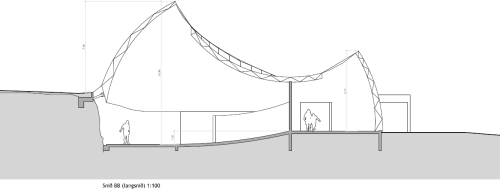
The local architect, Magnús Jensson, who has designed the future temple, is keen to stress that his inspiration has not come from traditional Viking buildings (halls), but rather from the timeless Icelandic nature. Nevertheless, the design does seem to reflect at least some avant-garde church buildings from the 20th century, for instance the sloping roof of the Chapelle Notre-Dame-du-Haut, designed by Le Corbusier or the church in Firminy, which is slightly built into the slope of a hill.
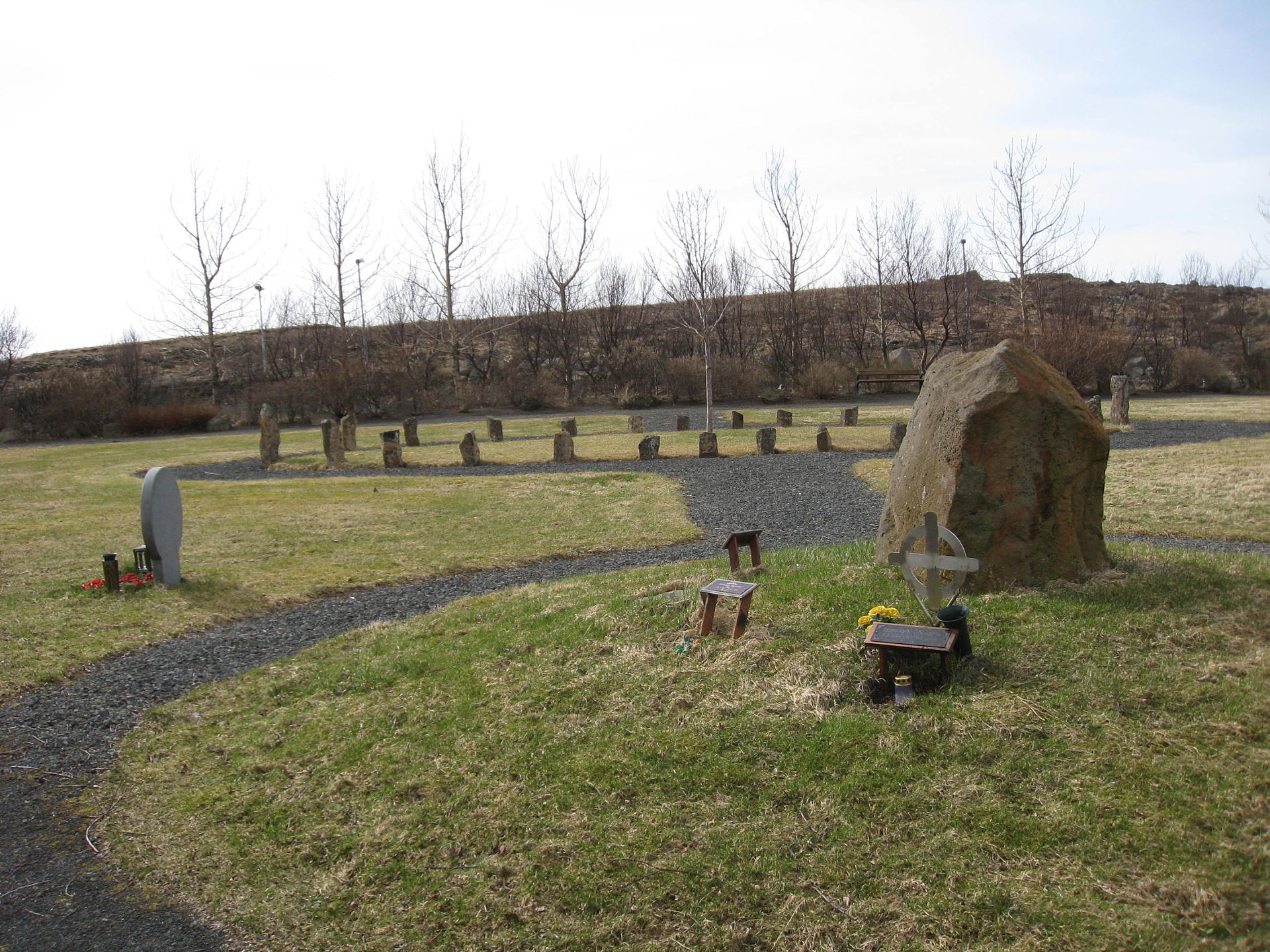
Further, the location will be near the heathen graveyard in reykjavik, another decidedly “Christian” feature of the new project (In old Iceland people were buried at or near their farms).
NOTES:
[1] “The Saga of the People of Eyri,” tr. Judy Quinn, The Complete Sagas of Icelanders, ed. Viðar Hreinsson et al., Reykjavík: Leifur Eiríksson, 1997, ISBN 9979-9293-0-8, Volume 5, pp. 133-34. Sections of the Eyrbyggja Saga have survived in fragments from the 13th century and in numerous manuscripts from the 14th century
SOURCES:
Construction of a pagan temple to begin in Reykjavík next month
Styttist í framkvæmdir við ásatrúarhof
READ MORE:
Hofstadir: excavations of a Viking Age feasting hall in north-eastern Iceland
Gavin Lucas (ed.) with numerous contributors.
Series: Institute of Archaeology Reykjavik Monograph 1).
Reykjavik: Fornleifastofnun Íslands (Institute of Archaeology, Iceland) 2009
ISBN: 978-9979-9946-0-2
Bloody Slaughter: Ritual Decapitation and Display At the Viking Settlement of Hofstaðir, Iceland.
Lucas, Gavin and Thomas McGovern
In: European Journal of Archaeology 2007, 10(1): 7-30.
Myvatn Landscapes Project – Reports
SEE MORE: