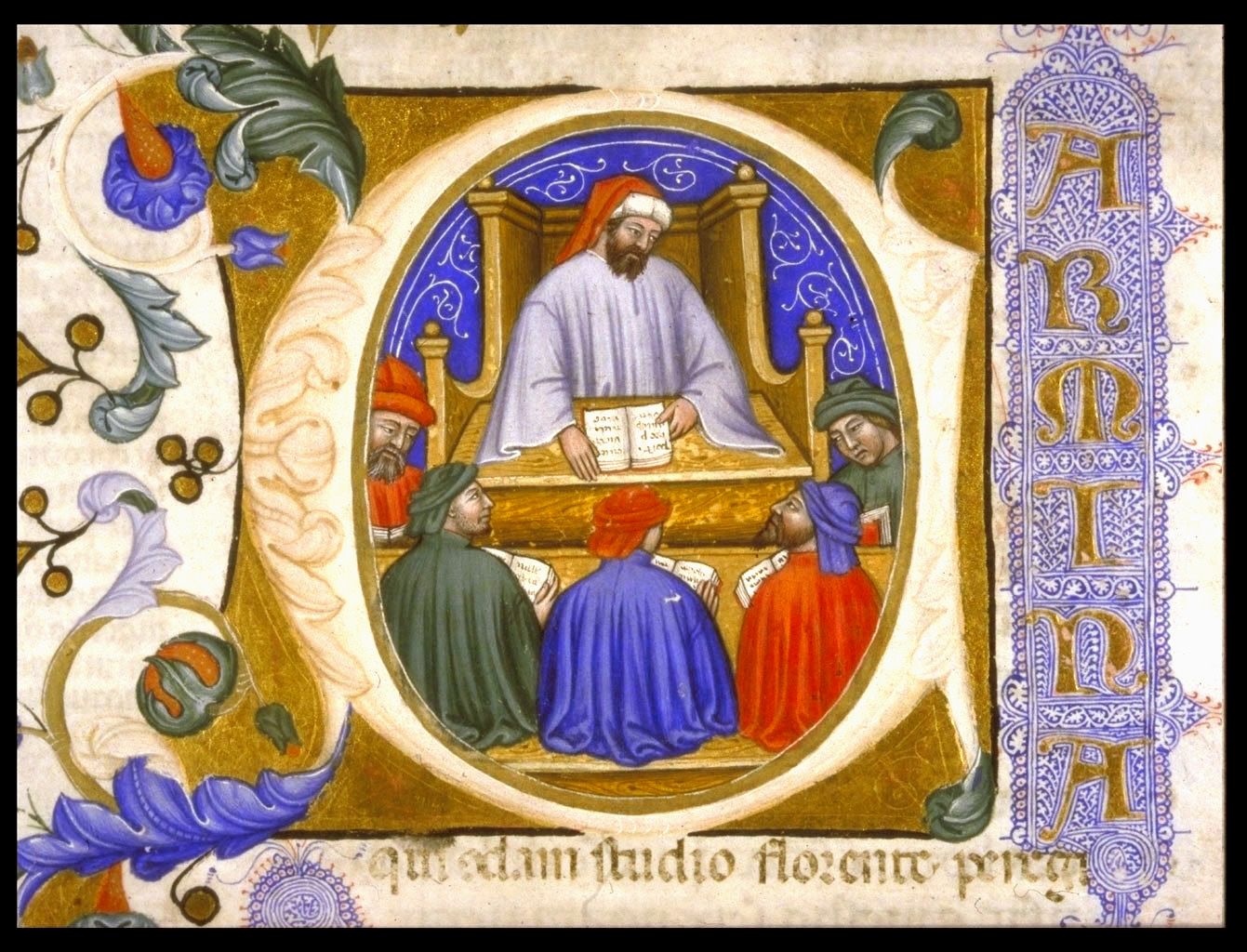
The German historian Johannes Fried is famous for his ability to makes the life and times of bygone people live in the minds of readers. New book from Harvard University Press is sure to be a bestseller
The Middle Ages
By Johannes Fried, translated by Peter Lewis
Harvard University Press 2015
ISBN 9780674055629
ABSTRACT:
 Since the fifteenth century, when humanist writers began to speak of a “middle” period in history linking their time to the ancient world, the nature of the Middle Ages has been widely debated. Across the millennium from 500 to 1500, distinguished historian Johannes Fried describes a dynamic confluence of political, social, religious, economic, and scientific developments that draws a guiding thread through the era: the growth of a culture of reason.
Beginning with the rise of the Franks, Fried uses individuals to introduce key themes, bringing to life those who have too often been reduced to abstractions of the medieval “monk” or “knight.” Milestones encountered in this thousand-year traversal include Europe’s political, cultural, and religious renovation under Charlemagne; the Holy Roman Empire under Charles IV, whose court in Prague was patron to crowning cultural achievements; and the series of conflicts between England and France that made up the Hundred Years’ War and gave to history the enduringly fascinating Joan of Arc. Broader political and intellectual currents are examined, from the authority of the papacy and impact of the Great Schism, to new theories of monarchy and jurisprudence, to the rise of scholarship and science.
The Middle Ages is full of people encountering the unfamiliar, grappling with new ideas, redefining power, and interacting with different societies. Fried gives readers an era of innovation and turbulence, of continuities and discontinuities, but one above all characterized by the vibrant expansion of knowledge and an understanding of the growing complexity of the world.
CONTENT:
- Preface
- Boethius and the Rise of Europe
- Gregory the Great and the New Power of the Franks
- Charlemagne and the First Renewal of the Roman Empire
- Consolidation of the Kingdoms
- The End of Days Draws Menacingly Close
- “The True Emperor Is the Pope”
- The Long Century of Papal Schisms
- The Vicar of God
- The Triumph of Jurisprudence
- The Light of Reason
- The Monarchy
- Waiting for Judgment Day and the Renaissance
- Epilogue: The Dark Middle Ages?
- Abbreviations
- Notes
- Selected Bibliography
ABOUT THE AUTHOR:
Johannes Fried was, until his retirement, Professor of Medieval History at the University of Frankfurt. He is known for his elegant end sensuous way of writing history, which has inspired countless students and readers and which makes even huge scholarly publications widely read. Of special importance is his biography of Charlemagne, published in 2014 in connection with the 1200-year anniversary of the death of the emperor.
Although it has caused some historians to be critical of the work of Johannes Fried, his ability to lead his readers to a heightened sense of people and places has not gone unnoticed. Famous is the controversy with another prominent medievalist, Gerd Althof, about the proper role of how to write history. The storm broke when Johannes Fried published a general introduction to German History writing: Der Weg in die Geschichte. Die Ursprünge Deutschlands bis 1024. (1994). According to Althoff, Fried’s style was “too suggestive” and characterized by “imaginary elaborations” above and beyond what the sources allowed. In his reply to this rather spectacular (and typical German) conflict, Fried answered that Althoff was critical because his “Althoffiana” had been put under siege. In general the verdict has been that the conflict was more of a conflict over turf, and that the historical writings of Johannes Fried has been immensely inspiring for new generations of historians. As has the work of Gerd Althoff!
FEATURED PHOTO:
From a 1385 Italian manuscript of the Consolation: Miniature of Boethius teaching. Boethius, On the Consolation of Philosophy Italy, 1385 MS Hunter 374 (V.1.11), folio 4r