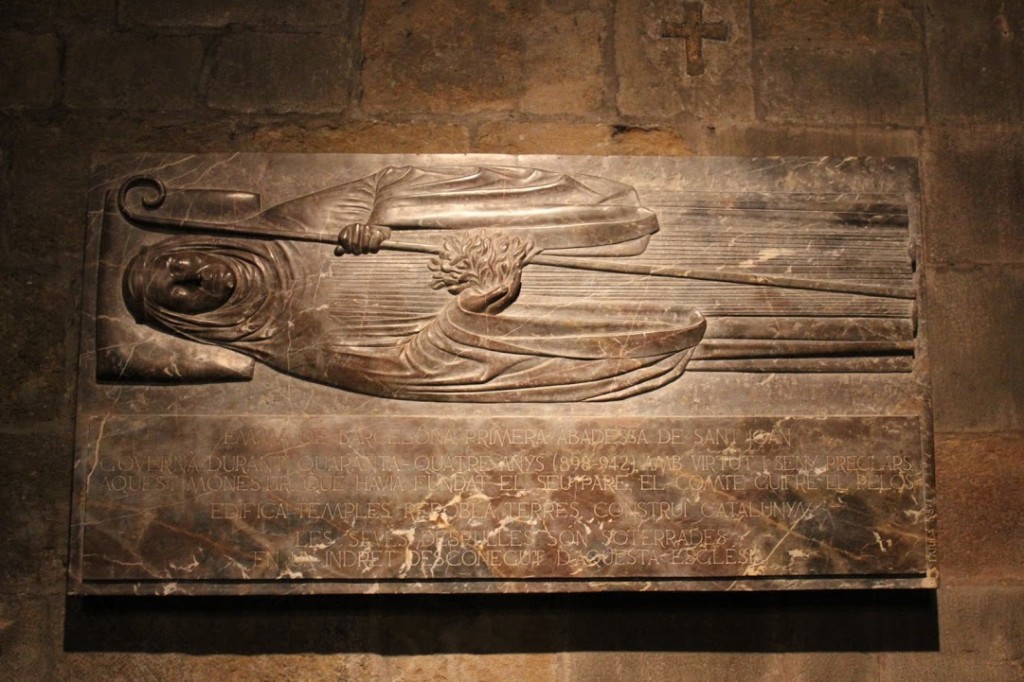
Sant Joan de les Abadesses is a Romanesque monastery located in the foothills of the Pyrenees. Recently a vast repository of photos were posted…
In winter the Nunnery of Sant Joan de les Abadeses (Monestir de Sant Joan de les Abadesses) in the foothills of the Pyrenees is cold, windy and dark; full of treasures, but difficult to see it all in its murky atmosphere. Adrià López Cruz recently posted 277 wonderful photos taken during the summer, making armchair travel possible…
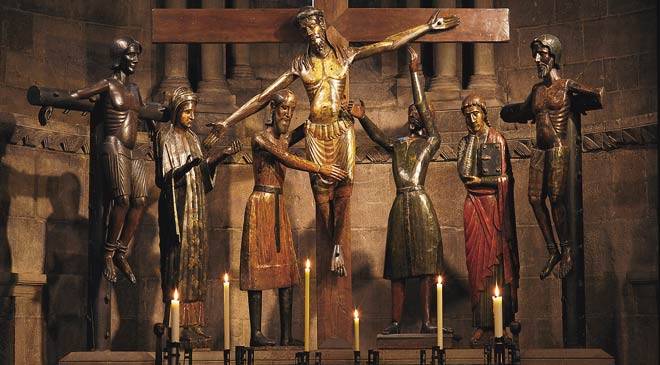
© Turespana
was founded at the end of the 9th century by the Count Guifré the Hairy, the founding father of the dynasty, which would rule Barcelona and later Aragon until 1410. Together with its sister foundation further down the valley, Santa Maria Ripoll, it was given to his children. Sant Joan de les Abbadesses was given to his daughter Emma, while her brother was oblated to Santa Maria. Both institutions were heavily endowed with land. While the archive of Santa Maria in Ripoll is long gone, the nunnery has in later years become famous for its large number of preserved documents and charters from the 10th and 11th centuries, which have been carefully explored by the medievalist, Jonathan Jarrett (known for his well-curated blog, A Corner of 10th-century Europe)
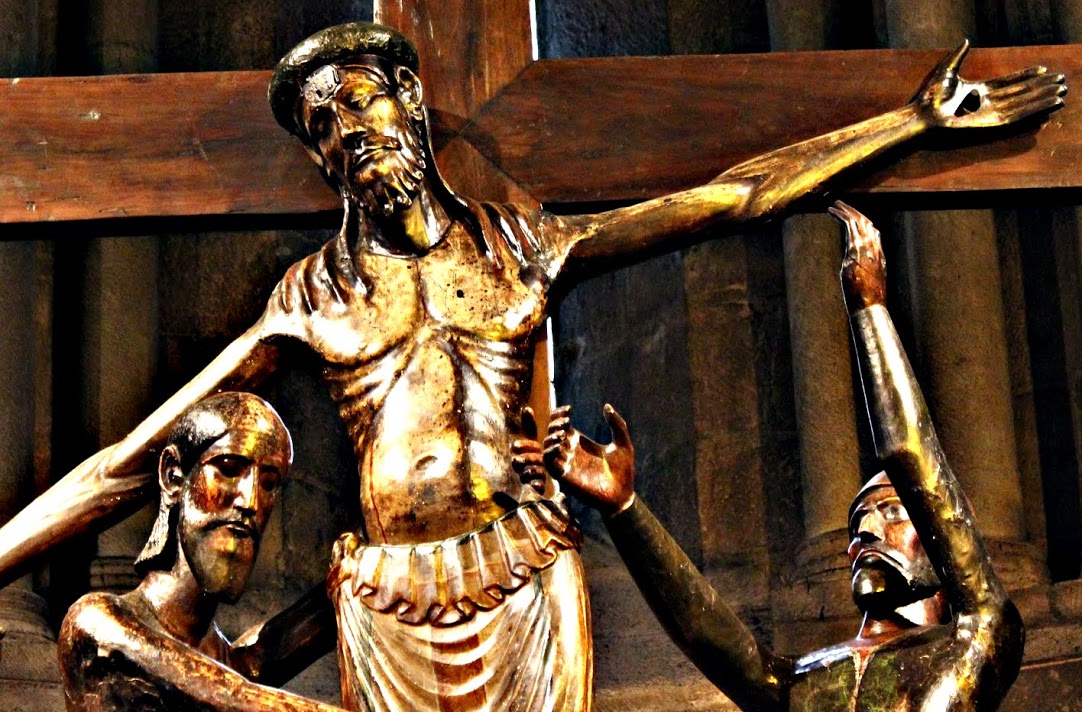
© Adrià Lopéz Cruz
In these documents Emma figures either as one of the principal actors or as a witness in 138 of app. 150, covering the period from 898 – 942 and we see her as bent on a strategy focusing on both “aggrandisement and self-protection”, as Jonathan Jarrett puts it.
The original building was probably built on the ruins of a former Visigothic monastery, but exactly how ruined is a question, we may well ask. The careful study of the charters has in fact uncovered the ruinous state of the church as well as the desert-like character of the countryside as no more than a convenient myth, created by Emma and her kin-group in order to explain the dominant lordship of the nunnery and its omnipresence in the Vallfogona.
The present building is from the 12th century. It houses an altar executed in 1434 by a Florentine artist and the famous “descension”, an outstanding carved group from around 1250 (worth a detour). Apart from that there are a large collection of Romanesque stone-carvings, of which many fragments are exhibited in the small museum located in the adjoining cloister.
Of these a “fragment of a tympanum with a representation of the Baptism of Christ in the waters of the Jordan River is particularly important. Its style corresponds to local production of the last quarter of the twelfth century, notably that of Ripoll…preserved work indicates a significant production of sculpture at Sant Joan, deriving from Ripoll as well as the Roussillon, but with definite originality, that spans the last quarter of the twelfth century.” [1]
SOURCE:
Castells Monestirs i Cathedrals
READ MORE:
Vallfogona and the Vall de Sant Joan: a Community in the grip of change
In: Rulers and Ruled in Frontier Catalonia, 880-1010: Pathways of Power pp 23 -72
By Jonathan Jarett
Boydell & Brewer, 2010
ISBN-10: 0861933095
ISBN-13: 978-0861933099
Power over Past and Future: Abess Emma and the Nunnery of Sant Joan de les Abadesses
By Jonathan Jarrett
In: Early medieval Europe, Vol 12, nr. 3 (Oxford: Blackwell 2004) pp. 229 -258
An Early Catalonian Charter in the Houghton Library from the Joan Gilli Collection of Medieval Catalonian manuscripts
By Nathaniel L. Taylor
In: Harvard Library Bulletin, New Series Vol 7, No. 3, 1996 pp. 37 – 44
PLAN A VISIT:
Monestir de Sant Joan de les Abadesses
Ajuntament de la Baronial Vila de Sant Joan de les Abadesses
______
By: Xavier Barral i Altet
In: Gesta, Vol. 18, No. 2 (1979), pp. 15-25