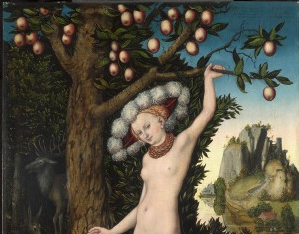
EXHIBITION: German Renaissance Paintings in the National Gallery are at the center of a major exhibition in London
The exhibition takes a fresh look at German Renaissance paintings in the National Gallery Collection, providing insights into the way these works were perceived in their time and in the recent past, and how they are seen today.
It focus on some of the best-known artists of the period, including Hans Holbein the Younger, Albrecht Dürer and Lucas Cranach the Elder. All famous artists in their own time, the exhibition will highlight the ways in which their paintings, drawings and prints were valued in the 16th century for qualities such as expression and inventiveness.
The exhibition also examines the evolution of the perception of German Renaissance art and the reasons why attitudes towards it were mixed in the 19th and early 20th centuries, especially in the context of the National Gallery Collection. While some viewers admired the artists’ technical mastery and their embodiment of a perceived German national identity, others saw these works of art as excessive or even ugly – particularly when compared to works of the Italian Renaissance.
This exhibition is the result of collaboration between the National Gallery and the University of York.
Strange Beauty
National Gallery, London
Sainsbury Wing Exhibition
19.02.2014 – 11.05.2014
READ MORE:
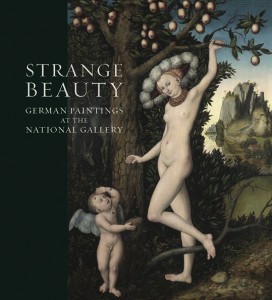
Strange Beauty
German Paintings at the National Gallery
By Caroline Bugler
Paperback, 112 pages, 70 color illustrations, price: £9.99
National Gallery London 2014, in Press
Publication date: 28 Feb 2014
ISBN: 9781857095708
ABSTRACT: This book of highlights from the National Gallery’s collection of German art presents masterpieces by some of the world’s favourite Renaissance artists – Hans Holbein, Albrecht Durer, Lucas Cranach and Adam Elsheimer – as well as wonderful paintings by later generations of artists including Caspar David Friedrich and Adolph Menzel. Spanning a wide variety of styles, their works share an extraordinary originality, inventiveness and technical mastery. Sitting at the heart of Europe, Germany has always been a melting pot for ideas from surrounding countries – the Netherlands, France, Italy, Bohemia, Poland and England. While individual cities developed into regional centres with their own artistic specialities, German painters also travelled widely. The disparate influences they absorbed fed into images that were sometimes classically beautiful, sometimes astonishingly realistic and sometimes disturbingly dark. The paintings on these pages range from devotional works and allegories to minutely observed studies of nature and characterful portraits, including Holbein’s imposing and amazingly lifelike portrayal of two close friends, The Ambassadors.