Subjects and Stories from the Old Testament are highlighted in a major exhibition in Munich...
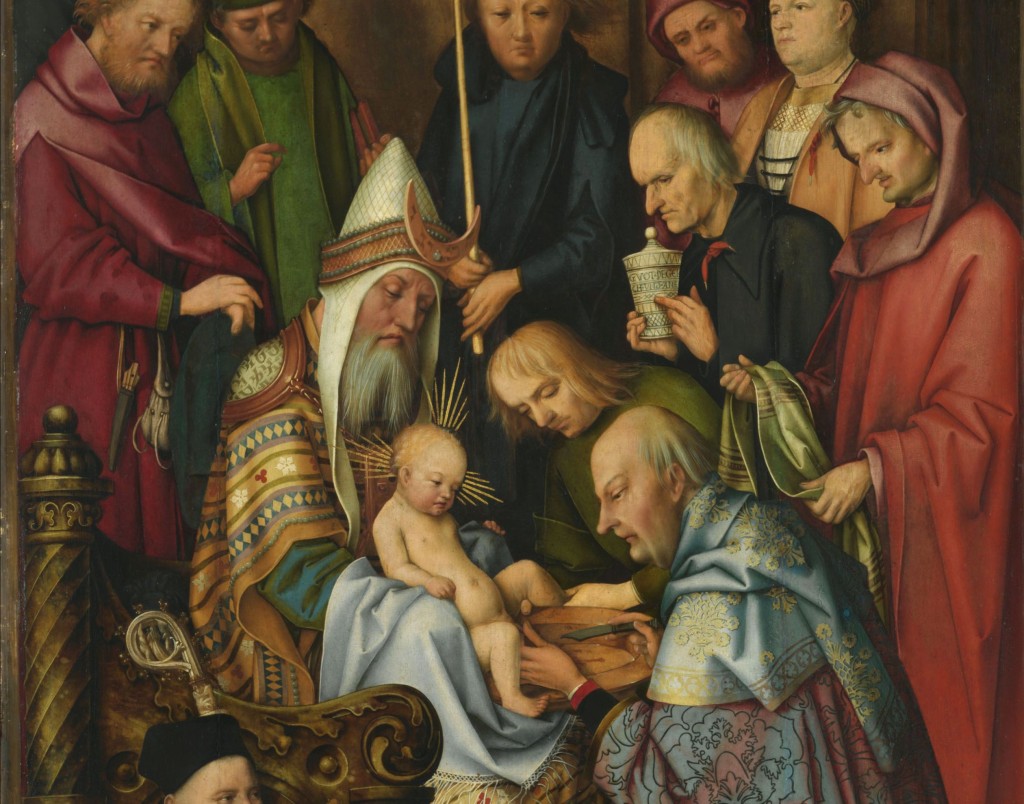
Subjects and Stories from the Old Testament are highlighted in a major exhibition in Munich...
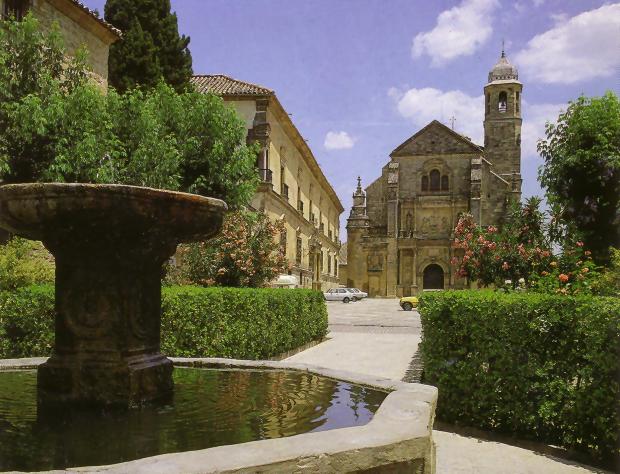
Baeza and Úbeda are twin renaissance cities. Come July the famous patios open their doors…
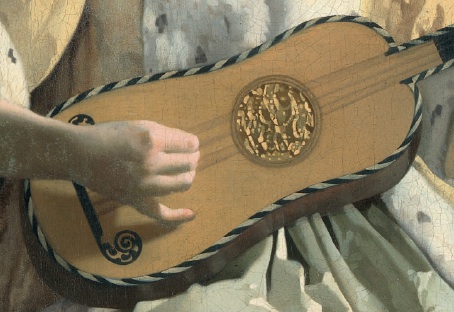
Three paintings by Vermeer of musical entertainers are brought together for the first time ever…
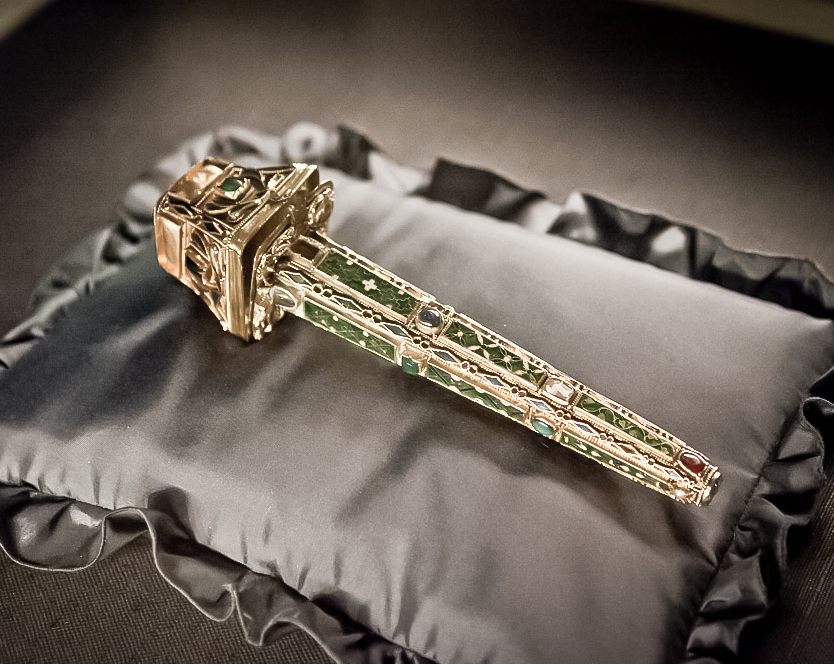
The splendors of the late Carolingians are exhibited in Mainz this summer...

The Eucharist in Medieval Life and Art is on view at New York's The Morgan Library & Museum...
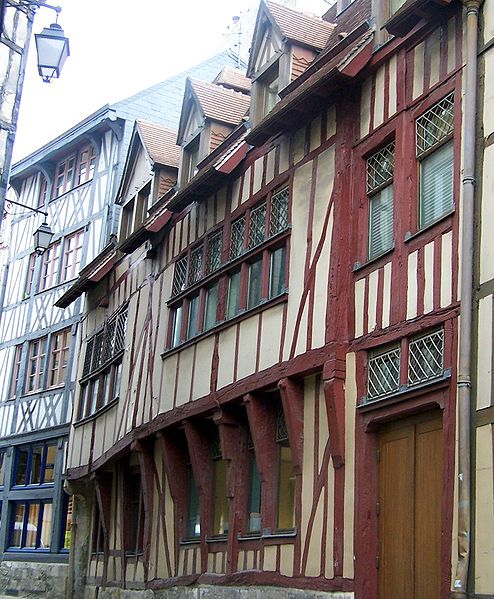
Jeanne d’Arc was burned at the stake in Rouen in May 1431. But what did the city look and feel like?
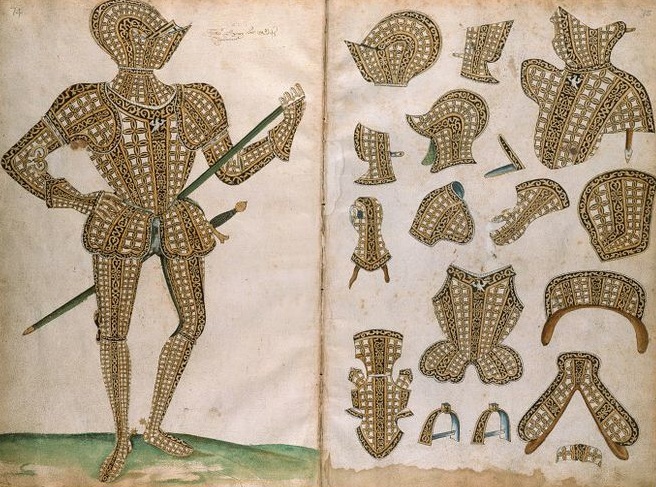
Treasures of the Royal Courts of the Tudors, Stuarts and the Russian Tsars shown at V&A…
Currently on show in Prague for only ten days, the Bohemian crown was made for the coronation of Charles IV in 1347
The Bohemian crown – the so-called Crown of Saint Wenceslas – has a somewhat curious form due to the setting of the jewels. It consists of a golden headband with a diameter app. 19 – 20 cm and 4.8 cm wide, and divided into four pieces. Each of these pieces is adorned with a curious fleur-de-lis composition, which rises up from the headband. All in all they each measure 12 cm in the height. Fixed to these are four arches in the form of bejewelled bands ending in a hollow cross at the apex, presumably filled with a relic, a thorn from the Crown of Thorns, which was presented to the Queen Elisabeth in 1326 by the French King.

However, the jewels adorning the crown are the most spectacular part. At the front is an uncut sapphire weighing more than 40 carat. Around it are placed six spinels. Together the ensemble looks like a cross. Corresponding jewels are found on the other four sites. Originally it was adorned with only red and blue jewels. However Charles IV kept elaborating on the design, probably reusing a belt, which was presented to his Queen, Blanche, from her brother, the king of France. In its present – imperial – form it was finished in 1374 – 1378 and carries 19 sapphires, 44 spinels, 1 ruby, 30 emeralds and 20 pearls. Apart from the six magnificent sapphires (belonging to the group of the ten largest in the world), the cross at the apex of the crown holds a small but beautiful cameo with a rendering of the crucifixion. Probably this Byzantine cameo was part of an earlier Bohemian crown – the crown of Ottokar II – which it was definitely designed to emulate. All in all it weighs app. 2.5 kilo. The curious look stems from the way in which the jewels have been set on small protruding postaments. With a background of solid gold the jewels are stopped from being enlightened, which gives the viewer a less than ephemeral experience. On the other hand the massive ostentatious character as seen from afar must have been impressive.
The crown was made to serve two purposes. One was to be used as the crown of the residing king and his dynasty at coronations or other likeminded occasions. If used as such it was to be returned the same day to its regular place of keeping in the Cathedral of St. Vitus, where another purpose was to serve as a reliquary for the thorn, to be kept in the new chapel of Saint Wenceslas (907 -935), which Charles IV had built in the Cathedral of St. Vitus as a parallel to the Sainte-Chapelle in Paris. As such the crown was supposed to be placed on the head of a bust in which the skull of the saint was kept, literally crowning him with a thorn from the Crown of Thorns. In connection with this, the king composed a liturgy for a special annual feast, which was supposed to culminate in showing off the imperial treasury in the centre of Prague, including the crown, thus advertising the protection of the saint of the land, the dynasty and the city of Prague.

Apart from the Crown of Saint Wenceslas, The Bohemian Crown Jewels, include a royal orb and sceptre from the beginning of the 16th century, the coronation vestments of the kings of Bohemia, a gold reliquary cross, and St. Wenceslas’ sword with a blade from the 10th century.
A curious ritual
The ancient Bohemian Royal Insignia are kept under lock in the cathedral of St. Vitus by seven Czech dignitaries – the President of the Republic, the Prime Minister, the Prague Archbishop, the Chairman of the House of Deputies, the Chairman of the Senate, the Dean of the Metropolitan Chapter of St. Vitus Cathedral and the Mayor of Prague. According to a tradition from the 18th century all must convene in order to facilitate the opening up of the impenetrable door into the crown chamber found in the chapel of St. Wenceslaus in the St. Vitus Cathedral at Prague Castle. Here the crown has been kept since 1867 apart from short periods, when it was walled away in 1945 or on show.
This happens very seldom. In the course of the twentieth century the coronation jewels have only been exhibited eight-times – in 1929, 1945, 1955, 1958, 1968, 1975, 1978 and 1993. The show this year is occasioned by the election of a new president, Miloš Zeman, but will last only for ten days. Further it is only about 5000 people, who are allowed into the hallowed hall every day, which means that no more than 50.000 will have the opportunity to see the crown jewels before they are locked away again for at least five years.
To say it mildly, this is a curious ritual in a modern secularised state, where the population by far is one of the most atheist in Europe. According to a Eurobarometer Poll from 2005 nearly a third of the Czechs do not believe believe in any kind of spirit, God or life force. Of the rest only 19% believe in God or consider themselves religious. These results were confirmed by a Gallup Poll in 2012. Sociologists might consider the unveiling and exhibiting of the crown jewels in Prague a kind of civil religion. However, the interplay between the elected politicians and the Catholic dignitaries holding the keys to royal insignia witness to a nation with a slightly muddled identity. Elsewhere in the 21st century such national treasures are continuously exhibited to the delight of art historians and cultural tourists be it in Royal Collections or treasuries of Cathedrals…
About the exhibition at the official website of the Castle of Prague
see a video from the opening of the door in the Chapel of St. Wenceslas
See a photo gallery of the Crown of Wenceslas here
READ MORE:
The Czech Coronation Jewels.
Unknown History – Hidden Messages – Long-lost Symbols
By Jan and Thomas Bonek.
Eminent 2005
ISBN: 978-80-7281-221-9
Autobiography of Charles IV of Luxemburg, Holy Roman Emperor and King of Bohemia (Central European Mediaeval Texts)
Edited and translated by Balazs Nagy, Paul W. Knoll and Frank Schaer
Publisher: Central European University Press 1999
ISBN-10: 9639116327
ISBN-13: 978-9639116320
Die Sankt Wenzelskrone im Prager Domschatz und die Frage der Kunstauffassung am Hofe Kaiser Karls IV.
By Karel Otavsky
European University Studies. Series XXVIII, History of art.
Peter Lang 1993
ISBN-10: 3261045167
ISBN-13: 978-3261045164
In Heaven and on Earth: Church Treasure in Late Medieval Bohemia
By Katerina Hornícková
Thesis submitted to Central European University
Department of Medieval Studies, Budapest 2009
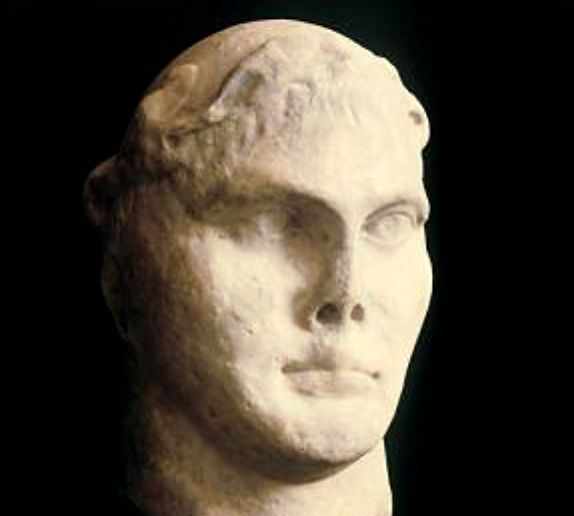
1700 years ago the edict of Milan granted full tolerance to Christianity and other religions...
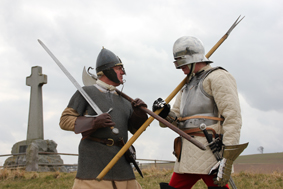
1513 an English army defeated James IV and his invading army at Flodden in Northumbria...

Earthly Bread and Heavenly Food…
Cabinet exhibition on the occasion of the Eucharistic Congress in Cologne.
The Catholic Church venerates the consecrated host as a symbol of the presence of Christ resurrected. In the Middle Ages Cologne was among the first cities in which on the feast day of Corpus Christi the body of Christ was carried through the city in a procession. For this occasion splendid monstrances were created, one of which is at the heart of this exhibition. Paintings and prints from Cologne from the Middle Ages to the modern era illustrate the veneration of the consecrated host through the ages. Today, as in the past, the celebration of the First Communion is at the centre of Eucharistic devotion.
Earthly Bread and Heavenly Food
Kölnisches Stadtmuseum
18.05.2013 –30.06.2013

Silk not Sin – Ceremonial Garments for the Preparation of the Holy Mass.
In the Middle Ages great attention was paid to the preparation of the celebration of mass. By the ritual laying on of clerical vestments accompanied by vesting prayers, priests and bishops completed a transition from the secular to the sacred. Beginning with precious undergarments – these rare items will again be on display for the first time since 1985 at Museum Schnütgen – the exhibition follows the cleric step by step in the solemn preparatory ceremony up to the combing of the hair and washing of the hands. Precious treasures of ecclesiastical textile art including an undergarment from the 14th century and the medieval vestments from the church of St Andreas are presented together with liturgical objects such as the famous ivory comb of St Heribert.
Museum Schnütgen, Köln
23.05.2013 – 24.08.2014

Charlemagne influenced a great deal in Europe. The changes and innovations brought about by him in many areas shaped the foundations of our culture. The 28th January 2014 marks the 1200th anniversary of the death of Charlemagne. On this occasion the Swiss National Museum will be devoting a large temporary exhibition to Charlemagne (741 – 814) and “Carolingian Switzerland”. The Exhibition will show what changed under Charlemagne, what effect his reforms had on education, faith and society and which innovations were made in art and architecture. Embedded in the European Context, the emphasis will be placed on Switzerland’s cultural heritage from Charlemagne’s time. The time frame will cover his reign of 771 – 814 through to the treaty of Verdun 843. Some topic areas will also take a look at the Merovingian period and the late 9th century. The exhibition is being prepared in close collaboration with the simultaneously planned book project “Die Zeit Karls des Grossen in der Schweiz” under the leadership of prof. Dr. Georges Descoudres, Dr. Jürg Goll and dr. Markus Riek. Project manager is Christine Keller.
Charlemagne and Switzerland
20.09.2013 – 02.02.2014
National Museum Zurich