Is the silver figurine from Lejre representing Odin? Freya? Or perhaps a völva, a Viking sorceress? Many interpretations have been put forward
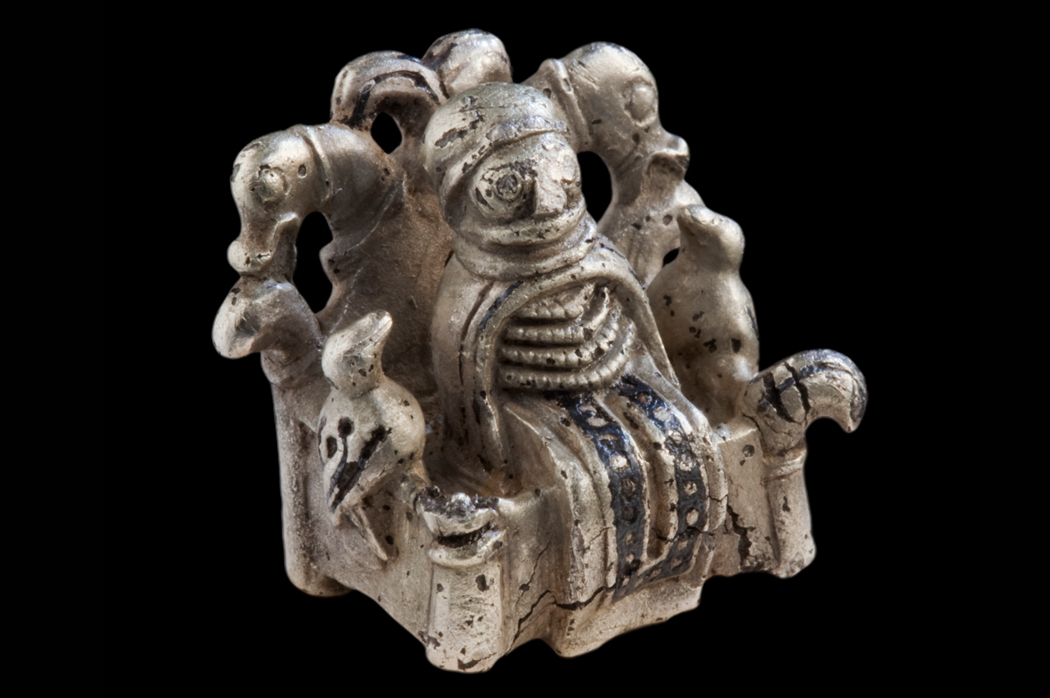
Is the silver figurine from Lejre representing Odin? Freya? Or perhaps a völva, a Viking sorceress? Many interpretations have been put forward
Viking warfare and plunder is a keynote for the Viking 2013 exhibition in Copenhagen...
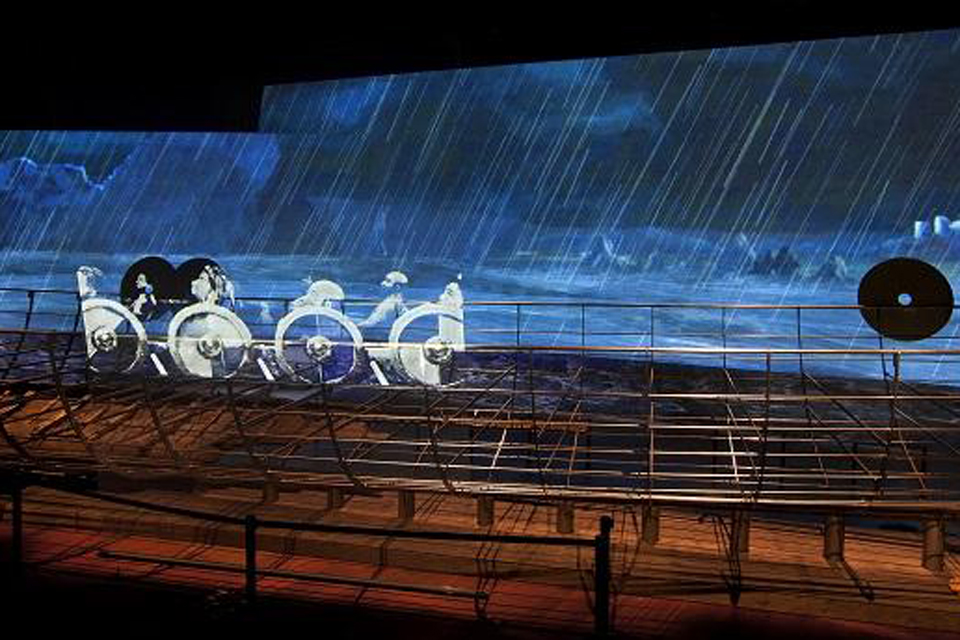
Heave to Copenhagen, where the Viking 2013 is on show all summer and autumn at The National Museum...

The Viking economy of gifted splendour is the third angle of the exhibition Viking 2013...

The world of Viking myths and religion is the fourth part of the exhibition Viking 2013...
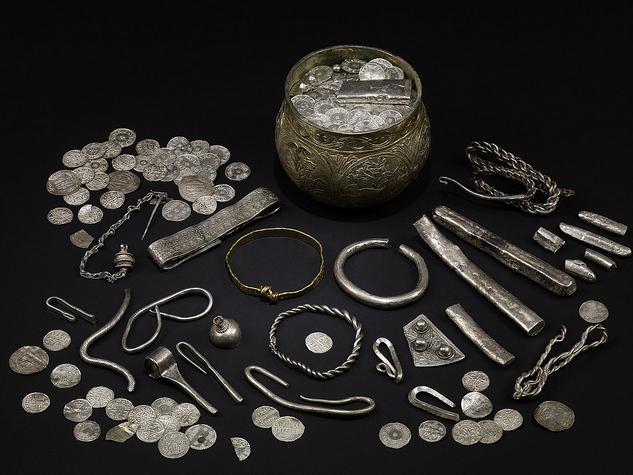
Material Viking Culture was inspired by plunder and trading ventures...
NEW RESEARCH: Odin from Lejre as challenger of hegemonic orders...
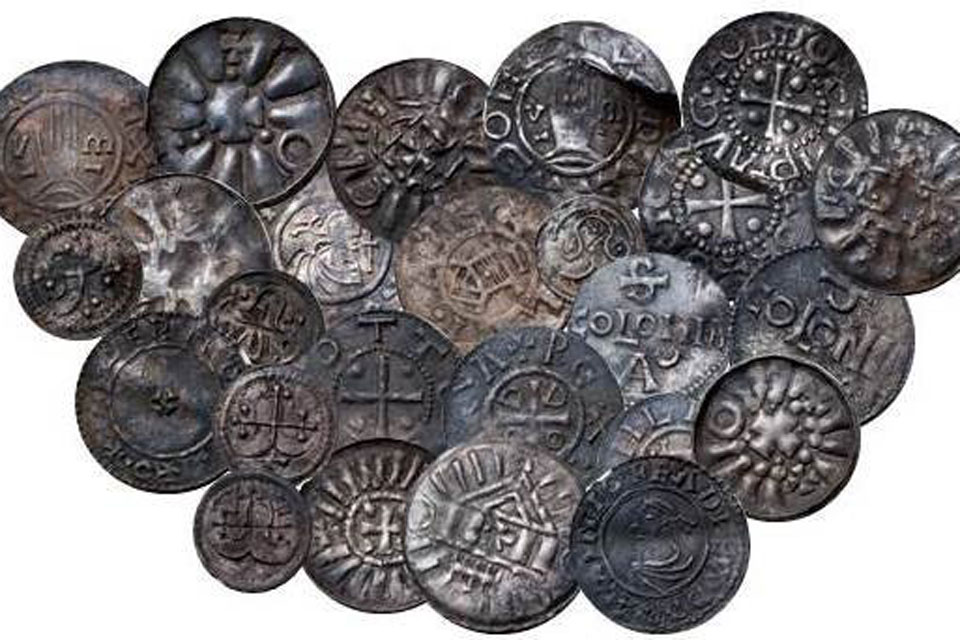
Spectacular new find of a Viking hoard sheds new light on the Cross Coins of Harold Bluetooth

New excavations are expected to help date the Viking palisade in Jelling accurately...
Exploring the eco-friendly aspects of Viking life, children are shown how they too can ‘live like a Viking’

Viking heritage tentatively listed as world heritage...
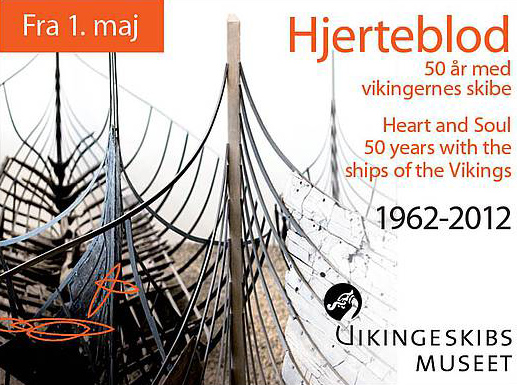
Exhibition tells the story of 50 years with the Viking-ships in Roskilde...
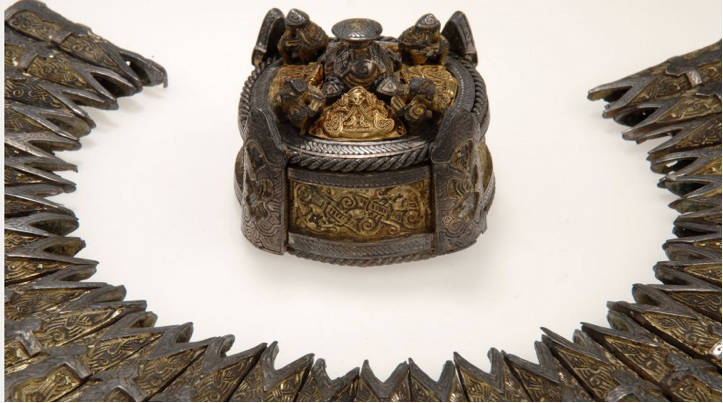
Vikings is a major exhibition spring 2013 in Edinburgh...

New Nordic Viking Food 2013.
New Nordic Food was a concept launched in 2003 when Danish Cooks and Food-writers got together and wrote a manifesto in order to create a New Nordic Kitchen. The manifesto stressed purity, freshness, respect for the seasons and locally – Nordic – sourced ingredients. One object was to promote the rejuvenating of local producers and traditional production methods. As is wellknown, one result was the creation of the restaurant Noma which has been ranked as the world’s best restaurant three years in a row. Another result was a study of what happens to the obesity of people, who adopt a diet based on these principles, the New Nordic Diet. The results of this scientific study was remarkable: While the ordinary dieters lost 1.6 kilo on average inside 12 weeks, the Nordic Dieters lost 3.1 kilos in the same period. Highly recommendable! –
New Nordic Viking Food 2013
Finally, a third spin-off – New Nordic Viking Food – was launched last year, when cultural historians at the Viking Ship Museum in Roskilde teemed up with culinary historian and archaeologist Bi Skaarup and a local restaurant Snekken, located at the harbour next door.
The object was to develop a new food–concept inspired by the Vikings.
A few of the inspirational features are
– and lots of beer
So-far a cooking book is only being discussed…
A Modern Viking Meal:
Get the recipes for Salt Beef, Glazed Rootbeets and a plain Sourdough-Bread..
 Get the recipes for Salt Beef, Glazed Rootbeets and a plain Sourdough-Bread..
Inspired by the work at The Viking Ship Museum in Roskilde in Denmark, Culinary Historian Bi Skaarup and the restaurant near-by: Snekken
Prepare a brine of 2 litres of water, 200 gr salt, 75 – 100 gr of honey and add junipers, wild garlic, thyme, fresh ginger and some dried rose hips. You can go wherever you fancy with the flavourings. Bring the mixture to boil and let it cool. Take half a brisket (the boned belly from an ox) and place it in a heavy-duty re-sealable freezer bag and ladle the brine over it. Reseal and place in the refrigerator for at least 10 days (turning it around once every day). To use it, open the bag and clean the meat for excessive brine under cold running water (don’t overdo this as the meat will then turn “hard”). Place in a pot filled with cold water and set to boil – preferably on an open fire – and cook it slowly for at least 2 – 4 hours until really tender (when a skewer may be passed through with alarmingly little resistance). To the water may be added sliced onions, carrots, kale and wild herbs like nettles, thyme and wild garlic. Be sure the meet is covered during boiling (add extra water if necessary).
Tip: don’t discard the soup in which you have boiled the beef. It is great to use next day for boiling a lot of roots and serve as soup with sourdough bread.
Two onions and 300 gr rootbeets are peeled and chopped (1cm3). Braised until half tender, 2 dl white wine (or a mixture of apple vinegar and water to taste) is added together with 3 dl chicken fond. Cook until liquid is reduced by half and taste with salt, pepper and honey.
Starter
Mix 150 gr white flour, 75 gr whole grain flour and 75 gr rye flour with 9 dl of water from the tap plus a teaspoon of salt and a teaspoon of honey (1 dl flour to 2 dl water). Whip it carefully and let it stand in a glass container on the kitchen-table for app 10 days. Keep a lid on but only partially, as the mixture needs to breathe. Carefully stir at least once a day. About 10 days afterwards the mixture should be bobbling and smell like homebrewed dark beer.
Bread
Mix half of the starter (conserve the rest in the refrigerator) with 5 ½ -6 dl water and 10 gr fresh yeast, 200 gr coarse wholegrain flour (as course as you can get it) 700 gr sifted flour and 1 tablespoon salt. Use the Kitchen Aid for about 10 min. Then place the dough in an oiled container in the refrigerator for 24 hours.
Turn the dough out on the table, cut one third away for next batch and keep in the refrigerator. The dough is then split into two, and formed into loaves. Left to raise again for 1 – 2 hours, the reset a bit and bake in a very hot oven. Set it to 250° C and place a pan in the bottom with. When the loaves on the baking sheet are loaded, tip a dl water into the pan in the bottom (the steam is what makes the bread deliciously crusty). Bake for 5 min and then turn the heat down to 230° C and bake for 25 min. Fabulous while fresh from the oven, but try to reserve some and toast it the next day.
READ MORE
The focal point of the Viking exhibition 2013 will be the world's largest known Viking ship. Measuring 37 metres it will surely amaze visitors