Home » Archives for Medieval Histories » Page 58

Author: Medieval Histories

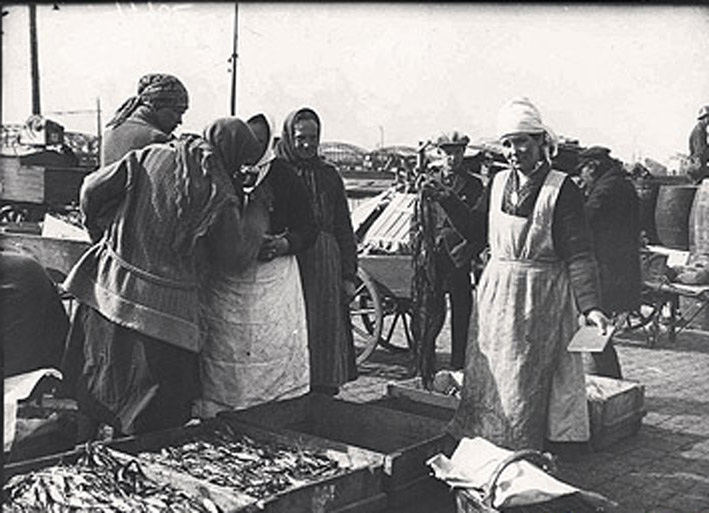
The Old fish Market in Riga.

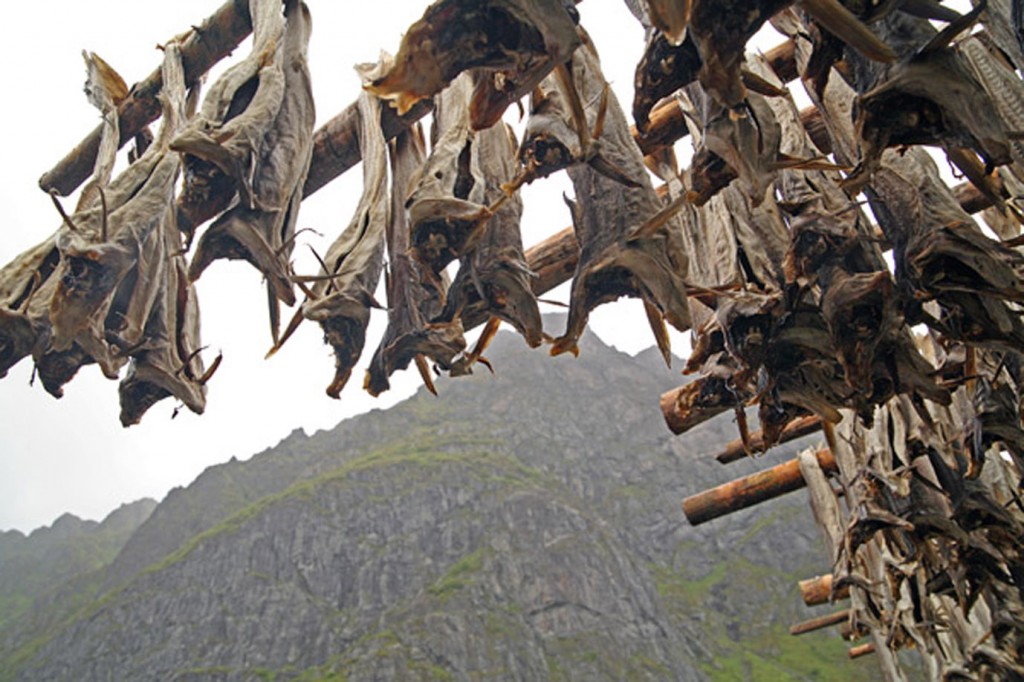
People in Medieval Riga Ate Raw fish

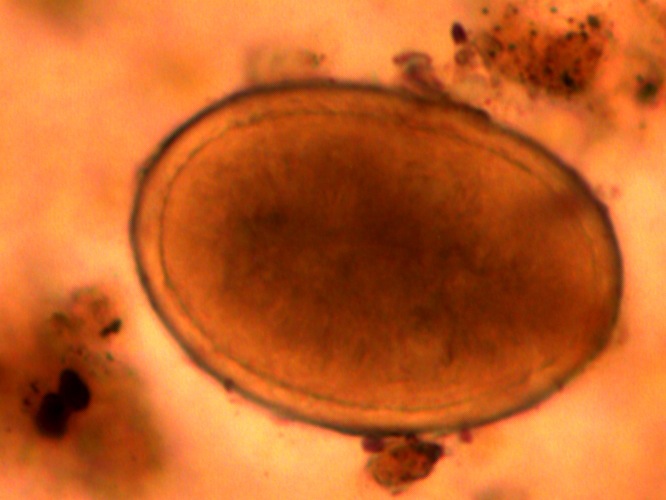
Significant numbers of eggs from fish tapeworm in a latrine from medieval Riga show the population ate raw fish.

Analysis of a medieval latrine block from Riga with excellent organic preservation demonstrated an unusually high concentration of human intestinal parasite eggs present, primarily fish tapeworm. This indicates the population consumed significant amounts of raw, smoked, pickled, or dried fish by the population.

Intestinal parasites in a mid-14th century latrine from Riga, Latvia: fish tapeworm and the consumption of uncooked fish in the medieval eastern Baltic region
By Hui-Yuan Yeha, Aleks Pluskowskib, Uldis Kalējsc, Piers D. Mitchella
In: Journal of Archaeological Science, Vol. 49, September 2014, pp. 83–89

ABSTRACT:
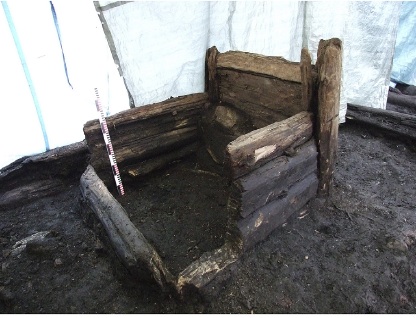
Latrine in Riga 1356 AD

The aim of this study was to investigate faecal material from a medieval latrine in the coastal town of Riga (Latvia) in order to identify the intestinal parasites present within the population. We identified very large numbers of the eggs of three species of parasitic intestinal worms that affect humans – fish tapeworm (Diphyllobothrium latum), whipworm (Trichuris trichiura), and roundworm (Ascaris lumbricoides). The fish tapeworm evidence demonstrates that the population were eating large amounts of uncooked fish (perhaps raw, smoked, or pickled) since cooking prevents parasite transmission.

ELISA analysis identified the presence of the parasite Entamoeba histolytica, which can cause dysentery in humans. Two eggs of equid pinworm (Oxyuris equi) that affects horses and donkeys, demonstrating the presence of this parasite in farm animals of the region by the medieval period, was also noted.

In the article the scientists discuss the implications of these findings for our knowledge of intestinal parasites in coastal areas of the medieval Baltic region, of food consumption, of hygiene, and of the affects of the parasites upon the health of those living in medieval Riga, the most important city in the crusader state of Livonia.

The authors conclude that the analysis “provide a vivid insight into the water-focussed culture of the Baltic Region during the Medieval period.”

PS: Freezing raw fish for 24 hours to -4 Celsius makes the raw fish safe for consumption

OTHER POSTS:

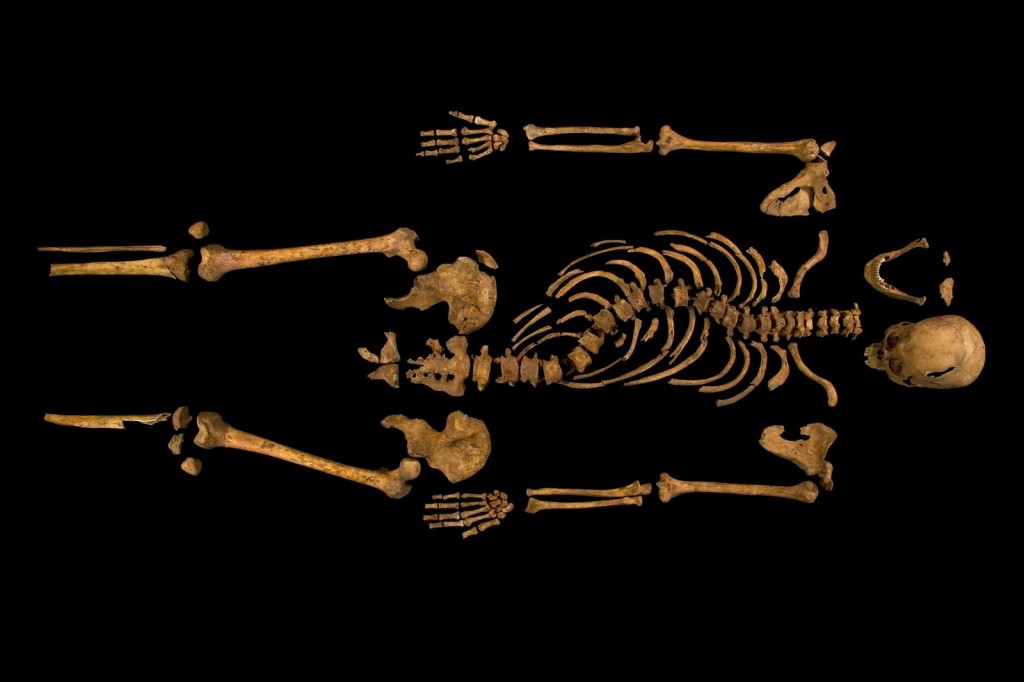
Richard III suffered from roundworm

Raw Herring was a Medieval Delicatessen – try it out in a safe version and read the story
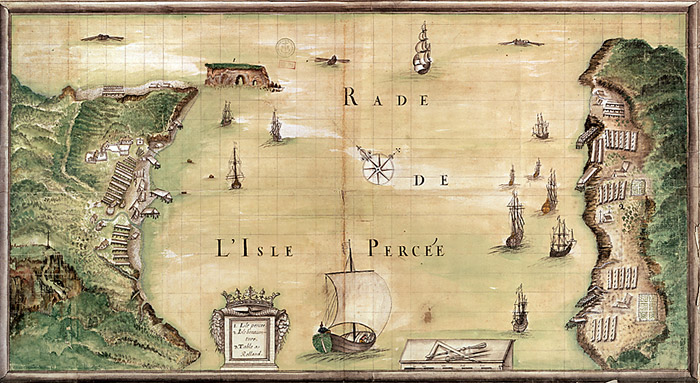
Habour at Percee in New France

Historic Cod Fishery in Newfoundland and Labrador

Commercial fishing off the coast of Newfoundland and Labrador quickly gained economic importance. A zoo-archaeological study of sifted bones from different locations off and on the coast of Newfoundland and Labrador documents the environmental impact of commercial fishery and the different technologies used.

 Cod fishing station 1698 in Maine.  Source: Penobscot Marine Museumin Maine
Cod fishing station 1698 in Maine. Source: Penobscot Marine Museumin Maine

Zooarchaeology of the Historic Cod Fishery in Newfoundland and Labrador, Canada
By Matthew W. Betts, Canadian Museum of History, Stéphane Noël, Université Laval, Eric Tourigny, University of Leicester, Mélissa Burns, Memorial University of Newfoundland, Peter E. Pope, Memorial University of Newfoundland, and Stephen L. Cumbaa, Canadian Museum of Nature
In: Journal of the North Atlantic 2014, Vol. 24  pp. 1 – 21

ABSTRACT:

Allometry and growth-increment aging of archaeological fish remains has the potential to reveal much about past fishing strategies, fish processing and trade, and fish populations. This paper documents the age and size characteristics of four samples of Atlantic cod (Gadus morhua) bones from early European contexts at Red Bay, Ferryland, Bay Bulls, and Crouse, which collectively span the middle 16th to early 19th centuries AD. It is shown that the size of cod became significantly depressed already during the 17th century.

The samples, which document the size structure of the “fished” population (the death assemblage), thus allow for a comparison of fishing strategies and techniques between the early Basque, French, and English commercial operations. In the article it is discussed whether the depressed size of cod from a ‘French’ site is a reflection on the fact that the French Fishermen were known to use seines to fish for bait (including small cod) for their ‘hand-lined’ fishing for large cods. Already in the 17th century the English banned the use of seines; a very early example of environmental protection introduced by the governing institutions. However, the explanation for the depression of average size in a later context is definitely linked to the shift from hand-lined fishing to long-line fishing post 1850. Contributing to this is nevertheless also climate changes with colder water slowing growth significantly.

Thus the samples, derived from multiple fishing regions around Newfoundland and Labrador, provide an important record of cod populations during early stages of the commercial fishery and thus offer a critical baseline record against which to compare modern handlined cod population data, when evaluating future consequences of the expected climate changes.

OTHER RELEVANT POSTS:

Cod for the City of London

Fish Fight Anno 1000, Raw Fish and Anselm and Walraversidje 

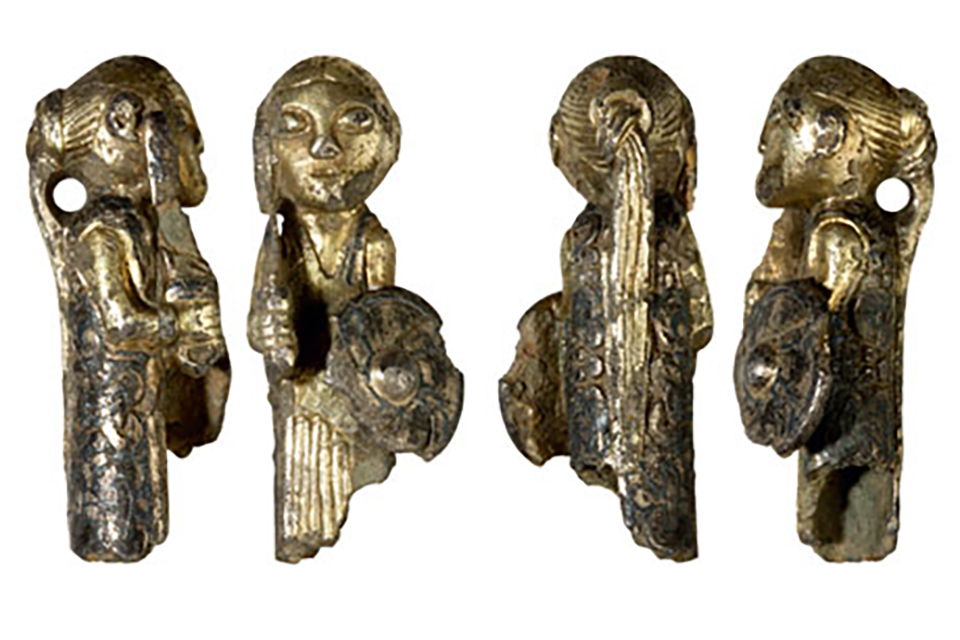
Four views of the Valkyrie from Haarby near Odense. © National Museum in Copenhagen/CCBYSA

Warrior Women in Viking Age Scandinavia?

Did Viking Women participate in war and piracy? Were shield-maidens more than a mythological or literary construct? Or did Viking women primarily lead lives centered on feeding their households, tending their children and spinning their wool? A new survey explores these questions from an archaeological point of view

‘Warrior-women’ in Viking Age Scandinavia? A preliminary archaeological study
by Leszek Gardela
In: Analecta Archaeologica Ressoviensia. Rzeszow 2013, Vol. 8, pp. 273 – 309 (both English and Polish text)

ABSTRACT:

Artistic reconstruction of grave A505 from Trekroner-Grydehøj, Denmark. Dra-wing by Mirosław Kuźma. © Leszek Gardeła and Mirosław Kuźma
Artistic reconstruction of grave A505 from Trekroner-Grydehøj, Denmark. Drawing by Mirosław Kuźma.
© Leszek Gardeła and Mirosław Kuźma (By kind permission)

Did Viking Women participate in war and piracy? Were shield maidens more than a mythological or literary construct? Or did Viking women primarily lead lives centred on feeding their households, tending their children and spinning their wool?

A systematic reconsideration of a series of odd Viking burials might shed light on this question in the future.

As is well known, Viking burial customs were very diverse; different practices governed through time and inside the same burial ground, where cremation and inhumation were used simultaneously. As to furnishing, a wide variety in terms of grave goods (or not) has been documented by archaeologists.

This article focuses on a handful of select graves from Denmark, Norway, and Southern Sweden, which have puzzled archaeologists for some time. These graves, which hold either solitary females or females buried together with males, are characterised by being furnished with weapons or war gear, which might be identified as having belonged to the dead woman.

Weapons present were axes, spears, arrows and shield buckles, but no swords. These assemblages are not easily understood, and Leszek Gardela, who has surveyed the material, is very careful to pinpoint that no firm conclusions may be reached at present. For instance, the presence of axes in these graves might reflect the need for the woman to have a helpful axe for cutting up meat. Or axes might be symbolically placed in the graves, referring to Mjöllnir, the hammer of Thor. Some of these axes were very old and appear to be heirlooms.

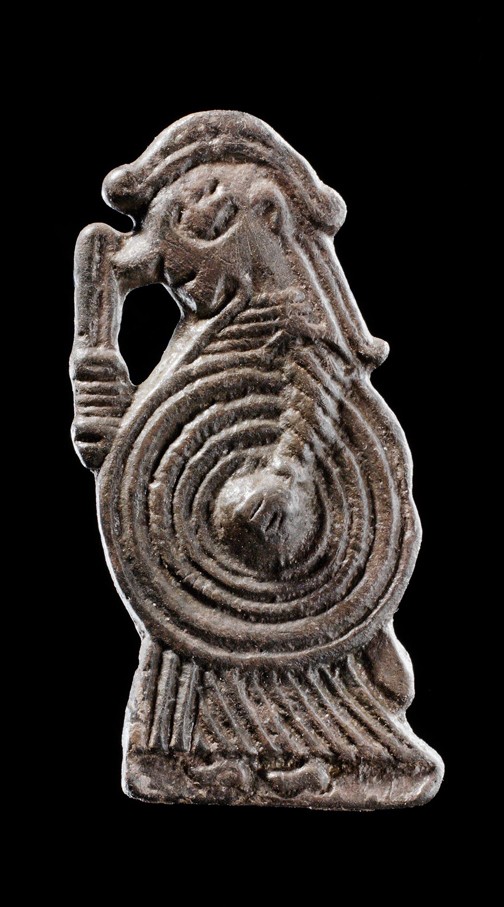
Valkyrie from Vrejlev, Denmark

Valkyrie from Vrejlev, Denmark

However, perhaps we glimpse something else, such as graves, where wise women well versed in seiðr (shapeshifting) and other obscure magic were buried together with their staffs, which sometimes might be a spear (Vølva means “staf”. Often these graves were located in liminal positions within the burial ground. Literary texts indicate that the bereaved also threw spears or axes into the graves to keep the women from haunting the living. In some graves, boulders were placed to keep the dead in their place. However, this practice was decidedly Swedish.

Some of these ‘warrior women’ may thus have been known as Völver or spæwīfes, which they tended to be called in an Old English – wise women in the broadest sense. Others might have been known as ‘warrior women’ or ‘Valkyries’ as they were called in Norse Mythology and other written sources. Such Valkyries had spears as their attributes (although brooches seem to show them with swords). But perhaps the two roles were mingled?

To conclude, the author states that it is likely too early to offer definite answers as to whether some women lived out their lives as shield maidens in Viking society. Much information lacks, for instance, detailed anthropological explorations of the skeletal material (for example, were the women in these graves able to wield a sword or were they too frail?)

A project which shifts the evidence to a wider geographical context and which also includes evidence from The Anglo Saxon world might perhaps help to answer some of these questions, writes Leszek Gardela

READ MORE

Viking women, warriors, and valkyries
By Judith Jesch, Professor of Viking Studies, University of Nottingham – British Museum Blog

FEATURED PHOTO:

Four views of the Valkyrie from Haarby near Odense. © National Museum in Copenhagen/CCBYSA

READ ALSO

Silver Figurine from Revinge, Freyja 9th century

Freyja from Revinge

An exquisite tiny silver figurine from the Viking Age, newly found, sheds light on the dresses of Viking Women in the 9th century

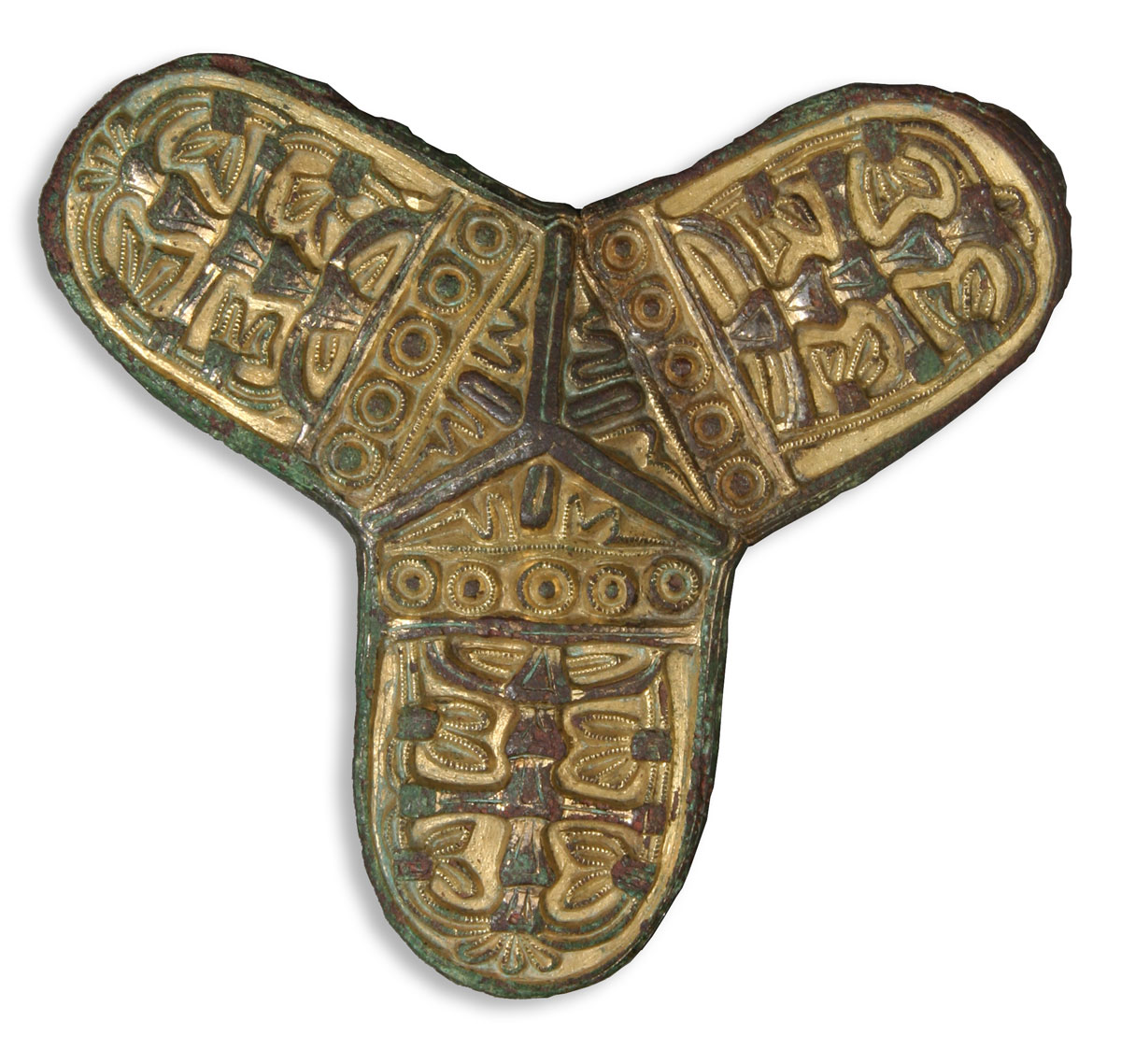
Trefliget-spaende- Museum Soenderjylland 9th century (end)
Three Foiled Brooch from Museum Soenderjylland, end of 9th century © Museum Soenderjylland

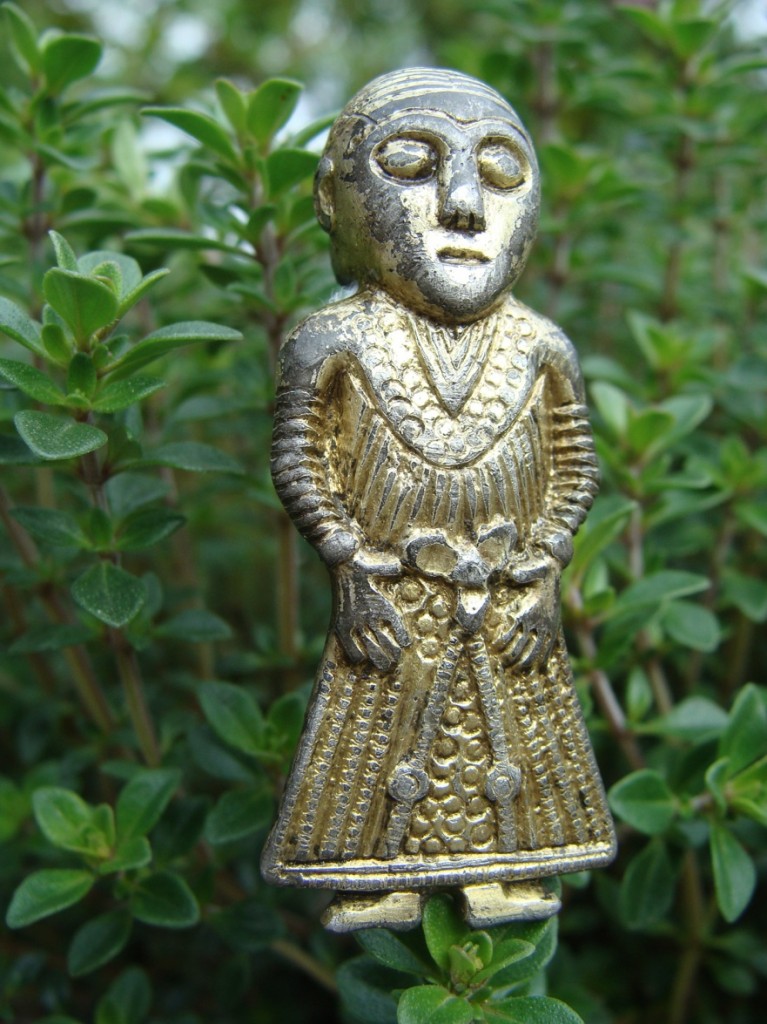
A few months ago a tiny silver figurine was found on the Island of Funen by a man with a metal-detector. Immediately called ‘The Revinge-Woman’ after the spot, where she was found, soon found her way into the hearts of the archaeologists. Not only is she sensational, she is also lovely! The figurine estimated to be from the 9th century is tiny and measures no more than 4,6 cm. She is made of solid silver and afterwards gilded. While her body is flat, the head is three-dimensional. In the back of her head small holes signify, that she has been worn as an amulet. She is wearing a dress and jewels, which are very delicately wrought and which presents details, not known from graves Her hair, which has been parted in the middle, is tightly pulled back and twisted into a bun. Around her neck she carries what looks like a massive string of pearls or a golden necklace. Perhaps her arms are covered in golden rings too. Or perhaps the arms of her dress were pleated, as might also have been the case with the body of her dress. Around her waist she carries a belt, fastened by a three-foil brooch. In Viking graves these brooches are usually found on the breasts of the dead women, but here it is used to pull her dress together at the waist. From the waist hang delicately wrought belt-straps. Beneath her dress delicate feet peep out. Due to the position of her hands in front of her tummy, she is believed to represent the goddess Freyja, responsible for love, lust, beauty, sorcery, fertility and gold. According to Norse Mythology she is said to own Brísingamen, a fabulous torque or necklace, made by dwarfs. Brísingamen is also mentioned in Beowulf, who receives something like it as a gift from Wealtheow, the queen of Denmark after he has killed Grendel. (Verses 1190 – 1200 [1])

Silver Valkyrie

Viking Valkyrie from Haarby
Valkyrie from Haarby, 9th century Photo: Asger Kjærgaard/Odense Bys Museer

Other silverfigurines from the same time – for instance the unique silver Valkyrie, presently (summer 2014) exhibited at the British Museum at the Viking exhibition – are of app. the same size. This Valkyrie measures 3.5 cm and was found in Hårby, also on the island of Funen in 2013. It shows a female warrior complete with sword and shield. Her hair, though, is flowing down from a bun and her dress looks different. She also seems to carry a long necklace around her throat. The two figurines were found app. 50 km apart. The Silver newly found figurine may be seen at the The Viking Museum Ladby on the Island of Funen, Denmark, during summer 2014.

SOURCE:

Ekstraordinært fund: Forgyldt sølvfigur fra 800-tallet [Extraordinary find: Gilded silver-figurine from the 9th century]

The Viking Museum Ladby

 NOTES:

[1]

The cup was carried to him, kind words
spoken in welcome and a wealth of wrought gold
graciously bestowed: Two arm bangles, a mail-shirt and rings; and the most resplendent
torque of gold I have ever heard tell of
anywhere on earth or under heaven.
The was no hoard like it since Hama Snatched
the Brosings’ neck-chain and bore it away
(p. 85, verses 1191 – 1198)

From:
Beowulf. A New Verse Translation.
By Seamus Heaney
New York, Farrar, Straus and Geroux 2000

Beowulf on Silver Pommel Staffordshire Hoard

Staffordshire Hoard – Status 2014

The Staffordshire Hoard consists of more than 4000 more or less broken pieces of gold and silver from 7th century Mercia. The last years have been spent on getting an overview of the pieces of this gigantic puzzle. Now the team is taking stock before moving on to the next stage.

Immediately after the Staffordshire Hoard was secured for the public, it became necessary to gather a team, which might clean and study the hoard in all its details – both on sight and under microscopes. This team has been working diligently since March 2012 performing, what has been termed stage 1 in the overall research project. In the Newsletter from May 2014 the current status is generously shared with the (very) interested public. In January 2001 none had a very precise overview of what the Staffordshire Hoard in fact contained. Apart from the fact that about a third stemmed from swords and seaxes, that there were pieces from helmets (one or more) and that a small handful of items were obviously Christian, no one could in fact say much more.

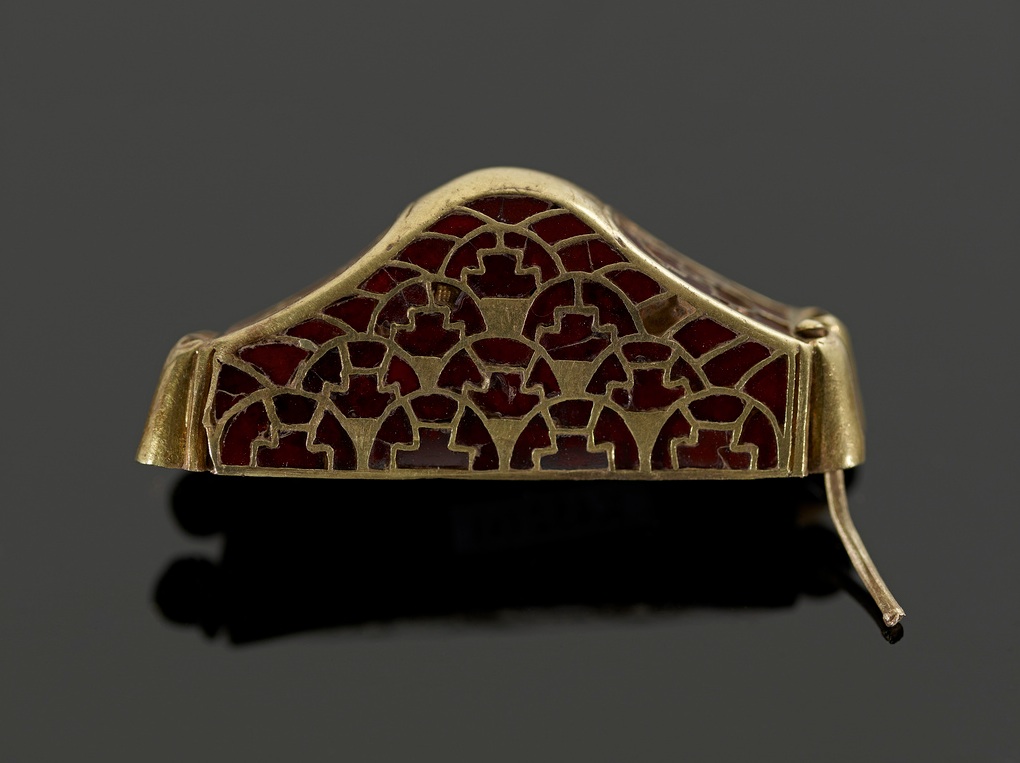
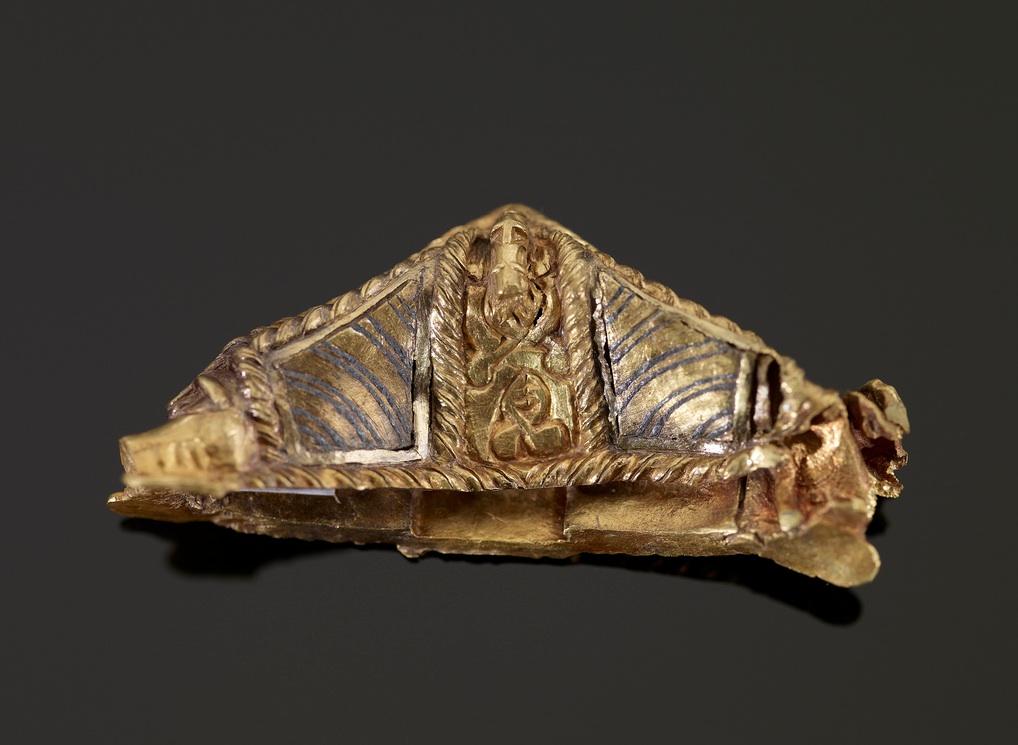
Golden Pommel with cloisonné Staffordshire Hoard

In February 2014, however, all the bits and pieces (more than 4000) had been catalogued. At this point there were all brought together in order to facilitate a ‘grouping exercise’, whereby hopefully some of the tinier fragments might be pared. During this grouping exercise it became possible to confirm over 200 physical joints, which were already suspected. But added to this should be more than 600 new ones, which appeared by placing the items next to each other. Out of this it was even possible to construct suites of ensembles of pieces, which could be fitted to each other. The team now know that over 350 fragments relate to only 120 items. All this is now making it possible to enter stage two. All this lead to the ‘Third Project Meeting’ whose participants were not only the team and members of the Hoard Management Group, but also scholars from the advisory Panel and the wider Anglo-Saxon scholarly community.

A Male and Military Hoard

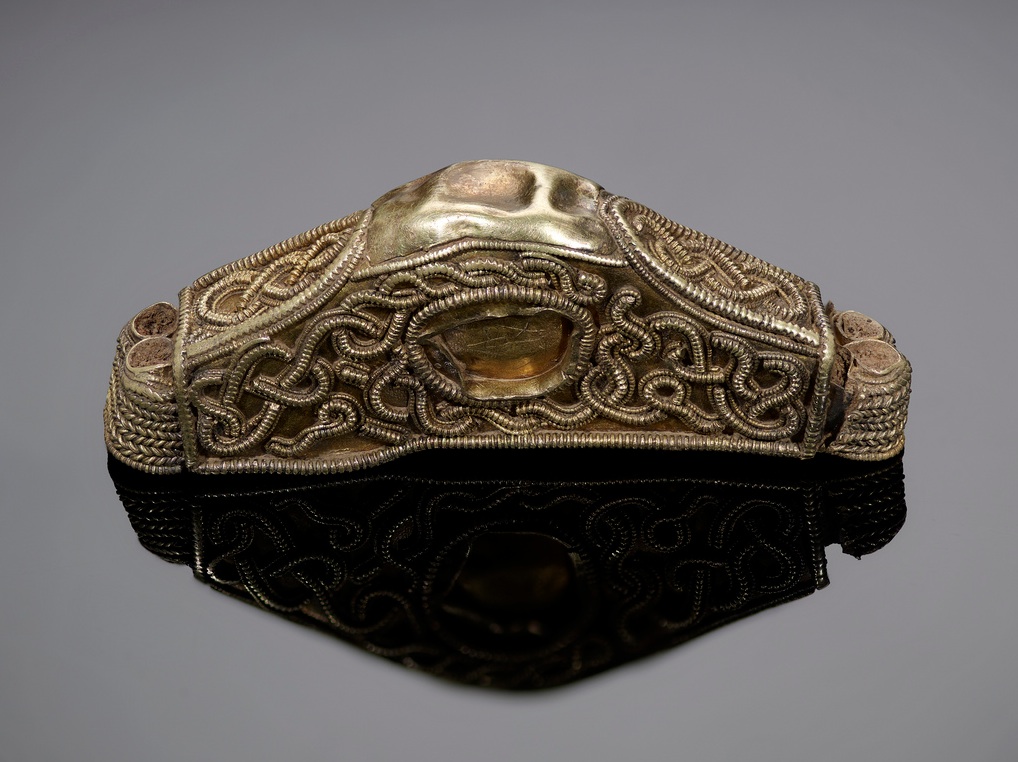
Golden Filligree Pommel Staffordshire Hoard
Golden Filligree Pommel from the Staffordshire Hoard

All this has strengthened the ‘conclusion that this is fundamentally a male and military hoard’. Nearly 60% of the identified material stems from swords and seax fittings. The team suggests, the hoard probably represents booty captured during multiple battles. Later the pieces have been chopped up to make them easily disposable as gifts for his retinue at a time and in a place (7th century Mercia) where coins were not minted. It has been estimated that the gold in the hoard represents something like 3000 contemporary golden coins. However, the small group of Christian items have increased slightly as there is believed to be yet another additional gold arm from a second pectorial cross, found in the hoard. And then there are the suites of large cloisonné mounts, as yet still enigmatic. Some of these appear to form pairs. They might just have been mounted on a thin plate, perhaps a book cover… Further information may be gathered from the techniques. For instance a number of suites of inlaid silver mounts have been made with a type of niello, which is not normally seen on Anglo-Saxon silver. Another major conclusion is that there are nearly three times as many filigree-decorated pommels, than cloisonné-decorated ones. Also the number of items decorated with Salin Style 2 (ca 570 – 700 AD) ornaments have risen to 130 pieces. Finally there is a group of silver pommels decorated with Insular non-zoomorphic ornamentation.

One intriguing find in the cloisonné pieces, is a type of green inlay, which has so-far not been identified. Perhaps it has been more widespread than generally believed, since old pieces in museums have often been to carefully cleansed, removing what might have been considered no-more than dirt. So far the scientific analysis has not yielded an answer to what the green stuff might be. However, further investigations are promised.

The Wider Programme

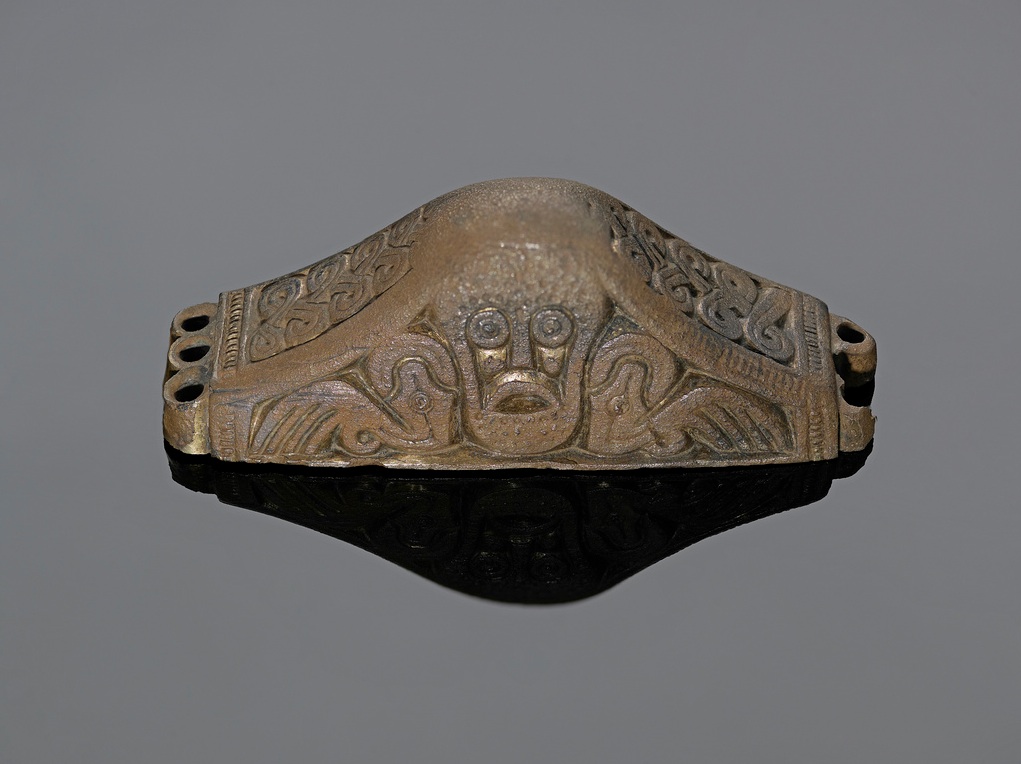
golden filigree pommel with face - Staffordshire Hoard
Golden filigree pommel with face – Staffordshire Hoard

Currently funds will have to be found to continue with stage two. This is planned to be a 30 month long project leading to the final publication. And yes, it will be expensive. Meantime a new permanent gallery will be opened in Birmingham in October planned to exhibit parts of the magnificent find. Amongst other things a reconstruction of a mead-hall will be decorated by hangings embroidered by volunteers organised by the Embroiders Guild It is a great pleasure that the owners, the research team and the curators are so generous in providing updates on the scientific and scholarly investigations into the Staffordshire Hoard. Had it been in the old days, the tradition would have been to ‘hoard’ the results for scientific publications in the far-out future. Not so here!

SOURCE

Spoils of War. The brutal origins of the Staffordshire Hoards.
In: Current Archaeology May 2014.

Pioneering research shows ancient Hoard as ‘true archaeological mirror’ to early epic poem Beowulf.

Introduction into the Staffordshire Hoard Grouping Exercise – Video

Look out in the near future for a formal overview of the research results written by Chris Fern. When officially agreed upon, the text will appear at the Barbican Website.

FEATURED PHOTO:

Silver Pommel with face. Probably mainland Europe, perhaps Scandinavia. The team call ‘him’ Dave, but perhaps Beowulf is more appropriate?

cover - richard III cronicles

Richard III – From Contemporary Chronicles, Letters and Records

The ultimate source book for anyone interested in the sources behind the story of Richard III

Richard III: From Contemporary Chronicles, Letters and Records
By ‪Keith Dockray and  ‪P. W. Hammond
‪Fonthill Media 2014

ABSTRACT

No English king has suffered wider fluctuations of reputation than Richard III, perhaps the most controversial ruler England has ever had. Vilified by critics as a ruthless master of intrigue and a callous murderer, he has been no less extravagantly praised by defenders of his reputation against Tudor and Shakespearian charges of tyranny. Richard III: From Contemporary Chronicles, Letters and Records, by its presentation of contemporary and near contemporary sources, enables the reader to get behind the mythology and gain a more realistic picture of the king. An invaluable collection of the primary sources presented clearly and concisely, it demonstrates just why Richard has remained an enigma for so long. Established as an essential part of the literature on Richard III since its first publication under the title Richard III: A Reader in History, this new edition has been completely revised and considerably expanded to offer an indispensable source book for historians, students and the general reader. Also, this up to date edition includes a chapter in relation to the exciting discovery of Richard III’s skeleton that was found under a car park in Leicester. The Genesis of this book came from a summary guide produced by Keith Dockray for all of his second year undergraduate students. Upon this foundation has been built an accessible and enjoyable history of this fascinating king, as seen by those who knew him at the time, or who were living shortly after his untimely death at Bosworth Field.

AUTHORS

Keith Dockray was formerly a senior examiner in medieval history and early modern history at the University of Huddersfield. 

Peter Hammond is a medieval historian and leading authority on the reign of Richard III. For thirty years, he was the research officer of the Richard III Society and is currently a vice president of the society. He is probably best known for his books The Battles of Barnet and Tewkesbury and Food and Feast in Medieval England. With Dr Anne Sutton, he wrote The Coronation of Richard III: The Extant Documents and Richard III: The Road to Bosworth Field. As an editor, he has compiled a new edition of Historic Doubts on the Life of Richard the Third by Horace Walpole. He has also written and contributed to many other books and magazines on medieval and local history.

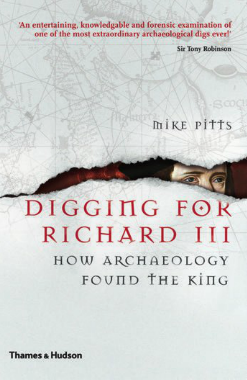
cover digging for richard III

Digging for Richard III: How Archaeology Found the King

Mike Pitts tells the story of how archaeologists found Richard III, the king in the car park
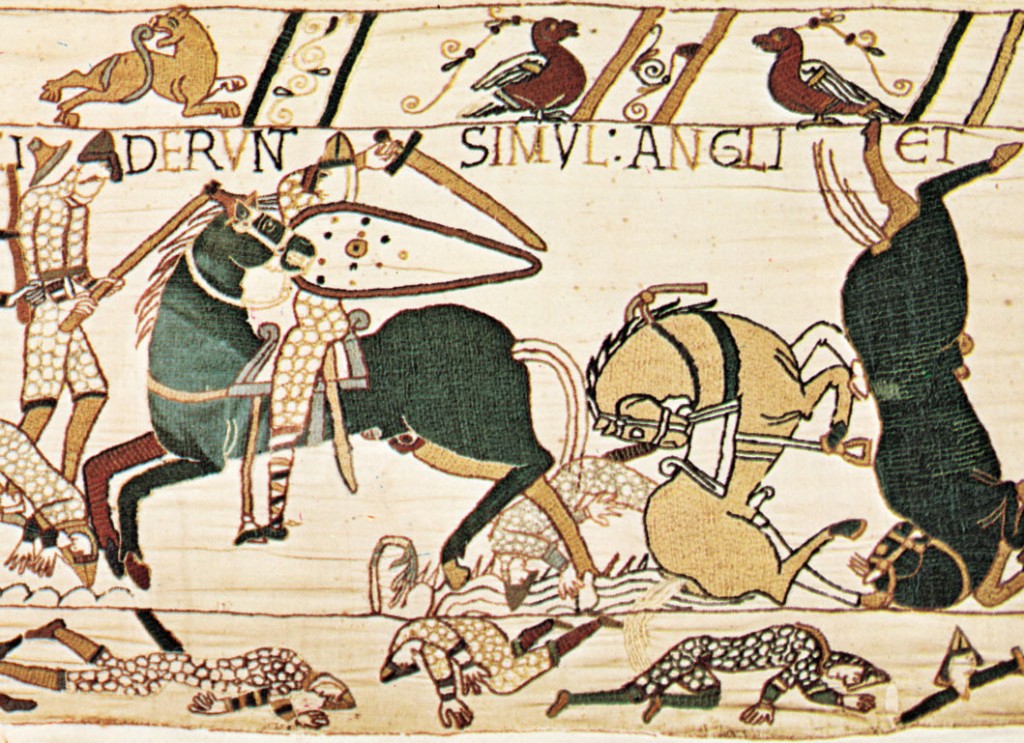
Digging for Richard III: How Archaeology Found the King
BY Mike Pitts
Thames and Hudson Ltd (14 April 2014)
ISBN-10: 0500252009
ISBN-13: 978-0500252000

The book is available in hardcover as well as an E-book – iBooks, Kindle and Kobo.

ABSTRACT:

First came the news that archaeologists were searching for a king in a car park. Next it was said they had located the church where Richard had been buried. Finally it was announced that a skeleton had been found – with curved spine and battle wounds. Archaeologists urged caution, as media frenzy led to questions in Parliament. The scientific conclusion came early in 2013. All the studies, including analysis of anatomy, DNA, high-resolution scanning and a digital facial reconstruction, led to one thing. This really was Richard III, England’s most disputed monarch and probable murderer of the Princes in the Tower.

The events of Richard III’s reign and his death in 1485 at the Battle of Bosworth are known worldwide through Shakespeare’s most performed, filmed and translated history play. ‘Digging for Richard III’ is the page-turning story of how his grave was found, the people behind the discovery and what it tells us. It is the first complete narrative of a project that blended passion, science, luck and detection. Told by a noted archaeologist with access to all the parties involved, it follows the quest from an idea born in an Edinburgh bookshop to the day, fourteen years later, when two archaeologists carefully raised the bones from a car park in Leicester, and the scientific studies that resulted.

The vivid tale of a king, his demise and now his rediscovery, this is also an insider’s gripping account of how modern archaeology really works, of how clues meticulously assembled and forensically examined are pieced together to create a narrative worthy of the finest detective fiction.

AUTHOR:

Mike Pitts is an archaeologist and award-winning journalist. He grew up in Sussex and studied archaeology at University College London. In his early career he directed his own excavations at sites such as Stonehenge and Avebury, and he continues with scientific research, including most recently on an Easter Island statue. For the last ten years Mike has edited Britain’s leading archaeological magazine, British Archaeology, and as a freelance journalist he writes frequently for national and international newspapers and magazines.


Cover Battle of Bosworth

Bosworth 1485

In 1485 the historic Battle of Bosworth took place just outside Leicester. A new book tells the story and presents the recent discoveries in the field.
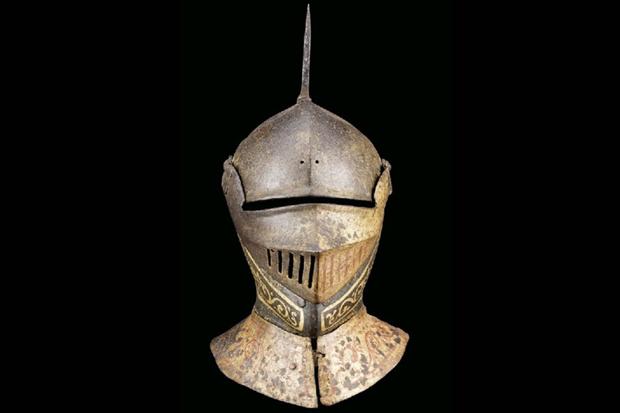
Bosworth 1485. The Psychology of Battle
By Michael Jones
John Murrey 2014
ISBN: 9781848549081

ABSTRACT

In 1485 the Battle of Bosworth marked an epoch in the lives of two great houses: the house of York fell to the ground when Richard III died on the field of battle; and the house of Tudor rose from the massacre to reign for the next hundred years.

Michael Jones, co-author of The King’s Grave: The Search for Richard III, rewrites this landmark event in English history. He shifts our perspective of its heroes and villains and puts Richard firmly back into the context of his family and his times.

AUTHOR:

Michael Jones was awarded a history PhD by Bristol University and subsequently taught at Glasgow University and Winchester College. He is a fellow of the Royal Historical Society and member of the British Commission for Military History, and works now as a writer, media consultant and presenter. Among his historical titles he has written books on the battles of Bosworth, Agincourt, Stalingrad and Leningrad. He was TV consultant for Channel 4’s Richard III: Fact or Fiction and National Geographic’s Mystery Files: The Princes in the Tower, and co-author, with Philippa Gregory and David Baldwin, of The Women of the Cousins’ War.

Gars-Thunau

Excavations of a fortified hilltop has yielded information about the way of life of the early medieval elite, 9th -10th centuries AD...

Read more