The Legends of King Arthur, were written down at Oxford Castle in the 12th century...
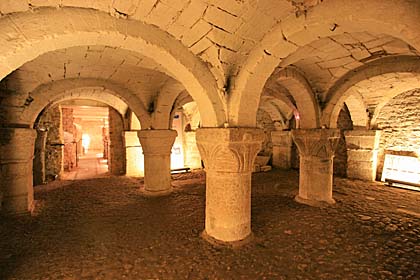
The Legends of King Arthur, were written down at Oxford Castle in the 12th century...
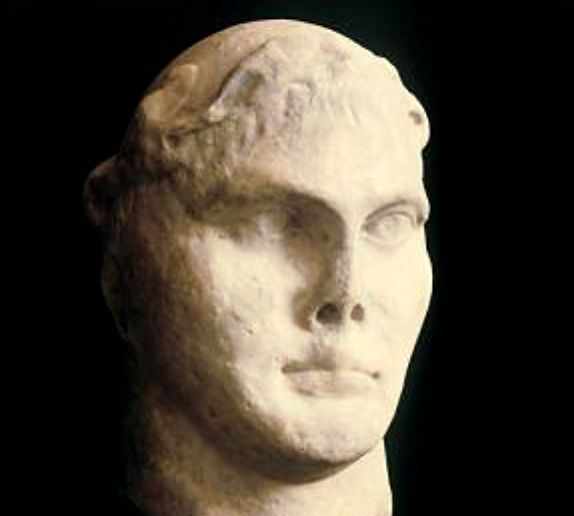
1700 years ago the edict of Milan granted full tolerance to Christianity and other religions...
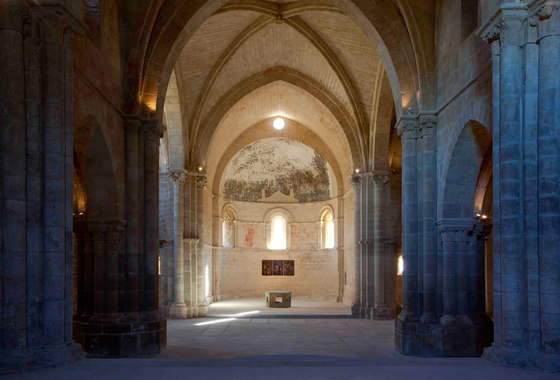
Abadia Retuerta LeDomaine is a romanesque abbey in Northern Spain near Valladolid...

Northern Spain is littered with Romanesque Art and Architecture. A huge restoration project recently recieved the prestigious Europa Nostra Medal 2013
Románico Norte – or Romanesque North – is the name of a huge and impressive project in Northern Spain. From 2005 to 2012 a plan was laid to institute a complete restoration of 54 churches in the diocese of Palencia and Burgos, in the old Merindad Aguilar de Campo district. The geographical area covered by the Plan focuses on the North Eastern part of the Northwest province of Palencia and Burgos, where the Southern slope of the Cantabrian Mountains meet the Castilian plateau. The vast territory with its distinct topography has posed a major challenge for the whole team trying to implement the objectives of the plan for the development of the “Romanesque North”.

The work has – as can be ascertained from the website – been carried out in collaboration with a number of partners, who have provided state of the art solutions. Apart from local councils the work has been funded by La Consejería de Cultura y Turismo de la Junta de Castilla y León , la Fundación Siglo para las Artes de Castilla y León and la Fundación Santa María la Real-Centro de Estudios del Románico . Partner has also been the Dioceses of Palencia and Burgos.
The aim has been to further sustainable economic growth, through taking care of and developing the nature, history and heritage, which is embedded in the landscape. Accordingly the work is still in progress since not only the churches but also the surrounding landscape is being analysed, described and restored.
Iglesia de San Juan Bautista
This has for instance been the case in the Iglesia de San Juan Bautista in Matamorisca, where the church is decorated with a series of very well preserved murals, which have been painstakingly restores. However, in order to provide lightening for the celebration of mass and other religious services, the church had installed a really terrifying lightening system – with ripe possibilities for fires. Further the old lightening hampered the visitor, who wanted to study the murals in detail. Apart from restoring the church, the work carried out by Románico Norte consisted in installing a state of the art lightening, where 95% of the fuses etc. were hidden and at the same time providing a better experience both for the local villagers and the cultural tourists.
Románico Norte recently received the prestigious Europa Nostra Prize for 2013. Read the validation here – and see the video
READ MORE:
Read more about Romanesque art in Spain
Enciclopedia del Románico en la Peninsula Iberérica
– or access the encyclopedia in digital form
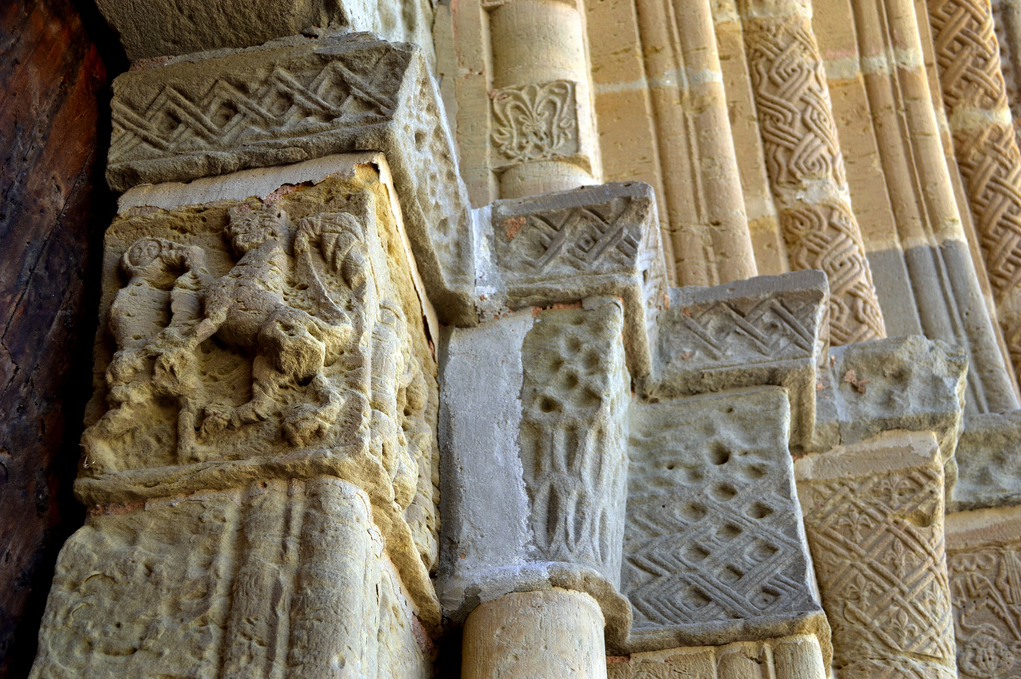
Santa Coloma de Queralt is a perfect example of a medieval rural market town in Catalonia...
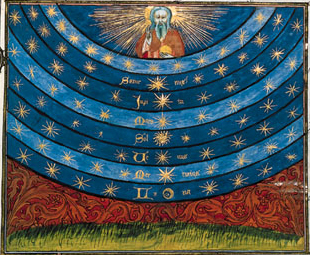
Last year “Minor Planet 36169” was renamed “Grosseteste” after the 13th century scientist. But why?
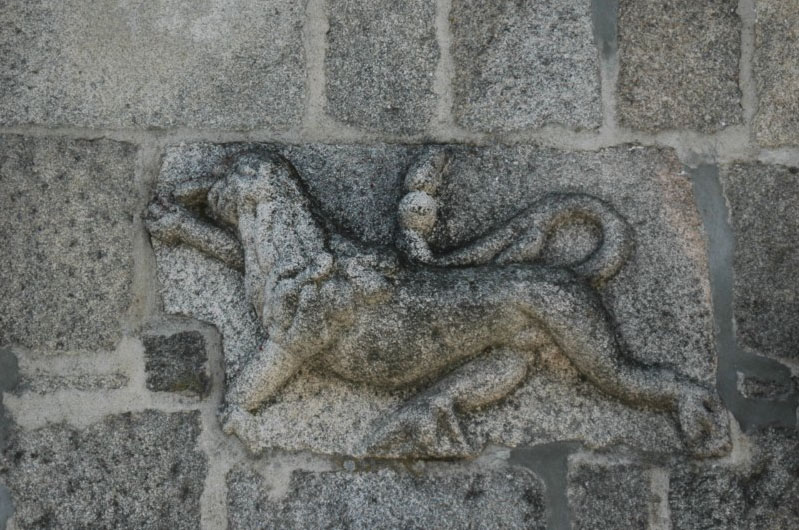
Portuguese researchers have catalogued hundreds of secret Jewish markings in Seia...

The Medieval Academy of America torn in a new power struggle
Last week The Medieval Academy of America announced that co-executive directors, Eileen Gardiner and Ron Musto have resigned, effective immediately. Richard W. Unger, president of the Academy, who made the announcement, called it regrettable. In an e-mail statement to Inside Higher Ed the two ex-directors said “they left because the board of the Academy was changing procedures to minimize the power of the staff members, who led the daily operations of the Academy, and forcing them to spend excessive time responding to “oversight” from board members.”
As far as can be gleaned from twitters and comments in blogs, observers are of the opinion that the fall-out is a reflection upon the many changes, which have taken place in the last two years, where Gardiner and Musto have worked to renew the internet-presence and the publications strategy of the Academy. So far no real explanation has been forthcoming.
However, it is a remarkable fact that a new survey on Medievalists and the Scholarly Digital Edition which was presented at the recent annual meeting in Knoxville, shows that about 50% of medievalists in 2011 still preferred to read at least some of their journals in print, while none professed to prefer exclusively to use scholarly editions in electronic form. Although the survey was done before the advent of the ipad and the other tablets on the market, it is an astounding fact that medievalists seem to be somewhat averse to electronic publishing.
In view of this it may seem a safe bet that the board might have felt inclined to reign in a future strategy whereby the Academy might move to render the established publishing houses obsolete in a situation where the new directives concerning open-access are calling for new business models. With more than 4000 members worldwide, one of the Academy’s assets is its ability to foster genuinely anonymous peer-reviews at a grand scale while at the same time turn itself into a proper medieval publishing house paid for by the money, which scholars in the future are expected to put down the publication of their work. A business model which the current publishers as opposed to a not-for-profit association cannot follow since they are in the business of making money. At the annual meeting several announcements were made, which points in this direction, amongst these a revival of the Speculum Books Series and a possibility to discontinue reading Speculum in Print.
Gardiner and Musto have worked in various aspects of the book trade since 1967 and cofounded Italica Press in 1985. They have individually and jointly authored and edited numerous books, articles, reviews, and websites, with a concentration on medieval studies and e-publishing. They have most recently been working together on the book, The Digital Humanities: A Primer for Scholars and Studies, to be published by Cambridge University Press. However, both are also acclaimed medievalists.

Newly-discovered 12th century recipes to be recreated at Durham University event...
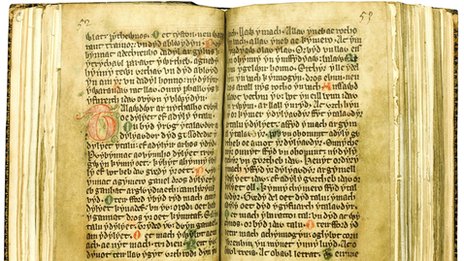
Cyfraith Hywel is the name of a new academic website examining all aspects of medieval Welsh law...
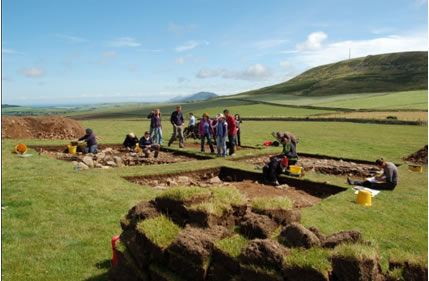
Focus is on the archaeological background for the emergence of Celtic languages...
Scholars aim to study a neglected series of Medieval Welsh-language sources...
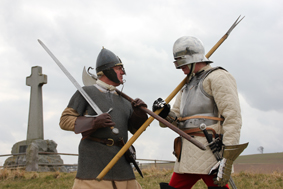
1513 an English army defeated James IV and his invading army at Flodden in Northumbria...

Earthly Bread and Heavenly Food…
Cabinet exhibition on the occasion of the Eucharistic Congress in Cologne.
The Catholic Church venerates the consecrated host as a symbol of the presence of Christ resurrected. In the Middle Ages Cologne was among the first cities in which on the feast day of Corpus Christi the body of Christ was carried through the city in a procession. For this occasion splendid monstrances were created, one of which is at the heart of this exhibition. Paintings and prints from Cologne from the Middle Ages to the modern era illustrate the veneration of the consecrated host through the ages. Today, as in the past, the celebration of the First Communion is at the centre of Eucharistic devotion.
Earthly Bread and Heavenly Food
Kölnisches Stadtmuseum
18.05.2013 –30.06.2013

Silk not Sin – Ceremonial Garments for the Preparation of the Holy Mass.
In the Middle Ages great attention was paid to the preparation of the celebration of mass. By the ritual laying on of clerical vestments accompanied by vesting prayers, priests and bishops completed a transition from the secular to the sacred. Beginning with precious undergarments – these rare items will again be on display for the first time since 1985 at Museum Schnütgen – the exhibition follows the cleric step by step in the solemn preparatory ceremony up to the combing of the hair and washing of the hands. Precious treasures of ecclesiastical textile art including an undergarment from the 14th century and the medieval vestments from the church of St Andreas are presented together with liturgical objects such as the famous ivory comb of St Heribert.
Museum Schnütgen, Köln
23.05.2013 – 24.08.2014

Charlemagne influenced a great deal in Europe. The changes and innovations brought about by him in many areas shaped the foundations of our culture. The 28th January 2014 marks the 1200th anniversary of the death of Charlemagne. On this occasion the Swiss National Museum will be devoting a large temporary exhibition to Charlemagne (741 – 814) and “Carolingian Switzerland”. The Exhibition will show what changed under Charlemagne, what effect his reforms had on education, faith and society and which innovations were made in art and architecture. Embedded in the European Context, the emphasis will be placed on Switzerland’s cultural heritage from Charlemagne’s time. The time frame will cover his reign of 771 – 814 through to the treaty of Verdun 843. Some topic areas will also take a look at the Merovingian period and the late 9th century. The exhibition is being prepared in close collaboration with the simultaneously planned book project “Die Zeit Karls des Grossen in der Schweiz” under the leadership of prof. Dr. Georges Descoudres, Dr. Jürg Goll and dr. Markus Riek. Project manager is Christine Keller.
Charlemagne and Switzerland
20.09.2013 – 02.02.2014
National Museum Zurich