The King Richard III Visitor Centre in Leicester is now open
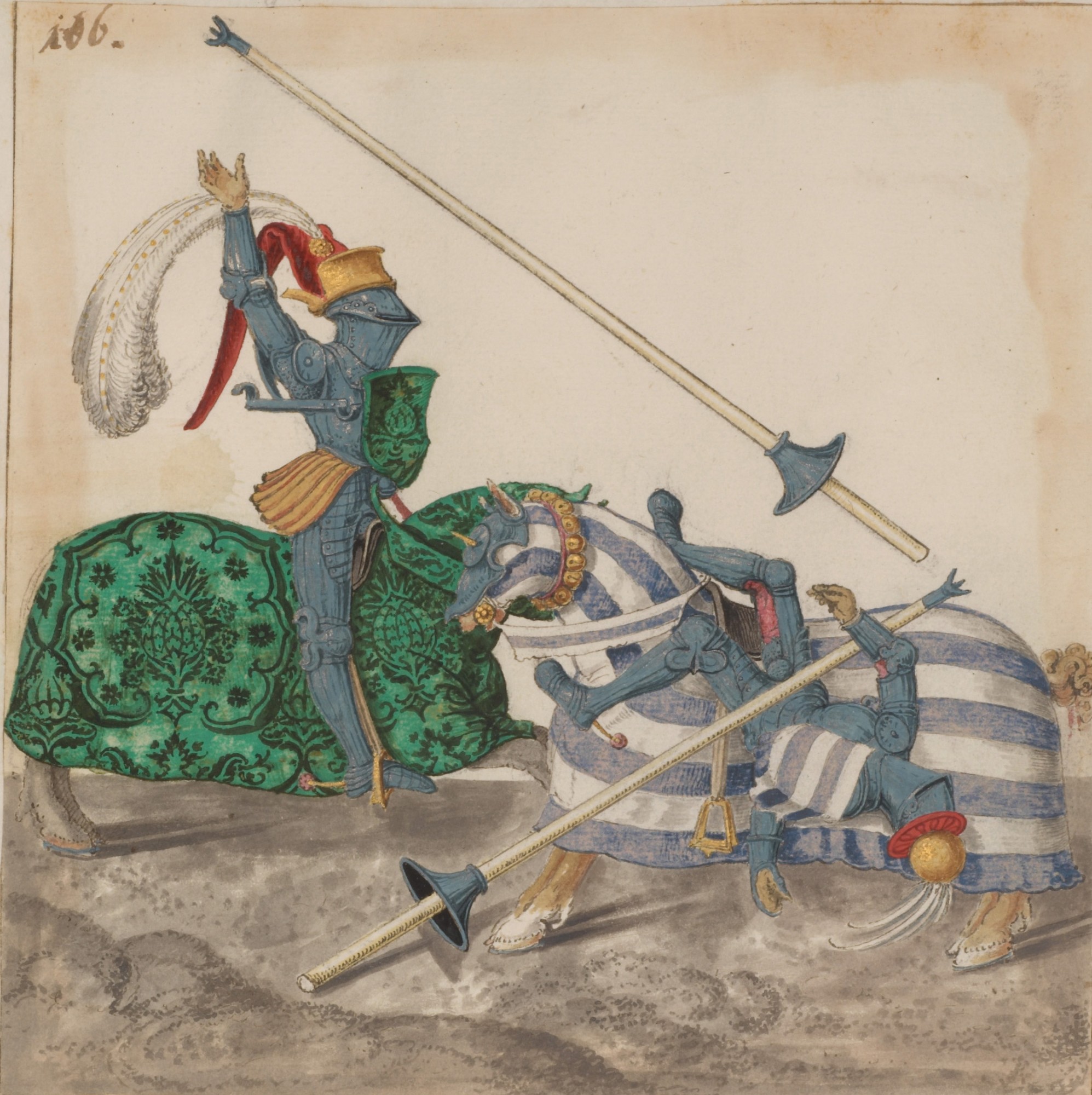
Chivalry and Tournaments – the story of a late medieval festival is an exhibition in Schaffhausen in Switzerland 2014
The story of Maximilian I as the "last knight" is told in Mannheim this summer (2014)
The Battle of Clontarf 1014 is a vibrant Irish Myth
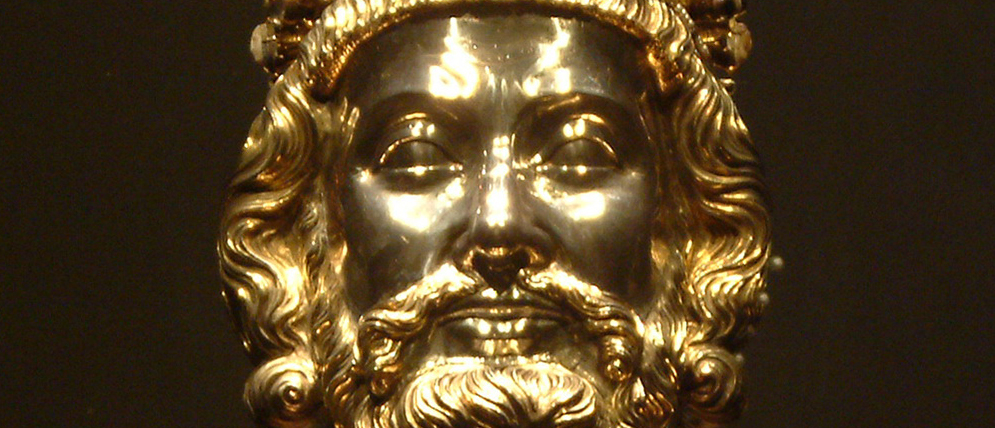
Charlemagne – Power, Art and Treasures - are three exhibitions mounted in Aachen this summer, commemorating Charlemagne.
Around 300 a rebellion broken out in what is currently the Western part of Switzerland. As the story goes, a legion of Roman soldiers from Egypt was transferred to the region in order to crush the revolt. On the night before battle the emperor Maximian issued the usual order that the whole army should offer to the Roman Gods. The challenge was that the soldiers in the so-called Theban legion were Christians. After repeatedly having refused to comply with the command, the emperor ordered a decimation. Following this every 10th man was put to death; at the same time an additional decimation was declared to take place if the soldiers, who were still alive, did not give in. In the end it is claimed that 6600 soldiers in the Theban legion refused to take part in the sacrificial rites and were martyred. This is primarily said to have taken place at Aquanum at an old toll-station on the upper Rhone, where the river meanders through a narrow gorge. Whether a legend or not, the story very early on caught the imagination of the men of the Late Antiquity. One of these was Eucherius, who visited the site in the first part of the 5th century and wrote about it a letter. Here he told the story in detail of how a bishop, Theodore of Octodurum, had a vision of where to find the remains of the martyred soldiers.
There are many reasons to believe that the legend about the Theban legion and its martyrdom was invented by this Theodore around 380’s, when there was a frenzy to discover saints and martyrs galore, while at the same time a pagan resurgence in the Roman army was taking place (around 390 AD). Nonetheless, whatever the facts and fiction, the story quickly caught the imagination of locals as well as bishops, and very soon a thriving centre for pilgrimage was erected on top of an earlier Roman sanctuary dedicated to Celtic water nymphs. When Eucherius visited the site, he noted that the earliest basilica, where the martyrs were buried, was already endowed with silver, gold and precious art and famous for its miracles. Probably the first sanctuary was cared for by a double institution, both male and female. In the earliest writing s we get an impression of a somewhat boisterous place: at the same time both local sanctuary, post-station for travellers and pilgrims and toll-station for merchants moving between Gaul, Germany and Italy. In the beginning of the 6th century – Saint-Maurice d’Agaune came to play a slightly different role as it was reformed by the Burgundian king, Sigismund († 524). His father was an Arian; however as a student of Avitus of Vienne he converted to Catholicism. Together the two men, king and bishop, turned the place into a highly evocative and symbolic site. Architecturally they rebuilt the basilica and reorganised the site by adding a series of other buildings to it. Further a new liturgy – Laus Perennis – was introduced to fill the place with eternal song. Later, after Sigismund and his family had been murdered, his remains were translated to the church, where he became venerated as the first royal saint in Western Europe. This contributed to cement the site as a both a royal and religious centre. In due course it came to present a format for other large monasteries, e.g. St. Denis in Paris. Later in the 9th century, after a group of Augustinian Canons had taken over from the monks, the place was once more imbued with a certain aura, when the second Burgundian Kingdom was established. Since then it has continuously functioned as both a local religious centre and a powerful political place, caring for the myth of soldiers, who did not desert, but instead believed it possible to be at the same time “in and out of this world”; as famously memorialised by Saint-Maurice in the speech, rendered by Eucherius:
“Emperor, we are your soldiers but also the soldiers of the true God. We owe you military service and obedience, but we cannot renounce Him who is our Creator and Master, and also yours even though you reject Him. In all things, which are not against His law, we most willingly obey you, as we have done hitherto. We readily oppose your enemies whoever they are, but we cannot stain our hands with the blood of innocent people (Christians). We have taken an oath to God before we took one to you, you cannot place any confidence in our second oath if we violate the other (the first). You commanded us to execute Christians, behold we are such. We confess God the Father the creator of all things and His Son Jesus Christ, God. We have seen our comrades slain with the sword, we do not weep for them but rather rejoice at their honour. Neither this, nor any other provocation has tempted us to revolt. Behold, we have arms in our hands, but we do not resist, because we would rather die innocent than live by any sin.”
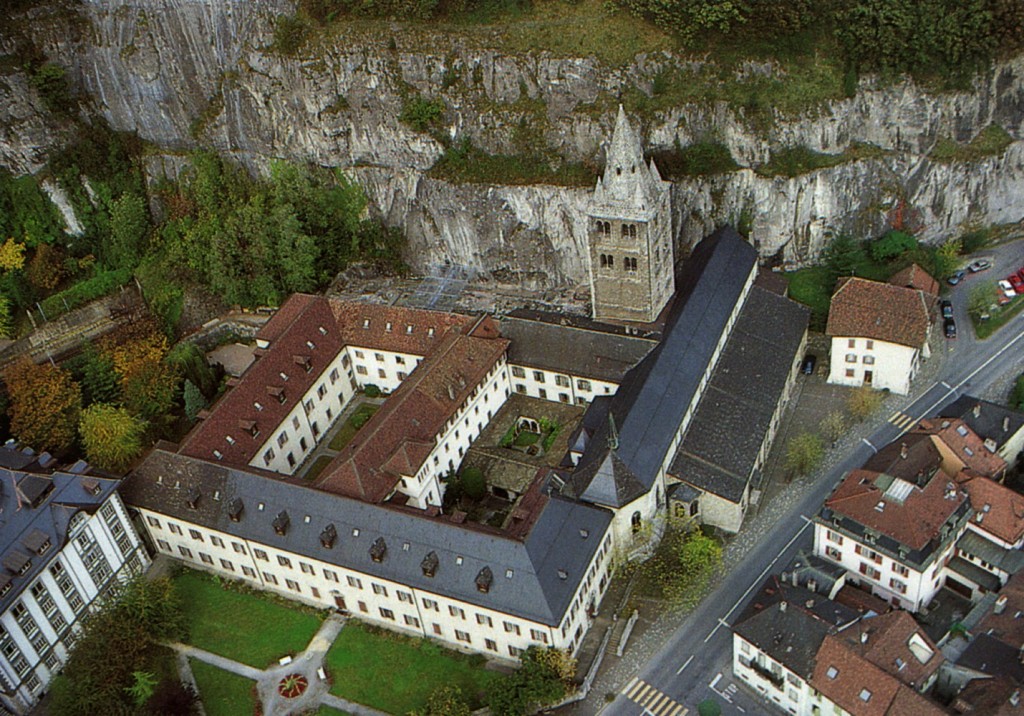
Today the abbey is home to 53 regulated canons, who work amongst the local people as well as in the local college. Apart from this, the canons cater for the many pilgrims, which still visit the evocative place. The abbey has also been declared World Heritage. Another function is thus to cater for the many cultural tourists, who come to see the famous treasury and the archaeological site.
The 1500-year anniversary 2014-15
Archaeology at Saint-Maurice d’Agaune
The Treasury at Saint-Maurice d’Agaune
The textiles at Saint-Maurice d’Agaune

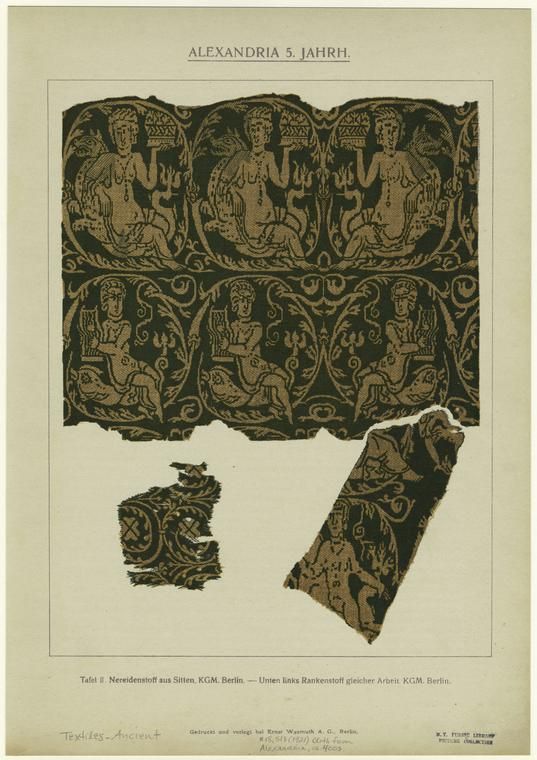
Already in the beginning of the 20th century a German professor by the name of Stückelberg took the opportunity to register and photograph a series a relic-wrappings from the churches and abbeys in the Valais. Many of these tiny pieces belong to the early middle ages and stem from China, via Persia and Egypt to Western Europe. Many of these tiny pieces appeared to belong to the same textiles. Fragments seemed to have been cut off and used in different locations.
One such famous piece is of course the “Nereid Textile” from Sion (Sitten), one of the few fabrics from classical antiquity. It was probably found during an opening of the reliquary of St. Maurice in 1225 and after that dispersed through the valley. Studying all the fragments, Stückelberg found that the sudarium had been bordered on top by a pattern of eagles, while the bottom paraded falcons. He dated the piece to the 4th century and concluded that it might in fact have been the earliest wrapping for Saint Maurice (or what was believed to be his earthly remains, found by Theodulus).

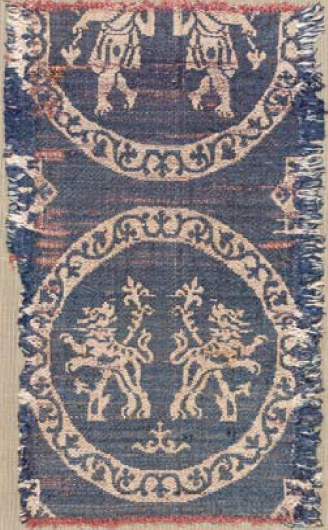
Another silk-piece found at St. Maurice in 1923 seems to be a bit later – from the 6th century. It sports a rapport of lions, vine and chalices.
Too other fragments from Egypt from the 7th to 8th centuries show rapports of dancing figures in medallions alternating with dancing lions or cows. Colours white on blue or red on yellow. These were all found in the Ewer in 1923.
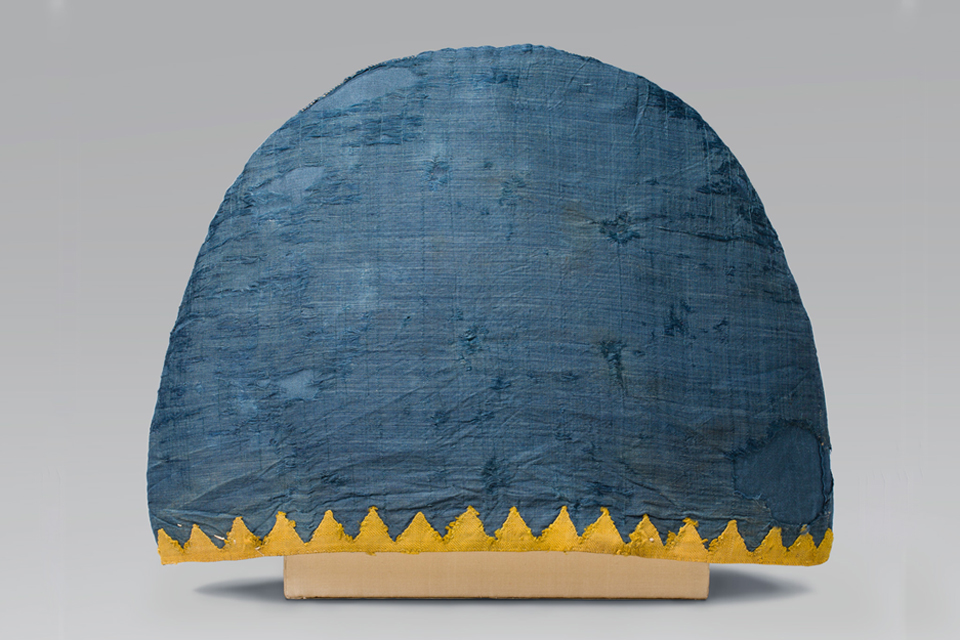
More, however, were to come. As late as in 1961, a whole new cache of fragments were found when the head of St. Candidus was opened. This costly head-shaped reliquary was made in the 12th century. During restoration work the head was found to contain not only parts of the presumed skull but also a blue silk cap and dozens of small tied-up packages of relics wrapped in fabrics with little parchment notes attached.
Some of these textiles belong to the period, when Saint-Maurice d’Augune was founded (515).
Currently this cache of textiles is exhibited at the Abegg-Stiftung at The Villa Abegg in Switzerland together with other rich collections from Hildesheim and the Guelph Treasure. It may be viewed by contacting the Institution.
Unfortunately the full collection of textiles has never been published.
Veil and Adornment
Medieval Textiles and the Cult of Relics.
Villa Abegg
27.04.2014 – 09.11.2014
Unveröffentlichte Walliser Gewebefunde
By E. A. Stückelberg
In: Anzeiger für schweizerische Altertumskunde: Neue Folge, 1926, Vol. 26, no. 2 – 3, pp. 95 ff. (with 20 coloured photos)
Early Textiles in the Canton Valais
A. F. Kendrick
The Burlington Magazine for Connoisseurs, 1924, Vol. 45, No. 258, pp. 125-127+130-131
Textilien des Mittelmeerraumes aus spätantiker bis frühislamischer Zeit
By Sabine Schrenk and Regina Knaller (Textile Analysis)
In: Textilsammlung der Abegg-Stiftung Volume 4
With English Translation of the Introducing Texts
ISBN 3-905014-24-6
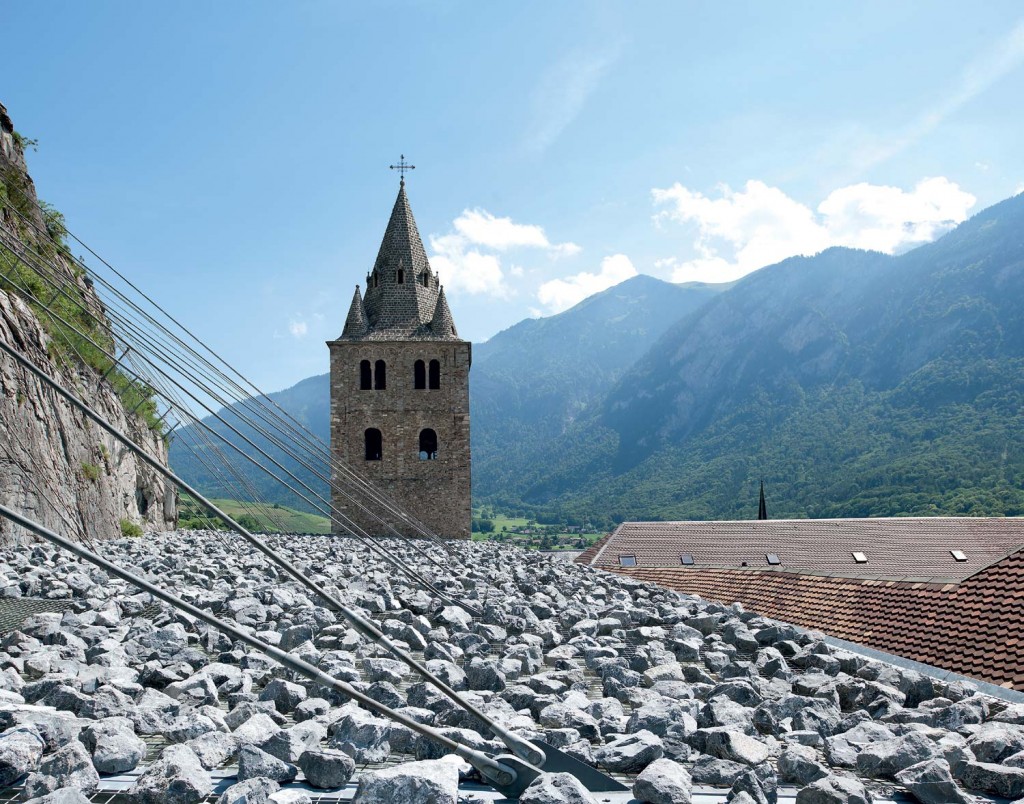
Saint-Maurice d'Agaune is one of the oldest monasteries in Western Europe and can trace its history back to the 5th century AD
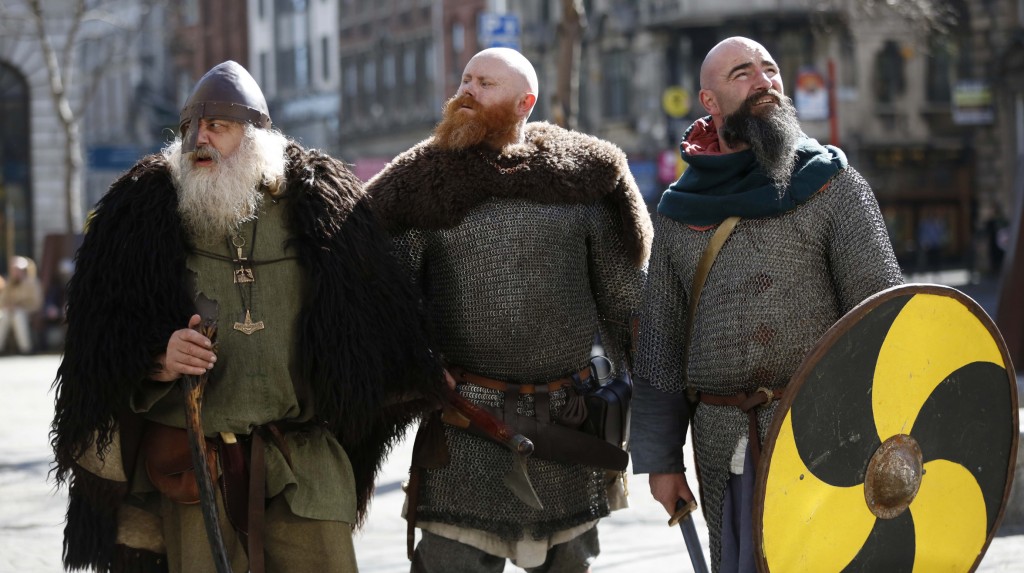
A review of the reviews of the 2014 exhibition of the Vikings - Life and Legend at the British Museum
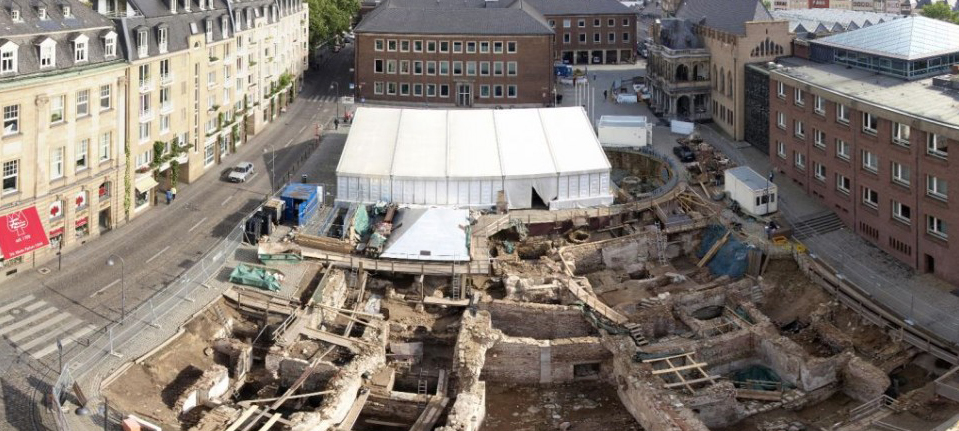
During the last decade archaeologists in Cologne have re-excavated the 700-year old synagogue with its adjacent Mikveh...
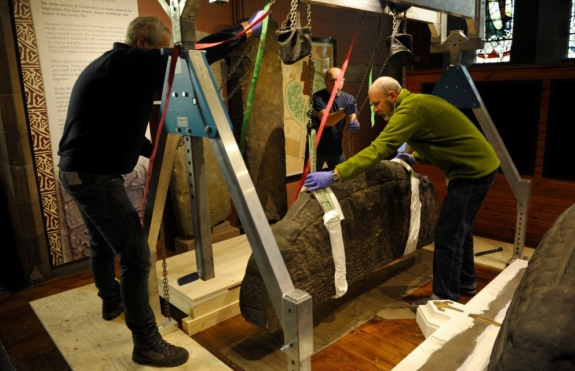
One of the impressive hogbacks is shipped to London to be exhibited among Viking treasures...
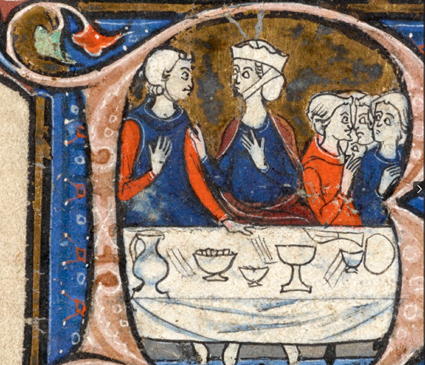
EXHIBITION: French Medieval manuscripts are exhibited at Cambridge University Library...
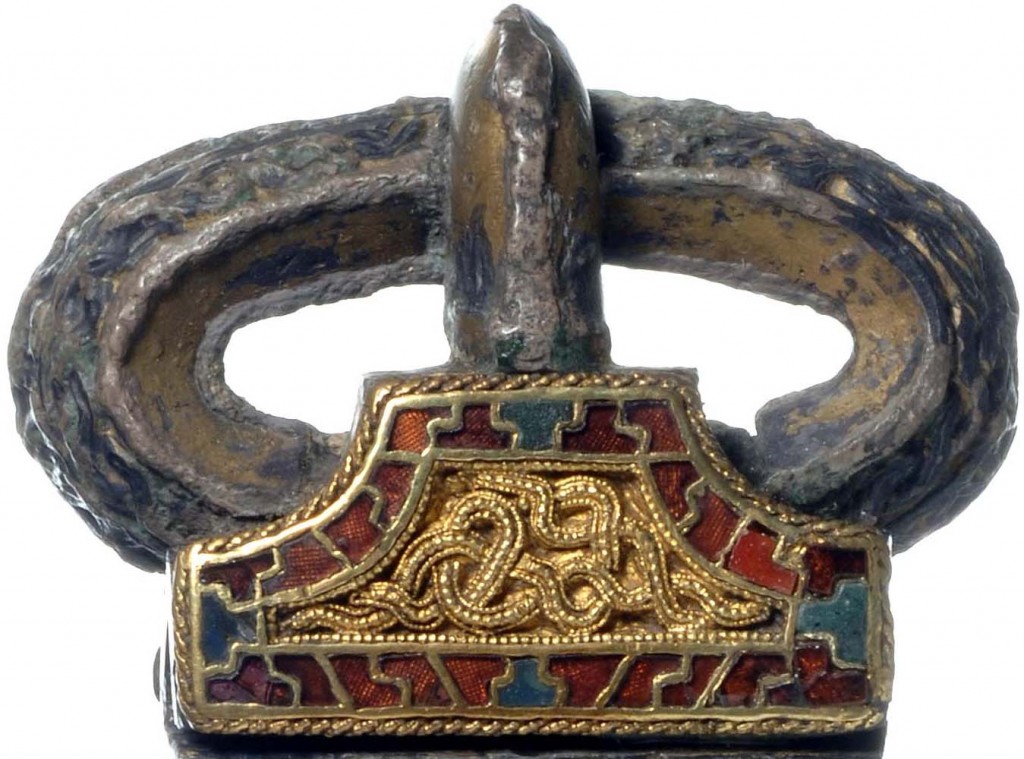
EXHIBITION: The Merovingians are at the centre of an important exhibition in Holland this spring...
EXHIBITION: This spring the story of the Vikings is told in the British Museum...
EXHIBITION: The story of Amber through the Times is shown at Museums in Riga in Latvia...
EXHIBITION: German Renaissance paintings are shown in a major exhibition in London...